- Bambusa Metake Korean/Japanese Arrow Bamboo — My anchor
I want to tell you about the day I accidentally ordered what I thought was a small decorative bamboo plant and instead received something that looked like it could house a family of pandas. It arrived on my doorstep in a box so tall my mail carrier left a passive-aggressive note. My neighbor watched me wrestle it up my driveway and simply said, “Good luck with that.” She was not wrong. But here’s the thing — that ridiculous, oversized, completely-wrong-for-my-porch bamboo plant became the starting point for the most beautiful bamboo Japanese garden I never planned to build.
This post contains affiliate links. As an Amazon Associate, I earn from qualifying purchases. If you click a link and make a purchase, I may earn a small commission at no extra cost to you. I only recommend products I genuinely love or would use myself.
Before that chaotic delivery, my backyard was a sad stretch of patchy grass and a cracked concrete border that I kept telling myself I’d fix “next weekend” for approximately three years. I had zero garden experience, a modest budget, and a slightly unhinged optimism that I could turn it into something serene and intentional. Spoiler: I did. For under $300. And you absolutely can too.
Why Bamboo Is the Soul of a Japanese Garden
Japanese garden design is rooted in a philosophy called wabi-sabi — finding beauty in simplicity, imperfection, and the natural world. Bamboo fits that philosophy so perfectly it almost feels like cheating. It sways in the wind. It rustles. It casts gorgeous dappled shadows. It’s evergreen, so your garden looks intentional even in January when everything else looks like it gave up.
Bamboo also brings something few plants can offer: movement and sound. A Japanese garden isn’t meant to be looked at like a painting. It’s meant to be experienced. The gentle clatter of bamboo canes in a breeze does more for your nervous system than a spa day. Trust me, I’ve tested both.
The key design principle to understand before you plant anything is restraint. Japanese gardens use fewer plant varieties than Western gardens, placed with more intention. You’re not filling space �� you’re shaping negative space. Bamboo, river rocks, a gravel path, and a focal point or two. That’s genuinely all you need.
Choosing the Right Bamboo for a Japanese Garden
Not all bamboo belongs in a Japanese-style garden. You want varieties that are elegant, upright, and relatively well-behaved. Here’s where I need to revisit my delivery disaster for a moment.
What I had originally ordered was supposed to be a container-friendly ornamental variety. What showed up was something entirely different — a gorgeous but humbling lesson in always reading the plant description twice. After a lot of frantic Googling and one very educational phone call to a local nursery, I realized I needed to rethink my entire approach. And honestly? It was the best mistake I ever made, because it sent me down a rabbit hole of bamboo research that completely transformed my backyard.
For a traditional Japanese aesthetic, I recommend starting with arrow bamboo. The Bambusa Metake Korean/Japanese Arrow Bamboo #1 Size Live Plant is one of my top picks. It’s a clumping-style bamboo that stays manageable, reaches a graceful medium height, and has that classic slender silhouette you see in Japanese woodblock prints. It’s cold-hardy, shade-tolerant, and plays beautifully alongside stone and gravel. This is the variety I eventually settled on, and it anchors my entire garden.
If you’re working with a smaller space — a patio, balcony, or container garden — consider starting from seed with something like these Japanese Bamboo Bonsai Forest Seeds. Growing bamboo bonsai is a genuinely meditative process and fits the Japanese garden aesthetic on even the tiniest terrace. It’s also a wonderful project if you want to involve kids or just want something you can watch grow incrementally from your kitchen window.
Building Your Bamboo Japanese Garden: A Practical Layout Guide
Here’s the step-by-step approach I used to put the whole thing together without losing my mind or my budget.
Step 1: Define Your Space
Start by marking out your garden boundary with a garden hose or spray paint. In Japanese design, curves are preferred over hard angles — they feel more natural and less confrontational. Even if you’re working with a rectangular bed, soften the edges where you can.
Step 2: Lay Your Ground Cover
Remove your grass, lay down landscape fabric, and top it with gravel or decorative stones. This is where you can have a lot of fun. I used a combination of Virekm River Rocks for the main ground surface — they’re smooth, natural-looking, and come in a great neutral palette that complements bamboo beautifully. For the stepping stone path that winds through the garden, I did something a little unexpected and added a border of UNIME Glow in the Dark Garden Pebbles. My kids think it’s the coolest thing in the neighborhood. My neighbors agree, although some of them are seven years old.
Step 3: Plant Your Bamboo Thoughtfully
Place your bamboo in odd-numbered groupings — threes and fives look more natural than pairs or even rows. Plant the tallest varieties at the back or corners to create a natural privacy screen, and use lower-growing varieties or bonsai specimens toward the front for layering and depth.
If you want to add something a little unexpected and sculptural near the front of your garden, I love the look of the Beta Bucks John Bamboo Willow Bonsai Forest Kit. The weeping willow form pairs surprisingly well with upright bamboo — the contrast in texture and shape adds visual interest without breaking the zen mood. It’s also beginner-friendly, which, as we’ve established, is important for some of us.
Step 4: Add Focal Points
A Japanese garden needs at least one focal point to draw the eye. This could be a stone lantern, a simple water feature, a large specimen rock, or even a carefully placed piece of driftwood. Keep it minimal. One or two focal points maximum. Restraint, remember?
Tools I Use and Recommend
- Bambusa Metake Korean/Japanese Arrow Bamboo — My anchor
Tag: bamboo garden design
-
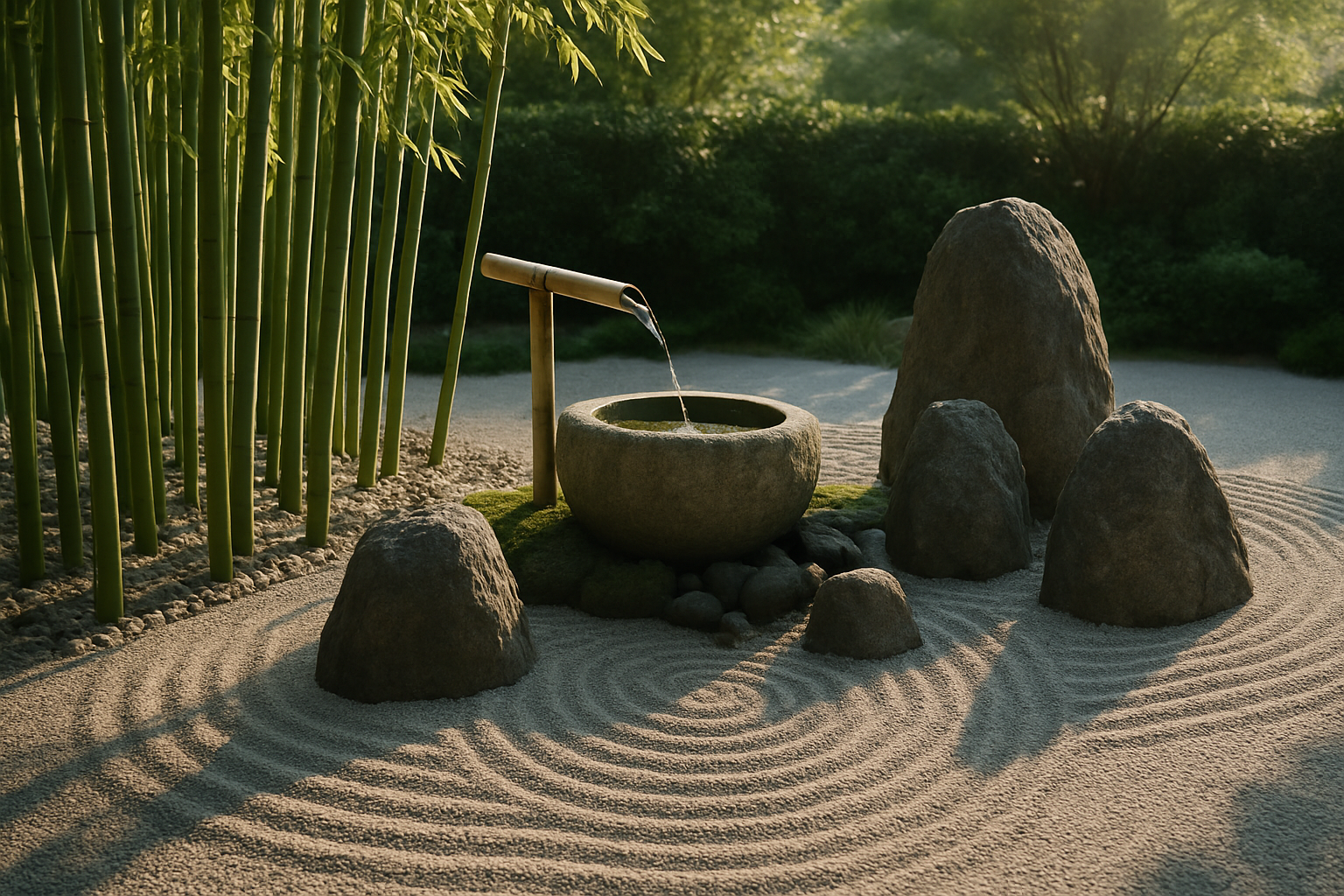
Bamboo for a Japanese Garden: How I Created Zen Serenity for Under $300