- Always check the manufacturer’s warranty for wet areas. A product rated for bathrooms will say so explicitly. If it doesn’t, assume it isn’t.
- Install an exhaust fan if you don’t have one. Humidity control is the single biggest factor in floor longevity in any bathroom.
- Use a proper underlayment or vapor barrier. Even waterproof LVP benefits from the right underlayment for sound and comfort.
- Acclimate your flooring. Let planks sit in the room for 48–72 hours before installation so they adjust to the temperature and humidity of the space.
- Seal the perimeter. Use a waterproof silicone caulk along edges near the shower, tub, and toilet base — even with water
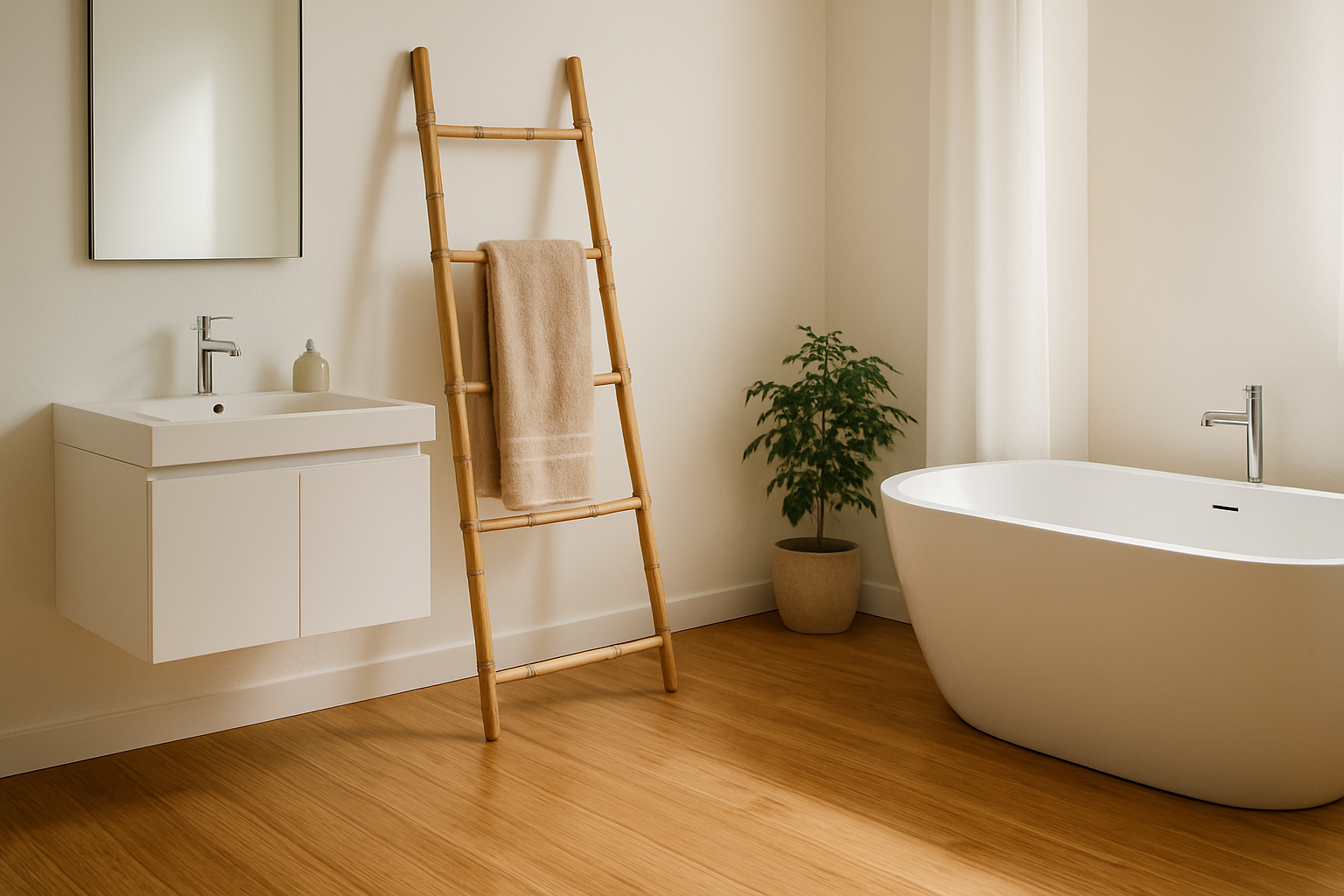
The water damage showed up on a Tuesday. I remember because I was already having a terrible week — my contractor had just bailed on me mid-project, I’d blown my renovation budget by nearly $800, and now I was standing in my half-finished bathroom staring at a swollen, buckled mess where my brand-new bamboo flooring used to be. I sat down on the edge of the tub and genuinely considered crying. If you’ve ever Googled “bamboo flooring bathroom” at midnight in a panic, I see you. This post is for you.
This post contains affiliate links. As an Amazon Associate, I earn from qualifying purchases. If you click a link and make a purchase, I may earn a small commission at no extra cost to you. I only recommend products I’ve personally researched or used.
How I Got Here: The Dream Bathroom Renovation Gone Wrong
It started with Pinterest. As these things often do. I’d been obsessed with the idea of a spa-like bathroom with warm, natural materials, and when I discovered bamboo flooring, I was completely sold. It was sustainable, it looked gorgeous, and the price point felt like a gift from the renovation gods. I bought solid bamboo planks, watched approximately forty-seven YouTube videos, and installed them myself over a long weekend while my partner, Jamie, very patiently did not say “I told you so.”
Jamie had raised an eyebrow when I picked solid bamboo for the bathroom. “Isn’t that going to be an issue with moisture?” they asked. I waved it off confidently. Reader, I should not have waved it off.
Within three months, the planks near the shower were lifting. By month five, one section had buckled so badly I was genuinely worried about a trip hazard. The solid bamboo — which is technically a grass, not a wood, but behaves similarly when it comes to moisture — had absorbed humidity from daily showers and expanded beyond what the installation could handle. I’d skipped a proper vapor barrier, used the wrong adhesive, and hadn’t sealed the edges near the shower curb. A triple-threat of rookie mistakes that cost me real money and real relationship strain.
The Truth About Bamboo Flooring in Bathrooms (What I Wish I’d Known)
Here’s the honest talk I needed before I started: bamboo flooring and bathrooms have a complicated relationship, and the type of bamboo product you choose makes all the difference. Let me break down what I learned the hard way.
Solid Bamboo in a Full Bathroom: Proceed With Caution
Solid bamboo planks — even strand-woven, which is denser and more moisture-resistant than traditional bamboo — are not ideal for high-humidity bathrooms with showers or tubs. They can work in a powder room with low humidity exposure, but in a bathroom where steam is a daily reality, the risk of warping and swelling is significant. Proper sealing, a moisture barrier underneath, and excellent ventilation are non-negotiable if you go this route.
Bamboo-Look LVP: The Smart Middle Ground
What I eventually discovered — and what completely saved my sanity — is that luxury vinyl plank (LVP) flooring with a wood or bamboo-style finish gives you the look you’re going for with 100% waterproof performance. SPC (stone plastic composite) core LVP is rigid, dimensionally stable, and genuinely impervious to moisture. It’s what I used for my redo, and I haven’t looked back.
If you want solid bamboo elsewhere in your home — a kitchen, bedroom, or living space — it’s a wonderful, sustainable choice. Just pair it with the right environment.
Products I Actually Recommend (Learned From Experience)
After my bathroom saga, I spent weeks researching before buying anything new. Here’s what made the cut.
For Bathrooms and High-Moisture Spaces
This is exactly what I replaced my damaged floor with, and it has been flawless for over a year now. The SPC Click Lock Luxury Vinyl Flooring Plank in Oak-2 is 5mm thick with a rigid core and is genuinely 100% waterproof — not water-resistant, waterproof. The click-lock install was so much easier than my original bamboo project, and the warm oak tone gave me that natural look I was after. If you prefer a slightly richer, more varied wood tone, the SPC Click Lock Luxury Vinyl in Umbrian Oak is a beautiful alternative from the same line.
For Living Rooms, Bedrooms, and Kitchens
If you’re installing in a lower-humidity space and want real bamboo underfoot, the Jeedeson Solid Bamboo Flooring in Light Honey is a gorgeous option. The tongue-and-groove system makes it a manageable DIY project, and the light honey color is warm and versatile. I’m actually planning to use this in our bedroom refresh next spring.
For Keeping Your Floors Looking Their Best
Whichever flooring you choose, maintenance matters. I alternate between two cleaners depending on what I need. For a heavier clean, the Rock Doctor Flooraid+ Bamboo Floor Cleaner Spray is my go-to — non-abrasive, rinse-free, and it smells great. For my regular weekly mop, I love the Better Life Floor Cleaner in Citrus Mint, which is plant-derived and safe for bamboo, hardwood, vinyl, and laminate. It leaves zero streaks and the scent is genuinely lovely.
Practical Tips Before You Install Anything
- Always check the manufacturer’s warranty for wet areas. A product rated for bathrooms will say so explicitly. If it doesn’t, assume it isn’t.
- Install an exhaust fan if you don’t have one. Humidity control is the single biggest factor in floor longevity in any bathroom.
- Use a proper underlayment or vapor barrier. Even waterproof LVP benefits from the right underlayment for sound and comfort.
- Acclimate your flooring. Let planks sit in the room for 48–72 hours before installation so they adjust to the temperature and humidity of the space.
- Seal the perimeter. Use a waterproof silicone caulk along edges near the shower, tub, and toilet base — even with water
Tag: bamboo renovation
-
Bamboo Flooring in My Bathroom: The Home Renovation That Gave Me Gray Hairs