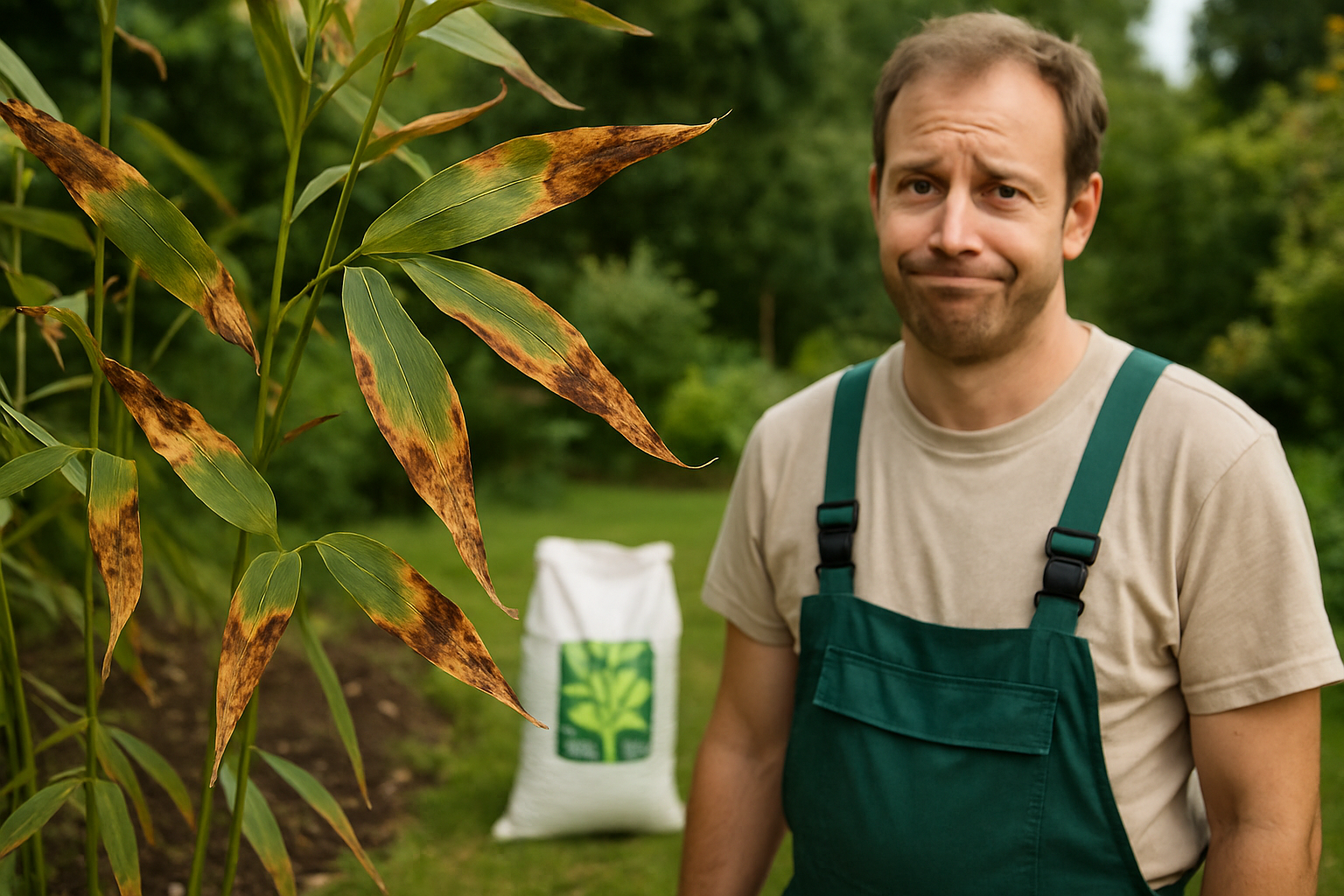
I want to tell you about the day I stood in my backyard, coffee in hand, staring at my beloved golden bamboo grove and genuinely wondering if I had killed it. The leaves were curling, scorched brown at the tips like someone had run a lighter along each one, and I had absolutely no one to blame but myself. If you’ve ever Googled “bamboo leaf scorch fertilizer burn” in a mild panic at seven in the morning, welcome. You are among friends here.
This post contains affiliate links. As an Amazon Associate, I earn from qualifying purchases.
This is my very public confession about the time I decided that if a little fertilizer was good, a lot of fertilizer was obviously going to be absolutely spectacular. Reader, it was not spectacular. But the story does have a happy ending, and more importantly, I learned enough along the way to make sure you never have to recreate my particular brand of gardening chaos.
How I Managed to Scorch an Entire Bamboo Grove
It started with good intentions, as most gardening disasters do. My golden bamboo had been looking a little lackluster after a long winter, and I was eager to give it a boost heading into spring. I had just ordered a big bag of granular fertilizer, and when it arrived I did what any reasonable person does: I ignored the instructions entirely and applied roughly three times the recommended amount because, in my head, I was essentially giving my bamboo a spa treatment instead of a meal.
I raked it in, watered it generously, and then stood back with the satisfied smugness of someone who has absolutely no idea what they’ve just done. Two weeks later, the tips of nearly every leaf in the grove had turned a crispy, unmistakable brown. The culms still looked okay, but the foliage looked like it had been through something deeply traumatic. Which, to be fair, it had. I had happened to it.
What Bamboo Leaf Scorch From Fertilizer Burn Actually Looks Like
Before we get to the fix, let’s make sure we’re talking about the same thing. Bamboo leaf scorch from fertilizer burn has a pretty recognizable signature, and it’s worth distinguishing from other issues like drought stress, wind burn, or fungal disease.
- Browning starts at the leaf tips and edges, not in the center or as random spots
- Leaves may curl or feel dry and papery at the affected areas
- The damage is widespread across the plant, not isolated to one section
- Symptoms appear relatively quickly after fertilizing, usually within one to three weeks
- The soil may smell slightly acrid if you’ve really overdone it, or you may notice a white crusty residue near the root zone
What’s happening underneath is a process called salt burn. Excess fertilizer salts in the soil draw moisture out of the roots through osmosis, essentially dehydrating the plant from the inside out even if the soil itself is wet. Your bamboo is thirsty despite being surrounded by water it can no longer properly absorb. It’s a cruel little irony.
How to Treat and Recover From Bamboo Leaf Scorch Fertilizer Burn
Here’s the good news: bamboo is incredibly resilient, and if you catch this early, recovery is very achievable. Here’s what I did, and what you should do too.
Step 1: Flush the Soil Deeply
The goal is to dilute and push those excess fertilizer salts down and out of the root zone. Water your bamboo deeply and slowly for several days in a row. We’re not talking a quick sprinkle — we’re talking a slow, steady soak that moves water all the way through the soil profile. If you applied granular fertilizer, try to physically remove any you can still see on the surface before flushing.
Step 2: Check Your Soil Moisture Carefully
One of my biggest mistakes during the recovery process was guessing at soil moisture and overwatering in my panic, which created a whole different set of problems. A good soil meter is genuinely one of the most useful tools you can have for bamboo care. I now use one religiously before I water or amend anything.
Step 3: Be Patient With the Foliage
The scorched leaves are not going to turn green again — that damage is done. But once the root zone recovers, your bamboo will push fresh new growth. Don’t strip the damaged leaves off in a frenzy. Let the plant drop them naturally, and focus your energy on soil recovery rather than cosmetic tidying.
Step 4: Wait Before Fertilizing Again
Give your bamboo at least six to eight weeks before you even think about feeding it again. When you do return to fertilizing, choose a slow-release or controlled-release formula that delivers nutrients gradually rather than all at once. Your bamboo will thank you quietly by simply not dying.
Tools and Products I Actually Use Now
After my fertilizer fiasco, I got serious about having the right tools on hand. Here’s what I recommend based on real, embarrassing, hard-won experience.
For Monitoring Soil Conditions
The YAMRON 4-in-1 Soil Moisture Meter is fantastic for bamboo growers because it measures soil moisture, pH, temperature, and sunlight intensity all in one device. Having that pH reading is especially useful after a fertilizer burn incident, since salt buildup can throw off your soil chemistry. The backlit LCD display makes it easy to read even in shaded grove conditions.
If you have large container bamboo or deeper planting beds, the XLUX Long Probe Deep Use Soil Moisture Meter is a brilliant option. The extended probe reaches down into the root zone where it matters most, rather than just reading surface moisture that can be wildly misleading.
Another solid all-rounder is this 4-in-1 Soil Moisture and pH Meter, which covers the same bases as the YAMRON at a slightly different price point. Great for those who want a backup meter or are equipping a larger garden.
For Feeding Your Bamboo the Right Way
Once you’re ready to fertilize again, do yourself a favor and use something formulated specifically for bamboo. The