Tag: privacy fence options

  • Bamboo Fence vs Bamboo Screen: Which Is Right for Your Yard?
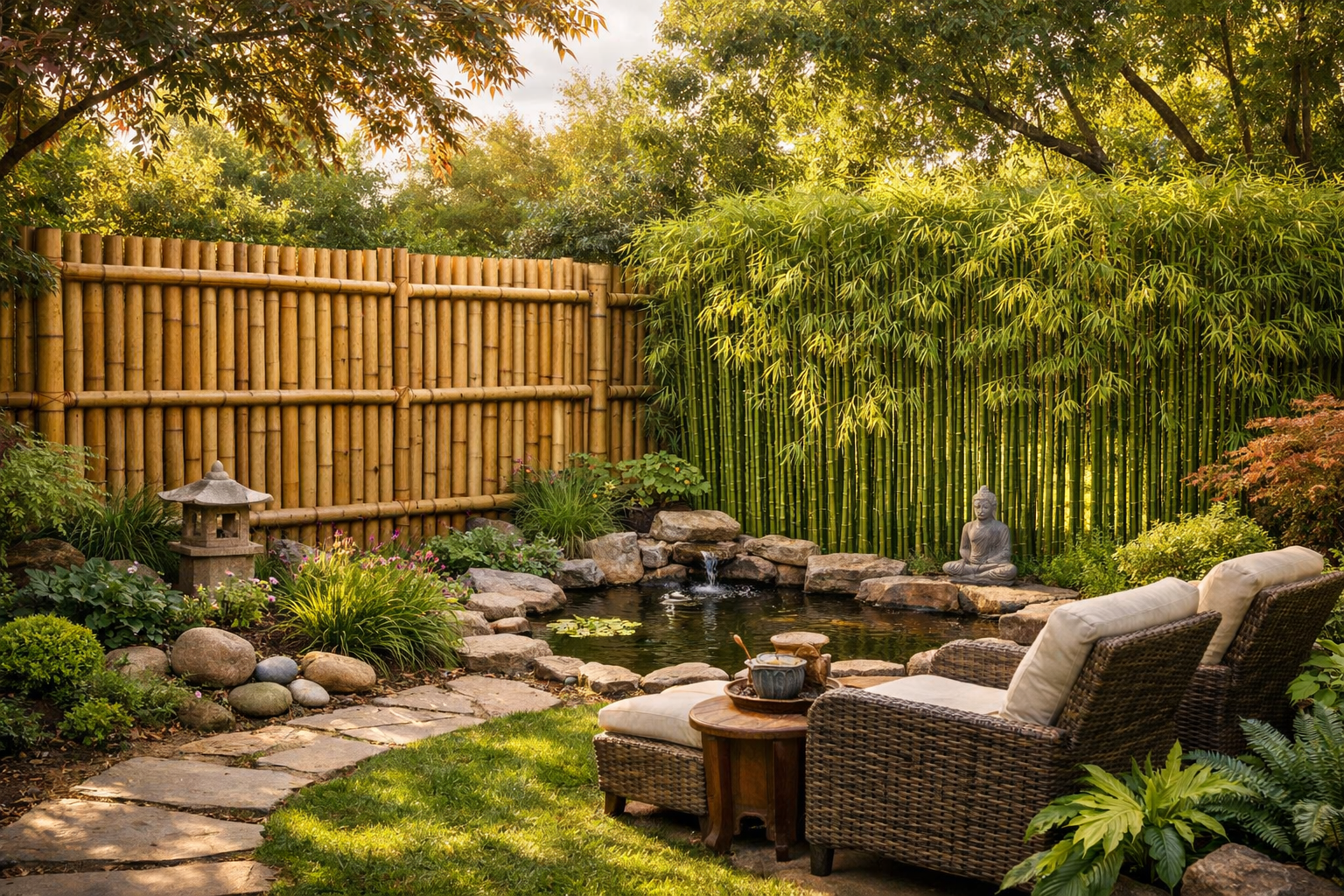
    Bamboo Fence vs Bamboo Screen: Which Is Right for Your Yard?

    This post contains affiliate links. As an Amazon Associate I earn from qualifying purchases at no extra cost to you.

    Last summer I was standing in my backyard holding a cold coffee, staring at two completely different bamboo installations and wondering why I’d never written about this. On my left: a solid bamboo fence running along the property line, doing the serious work of blocking my neighbor’s very enthusiastic garden gnome collection. On my right: a loose, airy bamboo screen draped along my patio pergola, doing something far more decorative and breezy. Both made from bamboo. Both technically called “bamboo fencing” in half the product listings I’ve ever read. But the bamboo fence vs bamboo screen differences couldn’t be more real once you actually live with both. If you’re trying to figure out which one belongs in your yard, I’ve made enough mistakes for both of us — let me walk you through what I’ve learned.

    Bamboo Fence vs Bamboo Screen: Which Is Right for Your Yard? — image 1

    What Actually Makes a Bamboo Fence Different From a Bamboo Screen?

    I used to use these terms interchangeably, and honestly so do a lot of sellers online. That’s part of what makes shopping for these products genuinely confusing. But after installing both, I’ve come to think of them as tools with different jobs — even if they look similar at a quick glance.

    A bamboo fence is built for structure and permanence. It uses thicker, more rigid bamboo poles or slats, and it’s typically mounted on a solid framework — fence posts, wooden rails, or an existing chain-link structure. The goal is a defined boundary. It blocks views, reduces noise to some degree, and gives your yard a clear edge. When I put up the fence along my property line, I used a roll from Forever Bamboo Natural Bamboo Fencing Decorative Rolled Fence Panel (0.75 in D x 6 ft H x 8 ft L). The poles are thick and sturdy, and once it was wired to my existing fence frame, it felt genuinely solid. It’s not going anywhere in a light wind.

    A bamboo screen, on the other hand, is more flexible in every sense of the word. It’s usually made from thinner bamboo slats or even reed material, woven or tied together with wire or twine. It rolls up easily, installs quickly, and works beautifully as a temporary or semi-permanent visual divider. It’s the difference between building a wall and hanging a curtain — both block your view, but only one of them is meant to move with the seasons.

    When a Bamboo Fence Is the Right Call

    If your goal involves any of the following, you probably want a fence rather than a screen:

    • Defining a clear property boundary
    • Blocking a persistent sightline from a neighbor’s window or elevated deck
    • Adding structure to a yard that currently has none
    • Creating a backdrop for a garden bed or water feature
    • Covering an ugly chain-link fence permanently

    Bamboo fencing is one of those projects that looks intimidating but is actually very manageable if you take your time. I’d recommend picking up some YIDIE Garden Stakes Sturdy Metal Fence Posts (5 Ft, Pack of 50) if you’re building a freestanding run — they’re plastic-coated steel, which means they hold up against moisture far better than plain metal stakes, and having extras on hand saves you a mid-project hardware store run (ask me how I know).

    For the bamboo material itself, I’ve had great luck with thicker slat rolls for fence applications. The 6.5ft x 13ft Bamboo Slat Screening Roll is a solid option — it’s wide enough to cover a decent run without seaming, and the natural slat construction gives it that clean, structured look that reads as a proper fence rather than a decorative add-on.

    Bamboo Fence vs Bamboo Screen: Which Is Right for Your Yard? — image 2

    When a Bamboo Screen Is the Better Choice

    Here’s where I’ll be honest: I reach for a bamboo screen more often than a fence these days, because most of my outdoor projects are about atmosphere rather than boundaries. Screens are ideal when you want to:

    • Add privacy to a balcony or apartment patio
    • Divide a large patio into cozier zones
    • Create a backdrop for outdoor dining or a seating area
    • Add texture and warmth to a bare fence or wall
    • Install something quickly without digging post holes

    The material choice matters here too. Thinner bamboo slat screens and natural reed screens behave slightly differently. Reed screens — made from dried reeds bundled together — have a softer, more organic look and excellent airflow. They’re my go-to for the patio area because they filter light beautifully without fully blocking it. The VEVOR Reed Fencing Roll (5.5 x 16.4 Ft Natural Reed Screen Curtain) is one I’ve recommended to several friends — it’s a generous size, the brown tones look warm and natural, and it’s sturdy enough to handle wind without ripping apart after one season.

    If you need something for a smaller balcony space, the Natural Reed Fencing Roll (available in 3/4/5/6ft heights, Coffee, 2.6 x 6.6ft) is a great compact option that even comes with cable zip ties — which, if you’ve ever tried to wire one of these up on a breezy afternoon by yourself, you will absolutely appreciate.

    For a more polished slat-style screen on the patio, the Sprigra Bamboo Slat Fence (4ft x 13ft) sits nicely in between — it has the clean lines of a proper bamboo fence but the flexibility and easy installation of a screen. I’d call it the middle-ground option, and that’s not a criticism. Sometimes the middle ground is exactly where you need to be.

    Bamboo Fence vs Bamboo Screen: Which Is Right for Your Yard? — image 3

    The Practical Stuff: Installation, Longevity, and Maintenance

    Let’s talk about what actually happens after you unroll one of these things in your yard, because that’s where the fence vs screen differences really show up in daily life.

    Installation

    Bamboo fencing needs a frame. Full stop. If you try to hang a heavy bamboo fence roll from a pergola the way you would a screen, it’s going to sag or pull the structure. You need posts, rails, and proper fasteners. The upside is that once it’s in, it’s in. Bamboo screens, especially the reed variety, can go almost anywhere. I’ve zip-tied them to patio railings, woven them through pergola slats, and even used them as a temporary room divider for an outdoor party.

    Longevity

    Properly mounted bamboo fencing can last 5 to 10 years depending on your climate and whether you seal or oil it periodically. Bamboo and reed screens tend to have a shorter lifespan — usually 3 to 5 years before they start looking weathered — but they’re also much cheaper to replace. I think of screens as seasonal investments and fences as longer-term ones. Neither answer is wrong; it just depends on your planning horizon.

    Maintenance

    Both benefit from a rinse-down in spring to remove mildew and debris. Bamboo fencing can be treated with tung oil or outdoor bamboo sealant to extend its life. Reed screens are harder to treat because of their texture, so replacement is usually the more practical option when they fade. If you want to get maximum life out of any bamboo installation, keep it off direct ground contact and make sure water can drain away from the base — that’s the single biggest thing that shortens bamboo’s outdoor lifespan.

    One more tip: if you’re building out a full fence run and need to anchor rolls between larger posts, BOVITRO Bamboo Stakes (4FT, 25 Pack) are handy for creating temporary support points while you work — and they do double duty in the garden once the project’s done, so nothing goes to waste.

    If you want a longer fence run and prefer something in a natural reed style, the Natural Reed Fencing Roll (6FT x 16.4FT, Brown) gives you excellent coverage and a warm, natural finish that works with almost any outdoor palette.

    Bamboo Fence vs Bamboo Screen: Which Is Right for Your Yard? — image 4

    My Final Recommendation: Bamboo Fence vs Bamboo Screen Differences Come Down to One Question

    After living with both in my yard, here’s the honest summary of bamboo fence vs bamboo screen differences: ask yourself whether you need a boundary or an atmosphere. If the answer is a boundary — something permanent, structural, and reliable — invest in proper bamboo fencing and mount it right. If the answer is atmosphere — warmth, privacy, texture, a sense of enclosure without construction — a bamboo or reed screen will get you there faster, cheaper, and with far less swearing involved.

    My personal recommendation for most homeowners starting out: begin with a screen. The 6.5ft x 13ft Bamboo Slat Screening Roll is a great starting point for patios and yard dividers, and the VEVOR Reed Fencing Roll is my top pick for balconies and pergola applications. Once you understand what you actually want from your outdoor space — which sometimes takes a season or two of living in it — you can graduate to a proper fence installation with much more confidence about where it belongs.

    Have you installed either one in your yard? I’d genuinely love to hear what worked and what didn’t — drop a comment below. And if you’re still not sure which direction to go, describe your space and I’ll do my best to point you toward the right option.

    META_DESCRIPTION