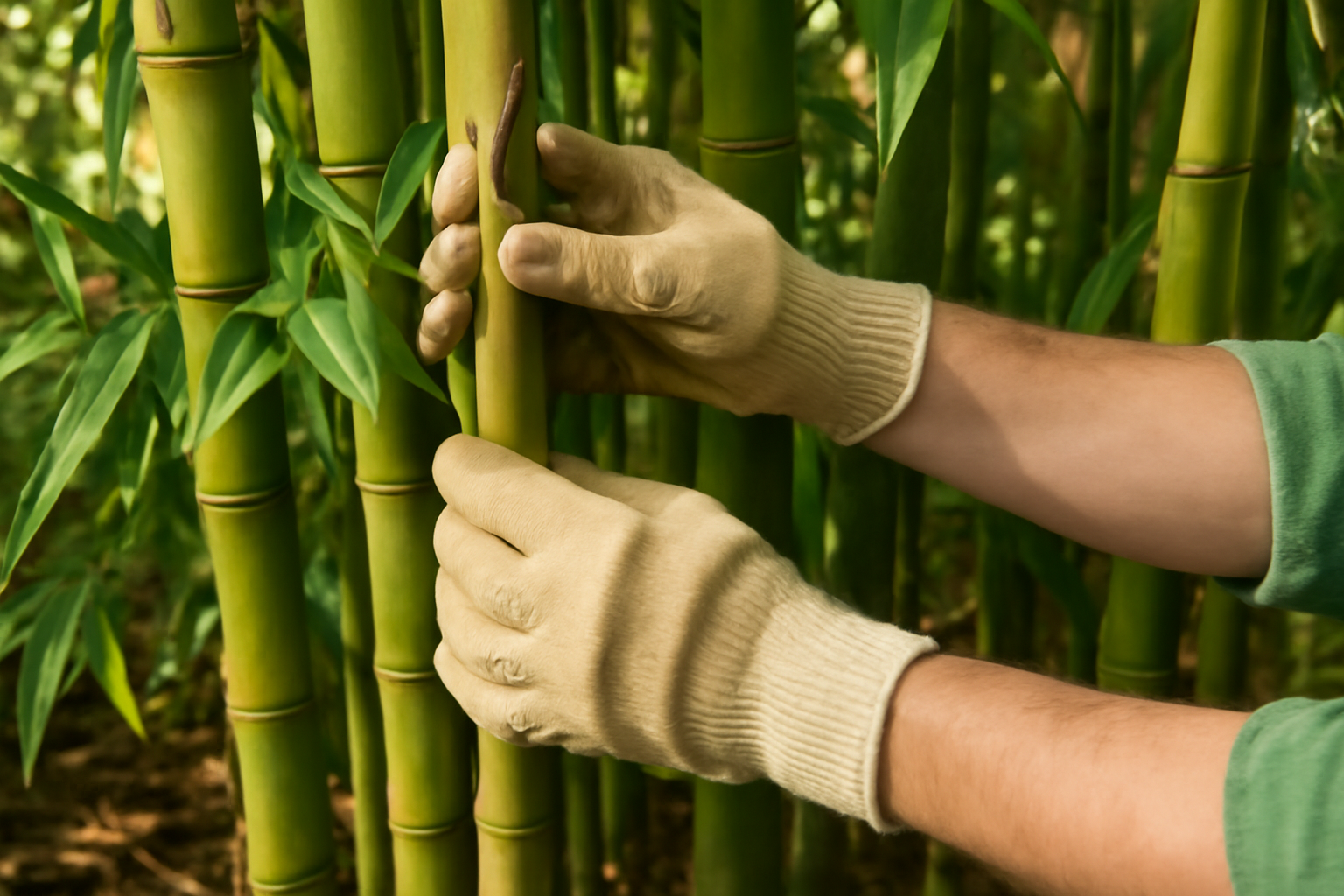
Category: Bamboo FAQs

Answers to the most common questions about bamboo as a plant — growth, roots, hardiness, and behaviour.

  • How Deep Do Bamboo Roots Go? The Truth About Rhizome Depth and Spread

    How Deep Do Bamboo Roots Go? The Truth About Rhizome Depth and Spread

    One of the most common questions about bamboo — and one of the most important for anyone planning to plant it near buildings, fences, or neighbouring properties — is how deep the roots actually go.

    The answer surprises many people: bamboo roots are shallower than almost any comparable plant. But that doesn’t mean they’re less of a concern. The real issue isn’t depth — it’s lateral spread.

    Roots vs Rhizomes: The Key Distinction

    To understand bamboo’s underground behaviour, you need to distinguish between two different structures:

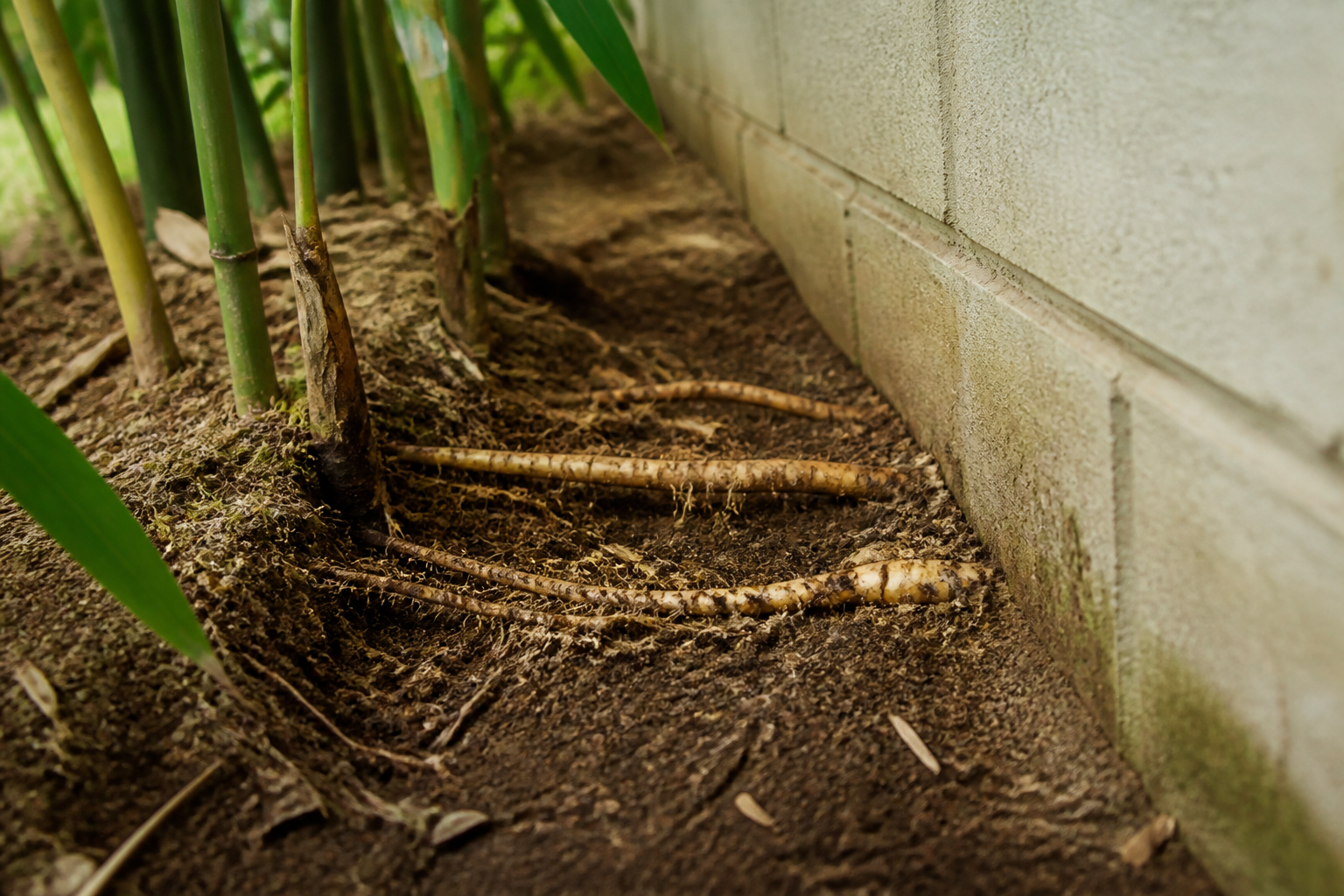
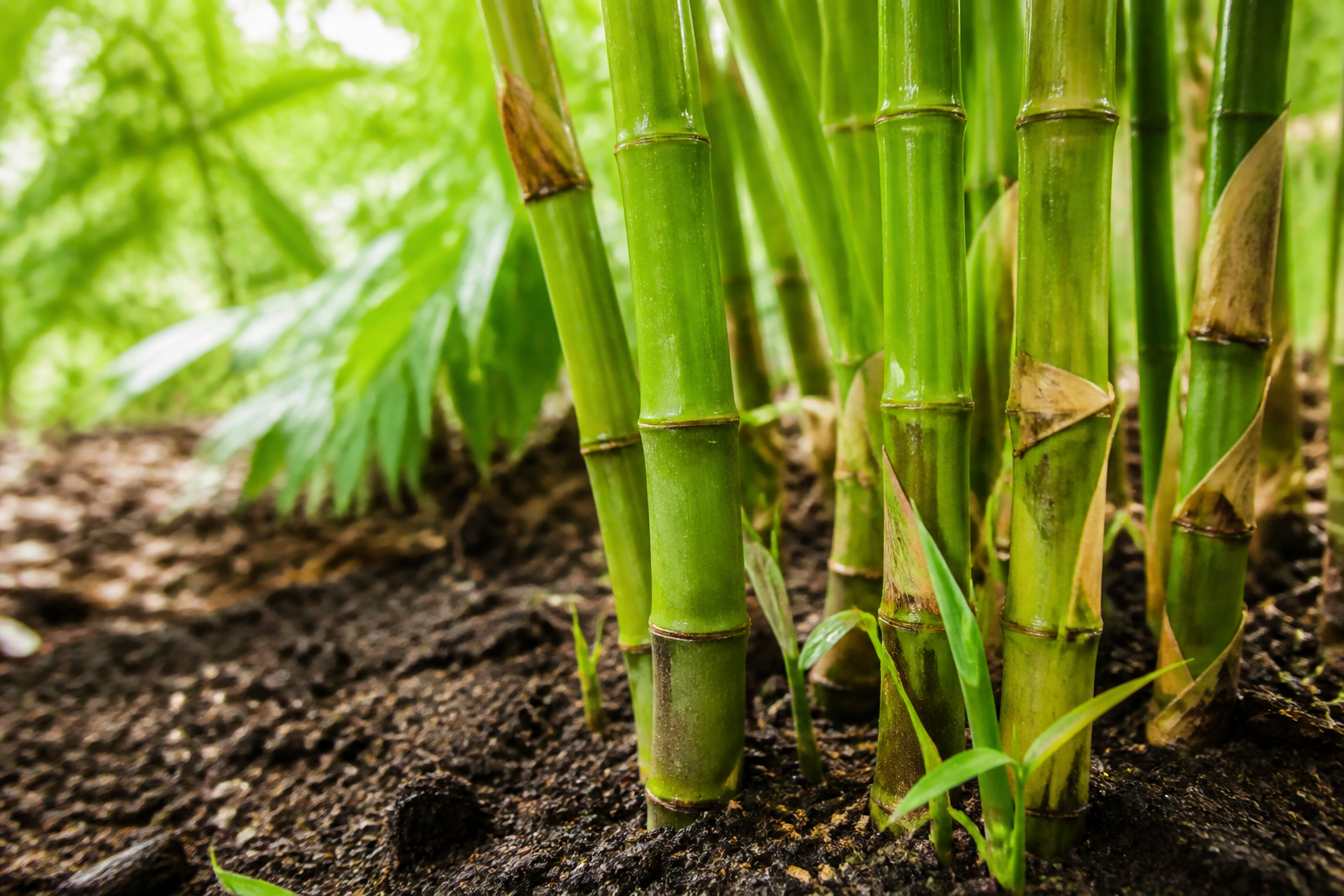
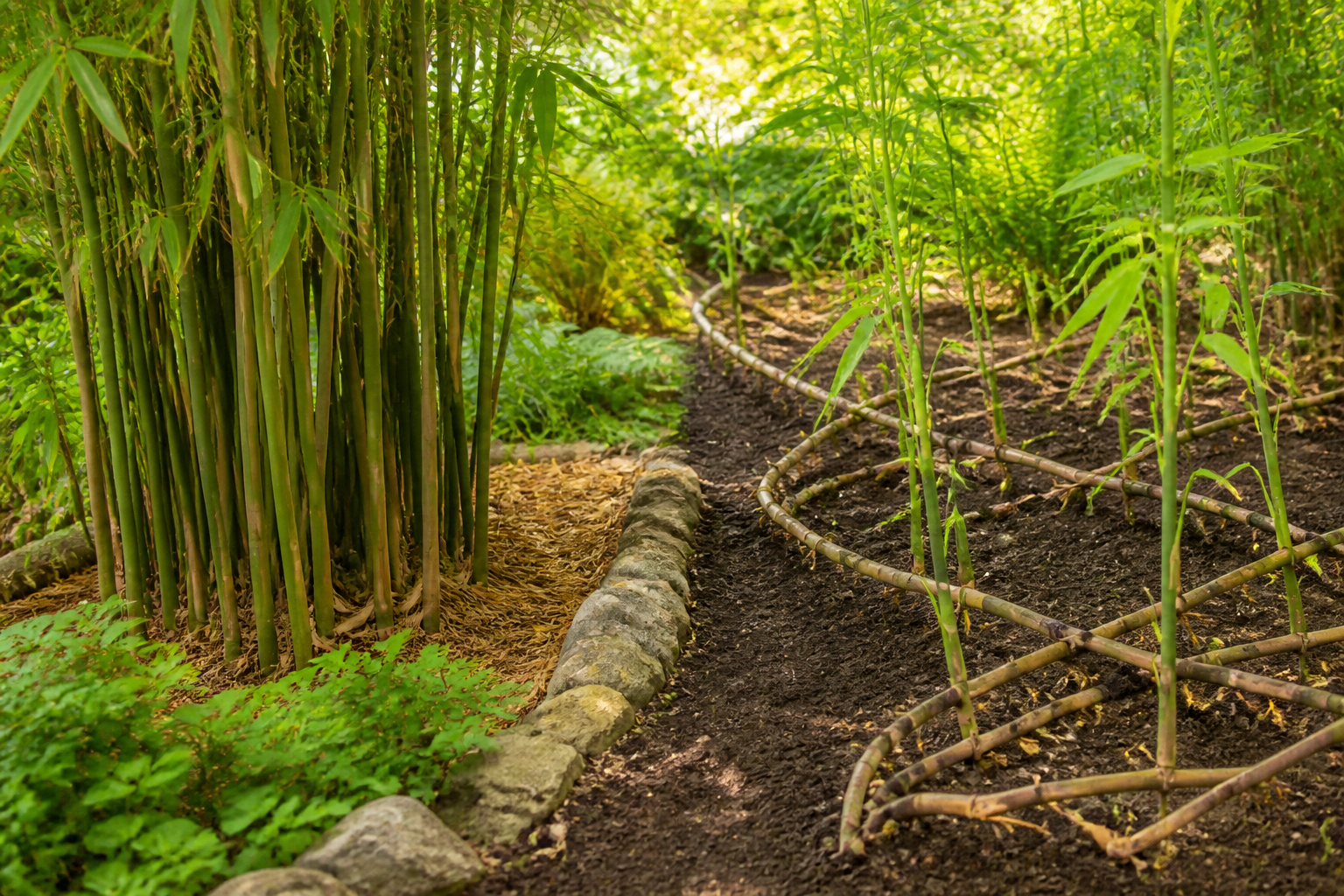
    • Rhizomes — the thick, horizontal underground stems that spread outward from the plant and produce new culms (canes). These are the structures responsible for bamboo’s spread and are the primary concern for containment and removal.
    • Feeder roots — thin, fibrous roots that extend downward and sideways from the rhizomes to absorb water and nutrients.

    When people ask “how deep do bamboo roots go?” they’re usually asking about rhizomes. And the answer is quite different depending on whether the bamboo is running or clumping.

    Running Bamboo Rhizome Depth

    Running bamboos (primarily Phyllostachys, Pleioblastus, and Pseudosasa) have leptomorph rhizomes — long, horizontal, fast-spreading rhizomes that can extend many metres from the original plant in a single season.

    Typical depth: 2–12 inches (5–30cm), with the majority of rhizome activity concentrated in the top 6 inches of soil. Rarely do running bamboo rhizomes go below 18 inches (45cm), and depths beyond 24 inches (60cm) are extremely uncommon.

    This is why bamboo root barriers need to go to a minimum of 24–30 inches (60–75cm) to be reliably effective — you need to be deeper than the rhizomes reliably travel to stop lateral spread.

    Clumping Bamboo Rhizome Depth

    Clumping bamboos (primarily Fargesia, Bambusa, and Borinda) have pachymorph rhizomes — short, thick, upward-curving rhizomes that stay close to the parent plant and produce tightly grouped culms. They don’t spread aggressively.

    Typical depth: 4–12 inches (10–30cm), and the spread is minimal — new growth stays within a predictable distance of the original planting, expanding the clump gradually rather than sending runners across the garden.

    How Do the Feeder Roots Compare?

    The fine fibrous roots that grow from rhizomes can extend considerably deeper — potentially 24–36 inches (60–90cm) or more in loose, deep soil. But these fine roots don’t cause structural problems and won’t produce new plants. They’re simply how bamboo absorbs water and nutrients. Their depth means bamboo is more drought-resilient than its shallow rhizome system might suggest.

    Does Bamboo Damage Foundations?

    This is the question most homeowners really want answered. The short answer: bamboo doesn’t have the force to crack or penetrate intact concrete or block foundations — unlike tree roots, which exert enormous pressure as they grow in diameter. Bamboo rhizomes are relatively thin and won’t displace solid structures.

    However, they can:

    • Exploit existing cracks in foundations, paving, or walls
    • Work through gaps in mortar or around pipe penetrations
    • Undermine loose or poorly compacted soil near structures, leading to settlement

    As a general guideline, plant running bamboo at least 3–5 metres (10–16 feet) from building foundations, and install a root barrier if planting closer. Clumping bamboo is far less of a concern and can be planted considerably closer.

    What This Means for Root Barriers

    Given that running bamboo rhizomes typically operate in the top 12 inches but can reach 18 inches in ideal conditions:

    • Root barriers should be at least 24 inches (60cm) deep, ideally 30 inches (75cm)
    • Use HDPE (high-density polyethylene) barrier at least 60mil thickness — thinner barriers can be penetrated by vigorous rhizomes
    • Leave 2–3 inches (5–7cm) of barrier above soil surface to prevent rhizomes going over the top
    • Join sections with overlap and seal — rhizomes will find gaps

    What This Means for Removal

    The shallow rhizome system is actually good news if you’re trying to remove bamboo. Unlike deep-rooted trees or shrubs, bamboo rhizomes are accessible with standard digging. The challenge isn’t depth — it’s thoroughness. Every fragment of rhizome left in the soil can reshoot, so complete removal requires patient, systematic excavation rather than deep digging.

    Effective removal typically involves cutting all culms to ground level, then methodically digging and pulling rhizomes outward from the centre, working through the top 12–18 inches of soil. Multiple follow-up sessions through the first growing season to catch regrowth are usually necessary.

    Summary

    Type Rhizome depth Lateral spread Barrier needed?
    Running bamboo2–18 inches (5–45cm)Aggressive — metres per yearYes, strongly recommended
    Clumping bamboo4–12 inches (10–30cm)Minimal — clump onlyUsually not necessary

    🛒 Bamboo Root Barriers We Recommend

    West Bay 20ft × 24in × 60mil Bamboo Root Barrier — heavy-duty HDPE for landscape edging, walkways, and bed containment

    View on Amazon →

    Bamboo Shield 50ft × 24in × 60mil Root Barrier — professional-grade barrier for larger planting areas and long runs

    View on Amazon →

    Bamboo Shield 30ft × 30in × 80mil Root Barrier — extra depth (30 inches) for maximum protection in loose or deep soils

    View on Amazon →

    As an Amazon Associate I earn from qualifying purchases. Prices and availability subject to change.

  • Is Bamboo Evergreen? What Happens to Bamboo in Winter

    Is Bamboo Evergreen? What Happens to Bamboo in Winter

    The short answer: yes, most bamboo species are evergreen — they retain their foliage year-round and stay green through winter. But bamboo’s relationship with cold and dormancy is more nuanced than a simple yes or no, and understanding the details helps you choose the right species for your climate.

    What “Evergreen” Means for Bamboo

    An evergreen plant retains its leaves throughout the year rather than shedding them all in autumn. By this definition, the vast majority of bamboo species — both clumping and running types — are evergreen.

    However, bamboo has a somewhat misleading quirk: it does shed leaves continuously, particularly in spring when it produces new culm growth and when old leaves at the base are naturally replaced. If you see bamboo leaves falling, it doesn’t mean the plant is going deciduous — it’s simply cycling old leaves out while the canopy stays full. This confuses many new bamboo growers who interpret leaf drop as die-back.

    Temperate vs Tropical Bamboo: How Cold Changes the Picture

    Tropical Bamboo (e.g., Bambusa, Dendrocalamus)

    Tropical and subtropical bamboo species are evergreen in their native climates and remain so year-round wherever temperatures stay above freezing. They have no cold tolerance — a hard frost will kill the foliage, and prolonged freezing will kill the plant entirely. In zones 9–12, they stay lush and green 365 days a year.

    Temperate Clumping Bamboo (e.g., Fargesia)

    Fargesia species — including the popular Fargesia murielae (umbrella bamboo) and Fargesia nitida — are cold-hardy to around -20°C (-4°F), making them suitable for USDA zones 5–9. They remain evergreen even in cold winters. Leaves may look slightly tattered after extreme cold, but the plant stays green and recovers quickly in spring. These are among the most reliably evergreen bamboos for temperate gardens.

    Temperate Running Bamboo (e.g., Phyllostachys)

    Phyllostachys species — the most commonly grown running bamboos — are evergreen across their hardiness range (typically zones 5–10 depending on species). In a mild winter within their zone, they stay fully green. At the cold edge of their range, they may experience:

    • Partial leaf bronzing or browning in extreme cold snaps
    • Temporary leaf curl (a protective mechanism — leaves curl inward to reduce surface area and water loss)
    • Occasional leaf drop from individual culms after unusually hard freezes

    In all these cases, the plant remains alive and will flush new growth in spring. It’s a stress response, not deciduousness.

    When Bamboo Behaves Like It’s Deciduous

    If bamboo is planted outside its hardiness zone — say, a zone 7 species experiencing a zone 4 winter — it may die back to the ground. The rhizomes often survive underground and reshoot in spring, which can look remarkably like a deciduous perennial. In these borderline situations, bamboo is not truly evergreen in that climate, but it isn’t truly dead either.

    Bamboo vs Ornamental Grasses: A Common Confusion

    Bamboo is often grouped mentally with ornamental grasses, many of which are deciduous or semi-evergreen. True bamboo (Poaceae, tribe Bambuseae) is a woody grass and behaves quite differently from ornamental grasses like Miscanthus or Pennisetum, which typically die back in winter. Bamboo’s woodiness — the lignified culms — gives it far more cold resilience and year-round presence.

    Best Evergreen Bamboo Choices by Zone

    USDA Zone Best Evergreen Species Notes
    Zone 5–6Fargesia murielae, F. robusta, Phyllostachys nudaFargesia most reliably evergreen; Ph. nuda handles cold well
    Zone 7–8Phyllostachys bissetii, Ph. aureosulcata, Ph. nigraWide range of evergreen running bamboos available
    Zone 9–10Phyllostachys vivax, Bambusa multiplex, Otatea acuminataFull year-round evergreen performance
    Zone 11–12Dendrocalamus, Gigantochloa, GuaduaTropical giants, fully evergreen year-round

    The Bottom Line

    If you’re planting bamboo for a year-round green screen, privacy hedge, or ornamental grove, you’re making a sound choice — in the right zone, bamboo will be one of the most reliably evergreen plants in your garden. Choose a species suited to your climate zone, and it will stay green through every winter it experiences.

    🛒 Recommended for Winter Bamboo Care

    Bonide Wilt Stop Anti-Transpirant Spray (40oz) — prevents winter desiccation on bamboo foliage in cold, dry, windy conditions

    View on Amazon →

    Bonide Wilt Stop Concentrated Anti-Transpirant (32oz) — protects bamboo, conifers, and broadleaf evergreens from winter burn

    View on Amazon →

    Super Green Lucky Bamboo Fertilizer — ready-to-use all-purpose fertilizer to strengthen bamboo heading into winter

    View on Amazon →

    As an Amazon Associate I earn from qualifying purchases. Prices and availability subject to change.