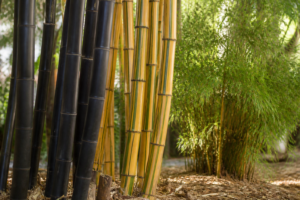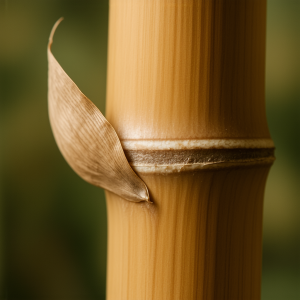
One of the most common questions about bamboo — and one of the most important for anyone planning to plant it near buildings, fences, or neighbouring properties — is how deep the roots actually go.
The answer surprises many people: bamboo roots are shallower than almost any comparable plant. But that doesn’t mean they’re less of a concern. The real issue isn’t depth — it’s lateral spread.
Roots vs Rhizomes: The Key Distinction
To understand bamboo’s underground behaviour, you need to distinguish between two different structures:
- Rhizomes — the thick, horizontal underground stems that spread outward from the plant and produce new culms (canes). These are the structures responsible for bamboo’s spread and are the primary concern for containment and removal.
- Feeder roots — thin, fibrous roots that extend downward and sideways from the rhizomes to absorb water and nutrients.
When people ask “how deep do bamboo roots go?” they’re usually asking about rhizomes. And the answer is quite different depending on whether the bamboo is running or clumping.
Running Bamboo Rhizome Depth
Running bamboos (primarily Phyllostachys, Pleioblastus, and Pseudosasa) have leptomorph rhizomes — long, horizontal, fast-spreading rhizomes that can extend many metres from the original plant in a single season.
Typical depth: 2–12 inches (5–30cm), with the majority of rhizome activity concentrated in the top 6 inches of soil. Rarely do running bamboo rhizomes go below 18 inches (45cm), and depths beyond 24 inches (60cm) are extremely uncommon.
This is why bamboo root barriers need to go to a minimum of 24–30 inches (60–75cm) to be reliably effective — you need to be deeper than the rhizomes reliably travel to stop lateral spread.
Clumping Bamboo Rhizome Depth
Clumping bamboos (primarily Fargesia, Bambusa, and Borinda) have pachymorph rhizomes — short, thick, upward-curving rhizomes that stay close to the parent plant and produce tightly grouped culms. They don’t spread aggressively.
Typical depth: 4–12 inches (10–30cm), and the spread is minimal — new growth stays within a predictable distance of the original planting, expanding the clump gradually rather than sending runners across the garden.
How Do the Feeder Roots Compare?
The fine fibrous roots that grow from rhizomes can extend considerably deeper — potentially 24–36 inches (60–90cm) or more in loose, deep soil. But these fine roots don’t cause structural problems and won’t produce new plants. They’re simply how bamboo absorbs water and nutrients. Their depth means bamboo is more drought-resilient than its shallow rhizome system might suggest.
Does Bamboo Damage Foundations?
This is the question most homeowners really want answered. The short answer: bamboo doesn’t have the force to crack or penetrate intact concrete or block foundations — unlike tree roots, which exert enormous pressure as they grow in diameter. Bamboo rhizomes are relatively thin and won’t displace solid structures.
However, they can:
- Exploit existing cracks in foundations, paving, or walls
- Work through gaps in mortar or around pipe penetrations
- Undermine loose or poorly compacted soil near structures, leading to settlement
As a general guideline, plant running bamboo at least 3–5 metres (10–16 feet) from building foundations, and install a root barrier if planting closer. Clumping bamboo is far less of a concern and can be planted considerably closer.
What This Means for Root Barriers
Given that running bamboo rhizomes typically operate in the top 12 inches but can reach 18 inches in ideal conditions:
- Root barriers should be at least 24 inches (60cm) deep, ideally 30 inches (75cm)
- Use HDPE (high-density polyethylene) barrier at least 60mil thickness — thinner barriers can be penetrated by vigorous rhizomes
- Leave 2–3 inches (5–7cm) of barrier above soil surface to prevent rhizomes going over the top
- Join sections with overlap and seal — rhizomes will find gaps
What This Means for Removal
The shallow rhizome system is actually good news if you’re trying to remove bamboo. Unlike deep-rooted trees or shrubs, bamboo rhizomes are accessible with standard digging. The challenge isn’t depth — it’s thoroughness. Every fragment of rhizome left in the soil can reshoot, so complete removal requires patient, systematic excavation rather than deep digging.
Effective removal typically involves cutting all culms to ground level, then methodically digging and pulling rhizomes outward from the centre, working through the top 12–18 inches of soil. Multiple follow-up sessions through the first growing season to catch regrowth are usually necessary.
Summary
| Type | Rhizome depth | Lateral spread | Barrier needed? |
|---|---|---|---|
| Running bamboo | 2–18 inches (5–45cm) | Aggressive — metres per year | Yes, strongly recommended |
| Clumping bamboo | 4–12 inches (10–30cm) | Minimal — clump only | Usually not necessary |
Understanding the Bamboo Root System
The bamboo root system is largely shallow by nature, with the majority of fibrous feeder roots concentrated in the top 12 to 18 inches of soil. However, rhizomes — the horizontal underground stems responsible for new shoot growth — can extend down to 2 to 3 feet in depth depending on soil conditions and bamboo species. So when homeowners ask how deep are bamboo roots, the honest answer is that it varies, but the real concern lies less with vertical depth and more with horizontal spread. Running bamboo varieties send rhizomes traveling aggressively outward, sometimes covering significant distances in a single growing season, which is what makes them a potential threat to neighboring properties, foundations, and garden beds.
Knowing your bamboo root depth is a critical first step when planning any containment strategy. A root barrier installed too shallow will allow rhizomes to dip beneath it and resurface on the other side, defeating its purpose entirely. This is why most experts recommend barriers that reach at least 24 to 30 inches deep for running species. Clumping bamboo, by contrast, features a much more compact and predictable bamboo root system that stays tightly bound to the original planting site, making it a lower-maintenance and less invasive option for residential landscapes. Understanding these distinctions helps you make smarter decisions about both species selection and long-term root management.
The Root Barrier That Finally Stopped My Golden Bamboo from Crossing the Property Line
After my running bamboo broke through a flimsy buried plywood barrier and started creeping toward my neighbor’s fence, I learned that shallow rhizomes need an equally committed underground containment system. A high-density polyethylene root barrier installed at the right depth and angle actually works — if you don’t cheap out on thickness.
What works
- Stops lateral rhizome spread dead when installed 24–30 inches deep with the top edge slightly angled outward — I’ve had zero breakthroughs in three seasons since installing mine correctly.
- Lets you actually contain running varieties without ripping out the whole stand — you get the aggressive growth you want inside the barrier, peace of mind outside it.
- Becomes invisible after year one and doesn’t degrade like wood or thin plastic — I’ve dug down to inspect mine and found it still intact and doing its job.
What doesn’t
- Installation is backbreaking labor if you’re doing it around established plants — digging a trench 2–3 feet deep by hand while keeping root damage minimal takes a full weekend per 20 linear feet.
- Won’t stop rhizomes that are already established beyond the barrier line — it only prevents new spread, so you need to install it *before* planting or immediately after if containment is a priority.
I almost returned mine after the first installation failed because I didn’t angle it properly and a single rhizome tip found a seam, but a reinstall with the correct technique proved the barrier itself is solid.
About This Article

Written by Marcus Chen. Marcus Chen has spent 15 years cultivating and studying bamboo across 14 different species, combining commercial growing operations with extensive hands-on experience in species selection and containment. As both a grower and consultant, he specializes in practical bamboo management, helping homeowners and landscapers understand the real-world requirements for responsible bamboo cultivation. Marcus brings tested knowledge of which species thrive reliably and which present containment challenges that go beyond standard recommendations. More about this site.
Verify this against a primary source
Specifics change, and your situation may differ from the one described here. These are the authorities worth checking directly:
- American Bamboo Society — species listings and cultivation guidance
- USDA PLANTS Database — species range and identification
- USDA Plant Hardiness Zone Map — cold hardiness verification for your location