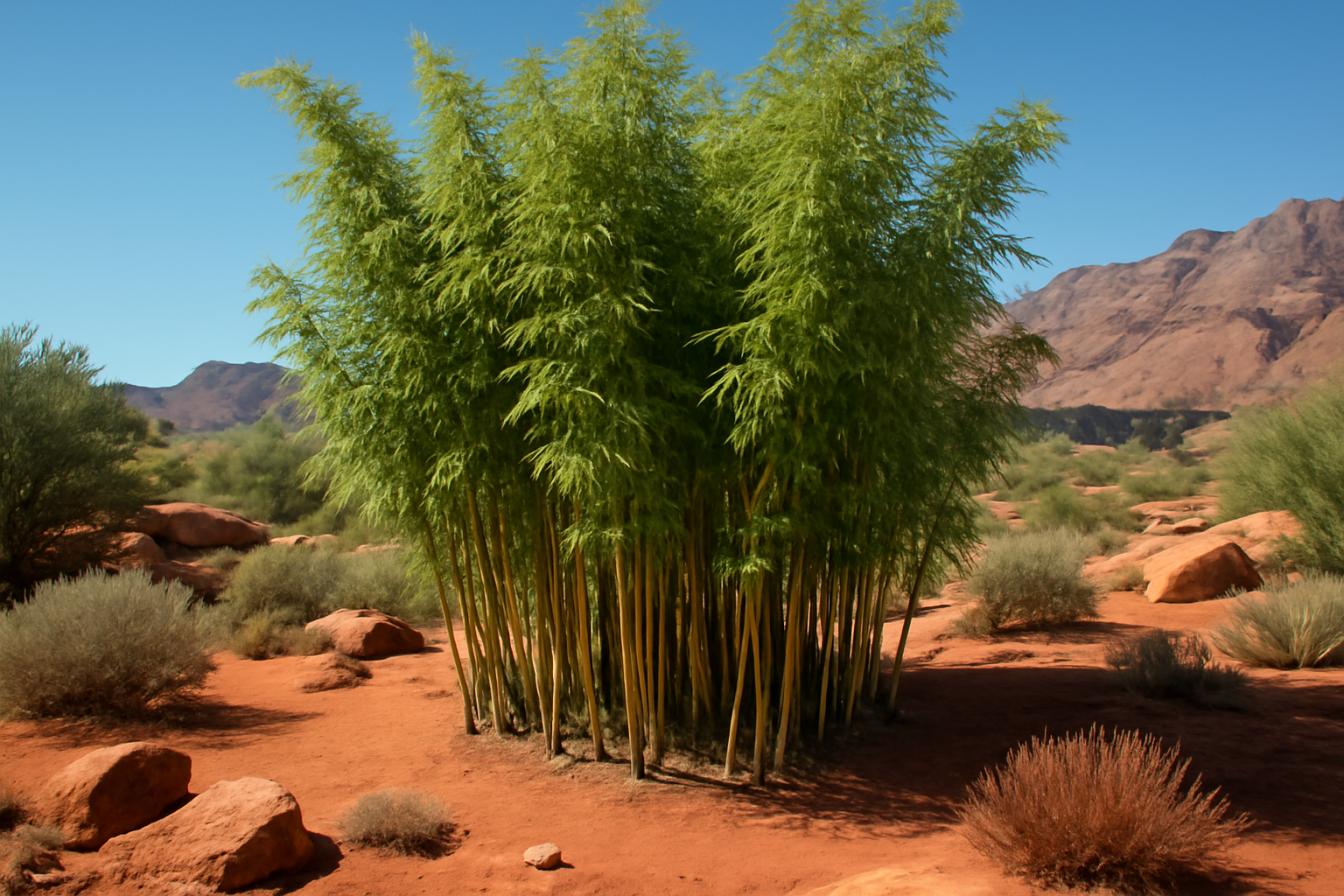
The short answer: yes, you can grow bamboo in Utah — but success depends heavily on choosing the right species and giving the plant consistent water in one of the driest states in the US.
Utah presents a genuinely challenging combination for bamboo: cold winters (especially in the north), hot and intensely sunny summers, low humidity, alkaline soil, and low rainfall. None of these are insurmountable, but you need to match the species to your specific location within the state.
Utah’s Climate Zones
Utah spans a surprisingly wide range of USDA hardiness zones:
- Northern Utah / Salt Lake City area: Zones 6b–7a. Cold winters (lows to -5°F / -20°C), hot dry summers
- Central Utah (Provo, Ogden): Zones 6a–7a. Similar to SLC with colder valley frost pockets
- Southern Utah (St. George, Moab): Zones 7b–8a. Milder winters, extremely hot summers, Mojave Desert influence
- High elevation areas: Zones 4–5. Too cold for most bamboo without significant winter protection
The Biggest Challenge: Aridity, Not Cold
Most people assume cold is the primary barrier to growing bamboo in Utah. But many bamboo species are surprisingly cold-hardy. The bigger challenge is water. Utah averages 8–13 inches of precipitation annually — bamboo, even drought-tolerant species, needs considerably more than this during the growing season.
Without supplemental irrigation, bamboo will struggle or fail in most Utah locations regardless of cold hardiness. With consistent watering, the species below will thrive.
Best Bamboo Species for Utah
For Northern and Central Utah (Zones 5–7)
Fargesia murielae (Umbrella Bamboo) — Cold-hardy to -20°F (-29°C), making it one of the most reliable choices for northern Utah. Clumping growth habit (no spreading rhizomes), reaching 10–14 feet tall. Critically: Fargesia prefers cooler summers and partial shade — it can struggle with Utah’s intense heat and full sun, so plant in a north or east-facing exposure with afternoon shade.
Fargesia robusta ‘Campbell’ — Slightly more heat-tolerant than F. murielae, clumping, cold-hardy to around -5°F (-20°C). A good choice for Utah gardens that get afternoon shade.
Phyllostachys nuda — A running bamboo cold-hardy to -15°F (-26°C). More heat and sun tolerant than Fargesia, making it a better choice for Utah’s intense summer conditions. Grows to 20–25 feet in ideal conditions, more typically 12–16 feet in Utah. Requires a root barrier to manage spread.
Phyllostachys bissetii — Cold-hardy to around -15°F (-26°C), more heat tolerant than most Phyllostachys, and notably drought-tolerant once established. One of the best all-around running bamboos for harsh North American climates, including Utah’s valleys.
For Southern Utah (Zones 7b–8a)
The warmer winters of St. George and Moab open up more species options, but the extreme summer heat (regularly exceeding 100°F / 38°C) becomes the new challenge:
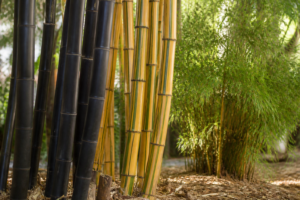
Phyllostachys aureosulcata (Yellow Groove Bamboo) — Cold-hardy to -10°F (-23°C), handles heat and partial drought. Golden-yellow culms with green groove, ornamentally striking.
Phyllostachys vivax — One of the largest cold-hardy bamboos (zone 6), reaching 35–40 feet in ideal conditions. More heat-tolerant than most, though still needs regular watering in Utah’s aridity.
Care Tips for Utah Bamboo
Watering: The Most Critical Factor
Deep, infrequent watering is better than frequent shallow irrigation — encourage roots to go deeper where soil moisture is more stable. During the first 2–3 establishment years, water deeply 2–3 times per week in summer. Once established, most cold-hardy species can tolerate once-weekly deep watering between rains, though they’ll look and perform better with more.
Install drip irrigation if possible — it delivers water directly to the root zone and dramatically reduces the water needed compared to sprinklers.
Soil Amendment
Utah soils are often alkaline (pH 7.5–8.5) and may be clay-heavy or sandy depending on location. Bamboo prefers slightly acidic to neutral soil (pH 5.5–7.0). Before planting:
- Amend the planting area generously with organic matter (compost, aged wood chips)
- Add elemental sulphur to lower pH if your soil tests above 7.5
- In clay soils, incorporate coarse sand and compost to improve drainage — bamboo will not tolerate waterlogged roots
Mulching: Essential
Apply a 4–6 inch (10–15cm) layer of organic mulch (wood chips, straw) over the root zone. In Utah’s climate, mulch:
- Retains critical soil moisture
- Moderates soil temperature (both cold protection in winter and heat reduction in summer)
- Gradually acidifies and enriches alkaline soil as it breaks down
- Protects rhizomes from freeze-thaw damage in the first winters
Sun Exposure
Utah’s high-altitude UV intensity and low humidity mean full sun can be harsh for some bamboo species. Running bamboos (Phyllostachys) generally handle full sun well; clumping Fargesia species genuinely prefer filtered afternoon shade in hot climates. East-facing or north-facing walls can provide the ideal combination of morning sun and afternoon protection.
Winter Protection for the First Years
Even cold-hardy species benefit from protection during their first two winters while their rhizome system establishes. Options:
- Extra-deep mulch layer (6–8 inches) applied before the first hard frost
- Burlap wrap for the culms in exposed sites during extreme cold snaps
- Anti-desiccant spray (such as Wilt-Pruf) applied in autumn to reduce moisture loss from foliage during cold, dry, windy winters — “winter burn” from desiccation is a bigger killer of bamboo in Utah than the cold itself
The Takeaway
Utah is challenging bamboo territory, but it’s not hostile territory. With the right species — particularly cold-hardy and drought-adapted varieties like Phyllostachys bissetii, Ph. nuda, or Fargesia murielae — and a commitment to mulching and regular irrigation, bamboo can establish, thrive, and provide a beautiful, year-round evergreen presence in Utah gardens.
The Root Barrier That Actually Stops Utah’s Runaway Rhizomes
Utah’s low humidity and alkaline soil can actually make bamboo more aggressive—the plant pushes harder to find moisture, and the rhizomes spread faster than you’d expect in a desert climate. A solid root barrier is the difference between a contained specimen and an invasive nightmare eating into your neighbor’s yard.
What works
- Stops new rhizomes cold—I’ve dug down after three years and found the barrier completely intact with zero breakthrough attempts on heavy clay.
- Stays flexible through freeze-thaw cycles; doesn’t crack or become brittle in Utah’s wide temperature swings between seasons.
- Easy to install during planting when soil is workable, and you can actually inspect it in subsequent years without tearing out the entire planting bed.
What doesn’t
- You still have to dig down 24–30 inches in rocky Utah soil—the barrier itself isn’t the hard part; the installation is brutal work.
- Doesn’t account for lazy installation; if you leave even a 2-inch gap at the top or overlap the seams incorrectly, rhizomes will find it and exploit it within two seasons.
I’ll admit I second-guessed this barrier the first time I saw a rhizome probe testing the edge in year two—my heart sank thinking I’d wasted money and effort—but when I dug it up, the barrier had held perfectly.
About This Article

Written by Marcus Chen. Marcus Chen has spent 15 years cultivating and studying bamboo across 14 different species, combining commercial growing operations with extensive hands-on experience in species selection and containment. As both a grower and consultant, he specializes in practical bamboo management, helping homeowners and landscapers understand the real-world requirements for responsible bamboo cultivation. Marcus brings tested knowledge of which species thrive reliably and which present containment challenges that go beyond standard recommendations. More about this site.
Verify this against a primary source
Specifics change, and your situation may differ from the one described here. These are the authorities worth checking directly:
- American Bamboo Society — species listings and cultivation guidance
- USDA PLANTS Database — species range and identification
- USDA Plant Hardiness Zone Map — cold hardiness verification for your location