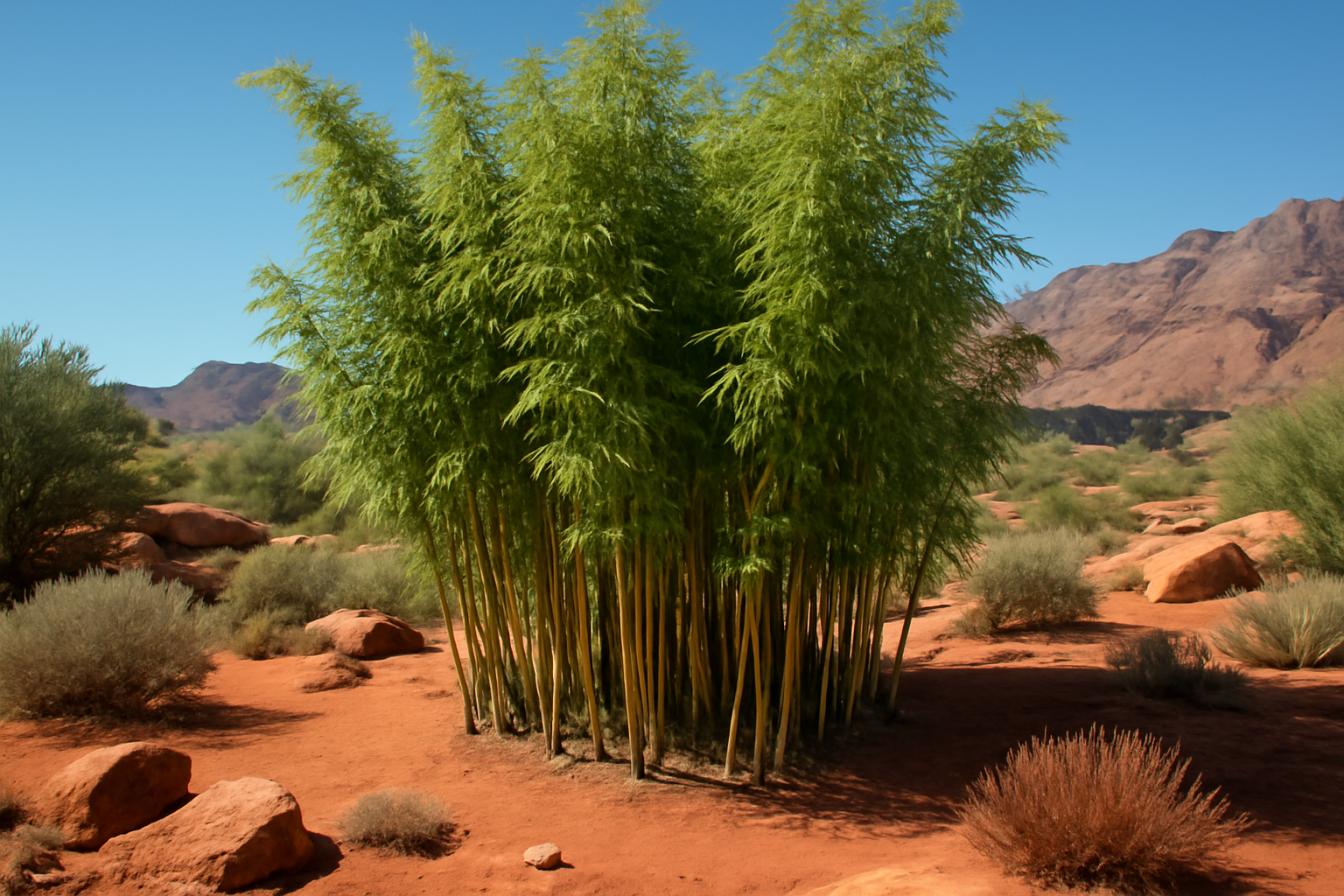
Category: Growing Bamboo by Region

State and region-specific guides to growing bamboo across different climates in the US and beyond.

  • Is Bamboo Legal in Arizona? The Complete Guide to Growing Bamboo in AZ

    Is Bamboo Legal in Arizona? The Complete Guide to Growing Bamboo in AZ

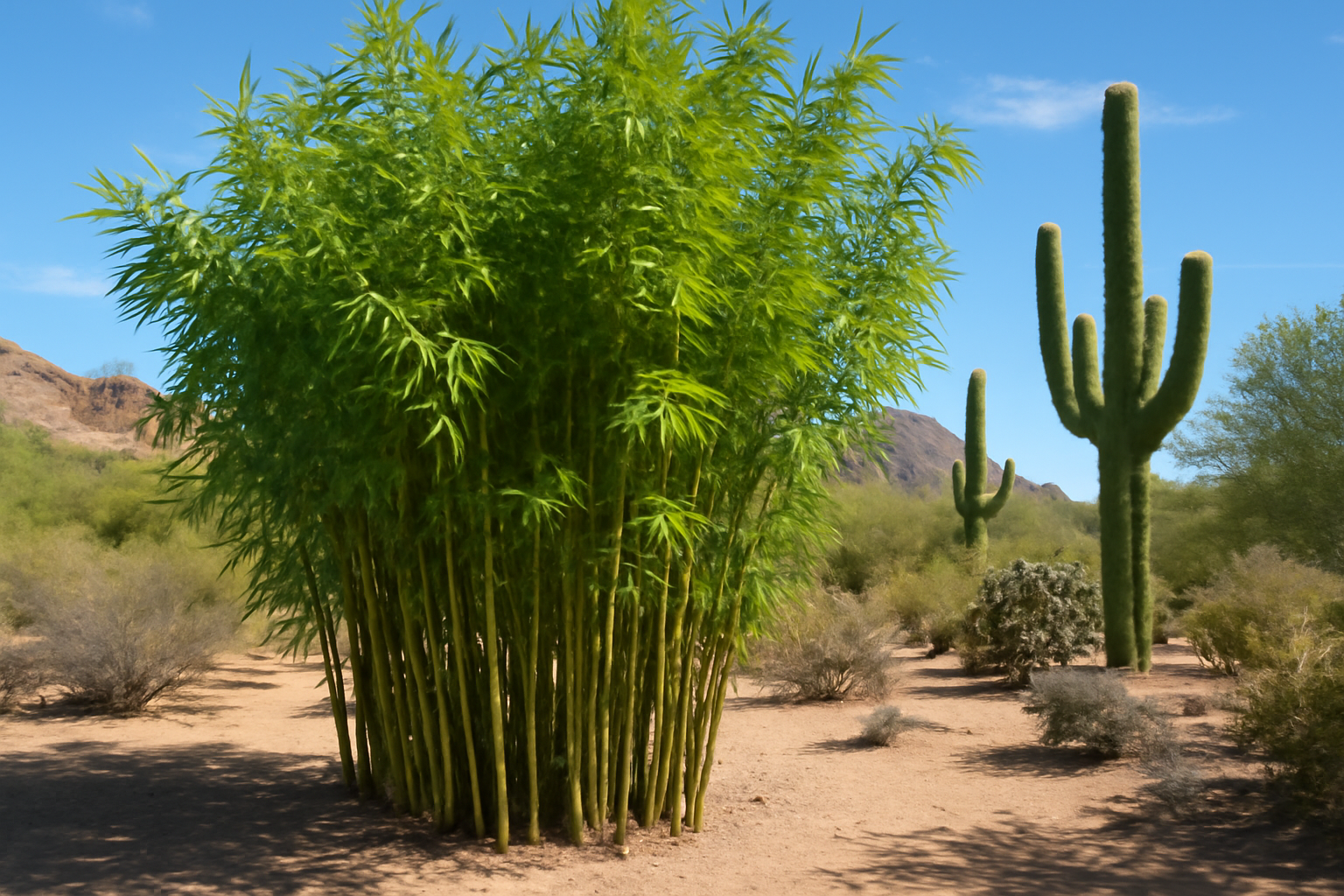
    Bamboo is completely legal to grow in Arizona — there is no state law, county ordinance, or municipal regulation in Arizona that prohibits it. But before you order a dozen culms and start digging, there are a few things worth knowing that could save you a lot of trouble down the road.

    I say that from experience. The legal question turned out to be the easy part. What actually caught me off guard was the combination of HOA paperwork, alkaline desert soil, and a summer that hit 112°F before my plants had any business being in that kind of heat. This guide covers everything I wish someone had told me before I got started.

    Arizona State Law and Bamboo: What the Rules Actually Say

    Unlike some states on the East Coast — where running bamboo has triggered neighbor disputes and even local ordinances — Arizona has no statewide legislation targeting bamboo. There is no prohibited plant list at the state level that includes bamboo species, and most Arizona counties do not regulate it either.

    That said, Maricopa County, Pima County, and most Arizona municipalities do have noxious weed lists, and it is worth checking your local extension office to confirm no recent updates apply to your area. As of the time of writing, no common bamboo genus — including Phyllostachys, Bambusa, or Fargesia — appears on Arizona’s noxious weed or invasive species lists.

    Where things get more complicated is not with the law — it’s with your neighborhood.

    The HOA Caveat: Check Before You Plant

    Arizona has one of the highest rates of HOA-governed communities in the United States. If you live in a planned community, master-planned subdivision, or any newer development built after the 1980s, there is a strong chance your property is subject to Covenants, Conditions, and Restrictions — known as CC&Rs.

    Many Arizona HOA CC&Rs include language about “invasive plants,” “plants that spread beyond property lines,” or even specifically name bamboo as a restricted species. This is especially common in communities with desert landscaping standards, where bamboo’s water usage and spreading habits can conflict with xeriscape requirements.

    Before planting anything, do the following:

    1. Request a copy of your HOA CC&Rs from your management company or county recorder’s office.
    2. Search the document for: “bamboo,” “invasive,” “spreading plants,” and “prohibited species.”
    3. If unclear, submit a written inquiry to your HOA board — get the response in writing.
    4. Check whether your HOA requires landscaping approval before planting anything new.

    Violations of HOA rules can result in fines or removal requirements regardless of what state law says. The HOA, in this context, has more practical authority over your yard than the Arizona legislature does.

    Running vs. Clumping Bamboo: Why It Matters in Arizona

    Part of why bamboo makes some HOA boards nervous is the difference between running and clumping varieties. Running bamboo — primarily species in the Phyllostachys genus — spreads aggressively through underground rhizomes that can travel 3 to 5 feet or more per year. In a wetter climate, this can mean bamboo appearing in a neighbor’s yard within a season or two.

    In Arizona’s dry, compacted desert soil, spread is slower — but it still happens, especially with consistent irrigation. If you plant a running variety, a root barrier is not optional. A high-density HDPE root barrier installed at least 24 to 30 inches deep around the planting area will contain rhizome spread and is the responsible way to grow running bamboo in any suburban setting.

    Clumping bamboo — including most Bambusa and Fargesia species — expands slowly outward from a central root mass and is far less likely to cause problems with neighbors or HOA rules. For Arizona homeowners new to bamboo, clumping species are almost always the better starting point.

    The Real Challenge: Arizona’s Climate

    Arizona’s climate is the bigger obstacle. The Sonoran Desert presents conditions that bamboo simply was not evolved to handle without intervention: summer temperatures above 105°F are routine in Phoenix and Tucson, relative humidity regularly drops below 10%, annual rainfall averages less than 8 inches in the low desert, and native soil is often highly alkaline with a pH between 7.5 and 8.5.

    Bamboo prefers slightly acidic to neutral soil (pH 5.5–7.0), consistent moisture, and at least moderate humidity. None of those conditions exist naturally in most of Arizona. That does not make bamboo impossible to grow — but it does mean you are managing against the environment, not with it.

    Key care practices that make a real difference in Arizona:

    • Deep drip irrigation: Water slowly and deeply, 2 to 3 times per week in summer, reaching at least 18 inches of soil depth. Shallow watering encourages surface roots that cook in July and August.
    • Heavy mulch layer: Apply 6 to 8 inches of organic mulch — shredded wood or straw — around the base. This is non-negotiable in the desert. It insulates roots, retains moisture, and slowly acidifies the soil as it breaks down.
    • Soil amendment: Incorporate sulfur, peat moss, or acidic compost to bring soil pH down toward 6.5. Alkaline soil locks out the iron and manganese bamboo needs, causing yellowing even in otherwise healthy plants.
    • Afternoon shade: In zones 9 and 10, position bamboo where it receives morning sun and protection from direct afternoon exposure, particularly from 1 PM to 5 PM during summer months.

    Best Bamboo Species for Arizona Growing Zones

    Not all bamboo handles Arizona’s conditions equally. Species selection matters more here than in almost any other state. The table below summarizes the best options by region and growing zone.

    Species Type Best For USDA Zones Heat Tolerance Notes
    Bambusa multiplex Clumping Phoenix, Tucson 7–10 Excellent Most reliable in low desert; tolerates alkalinity better than most
    Phyllostachys aureosulcata Running Tucson, south-facing walls 5–10 Good Requires root barrier; benefits from afternoon shade
    Phyllostachys bambusoides Running Phoenix (sheltered locations) 7–10 Good Plant against south-facing masonry walls for reflected warmth
    Fargesia murielae Clumping Flagstaff, Prescott 5–8 Low Prefers cooler temps; ideal for north Arizona; shade tolerant
    Phyllostachys bissetii Running Flagstaff, high desert 5–9 Moderate Hardy and vigorous; root barrier essential; good windbreak species

    For gardeners in the Phoenix metro and Tucson areas — zones 9 and 10 — Bambusa multiplex is the most forgiving starting point. It handles heat, tolerates some alkalinity, and won’t spread into your neighbor’s yard. For those in Flagstaff or Prescott at 5,000–7,000 feet elevation, Fargesia murielae is one of the few bamboo species genuinely suited to those cooler, drier winters.

    Practical Takeaway for Arizona Growers

    Bamboo can grow well in Arizona — but it will not grow easily. The legal path is clear: no state law stops you, and no county prohibits it. Your first real check is your HOA paperwork, not a government website. Once that’s confirmed, the work shifts entirely to your soil, your irrigation schedule, and your species choice. Get those three things right — amend your alkaline desert soil, mulch deeply, water consistently, and select a species matched to your specific zone — and bamboo becomes one of the most dramatic and rewarding plants you can grow in the Southwest.

    🛒 Recommended Products

    Rain Bird Drip Irrigation Kit — essential for Arizona bamboo; delivers water directly to roots in the desert heat

    View on Amazon →

    Bonide Wilt Stop Anti-Transpirant — reduces leaf scorch and desiccation in Arizona’s intense summer heat and low humidity

    View on Amazon →

    Miracle-Gro All Purpose Plant Food — keep Arizona bamboo well-fed through the active growing months (March–October)

    View on Amazon →

    As an Amazon Associate I earn from qualifying purchases. Prices and availability subject to change.

  • Can You Grow Bamboo in Mississippi? Laws, Best Species, and What to Know Before You Plant

    Can You Grow Bamboo in Mississippi? Laws, Best Species, and What to Know Before You Plant

    Mississippi has one of the most favorable climates for bamboo in North America — hot summers, mild winters across the southern half of the state, and the kind of humidity that makes bamboo genuinely thrive. If you’ve been wondering whether growing bamboo in Mississippi is a realistic option for your yard or property, the short answer is yes — but there are a few things you need to know before you put a single rhizome in the ground.

    I’ve grown bamboo in the Southeast for years, and I’ll be honest: I’ve made mistakes that cost me time, money, and at least one neighborly relationship. This guide covers what I wish someone had told me from the start — the right species, the legal picture, and how to plant smart so you’re not dealing with headaches two years down the road.

    Mississippi’s Climate: Why Bamboo Loves It Here

    Most of Mississippi falls within USDA Hardiness Zones 7b through 9a, which is almost a perfect range for a wide variety of bamboo species. The Gulf Coast and southern counties sit in Zone 8b–9a, where winters rarely drop below 20°F and frost is brief. Central Mississippi, including the Jackson metro area, is solidly Zone 8a. Northern counties edge into Zone 7b, where occasional cold snaps can test cold-hardiness, but even there, many species handle it without issue.

    The state averages 50 to 65 inches of rainfall annually, spread relatively evenly across seasons. Combine that with long, hot summers — Jackson averages 93 days above 90°F — and you have conditions that push bamboo into fast, vigorous growth. That’s the double-edged part. Bamboo loves Mississippi, and it will remind you of that fact every spring if you’re not paying attention.

    Is Bamboo Legal to Grow in Mississippi?

    Here’s the legal reality: Mississippi has no statewide ban on bamboo. There is no state law prohibiting you from planting it on your property. However, that doesn’t mean you’re in the clear everywhere, and this is where a lot of Mississippi gardeners get tripped up.

    Several municipalities and counties have passed or enforced local nuisance ordinances that can apply when bamboo spreads onto neighboring property. In Rankin County, including the city of Brandon, bamboo disputes have come up through nuisance and property encroachment complaints. Ridgeland and the broader Madison County area have seen documented neighbor disputes involving running bamboo crossing property lines, and local code enforcement has been brought in to resolve them.

    Jackson has general nuisance ordinance language that can be applied to invasive plants, including bamboo that has spread beyond a property boundary. While these aren’t bamboo-specific bans, they carry real consequences — including orders to remove plants at your own expense.

    The practical takeaway: if you live in a suburb, a neighborhood with an HOA, or anywhere in the Jackson–Brandon–Ridgeland corridor, check with your municipality before planting running bamboo. And regardless of where you plant it, installing a proper root barrier before planting is the single most important step you can take — both for containment and for your own legal protection. A documented root barrier shows good faith if a dispute ever arises.

    Best Bamboo Species for Mississippi

    Not all bamboo behaves the same way, and species selection matters enormously in Mississippi’s climate. The table below gives you a quick comparison of the species most suited to different parts of the state and different use cases.

    Species Type Hardiness Zone Max Height Best Use in MS
    Phyllostachys aurea (Golden Bamboo) Running 7a–10b 20–30 ft Privacy screens; requires root barrier
    Phyllostachys bissetii Running 6b–9a 20–25 ft Windbreaks, erosion control in central/north MS
    Bambusa multiplex (Hedge Bamboo) Clumping 8a–11 15–35 ft Urban lots, small yards, southern MS
    Bambusa oldhamii (Giant Timber Bamboo) Clumping 8b–11 40–55 ft Large properties in Gulf Coast region
    Fargesia robusta (Clumping Mountain Bamboo) Clumping 5b–9a 10–15 ft Northern MS, part-shade situations

    Phyllostachys aurea, known as Golden Bamboo, is probably the bamboo you’ve already seen growing wild along Mississippi roadsides and fence lines. It’s been naturalized here for well over a century and is extremely vigorous — which makes it a liability in suburban settings unless it’s properly contained. Phyllostachys bissetii is a better-behaved running species and handles the occasional hard freeze that hits northern Mississippi better than most.

    If you’re planting in a residential area, anywhere near Brandon, Madison, or Jackson, I’d genuinely steer you toward Bambusa multiplex. It’s a clumping species, meaning it spreads slowly outward from the original planting point rather than sending runners unpredictably across your yard. It handles Mississippi summers beautifully and won’t put you in a difficult position with your neighbors or local code enforcement.

    For northern Mississippi, where Zone 7b winters can bring temperatures down to 5–10°F, Fargesia species are the safer clumping choice. They prefer some afternoon shade in Mississippi’s intense summer heat and won’t reach the towering heights of the Phyllostachys types, but they’re elegant, manageable, and reliably hardy.

    Pests and Problems in Mississippi’s Humid Climate

    Mississippi’s humidity is bamboo’s best friend and, occasionally, its worst enemy. The two pest issues I’ve run into most often in this climate are:

    • Scale insects: These show up as small, waxy bumps on culms and leaves and are more prevalent in humid, shaded plantings. A severe infestation will cause yellowing and dieback. Horticultural oil applied in late winter, before new shoots emerge, is effective.
    • Spider mites: Counterintuitively, spider mites thrive during hot, dry spells in July and August when humidity drops and stressed plants become vulnerable. Affected leaves develop a stippled, grayish appearance. A strong water spray and insecticidal soap usually manage them before they become serious.

    Fungal issues are less common in established bamboo but can affect young plants during wet springs. Good air circulation and avoiding overhead watering on new plantings helps considerably. Mississippi’s heavy clay soils in many areas can also cause drainage issues — if water pools around your bamboo, you’ll see more root rot and yellowing than any pest will ever cause you.

    Practical Planting Advice for Mississippi Gardeners

    If you’re planting running bamboo anywhere in Mississippi — especially in suburban areas of Rankin, Madison, Hinds, or Forrest counties — install a 60 mil HDPE root barrier to a depth of at least 28–30 inches before you plant. This isn’t optional. Running bamboo rhizomes travel horizontally and can move 3–5 feet in a single season in Mississippi’s warm soil. A root barrier keeps that energy contained and, importantly, gives you documented evidence of responsible planting if a neighbor or code enforcement officer ever raises concerns.

    Spring planting, after soil temperatures reach 60°F, gives bamboo the longest establishment window before winter. Water new plantings deeply twice a week for the first season — bamboo won’t send up new shoots in its first year if it’s drought-stressed. Once established, most Mississippi bamboo is remarkably self-sufficient, but that first year matters more than most people realize. Plant with intention, contain what needs containing, and bamboo will reward you with one of the most striking and functional plants you can grow in this state.

    🛒 Recommended Products

    DeepRoot Bamboo Barrier 18″ — required by ordinance in several Mississippi municipalities for running bamboo

    View on Amazon →

    Miracle-Gro All Purpose Plant Food — feed bamboo through Mississippi’s long, hot growing season for rapid establishment

    View on Amazon →

    Bonide Systemic Insect Control — treat scale and mealybugs common in Mississippi’s humid bamboo gardens

    View on Amazon →

    As an Amazon Associate I earn from qualifying purchases. Prices and availability subject to change.

  • Can You Grow Bamboo in Utah? A Complete Guide for Desert Climates

    Can You Grow Bamboo in Utah? A Complete Guide for Desert Climates

    The short answer: yes, you can grow bamboo in Utah — but success depends heavily on choosing the right species and giving the plant consistent water in one of the driest states in the US.

    Utah presents a genuinely challenging combination for bamboo: cold winters (especially in the north), hot and intensely sunny summers, low humidity, alkaline soil, and low rainfall. None of these are insurmountable, but you need to match the species to your specific location within the state.

    Utah’s Climate Zones

    Utah spans a surprisingly wide range of USDA hardiness zones:

    • Northern Utah / Salt Lake City area: Zones 6b–7a. Cold winters (lows to -5°F / -20°C), hot dry summers
    • Central Utah (Provo, Ogden): Zones 6a–7a. Similar to SLC with colder valley frost pockets
    • Southern Utah (St. George, Moab): Zones 7b–8a. Milder winters, extremely hot summers, Mojave Desert influence
    • High elevation areas: Zones 4–5. Too cold for most bamboo without significant winter protection

    The Biggest Challenge: Aridity, Not Cold

    Most people assume cold is the primary barrier to growing bamboo in Utah. But many bamboo species are surprisingly cold-hardy. The bigger challenge is water. Utah averages 8–13 inches of precipitation annually — bamboo, even drought-tolerant species, needs considerably more than this during the growing season.

    Without supplemental irrigation, bamboo will struggle or fail in most Utah locations regardless of cold hardiness. With consistent watering, the species below will thrive.

    Best Bamboo Species for Utah

    For Northern and Central Utah (Zones 5–7)

    Fargesia murielae (Umbrella Bamboo) — Cold-hardy to -20°F (-29°C), making it one of the most reliable choices for northern Utah. Clumping growth habit (no spreading rhizomes), reaching 10–14 feet tall. Critically: Fargesia prefers cooler summers and partial shade — it can struggle with Utah’s intense heat and full sun, so plant in a north or east-facing exposure with afternoon shade.

    Fargesia robusta ‘Campbell’ — Slightly more heat-tolerant than F. murielae, clumping, cold-hardy to around -5°F (-20°C). A good choice for Utah gardens that get afternoon shade.

    Phyllostachys nuda — A running bamboo cold-hardy to -15°F (-26°C). More heat and sun tolerant than Fargesia, making it a better choice for Utah’s intense summer conditions. Grows to 20–25 feet in ideal conditions, more typically 12–16 feet in Utah. Requires a root barrier to manage spread.

    Phyllostachys bissetii — Cold-hardy to around -15°F (-26°C), more heat tolerant than most Phyllostachys, and notably drought-tolerant once established. One of the best all-around running bamboos for harsh North American climates, including Utah’s valleys.

    For Southern Utah (Zones 7b–8a)

    The warmer winters of St. George and Moab open up more species options, but the extreme summer heat (regularly exceeding 100°F / 38°C) becomes the new challenge:

    Phyllostachys aureosulcata (Yellow Groove Bamboo) — Cold-hardy to -10°F (-23°C), handles heat and partial drought. Golden-yellow culms with green groove, ornamentally striking.

    Phyllostachys vivax — One of the largest cold-hardy bamboos (zone 6), reaching 35–40 feet in ideal conditions. More heat-tolerant than most, though still needs regular watering in Utah’s aridity.

    Care Tips for Utah Bamboo

    Watering: The Most Critical Factor

    Deep, infrequent watering is better than frequent shallow irrigation — encourage roots to go deeper where soil moisture is more stable. During the first 2–3 establishment years, water deeply 2–3 times per week in summer. Once established, most cold-hardy species can tolerate once-weekly deep watering between rains, though they’ll look and perform better with more.

    Install drip irrigation if possible — it delivers water directly to the root zone and dramatically reduces the water needed compared to sprinklers.

    Soil Amendment

    Utah soils are often alkaline (pH 7.5–8.5) and may be clay-heavy or sandy depending on location. Bamboo prefers slightly acidic to neutral soil (pH 5.5–7.0). Before planting:

    • Amend the planting area generously with organic matter (compost, aged wood chips)
    • Add elemental sulphur to lower pH if your soil tests above 7.5
    • In clay soils, incorporate coarse sand and compost to improve drainage — bamboo will not tolerate waterlogged roots

    Mulching: Essential

    Apply a 4–6 inch (10–15cm) layer of organic mulch (wood chips, straw) over the root zone. In Utah’s climate, mulch:

    • Retains critical soil moisture
    • Moderates soil temperature (both cold protection in winter and heat reduction in summer)
    • Gradually acidifies and enriches alkaline soil as it breaks down
    • Protects rhizomes from freeze-thaw damage in the first winters

    Sun Exposure

    Utah’s high-altitude UV intensity and low humidity mean full sun can be harsh for some bamboo species. Running bamboos (Phyllostachys) generally handle full sun well; clumping Fargesia species genuinely prefer filtered afternoon shade in hot climates. East-facing or north-facing walls can provide the ideal combination of morning sun and afternoon protection.

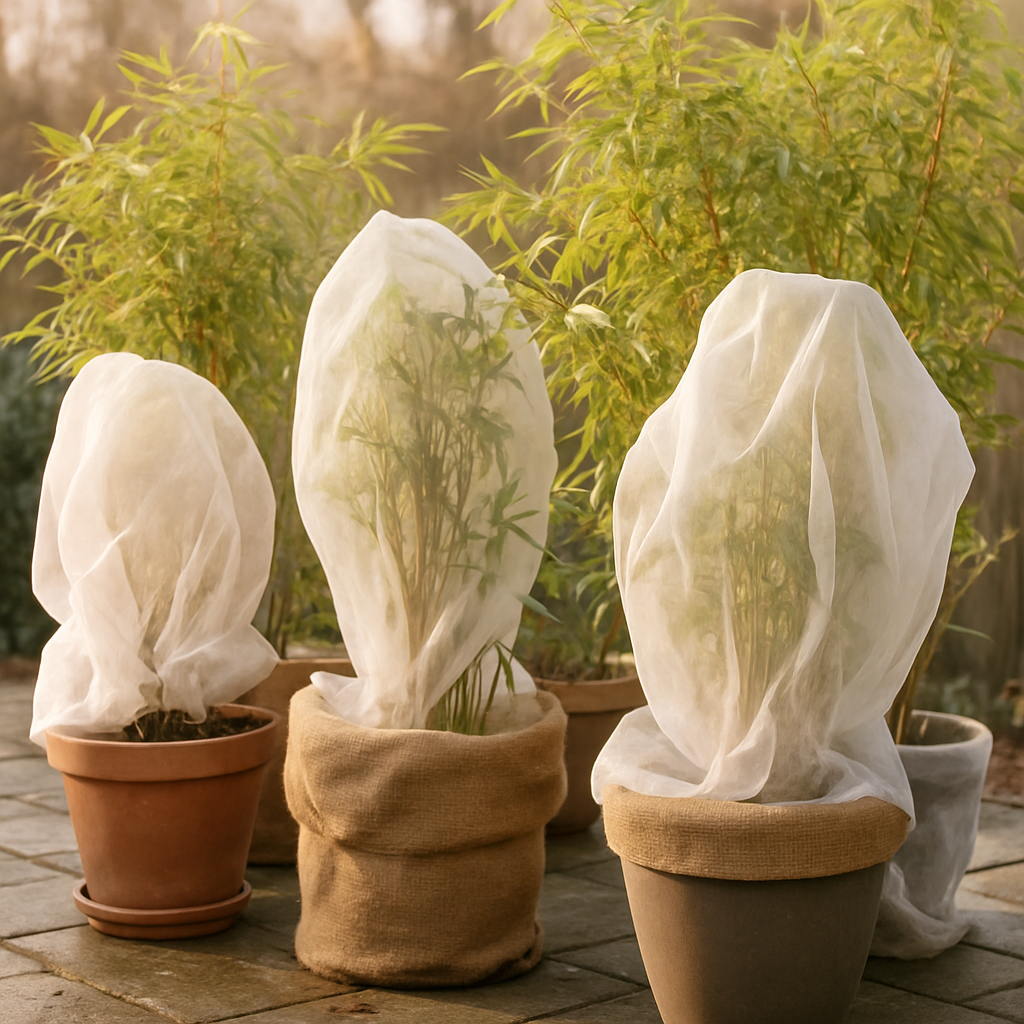
    Winter Protection for the First Years

    Even cold-hardy species benefit from protection during their first two winters while their rhizome system establishes. Options:

    • Extra-deep mulch layer (6–8 inches) applied before the first hard frost
    • Burlap wrap for the culms in exposed sites during extreme cold snaps
    • Anti-desiccant spray (such as Wilt-Pruf) applied in autumn to reduce moisture loss from foliage during cold, dry, windy winters — “winter burn” from desiccation is a bigger killer of bamboo in Utah than the cold itself

    The Takeaway

    Utah is challenging bamboo territory, but it’s not hostile territory. With the right species — particularly cold-hardy and drought-adapted varieties like Phyllostachys bissetii, Ph. nuda, or Fargesia murielae — and a commitment to mulching and regular irrigation, bamboo can establish, thrive, and provide a beautiful, year-round evergreen presence in Utah gardens.

    🛒 Essentials for Growing Bamboo in Dry Climates

    Rain Bird LNDDRIPKIT Drip Irrigation Landscape Kit — delivers water directly to bamboo root zones, conserving water in arid Utah gardens

    View on Amazon →

    Bonide Wilt Stop Anti-Transpirant Spray — critical for Utah bamboo: prevents winter desiccation from dry winds and low humidity

    View on Amazon →

    Super Green Lucky Bamboo Fertilizer — all-purpose ready-to-use feed to help bamboo establish in alkaline Utah soils

    View on Amazon →

    As an Amazon Associate I earn from qualifying purchases. Prices and availability subject to change.