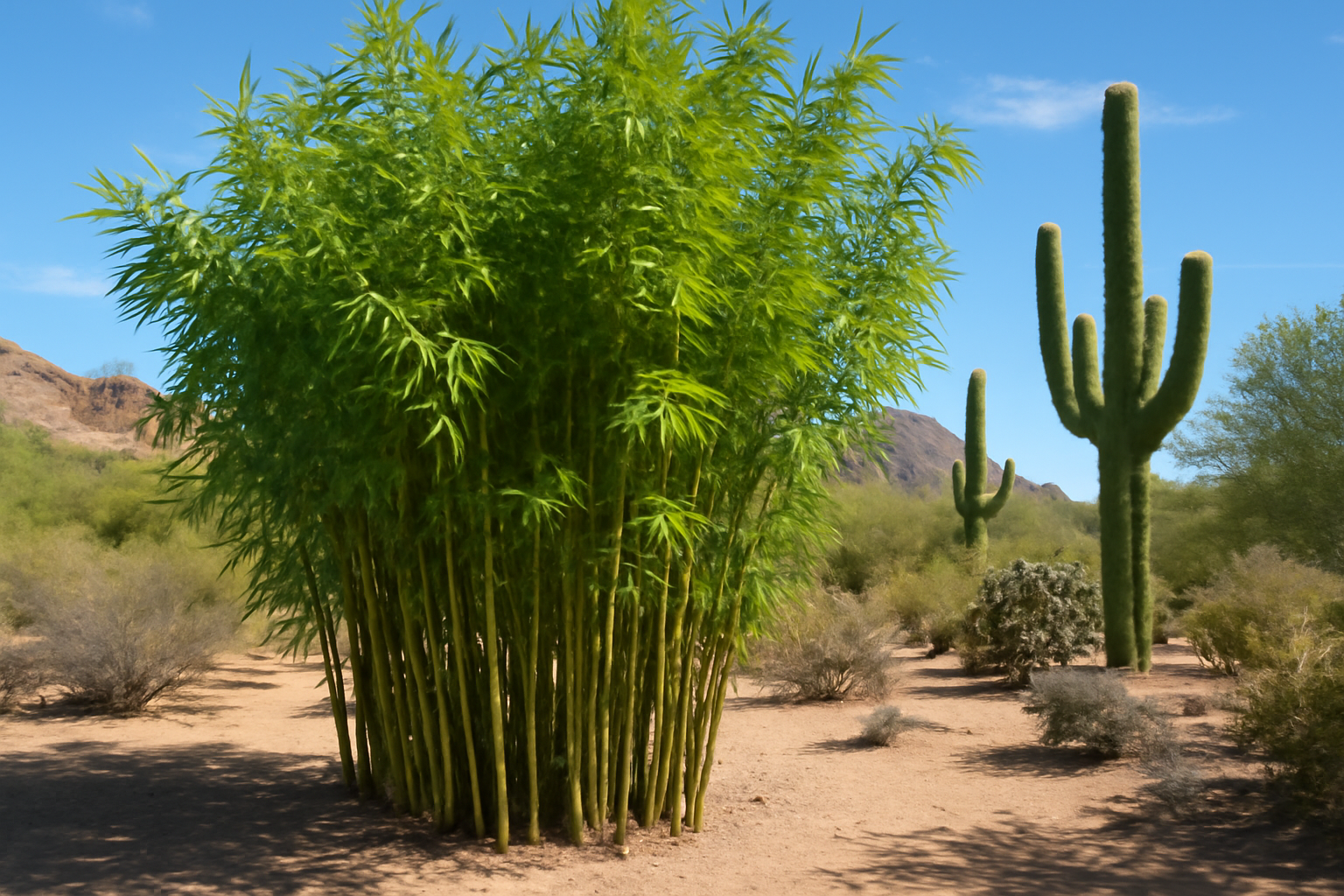
Bamboo is completely legal to grow in Arizona — there is no state law, county ordinance, or municipal regulation in Arizona that prohibits it. But before you order a dozen culms and start digging, there are a few things worth knowing that could save you a lot of trouble down the road.
I say that from experience. The legal question turned out to be the easy part. What actually caught me off guard was the combination of HOA paperwork, alkaline desert soil, and a summer that hit 112°F before my plants had any business being in that kind of heat. This guide covers everything I wish someone had told me before I got started.
Arizona State Law and Bamboo: What the Rules Actually Say
Unlike some states on the East Coast — where running bamboo has triggered neighbor disputes and even local ordinances — Arizona has no statewide legislation targeting bamboo. There is no prohibited plant list at the state level that includes bamboo species, and most Arizona counties do not regulate it either.
That said, Maricopa County, Pima County, and most Arizona municipalities do have noxious weed lists, and it is worth checking your local extension office to confirm no recent updates apply to your area. As of the time of writing, no common bamboo genus — including Phyllostachys, Bambusa, or Fargesia — appears on Arizona’s noxious weed or invasive species lists.
Where things get more complicated is not with the law — it’s with your neighborhood.
The HOA Caveat: Check Before You Plant
Arizona has one of the highest rates of HOA-governed communities in the United States. If you live in a planned community, master-planned subdivision, or any newer development built after the 1980s, there is a strong chance your property is subject to Covenants, Conditions, and Restrictions — known as CC&Rs.
Many Arizona HOA CC&Rs include language about “invasive plants,” “plants that spread beyond property lines,” or even specifically name bamboo as a restricted species. This is especially common in communities with desert landscaping standards, where bamboo’s water usage and spreading habits can conflict with xeriscape requirements.
Before planting anything, do the following:
- Request a copy of your HOA CC&Rs from your management company or county recorder’s office.
- Search the document for: “bamboo,” “invasive,” “spreading plants,” and “prohibited species.”
- If unclear, submit a written inquiry to your HOA board — get the response in writing.
- Check whether your HOA requires landscaping approval before planting anything new.
Violations of HOA rules can result in fines or removal requirements regardless of what state law says. The HOA, in this context, has more practical authority over your yard than the Arizona legislature does.
Running vs. Clumping Bamboo: Why It Matters in Arizona
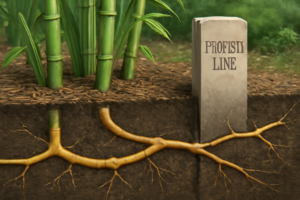
Part of why bamboo makes some HOA boards nervous is the difference between running and clumping varieties. Running bamboo — primarily species in the Phyllostachys genus — spreads aggressively through underground rhizomes that can travel 3 to 5 feet or more per year. In a wetter climate, this can mean bamboo appearing in a neighbor’s yard within a season or two.
In Arizona’s dry, compacted desert soil, spread is slower — but it still happens, especially with consistent irrigation. If you plant a running variety, a root barrier is not optional. A high-density HDPE root barrier installed at least 24 to 30 inches deep around the planting area will contain rhizome spread and is the responsible way to grow running bamboo in any suburban setting.
Clumping bamboo — including most Bambusa and Fargesia species — expands slowly outward from a central root mass and is far less likely to cause problems with neighbors or HOA rules. For Arizona homeowners new to bamboo, clumping species are almost always the better starting point.
The Real Challenge: Arizona’s Climate
Arizona’s climate is the bigger obstacle. The Sonoran Desert presents conditions that bamboo simply was not evolved to handle without intervention: summer temperatures above 105°F are routine in Phoenix and Tucson, relative humidity regularly drops below 10%, annual rainfall averages less than 8 inches in the low desert, and native soil is often highly alkaline with a pH between 7.5 and 8.5.
Bamboo prefers slightly acidic to neutral soil (pH 5.5–7.0), consistent moisture, and at least moderate humidity. None of those conditions exist naturally in most of Arizona. That does not make bamboo impossible to grow — but it does mean you are managing against the environment, not with it.
Key care practices that make a real difference in Arizona:
- Deep drip irrigation: Water slowly and deeply, 2 to 3 times per week in summer, reaching at least 18 inches of soil depth. Shallow watering encourages surface roots that cook in July and August.
- Heavy mulch layer: Apply 6 to 8 inches of organic mulch — shredded wood or straw — around the base. This is non-negotiable in the desert. It insulates roots, retains moisture, and slowly acidifies the soil as it breaks down.
- Soil amendment: Incorporate sulfur, peat moss, or acidic compost to bring soil pH down toward 6.5. Alkaline soil locks out the iron and manganese bamboo needs, causing yellowing even in otherwise healthy plants.
- Afternoon shade: In zones 9 and 10, position bamboo where it receives morning sun and protection from direct afternoon exposure, particularly from 1 PM to 5 PM during summer months.
Best Bamboo Species for Arizona Growing Zones
Not all bamboo handles Arizona’s conditions equally. Species selection matters more here than in almost any other state. The table below summarizes the best options by region and growing zone.
| Species | Type | Best For | USDA Zones | Heat Tolerance | Notes |
|---|---|---|---|---|---|
| Bambusa multiplex | Clumping | Phoenix, Tucson | 7–10 | Excellent | Most reliable in low desert; tolerates alkalinity better than most |
| Phyllostachys aureosulcata | Running | Tucson, south-facing walls | 5–10 | Good | Requires root barrier; benefits from afternoon shade |
| Phyllostachys bambusoides | Running | Phoenix (sheltered locations) | 7–10 | Good | Plant against south-facing masonry walls for reflected warmth |
| Fargesia murielae | Clumping | Flagstaff, Prescott | 5–8 | Low | Prefers cooler temps; ideal for north Arizona; shade tolerant |
| Phyllostachys bissetii | Running | Flagstaff, high desert | 5–9 | Moderate | Hardy and vigorous; root barrier essential; good windbreak species |
For gardeners in the Phoenix metro and Tucson areas — zones 9 and 10 — Bambusa multiplex is the most forgiving starting point. It handles heat, tolerates some alkalinity, and won’t spread into your neighbor’s yard. For those in Flagstaff or Prescott at 5,000–7,000 feet elevation, Fargesia murielae is one of the few bamboo species genuinely suited to those cooler, drier winters.
Practical Takeaway for Arizona Growers
Bamboo can grow well in Arizona — but it will not grow easily. The legal path is clear: no state law stops you, and no county prohibits it. Your first real check is your HOA paperwork, not a government website. Once that’s confirmed, the work shifts entirely to your soil, your irrigation schedule, and your species choice. Get those three things right — amend your alkaline desert soil, mulch deeply, water consistently, and select a species matched to your specific zone — and bamboo becomes one of the most dramatic and rewarding plants you can grow in the Southwest.
The Root Barrier That Finally Stopped My Running Bamboo from Crossing into the Neighbor’s Yard
Arizona’s heat and hard alkaline soil make running bamboo spread faster than you’d expect, and a barrier that works in temperate climates might fail under desert stress. I learned this the hard way when my first attempt at containment cracked in the summer heat and let rhizomes escape into the adjacent property.
What works
- Stays flexible even in 110°F+ heat—doesn’t become brittle or separate at seams like cheaper plastic barriers do.
- The 60-mil thickness is heavy enough to stop aggressive rhizomes without needing double-layering, which saves money and digging time.
- Installing it 2 inches above grade lets you actually see when rhizomes hit it, so you can cut them before they find the edge or dig under.
What doesn’t
- Alkaline Arizona water leaves mineral deposits on the surface that eventually degrade the material if you don’t rinse it off periodically.
- The edges still need to be sealed properly or rhizomes will find any gap—this isn’t a install-and-forget product in a hot, dry climate.
I almost ripped mine out after the first summer when I saw discoloration, but once I understood the mineral buildup was cosmetic and the barrier underneath was intact, it proved itself.
About This Article

Written by Marcus Chen. Marcus Chen has spent 15 years cultivating and studying bamboo across 14 different species, combining commercial growing operations with extensive hands-on experience in species selection and containment. As both a grower and consultant, he specializes in practical bamboo management, helping homeowners and landscapers understand the real-world requirements for responsible bamboo cultivation. Marcus brings tested knowledge of which species thrive reliably and which present containment challenges that go beyond standard recommendations. More about this site.
Verify this against a primary source
Specifics change, and your situation may differ from the one described here. These are the authorities worth checking directly:
- American Bamboo Society — species listings and cultivation guidance
- USDA PLANTS Database — species range and identification
- USDA Plant Hardiness Zone Map — cold hardiness verification for your location