Category: Bamboo Laws & Regulations

State laws, local ordinances, property line rules, and legal questions about growing bamboo.

  • Is Bamboo Legal in Arizona? The Complete Guide to Growing Bamboo in AZ

    Is Bamboo Legal in Arizona? The Complete Guide to Growing Bamboo in AZ

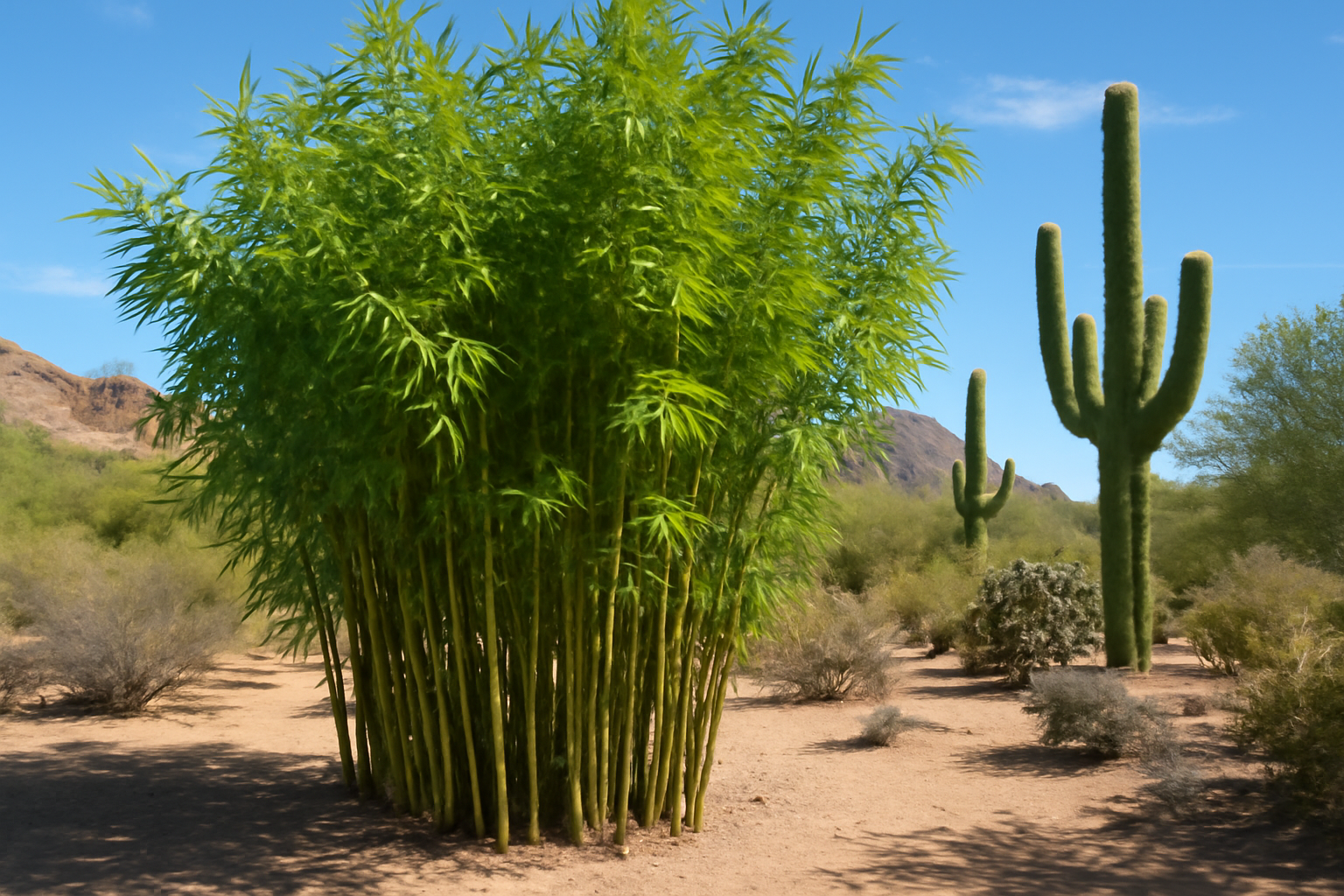
    Bamboo is completely legal to grow in Arizona — there is no state law, county ordinance, or municipal regulation in Arizona that prohibits it. But before you order a dozen culms and start digging, there are a few things worth knowing that could save you a lot of trouble down the road.

    I say that from experience. The legal question turned out to be the easy part. What actually caught me off guard was the combination of HOA paperwork, alkaline desert soil, and a summer that hit 112°F before my plants had any business being in that kind of heat. This guide covers everything I wish someone had told me before I got started.

    Arizona State Law and Bamboo: What the Rules Actually Say

    Unlike some states on the East Coast — where running bamboo has triggered neighbor disputes and even local ordinances — Arizona has no statewide legislation targeting bamboo. There is no prohibited plant list at the state level that includes bamboo species, and most Arizona counties do not regulate it either.

    That said, Maricopa County, Pima County, and most Arizona municipalities do have noxious weed lists, and it is worth checking your local extension office to confirm no recent updates apply to your area. As of the time of writing, no common bamboo genus — including Phyllostachys, Bambusa, or Fargesia — appears on Arizona’s noxious weed or invasive species lists.

    Where things get more complicated is not with the law — it’s with your neighborhood.

    The HOA Caveat: Check Before You Plant

    Arizona has one of the highest rates of HOA-governed communities in the United States. If you live in a planned community, master-planned subdivision, or any newer development built after the 1980s, there is a strong chance your property is subject to Covenants, Conditions, and Restrictions — known as CC&Rs.

    Many Arizona HOA CC&Rs include language about “invasive plants,” “plants that spread beyond property lines,” or even specifically name bamboo as a restricted species. This is especially common in communities with desert landscaping standards, where bamboo’s water usage and spreading habits can conflict with xeriscape requirements.

    Before planting anything, do the following:

    1. Request a copy of your HOA CC&Rs from your management company or county recorder’s office.
    2. Search the document for: “bamboo,” “invasive,” “spreading plants,” and “prohibited species.”
    3. If unclear, submit a written inquiry to your HOA board — get the response in writing.
    4. Check whether your HOA requires landscaping approval before planting anything new.

    Violations of HOA rules can result in fines or removal requirements regardless of what state law says. The HOA, in this context, has more practical authority over your yard than the Arizona legislature does.

    Running vs. Clumping Bamboo: Why It Matters in Arizona

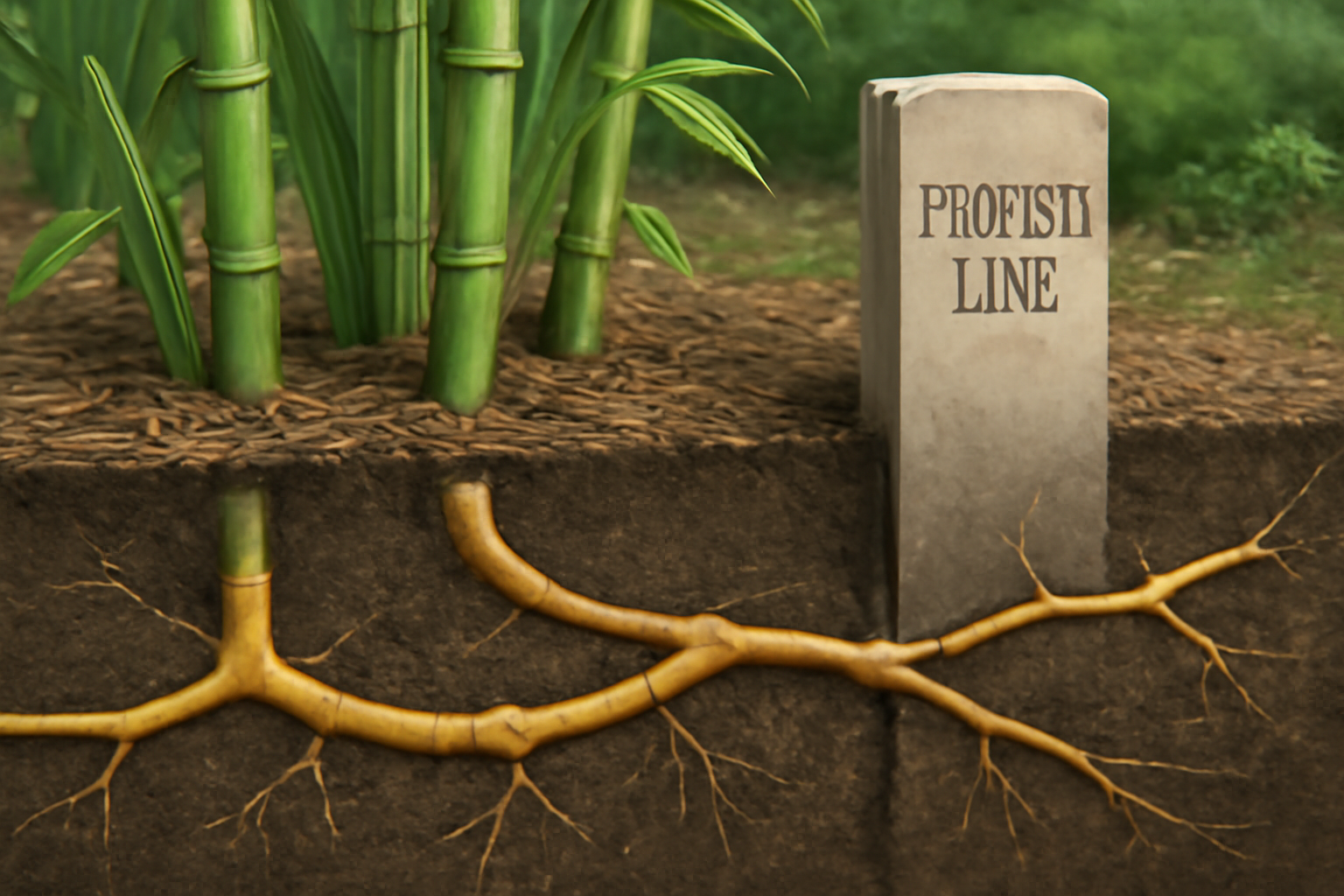
    Part of why bamboo makes some HOA boards nervous is the difference between running and clumping varieties. Running bamboo — primarily species in the Phyllostachys genus — spreads aggressively through underground rhizomes that can travel 3 to 5 feet or more per year. In a wetter climate, this can mean bamboo appearing in a neighbor’s yard within a season or two.

    In Arizona’s dry, compacted desert soil, spread is slower — but it still happens, especially with consistent irrigation. If you plant a running variety, a root barrier is not optional. A high-density HDPE root barrier installed at least 24 to 30 inches deep around the planting area will contain rhizome spread and is the responsible way to grow running bamboo in any suburban setting.

    Clumping bamboo — including most Bambusa and Fargesia species — expands slowly outward from a central root mass and is far less likely to cause problems with neighbors or HOA rules. For Arizona homeowners new to bamboo, clumping species are almost always the better starting point.

    The Real Challenge: Arizona’s Climate

    Arizona’s climate is the bigger obstacle. The Sonoran Desert presents conditions that bamboo simply was not evolved to handle without intervention: summer temperatures above 105°F are routine in Phoenix and Tucson, relative humidity regularly drops below 10%, annual rainfall averages less than 8 inches in the low desert, and native soil is often highly alkaline with a pH between 7.5 and 8.5.

    Bamboo prefers slightly acidic to neutral soil (pH 5.5–7.0), consistent moisture, and at least moderate humidity. None of those conditions exist naturally in most of Arizona. That does not make bamboo impossible to grow — but it does mean you are managing against the environment, not with it.

    Key care practices that make a real difference in Arizona:

    • Deep drip irrigation: Water slowly and deeply, 2 to 3 times per week in summer, reaching at least 18 inches of soil depth. Shallow watering encourages surface roots that cook in July and August.
    • Heavy mulch layer: Apply 6 to 8 inches of organic mulch — shredded wood or straw — around the base. This is non-negotiable in the desert. It insulates roots, retains moisture, and slowly acidifies the soil as it breaks down.
    • Soil amendment: Incorporate sulfur, peat moss, or acidic compost to bring soil pH down toward 6.5. Alkaline soil locks out the iron and manganese bamboo needs, causing yellowing even in otherwise healthy plants.
    • Afternoon shade: In zones 9 and 10, position bamboo where it receives morning sun and protection from direct afternoon exposure, particularly from 1 PM to 5 PM during summer months.

    Best Bamboo Species for Arizona Growing Zones

    Not all bamboo handles Arizona’s conditions equally. Species selection matters more here than in almost any other state. The table below summarizes the best options by region and growing zone.

    Species Type Best For USDA Zones Heat Tolerance Notes
    Bambusa multiplex Clumping Phoenix, Tucson 7–10 Excellent Most reliable in low desert; tolerates alkalinity better than most
    Phyllostachys aureosulcata Running Tucson, south-facing walls 5–10 Good Requires root barrier; benefits from afternoon shade
    Phyllostachys bambusoides Running Phoenix (sheltered locations) 7–10 Good Plant against south-facing masonry walls for reflected warmth
    Fargesia murielae Clumping Flagstaff, Prescott 5–8 Low Prefers cooler temps; ideal for north Arizona; shade tolerant
    Phyllostachys bissetii Running Flagstaff, high desert 5–9 Moderate Hardy and vigorous; root barrier essential; good windbreak species

    For gardeners in the Phoenix metro and Tucson areas — zones 9 and 10 — Bambusa multiplex is the most forgiving starting point. It handles heat, tolerates some alkalinity, and won’t spread into your neighbor’s yard. For those in Flagstaff or Prescott at 5,000–7,000 feet elevation, Fargesia murielae is one of the few bamboo species genuinely suited to those cooler, drier winters.

    Practical Takeaway for Arizona Growers

    Bamboo can grow well in Arizona — but it will not grow easily. The legal path is clear: no state law stops you, and no county prohibits it. Your first real check is your HOA paperwork, not a government website. Once that’s confirmed, the work shifts entirely to your soil, your irrigation schedule, and your species choice. Get those three things right — amend your alkaline desert soil, mulch deeply, water consistently, and select a species matched to your specific zone — and bamboo becomes one of the most dramatic and rewarding plants you can grow in the Southwest.

    🛒 Recommended Products

    Rain Bird Drip Irrigation Kit — essential for Arizona bamboo; delivers water directly to roots in the desert heat

    View on Amazon →

    Bonide Wilt Stop Anti-Transpirant — reduces leaf scorch and desiccation in Arizona’s intense summer heat and low humidity

    View on Amazon →

    Miracle-Gro All Purpose Plant Food — keep Arizona bamboo well-fed through the active growing months (March–October)

    View on Amazon →

    As an Amazon Associate I earn from qualifying purchases. Prices and availability subject to change.

  • Can You Grow Bamboo in Mississippi? Laws, Best Species, and What to Know Before You Plant

    Can You Grow Bamboo in Mississippi? Laws, Best Species, and What to Know Before You Plant

    Mississippi has one of the most favorable climates for bamboo in North America — hot summers, mild winters across the southern half of the state, and the kind of humidity that makes bamboo genuinely thrive. If you’ve been wondering whether growing bamboo in Mississippi is a realistic option for your yard or property, the short answer is yes — but there are a few things you need to know before you put a single rhizome in the ground.

    I’ve grown bamboo in the Southeast for years, and I’ll be honest: I’ve made mistakes that cost me time, money, and at least one neighborly relationship. This guide covers what I wish someone had told me from the start — the right species, the legal picture, and how to plant smart so you’re not dealing with headaches two years down the road.

    Mississippi’s Climate: Why Bamboo Loves It Here

    Most of Mississippi falls within USDA Hardiness Zones 7b through 9a, which is almost a perfect range for a wide variety of bamboo species. The Gulf Coast and southern counties sit in Zone 8b–9a, where winters rarely drop below 20°F and frost is brief. Central Mississippi, including the Jackson metro area, is solidly Zone 8a. Northern counties edge into Zone 7b, where occasional cold snaps can test cold-hardiness, but even there, many species handle it without issue.

    The state averages 50 to 65 inches of rainfall annually, spread relatively evenly across seasons. Combine that with long, hot summers — Jackson averages 93 days above 90°F — and you have conditions that push bamboo into fast, vigorous growth. That’s the double-edged part. Bamboo loves Mississippi, and it will remind you of that fact every spring if you’re not paying attention.

    Is Bamboo Legal to Grow in Mississippi?

    Here’s the legal reality: Mississippi has no statewide ban on bamboo. There is no state law prohibiting you from planting it on your property. However, that doesn’t mean you’re in the clear everywhere, and this is where a lot of Mississippi gardeners get tripped up.

    Several municipalities and counties have passed or enforced local nuisance ordinances that can apply when bamboo spreads onto neighboring property. In Rankin County, including the city of Brandon, bamboo disputes have come up through nuisance and property encroachment complaints. Ridgeland and the broader Madison County area have seen documented neighbor disputes involving running bamboo crossing property lines, and local code enforcement has been brought in to resolve them.

    Jackson has general nuisance ordinance language that can be applied to invasive plants, including bamboo that has spread beyond a property boundary. While these aren’t bamboo-specific bans, they carry real consequences — including orders to remove plants at your own expense.

    The practical takeaway: if you live in a suburb, a neighborhood with an HOA, or anywhere in the Jackson–Brandon–Ridgeland corridor, check with your municipality before planting running bamboo. And regardless of where you plant it, installing a proper root barrier before planting is the single most important step you can take — both for containment and for your own legal protection. A documented root barrier shows good faith if a dispute ever arises.

    Best Bamboo Species for Mississippi

    Not all bamboo behaves the same way, and species selection matters enormously in Mississippi’s climate. The table below gives you a quick comparison of the species most suited to different parts of the state and different use cases.

    Species Type Hardiness Zone Max Height Best Use in MS
    Phyllostachys aurea (Golden Bamboo) Running 7a–10b 20–30 ft Privacy screens; requires root barrier
    Phyllostachys bissetii Running 6b–9a 20–25 ft Windbreaks, erosion control in central/north MS
    Bambusa multiplex (Hedge Bamboo) Clumping 8a–11 15–35 ft Urban lots, small yards, southern MS
    Bambusa oldhamii (Giant Timber Bamboo) Clumping 8b–11 40–55 ft Large properties in Gulf Coast region
    Fargesia robusta (Clumping Mountain Bamboo) Clumping 5b–9a 10–15 ft Northern MS, part-shade situations

    Phyllostachys aurea, known as Golden Bamboo, is probably the bamboo you’ve already seen growing wild along Mississippi roadsides and fence lines. It’s been naturalized here for well over a century and is extremely vigorous — which makes it a liability in suburban settings unless it’s properly contained. Phyllostachys bissetii is a better-behaved running species and handles the occasional hard freeze that hits northern Mississippi better than most.

    If you’re planting in a residential area, anywhere near Brandon, Madison, or Jackson, I’d genuinely steer you toward Bambusa multiplex. It’s a clumping species, meaning it spreads slowly outward from the original planting point rather than sending runners unpredictably across your yard. It handles Mississippi summers beautifully and won’t put you in a difficult position with your neighbors or local code enforcement.

    For northern Mississippi, where Zone 7b winters can bring temperatures down to 5–10°F, Fargesia species are the safer clumping choice. They prefer some afternoon shade in Mississippi’s intense summer heat and won’t reach the towering heights of the Phyllostachys types, but they’re elegant, manageable, and reliably hardy.

    Pests and Problems in Mississippi’s Humid Climate

    Mississippi’s humidity is bamboo’s best friend and, occasionally, its worst enemy. The two pest issues I’ve run into most often in this climate are:

    • Scale insects: These show up as small, waxy bumps on culms and leaves and are more prevalent in humid, shaded plantings. A severe infestation will cause yellowing and dieback. Horticultural oil applied in late winter, before new shoots emerge, is effective.
    • Spider mites: Counterintuitively, spider mites thrive during hot, dry spells in July and August when humidity drops and stressed plants become vulnerable. Affected leaves develop a stippled, grayish appearance. A strong water spray and insecticidal soap usually manage them before they become serious.

    Fungal issues are less common in established bamboo but can affect young plants during wet springs. Good air circulation and avoiding overhead watering on new plantings helps considerably. Mississippi’s heavy clay soils in many areas can also cause drainage issues — if water pools around your bamboo, you’ll see more root rot and yellowing than any pest will ever cause you.

    Practical Planting Advice for Mississippi Gardeners

    If you’re planting running bamboo anywhere in Mississippi — especially in suburban areas of Rankin, Madison, Hinds, or Forrest counties — install a 60 mil HDPE root barrier to a depth of at least 28–30 inches before you plant. This isn’t optional. Running bamboo rhizomes travel horizontally and can move 3–5 feet in a single season in Mississippi’s warm soil. A root barrier keeps that energy contained and, importantly, gives you documented evidence of responsible planting if a neighbor or code enforcement officer ever raises concerns.

    Spring planting, after soil temperatures reach 60°F, gives bamboo the longest establishment window before winter. Water new plantings deeply twice a week for the first season — bamboo won’t send up new shoots in its first year if it’s drought-stressed. Once established, most Mississippi bamboo is remarkably self-sufficient, but that first year matters more than most people realize. Plant with intention, contain what needs containing, and bamboo will reward you with one of the most striking and functional plants you can grow in this state.

    🛒 Recommended Products

    DeepRoot Bamboo Barrier 18″ — required by ordinance in several Mississippi municipalities for running bamboo

    View on Amazon →

    Miracle-Gro All Purpose Plant Food — feed bamboo through Mississippi’s long, hot growing season for rapid establishment

    View on Amazon →

    Bonide Systemic Insect Control — treat scale and mealybugs common in Mississippi’s humid bamboo gardens

    View on Amazon →

    As an Amazon Associate I earn from qualifying purchases. Prices and availability subject to change.

  • Bamboo and Property Lines: The Legal Reality Every Bamboo Owner Needs to Know

    Bamboo and Property Lines: The Legal Reality Every Bamboo Owner Needs to Know

    If your bamboo crosses a property line and causes damage, you can be held legally responsible — and that responsibility doesn’t disappear just because the roots moved on their own. This is the legal reality that catches most bamboo growers off guard, and it’s one worth understanding before you plant a single culm.

    Bamboo as a Legal Nuisance: The Foundation of the Problem

    Under common law, bamboo — particularly running bamboo species — can be classified as a private nuisance if it spreads onto a neighbor’s property and causes measurable harm. The legal theory isn’t complicated: you own the plant, you’re responsible for the plant. The fact that rhizomes move underground without your involvement doesn’t transfer that responsibility to your neighbor or to nature.

    Courts in multiple states have applied two overlapping doctrines to bamboo disputes:

    • Private nuisance: Your bamboo interferes with a neighbor’s quiet enjoyment or use of their property.
    • Trespass: The rhizomes — physically part of your plant — have entered another person’s land without permission.

    The critical point that surprises most homeowners: the rhizomes are still legally your property even after they cross the line. That means the shoots emerging in your neighbor’s yard, the roots cracking their driveway, the culms shading their garden — all of that can be traced back to you as the originating owner. The law doesn’t care that you didn’t dig those roots across the boundary yourself.

    What Running Bamboo Can Actually Damage

    This isn’t hypothetical. Running bamboo species spread through aggressive lateral rhizome systems that can travel 15 to 20 feet or more per year in favorable conditions. Some species push farther. Phyllostachys aurea (Golden Bamboo) and Phyllostachys bambusoides (Japanese Timber Bamboo) are among the most commonly planted in residential landscapes — and among the most frequently cited in neighbor disputes.

    Here’s what the rhizomes can damage once they cross a property line:

    • Concrete driveways and walkways (rhizomes find and exploit existing cracks)
    • Home foundations, especially older poured-concrete or block foundations
    • Underground irrigation lines and drainage pipes
    • Established garden beds and lawn areas
    • Fence posts and wooden retaining structures

    In documented cases, neighbors have successfully sued bamboo-owning homeowners for the full cost of rhizome removal — which can run $1,500 to $5,000 or more depending on how far the bamboo has spread — plus repair costs for physical damage. Some cases have resulted in court-ordered forced removal, restraining orders against further planting, and ongoing monitoring requirements imposed by the court.

    State Laws You Need to Know

    Most bamboo disputes are handled under general nuisance or trespass law, but several states have moved toward more explicit regulation. New Jersey and Connecticut have been at the forefront of this.

    New Jersey enacted a bamboo control law (N.J.S.A. 13:1B-15.147) that took effect in 2021, specifically targeting running bamboo. Under this law, homeowners must install a root barrier if planting running bamboo within 40 feet of a property line, and they must maintain a 2-foot buffer between any bamboo and the property boundary. Violations can result in fines and mandatory removal at the homeowner’s expense.

    Connecticut has addressed running bamboo through municipal ordinances in multiple towns, with some requiring removal notices and compliance timelines when bamboo is documented crossing a property line.

    Even in states without specific statutes, courts have consistently ruled in favor of affected neighbors when the damage is demonstrable. The following table summarizes key differences in legal approach:

    State / Jurisdiction Legal Framework Buffer Requirement Enforcement
    New Jersey Specific bamboo statute (2021) 40 ft from property line; 2 ft buffer Fines, mandatory removal
    Connecticut (select towns) Municipal ordinances Varies by municipality Removal notices, compliance orders
    Most other U.S. states Common law nuisance / trespass None specified by statute Civil litigation, court orders
    United Kingdom Anti-Social Behaviour Act (2014) None specified Community protection notices, fines

    Clumping vs. Running Bamboo: Why the Species Distinction Matters Legally

    Not all bamboo behaves the same way, and this distinction has real legal weight. Clumping bamboo species — such as Fargesia murielae (Umbrella Bamboo) and Bambusa multiplex (Hedge Bamboo) — spread through tight, pachymorph root systems that grow slowly outward from the central clump, typically 2 to 4 inches per year. They don’t send out the aggressive lateral rhizomes that create neighbor disputes.

    Running bamboo species — including the widely planted Phyllostachys genus — use leptomorph rhizomes that travel horizontally through the soil, sometimes several feet below the surface, making them difficult to detect until shoots emerge far from the original plant.

    If you want bamboo near a property line and want to minimize legal risk, clumping varieties are the straightforward solution. Running bamboo can still be planted responsibly, but it requires active management — and that starts with a proper root barrier.

    Practical Steps to Protect Yourself Legally

    Experience teaches this lesson the expensive way. Here’s what responsible bamboo ownership actually looks like when property lines are involved:

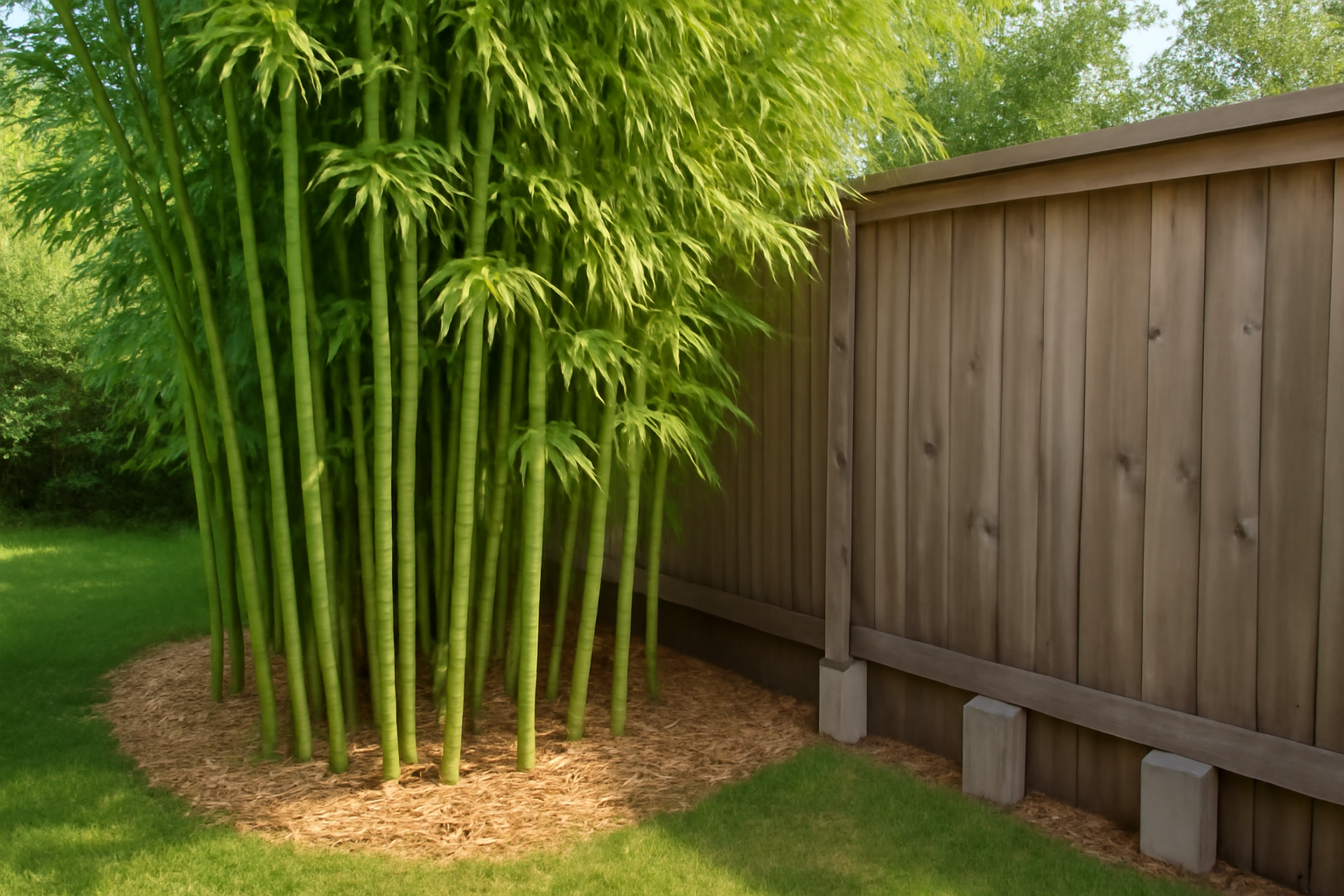
    1. Install a root barrier before planting. A high-density polyethylene (HDPE) barrier, at least 60 mil thick and installed to a depth of 24 to 30 inches, is the standard recommendation for containing running bamboo. Shallower or thinner barriers fail. Installing a root barrier after the bamboo is established is significantly more difficult and costly.
    2. Maintain a planting setback. Even with a barrier in place, plant running bamboo no closer than 5 to 10 feet from any property line. If you’re in New Jersey, follow the statutory 40-foot rule. If you’re anywhere else, treat the 20-foot mark as your personal threshold of caution.
    3. Do annual perimeter inspections. Walk the boundary of your bamboo planting every spring, when rhizome activity peaks. Probe the soil at the barrier edges and check for any shoots emerging outside the containment zone. Catching rhizome escape early — when a single root can be cut with a spade — is vastly easier than dealing with an established colony.
    4. Get a written agreement before planting near shared lines. If your neighbor is aware of and comfortable with your bamboo, document that. A simple signed letter stating they have no objection to the planting is not ironclad legal protection, but it significantly changes the character of any future dispute. Never rely on a verbal agreement.
    5. Know your local ordinances. Contact your municipality directly. Many local governments have adopted nuisance vegetation rules that apply to bamboo, sometimes more strictly than state law.

    If Your Neighbor Already Has the Problem

    If you’re on the receiving end of bamboo encroachment, document everything first. Photograph the bamboo, measure how far from the property line it has emerged, and note any damage. Send a written notice — certified mail — to the neighboring homeowner before taking any other action. Most disputes resolve at this stage, particularly when the neighbor realizes their legal exposure. If the problem continues, consult a local attorney who handles property disputes; many offer free initial consultations, and the documented spread of bamboo across a property line gives you a clear, well-established legal basis for action.

    The honest takeaway here is that bamboo is a genuinely beautiful, fast-growing plant that’s earned its reputation in landscapes around the world. But running bamboo in particular demands a level of ongoing stewardship that many gardeners underestimate. Planting it without containment near a property line isn’t just a neighborly risk — it’s a legal one. The gardeners who enjoy bamboo without conflict are the ones who planned for containment from the beginning, and who treat their perimeter inspections as a non-negotiable part of the growing season.

    🛒 Recommended Products

    DeepRoot Bamboo Barrier 18″ — prevents rhizome spread across property lines; strongest legal defense against neighbor complaints

    View on Amazon →

    Root Barrier 24″ Depth — for aggressive running bamboo planted near property boundaries

    View on Amazon →

    Fiskars Steel D-handle Spade — for digging the trench to install a root barrier before your bamboo reaches the property line

    View on Amazon →

    As an Amazon Associate I earn from qualifying purchases. Prices and availability subject to change.

  • Is Bamboo Illegal to Plant? What the Laws Actually Say in Your State

    Is Bamboo Illegal to Plant? What the Laws Actually Say in Your State

    Bamboo is not federally regulated in the United States — there is no nationwide ban on planting it. But depending on where you live, your state, county, city, or even your HOA may have something very specific to say about it.

    I learned this the hard way after planting a stand of Phyllostachys aureosulcata (yellow groove bamboo) along my back fence without doing much research first. A few years later, my neighbor wasn’t exactly thrilled. If you’re wondering whether bamboo is illegal to plant before you put anything in the ground — that instinct is exactly right. Here’s what the laws actually say.

    No Federal Ban, But Don’t Stop There

    At the federal level, bamboo is not classified as a noxious weed or invasive species under the Federal Noxious Weed Act. The USDA does not prohibit its cultivation. However, federal law sets a floor, not a ceiling — states and municipalities are entirely free to impose their own restrictions, and several have done exactly that.

    The distinction that matters most is whether your area has an invasive species designation (which can outright ban planting) versus a nuisance ordinance (which holds you liable if bamboo spreads onto neighboring property). These are very different legal situations with very different consequences.

    States With Notable Bamboo Restrictions

    A handful of states have passed legislation or adopted regulations that specifically address bamboo planting. The details vary considerably, so pay close attention to what type of restriction is in place.

    Connecticut

    Connecticut passed Public Act 13-140, which restricts the sale and planting of running bamboo unless a root barrier at least 60 mil thick is installed to a minimum depth of 18 inches, with at least 2 inches extending above the soil line. Violators can be held liable for the cost of removal from neighboring properties. This is one of the most specific bamboo laws in the country.

    New Jersey

    New Jersey does not have a statewide ban, but it does allow municipalities to enforce nuisance ordinances against bamboo that encroaches on neighboring land. Several towns — including Holmdel and South Brunswick — have passed local ordinances specifically targeting running bamboo. Property owners have faced fines and mandatory removal orders.

    New York

    New York State itself does not ban bamboo, but individual counties and municipalities have taken action. Nassau County and Southampton, for example, have ordinances requiring containment or prohibiting new plantings of running bamboo species outright. The legal landscape varies block by block in some parts of the state.

    Maryland

    Maryland has debated bamboo legislation multiple times. While a statewide ban has not passed as of this writing, the state lists several bamboo species as invasive plants of concern, and local jurisdictions have enforcement authority. Montgomery County has issued guidance discouraging running bamboo planting near property lines.

    Oregon and California

    Oregon’s major bamboo-related restriction targets Arundo donax (giant reed), which is technically not a true bamboo but is often mistaken for one. True bamboo species are not banned statewide in Oregon. In California, there is no statewide prohibition, but cities like Claremont and San Jose have passed local ordinances restricting or requiring containment of running bamboo. Always check at the city level in California.

    Summary Table: Key States and Running Bamboo Rules

    State Running Bamboo Restricted? Notes
    Connecticut Yes — statewide law Root barrier required (60 mil, 18″ depth); liability for spread
    New Jersey Varies by municipality Local ordinances in multiple towns; nuisance liability applies
    New York Varies by county/city Nassau County and some towns have specific ordinances
    Maryland No statewide ban; local rules vary Some counties discourage or restrict near property lines
    Oregon No (true bamboo) Arundo donax restricted; not a true bamboo species
    California Varies by city Some municipalities ban or require containment
    Arizona No statewide restriction City-level ordinances may apply; verify locally
    Mississippi No statewide restriction Legal to plant; local ordinances may still apply

    Invasive Species Designation vs. Nuisance Law — Why It Matters

    These two legal categories are often confused, and the difference is significant.

    • Invasive species designations typically prohibit planting, selling, or transporting a species. If your state lists a bamboo species as a Class A or Class B noxious weed, you may be legally prohibited from introducing it to your property at all — regardless of what your neighbors think.
    • Nuisance ordinances don’t necessarily ban planting, but they do make you legally responsible if your bamboo spreads beyond your property line. If a neighbor has to pay to remove bamboo rhizomes from their yard, you could be on the hook for those costs.

    Running bamboo species — primarily those in the Phyllostachys and Pleioblastus genera — are far more likely to trigger nuisance complaints because their rhizomes can travel 15 feet or more in a single growing season. Clumping bamboo species like Fargesia murielae or Bambusa multiplex expand slowly and stay where you put them, which is why they rarely appear in legislation at all.

    If you are planting running bamboo anywhere near a property line, installing a proper root barrier is not just good practice — in states like Connecticut, it is the law. A high-density polyethylene barrier rated at 60 mil, installed to a depth of at least 24 to 30 inches, is the standard recommendation for long-term containment.

    HOA Rules: Often Stricter Than Local Law

    Even if your city and state have no restrictions, your homeowners association very well might. HOA rules are private contracts, not public law, but they are legally enforceable — and many HOAs have added bamboo to their prohibited or restricted plant lists in recent years.

    Before you plant, pull out your CC&Rs (Covenants, Conditions, and Restrictions) and search for the words “bamboo,” “invasive,” or “screening plants.” Some HOAs ban bamboo entirely; others require a written approval process or specific containment methods. Violating HOA rules can result in fines, mandatory removal at your expense, and even legal action.

    Property Lines and Neighbor Liability

    One of the most common legal disputes involving bamboo isn’t about the plant itself — it’s about where it goes. Even in areas with no ordinances, common law principles of nuisance and trespass can apply when bamboo rhizomes cross property lines and cause damage. Courts in states including New Jersey and New York have ruled in favor of neighbors seeking compensation for bamboo removal costs.

    The property line question deserves its own deep dive, but the short version is this: if your bamboo leaves your property, your neighbor has legal standing to ask you to deal with it — and if you don’t, a court may order you to pay for the cleanup.

    How to Find the Actual Rules for Your Area

    Laws change, and local ordinances are often not well-publicized. Before planting any running bamboo species, take these practical steps:

    1. Search your city or county website for “bamboo ordinance” or “invasive plants.”
    2. Contact your local cooperative extension office — they track invasive species lists at the state level and often know local rules.
    3. Check your state’s department of agriculture website for noxious weed or invasive plant listings.
    4. Review your HOA documents if applicable.
    5. Ask your neighbors — not legally required, but often the most effective way to avoid a dispute before it starts.

    Bamboo is a remarkable plant, and in the right setting with the right management it can be an asset to any yard. But “the right setting” starts with knowing what your local laws actually say — not what someone told you at a garden center. Spend twenty minutes checking before you plant, and you’ll save yourself a significant amount of trouble down the road.

    🛒 Recommended Products

    DeepRoot Bamboo Barrier 18″ — required by law in several states and counties; stops rhizome trespass across property lines

    View on Amazon →

    Root Barrier 24″ Depth — deeper containment for states with strict bamboo regulations requiring documented containment

    View on Amazon →

    Fiskars Steel D-handle Spade — install your barrier properly the first time to stay compliant with local ordinances

    View on Amazon →

    As an Amazon Associate I earn from qualifying purchases. Prices and availability subject to change.