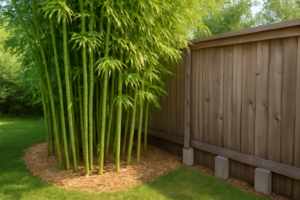
If your bamboo crosses a property line and causes damage, you can be held legally responsible — and that responsibility doesn’t disappear just because the roots moved on their own. This is the legal reality that catches most bamboo growers off guard, and it’s one worth understanding before you plant a single culm.
Bamboo as a Legal Nuisance: The Foundation of the Problem
Under common law, bamboo — particularly running bamboo species — can be classified as a private nuisance if it spreads onto a neighbor’s property and causes measurable harm. The legal theory isn’t complicated: you own the plant, you’re responsible for the plant. The fact that rhizomes move underground without your involvement doesn’t transfer that responsibility to your neighbor or to nature.
Courts in multiple states have applied two overlapping doctrines to bamboo disputes:
- Private nuisance: Your bamboo interferes with a neighbor’s quiet enjoyment or use of their property.
- Trespass: The rhizomes — physically part of your plant — have entered another person’s land without permission.
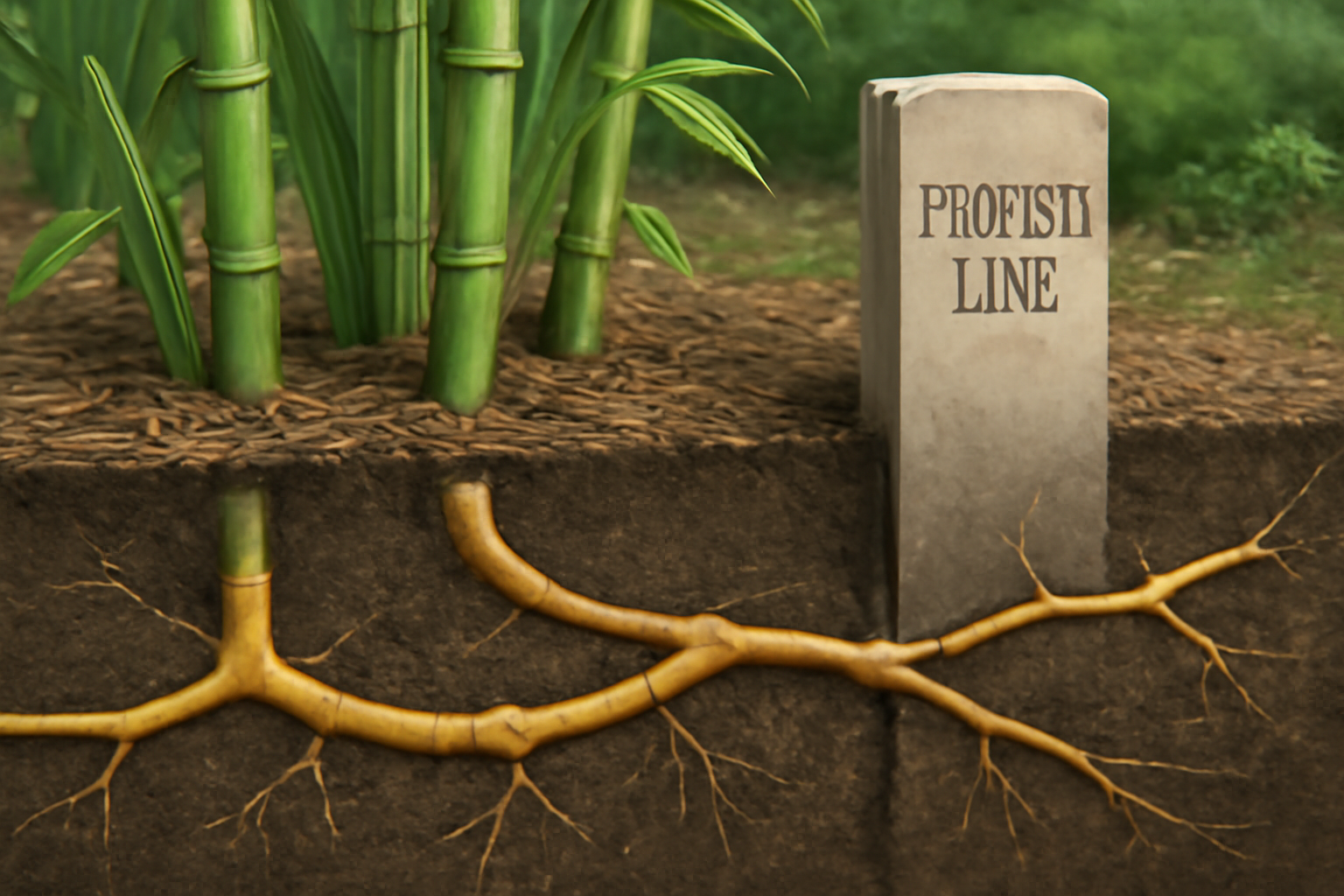
The critical point that surprises most homeowners: the rhizomes are still legally your property even after they cross the line. That means the shoots emerging in your neighbor’s yard, the roots cracking their driveway, the culms shading their garden — all of that can be traced back to you as the originating owner. The law doesn’t care that you didn’t dig those roots across the boundary yourself.
What Running Bamboo Can Actually Damage
This isn’t hypothetical. Running bamboo species spread through aggressive lateral rhizome systems that can travel 15 to 20 feet or more per year in favorable conditions. Some species push farther. Phyllostachys aurea (Golden Bamboo) and Phyllostachys bambusoides (Japanese Timber Bamboo) are among the most commonly planted in residential landscapes — and among the most frequently cited in neighbor disputes.
Here’s what the rhizomes can damage once they cross a property line:
- Concrete driveways and walkways (rhizomes find and exploit existing cracks)
- Home foundations, especially older poured-concrete or block foundations
- Underground irrigation lines and drainage pipes
- Established garden beds and lawn areas
- Fence posts and wooden retaining structures
In documented cases, neighbors have successfully sued bamboo-owning homeowners for the full cost of rhizome removal — which can run $1,500 to $5,000 or more depending on how far the bamboo has spread — plus repair costs for physical damage. Some cases have resulted in court-ordered forced removal, restraining orders against further planting, and ongoing monitoring requirements imposed by the court.
State Laws You Need to Know
Most bamboo disputes are handled under general nuisance or trespass law, but several states have moved toward more explicit regulation. New Jersey and Connecticut have been at the forefront of this.
New Jersey enacted a bamboo control law (N.J.S.A. 13:1B-15.147) that took effect in 2021, specifically targeting running bamboo. Under this law, homeowners must install a root barrier if planting running bamboo within 40 feet of a property line, and they must maintain a 2-foot buffer between any bamboo and the property boundary. Violations can result in fines and mandatory removal at the homeowner’s expense.
Connecticut has addressed running bamboo through municipal ordinances in multiple towns, with some requiring removal notices and compliance timelines when bamboo is documented crossing a property line.
Even in states without specific statutes, courts have consistently ruled in favor of affected neighbors when the damage is demonstrable. The following table summarizes key differences in legal approach:
| State / Jurisdiction | Legal Framework | Buffer Requirement | Enforcement |
|---|---|---|---|
| New Jersey | Specific bamboo statute (2021) | 40 ft from property line; 2 ft buffer | Fines, mandatory removal |
| Connecticut (select towns) | Municipal ordinances | Varies by municipality | Removal notices, compliance orders |
| Most other U.S. states | Common law nuisance / trespass | None specified by statute | Civil litigation, court orders |
| United Kingdom | Anti-Social Behaviour Act (2014) | None specified | Community protection notices, fines |
Clumping vs. Running Bamboo: Why the Species Distinction Matters Legally
Not all bamboo behaves the same way, and this distinction has real legal weight. Clumping bamboo species — such as Fargesia murielae (Umbrella Bamboo) and Bambusa multiplex (Hedge Bamboo) — spread through tight, pachymorph root systems that grow slowly outward from the central clump, typically 2 to 4 inches per year. They don’t send out the aggressive lateral rhizomes that create neighbor disputes.
Running bamboo species — including the widely planted Phyllostachys genus — use leptomorph rhizomes that travel horizontally through the soil, sometimes several feet below the surface, making them difficult to detect until shoots emerge far from the original plant.
If you want bamboo near a property line and want to minimize legal risk, clumping varieties are the straightforward solution. Running bamboo can still be planted responsibly, but it requires active management — and that starts with a proper root barrier.
Practical Steps to Protect Yourself Legally
Experience teaches this lesson the expensive way. Here’s what responsible bamboo ownership actually looks like when property lines are involved:
- Install a root barrier before planting. A high-density polyethylene (HDPE) barrier, at least 60 mil thick and installed to a depth of 24 to 30 inches, is the standard recommendation for containing running bamboo. Shallower or thinner barriers fail. Installing a root barrier after the bamboo is established is significantly more difficult and costly.
- Maintain a planting setback. Even with a barrier in place, plant running bamboo no closer than 5 to 10 feet from any property line. If you’re in New Jersey, follow the statutory 40-foot rule. If you’re anywhere else, treat the 20-foot mark as your personal threshold of caution.
- Do annual perimeter inspections. Walk the boundary of your bamboo planting every spring, when rhizome activity peaks. Probe the soil at the barrier edges and check for any shoots emerging outside the containment zone. Catching rhizome escape early — when a single root can be cut with a spade — is vastly easier than dealing with an established colony.
- Get a written agreement before planting near shared lines. If your neighbor is aware of and comfortable with your bamboo, document that. A simple signed letter stating they have no objection to the planting is not ironclad legal protection, but it significantly changes the character of any future dispute. Never rely on a verbal agreement.
- Know your local ordinances. Contact your municipality directly. Many local governments have adopted nuisance vegetation rules that apply to bamboo, sometimes more strictly than state law.
If Your Neighbor Already Has the Problem
If you’re on the receiving end of bamboo encroachment, document everything first. Photograph the bamboo, measure how far from the property line it has emerged, and note any damage. Send a written notice — certified mail — to the neighboring homeowner before taking any other action. Most disputes resolve at this stage, particularly when the neighbor realizes their legal exposure. If the problem continues, consult a local attorney who handles property disputes; many offer free initial consultations, and the documented spread of bamboo across a property line gives you a clear, well-established legal basis for action.
The honest takeaway here is that bamboo is a genuinely beautiful, fast-growing plant that’s earned its reputation in landscapes around the world. But running bamboo in particular demands a level of ongoing stewardship that many gardeners underestimate. Planting it without containment near a property line isn’t just a neighborly risk — it’s a legal one. The gardeners who enjoy bamboo without conflict are the ones who planned for containment from the beginning, and who treat their perimeter inspections as a non-negotiable part of the growing season.
The Root Barrier That Finally Stopped My Running Bamboo at the Property Line
Running bamboo doesn’t respect boundaries — it respects barriers. A properly installed root barrier is your only reliable defense against rhizomes crossing into your neighbor’s yard and creating the legal liability that keeps me up at night.
What works
- Rhizomes genuinely stop at the barrier edge — I’ve dug alongside mine after three years and found zero escapes on the blocked side, while the unbounded side was a tangled mess.
- The thickness (about 60 mil) withstands the steady pressure of aggressive rhizomes without puncturing or cracking under seasonal freeze-thaw cycles.
- Installation is straightforward enough for a home grower — bury it 24-30 inches deep and extend it 2 inches above soil to catch any aerial rhizome attempts.
What doesn’t
- It’s labor-intensive to install correctly — digging a barrier trench deep enough to actually work takes a full day for even a modest bamboo grove, and you can’t rush it.
- Existing rhizomes already past the barrier line won’t be stopped by it — this is a prevention tool for new plantings, not a fix for bamboo that’s already escaped.
I almost abandoned the barrier halfway through installation because my soil was rocky, but I’m genuinely grateful I finished it — that extra two hours of digging has saved me from what could have been an expensive lawsuit.
About This Article

Written by Marcus Chen. Marcus Chen has spent 15 years cultivating and studying bamboo across 14 different species, combining commercial growing operations with extensive hands-on experience in species selection and containment. As both a grower and consultant, he specializes in practical bamboo management, helping homeowners and landscapers understand the real-world requirements for responsible bamboo cultivation. Marcus brings tested knowledge of which species thrive reliably and which present containment challenges that go beyond standard recommendations. More about this site.
Verify this against a primary source
Specifics change, and your situation may differ from the one described here. These are the authorities worth checking directly:
- American Bamboo Society — species listings and cultivation guidance
- USDA PLANTS Database — species range and identification
- USDA Plant Hardiness Zone Map — cold hardiness verification for your location