Tag: backyard bamboo

  • Best Bamboo Fencing Panels on Amazon: What I Actually Installed in My Backyard

    Best Bamboo Fencing Panels on Amazon: What I Actually Installed in My Backyard

    I still remember standing in my backyard last spring, staring at a stack of bamboo fencing rolls piled against the garage wall like some kind of botanical crime scene. Four different products. Four separate Amazon orders. One very patient spouse who had stopped asking questions. I had set out to find the best bamboo fencing panels Amazon had to offer, and instead I had accidentally turned our driveway into a bamboo warehouse. But here is the thing — that slightly embarrassing experiment gave me something genuinely useful: a real, side-by-side comparison of products that most reviewers only ever buy once.

    This post contains affiliate links. As an Amazon Associate I earn from qualifying purchases at no extra cost to you.

    If you are trying to add privacy to a patio, cover a chain-link fence, or just make your backyard feel less like a fishbowl, I want to save you the trouble I went through. Below is my honest ranking of what I tested, installed, and in one case quietly returned.

    Best Bamboo Fencing Panels on Amazon: What I Actually Installed in My Backyard — image 1

    Why I Kept Ordering (And What I Was Actually Looking For)

    My backyard situation is pretty common. I have a wooden fence on two sides, but the back runs along a shared alley that is just open enough for the neighbors to see directly onto our patio. I wanted something that looked natural, did not require concrete footings, and could go up on a Saturday without borrowing tools I do not own. Bamboo fencing panels seemed like the obvious answer. The problem is that “bamboo fencing” on Amazon covers a surprisingly wide range of products — from thick, solid bamboo slat rolls to thin reed screens that are really more decorative curtain than fence.

    Here is what I was grading each product on:

    • Actual privacy coverage (no gaps you could read a newspaper through)
    • Ease of installation solo or with one other person
    • How it looked after a few weeks of weather
    • Value for the square footage covered

    With that rubric in mind, here is how each product stacked up.

    The Rankings: From “Do Not Bother” to “Genuinely Excellent”

    Last Place: VEVOR Reed Fencing Roll (5.5 x 16.4 ft)

    I want to be careful here because the VEVOR Reed Fencing Roll is not a bad product — it is just not what I needed it to be. This is a reed screen, not a bamboo slat panel, and that distinction matters more than I realized when I clicked “Buy Now.” The reeds are thin and bundled tightly, which gives it a lovely rustic texture, but the coverage has gaps. On a bright sunny day with the light behind it, you can absolutely see silhouettes through it. It excels as a decorative divider, a backdrop for an outdoor party, or a sun filter on a pergola. For true backyard privacy against a shared alley? It fell short. It also felt the flimsiest of the four when I unrolled it.

    Third Place: Natural Reed Fencing Rolls (6 ft x 16.4 ft, Brown)

    The Natural Reed Fencing Rolls in 6 ft x 16.4 ft impressed me more than the VEVOR, mainly because the 6-foot height actually covered what I needed it to cover. The reeds here were slightly thicker and the weave tighter, so light bleed was reduced. I used it temporarily along one section while I figured out my long-term plan, and it looked genuinely attractive tied to my existing wooden fence posts. The brown color aged gracefully even after two weeks of mixed weather. My hesitation is durability: after about three weeks, a few of the wire ties holding the reeds together started showing rust. That is a small fix — you can replace them with zip ties — but it told me something about the long-term story. Good for seasonal use or covered spaces. Less ideal as a permanent backyard solution.

    Best Bamboo Fencing Panels on Amazon: What I Actually Installed in My Backyard — image 2

    Second Place: Forever Bamboo Natural Bamboo Fencing Panel (6 ft H x 8 ft L)

    Now we are getting into real bamboo territory. The Forever Bamboo Natural Bamboo Fencing Decorative Rolled Fence Panel uses 0.75-inch diameter bamboo poles wired together horizontally, and the difference in solidity is immediately obvious when you pick it up. This thing has real weight and structure. Unrolled along my fence line, it looked exactly like the bamboo fencing you see in upscale garden centers, and it provided excellent coverage. The 6 ft x 8 ft dimensions are also easy to work with — smaller panels mean easier handling solo.

    So why second place? Primarily cost per square foot. You get 48 square feet per panel, and covering a 20-foot fence line at 6 feet tall means you need multiple panels, which adds up quickly. The construction quality is genuinely superior, and if budget is not a primary concern, this one could easily be your winner. It also pairs beautifully with the YIDIE Metal Fence Posts if you are mounting it independently rather than against an existing structure.

    Honorable Mention: Sprigra Bamboo Slat Fence (4 ft x 13 ft)

    The Sprigra Bamboo Slat Fence earns a genuine mention because the slat construction — flat bamboo pieces rather than round poles — gives it a very clean, modern look that some people will actually prefer. Coverage is solid, and the 13-foot length means fewer seams when covering longer runs. I did not rank it higher because the 4-foot height was simply not enough for my situation. If you have a shorter fence line, a balcony railing, or a garden bed border to screen, this one might actually beat everything else on this list. The value is excellent and installation was genuinely fast.

    Best Bamboo Fencing Panels on Amazon: What I Actually Installed in My Backyard — image 3

    The Winner: 6.5 ft x 13 ft Bamboo Slat Screening Roll

    The product I actually kept installed — the one still sitting in my backyard right now as I write this — is the 6.5 ft x 13 ft Bamboo Slat Screening Roll. It hits every single thing I was looking for, and it did so without making me feel like I had overspent.

    Here is what stood out immediately upon unrolling it:

    • The 6.5-foot height cleared the top of my fence posts with enough overlap to prevent any sight lines from the alley
    • The flat bamboo slat construction created genuinely dense coverage — no gaps, no light bleed
    • The 13-foot length covered the bulk of my back fence in a single roll without awkward seams
    • The natural color was warm and rich, not the bleached-out tan you see with cheaper reed products

    Installation took me about 45 minutes with a friend holding one end. I attached it to my existing wooden fence posts using zip ties every 12 inches — honestly, the included zip ties were better quality than I expected. If you are going freestanding, grab a pack of the YIDIE Garden Stakes Metal Fence Posts, which are solid, plastic-coated steel and drive into most ground types without a post-hole digger.

    After six weeks of spring weather including a heavy rainstorm and two windy stretches, the panel looks almost exactly as it did on day one. The bamboo has begun developing that slight silvery patina that natural bamboo gets when it weathers, which I actually prefer to the bright original color. No splitting, no unraveling at the edges, and the wire stays tight.

    For anyone doing a larger project and needing a smaller or differently sized option, I would also look at the Sprigra Bamboo Slat Fence (4 ft x 13 ft) for lower sections, or grab the Natural Reed Fencing Roll with Cable Zip Ties if you need a small accent section or a balcony topper — it comes in several height options and the included zip ties are a genuinely thoughtful touch. I also keep a bundle of BOVITRO Natural Bamboo Stakes nearby for any smaller garden projects or securing loose sections of rolled fencing at ground level.

    Best Bamboo Fencing Panels on Amazon: What I Actually Installed in My Backyard — image 4

    My Final Recommendation and What to Buy First

    If you are searching for the best bamboo fencing panels Amazon offers for genuine backyard privacy — not decoration, not a seasonal screen, but real coverage that holds up — start with the 6.5 ft x 13 ft Bamboo Slat Screening Roll. It beats everything else I tried on height, coverage density, value per square foot, and staying power through actual weather. I bought two rolls and have zero regrets. My backyard finally feels like a backyard instead of a performance stage.

    If your fence line is shorter or you need something for a balcony or patio divider rather than a perimeter fence, the Forever Bamboo Natural Bamboo Fencing Panel is the quality pick, and the Sprigra Bamboo Slat Fence is the value pick for shorter installations. Both are solid choices that I would recommend to anyone without hesitation.

    Have you installed bamboo fencing in your yard? Drop a comment below and let me know what worked for you — I am always looking for new products to test, and apparently my garage has not reached capacity yet.

  • The Bamboo Privacy Fence That Almost Ended My Marriage

    The Bamboo Privacy Fence That Almost Ended My Marriage

    My husband Dave and I don’t fight often, but the summer I decided to plant a bamboo privacy fence along our back property line, we came closer to a real blowup than we had in fifteen years of marriage. I’m talking slammed doors, silent dinners, and one very tense conversation in the driveway at 10 PM with a flashlight and a root barrier brochure. What started as a simple dream — a lush, green wall of privacy between our yard and our neighbors’ — turned into a months-long saga involving dead plants, unexpected costs, and one very justified “I told you so.” But here’s the thing: it also ended with the most beautiful, functional garden feature we’ve ever created together. Let me tell you the whole messy story.

    This post contains affiliate links. As an Amazon Associate, I earn from qualifying purchases. I only recommend products I’ve personally used or genuinely trust for your bamboo gardening projects.

    How a Simple Weekend Project Became a Marital Crisis

    It started innocently enough. Our neighbors built a deck that looked directly into our backyard, and suddenly our private little sanctuary felt like a fishbowl. I started researching options — wooden fences, vinyl panels, ornamental shrubs — and kept landing on the same answer: bamboo. It grew fast, stayed green year-round in our zone, and looked absolutely stunning in every photo I found. I was sold before Dave even knew I was shopping.

    Here’s where I made my first mistake. I bought twelve running bamboo plants from a discount nursery without fully understanding what “running” meant. I figured bamboo was bamboo. I wanted fast growth, and running varieties promised exactly that. What I didn’t realize was that without proper containment, running bamboo spreads aggressively through underground rhizomes — sometimes traveling ten or more feet in a single season. I planted all twelve along our fence line one Saturday afternoon while Dave was watching football, figuring I’d explain later.

    By the following spring, shoots were popping up in our vegetable garden, through a crack in the patio, and — most dramatically — in the neighbor’s flower bed on the other side of the fence. Our neighbor Janet was not amused. Dave was even less amused. That was the driveway flashlight conversation. It was not our finest hour.

    What I Wish I’d Known Before Installing a Bamboo Privacy Fence

    After the Great Rhizome Incident, I did what I should have done from the beginning: actual research. Lots of it. And I want to share everything I learned so you don’t have a driveway flashlight moment of your own.

    Running vs. Clumping Bamboo — Know the Difference

    This is the single most important decision you’ll make. Running bamboo spreads laterally through rhizomes and can become invasive without barriers. Clumping bamboo grows in a tight, expanding clump and stays much more manageable. For a privacy screen in most residential yards, clumping varieties like Fargesia or Bambusa are far safer choices — especially if you have neighbors or garden beds nearby. Running varieties like Phyllostachys can still work beautifully, but only with proper rhizome barriers installed first.

    Root Barriers Are Non-Negotiable for Running Types

    If you’re committed to a running variety for faster growth or cold hardiness, install a high-density polyethylene rhizome barrier at least 24–30 inches deep around your planting area. Bury it at a slight outward angle so rhizomes are deflected upward, where you can spot and trim them. Skipping this step is exactly how you end up apologizing to your neighbor Janet.

    Spacing and Soil Prep Matter More Than You Think

    For a privacy screen, plant clumping varieties 3–5 feet apart. They’ll fill in over two to three seasons and create a dense, beautiful wall. Amend your soil with compost and ensure good drainage — bamboo hates soggy roots. A slow-release fertilizer high in nitrogen will encourage that lush, leafy growth you’re after during the first growing season.

    Tools and Supplies I Recommend for the Job

    Doing this right the second time around, Dave and I invested in a few quality tools that made the whole process smoother and actually saved us money in the long run. Here’s what I’d recommend having on hand before you start:

    • A heavy-duty spade or trenching shovel — Installing root barriers means digging a trench 24–30 inches deep along your entire planting area. A sharp, long-bladed spade is worth every penny.
    • High-density polyethylene rhizome barrier (60 mil or thicker) — Don’t cheap out here. Thin barriers can be punctured by aggressive rhizomes. Look for commercial-grade options rated specifically for bamboo.
    • A soil pH meter — Bamboo thrives in slightly acidic soil between 6.0 and 6.5. Knowing your starting point helps you amend correctly before planting.
    • Slow-release nitrogen fertilizer — A balanced fertilizer with a higher nitrogen content supports vigorous cane and leaf growth in the establishment years.
    • A quality garden hose with an adjustable nozzle — Newly planted bamboo needs consistent moisture while it establishes, especially in the first summer. Deep, regular watering beats shallow daily sprinkles every time.

    You can find all of these on Amazon — search specifically for “60 mil bamboo rhizome barrier” and read reviews carefully to make sure you’re getting a product rated for aggressive running varieties.

    The Redemption Arc (Yes, There Is One)

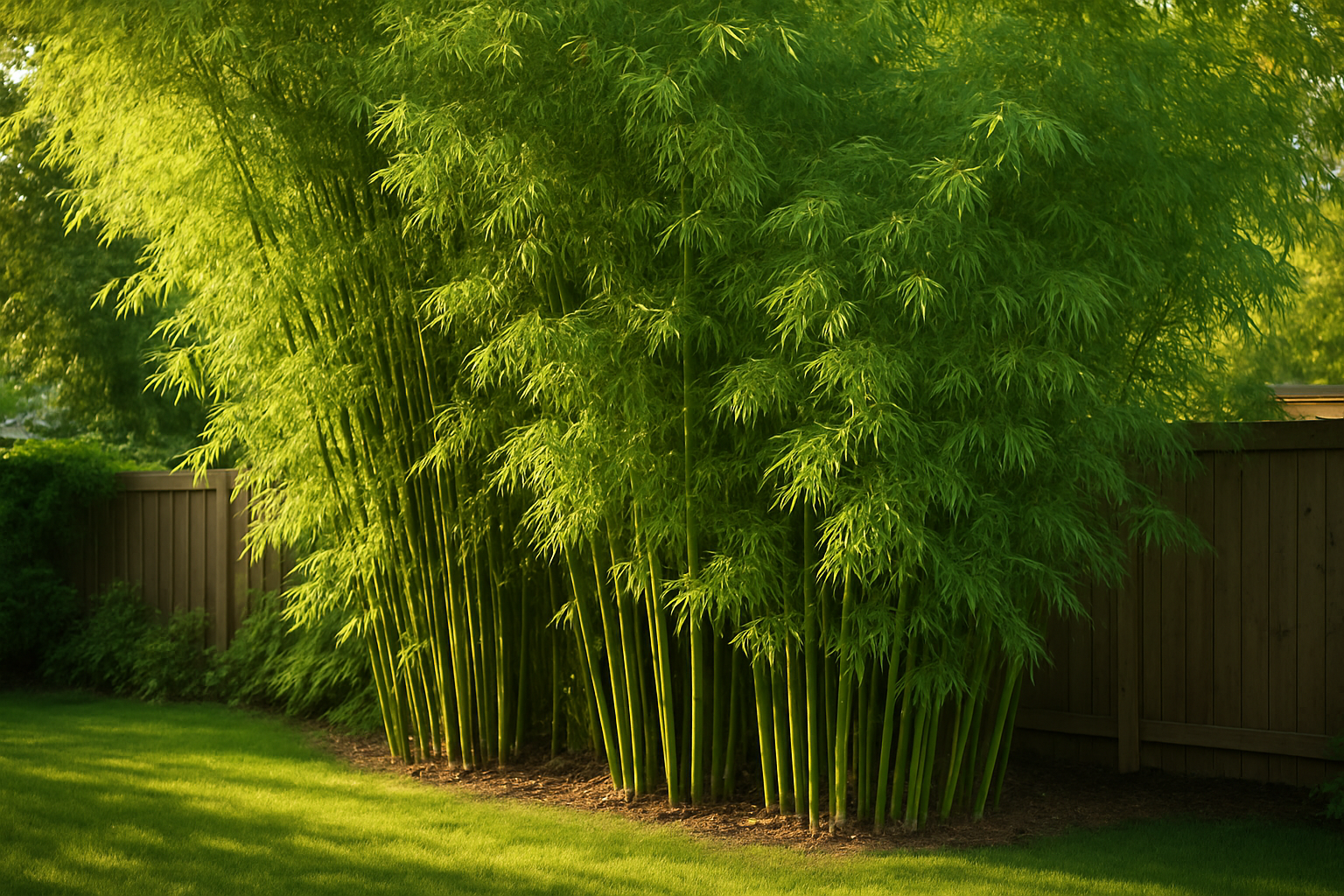
    That fall, after the disaster was cleaned up and the peace treaty with Janet had been signed (in the form of a very nice bottle of wine and a sincere apology), Dave and I started over. Together this time. We spent a weekend researching clumping varieties suited to our climate — we’re in zone 7 — and landed on Fargesia robusta, sometimes called the Campbell bamboo. Cold-hardy, clumping, elegant, and fast enough to give us meaningful privacy within two seasons.

    We dug the trench together. We amended the soil together. Dave, who had initially wanted nothing to do with any bamboo ever again, became genuinely invested in getting it right. There was something unexpectedly bonding about doing the hard, dirty work side by side with a shared goal. By the second summer, the canes were reaching six feet and filling in beautifully. By the third, we had the lush green privacy screen I’d originally dreamed of — without a single shoot in the wrong place.

    Last July, we had dinner on the back patio — the one the bamboo now screens perfectly from the neighbors’ deck. Dave looked over at the swaying green wall and said, completely unprompted, “Okay. It was worth it.” Fifteen years of marriage and that might be one of my favorite things he’s ever said to me.

    If you’re dreaming of your own bamboo privacy fence, please learn from my expensive, marriage-straining mistakes. Choose the right variety for your space, prepare your soil, contain what needs containing, and — if you have a partner — maybe loop them in before you buy twelve plants on a Saturday morning. The result, when you do it right, is genuinely magical. And I promise the journey there is worth every bit of effort.