- Miracle-Gro Quick Start Planting and Transplant Starting Solution — This liquid fertilizer mixes right into your watering can and delivers nutrients directly to stressed roots. I use it for the first few waterings after transplanting.
- Dr. Earth Organic Starter and Transplant
I watched fifty dollars worth of bamboo turn yellow, then brown, then completely dead — and I had no one to blame but myself. I thought transplanting bamboo was just like moving any other plant: dig it up, plop it in a new hole, water it, done. I was spectacularly wrong. That failure sent me down a rabbit hole of research, trial, and eventually real success. Now I want to save you from making the same expensive, heartbreaking mistakes I did. If you’re trying to figure out how to transplant bamboo the right way, you’re in exactly the right place.
This post contains affiliate links. As an Amazon Associate, I earn from qualifying purchases.
The Mistake That Started It All
My neighbor was dividing her massive golden bamboo clump a few summers ago and offered me a chunk of it for free. I was thrilled. I’d been wanting a privacy screen along my back fence for years, and this seemed like a gift from the gardening gods. She handed me a hacked-off section of rhizomes with a few culms still attached, and I drove home grinning.
I dug a hole, dropped it in, gave it a good splash of water from the hose, and walked away feeling like a genius. Within two weeks, every single cane had gone yellow. Within a month, the whole thing was a crispy brown ghost of itself. My neighbor felt terrible. My husband reminded me — gently, but still — that we could have just bought privacy fencing for that amount of stress. The bamboo was dead. Our relationship survived, but just barely.
Here’s what I didn’t know then: bamboo is incredibly sensitive during transplanting, and the roots need serious care from the moment they leave the ground. Skip the right steps and you’re basically just planting a stick.
How to Transplant Bamboo: The Right Way to Do It
After my disaster, I spent weeks reading everything I could find. I talked to a local bamboo nursery owner and joined a few online gardening groups. What I learned completely changed how I approach this process, and my next transplant not only survived — it thrived. Here’s the method that actually works.
Timing Is Everything
The best time to transplant bamboo is early spring, just before new shoots begin to emerge. The plant is waking up and ready to push energy into new growth, which means it can recover from root disturbance much more quickly. Early fall is a decent second option in mild climates. Avoid transplanting in summer heat or the dead of winter — both extremes put enormous stress on an already vulnerable root system.
Dig Wide, Not Deep
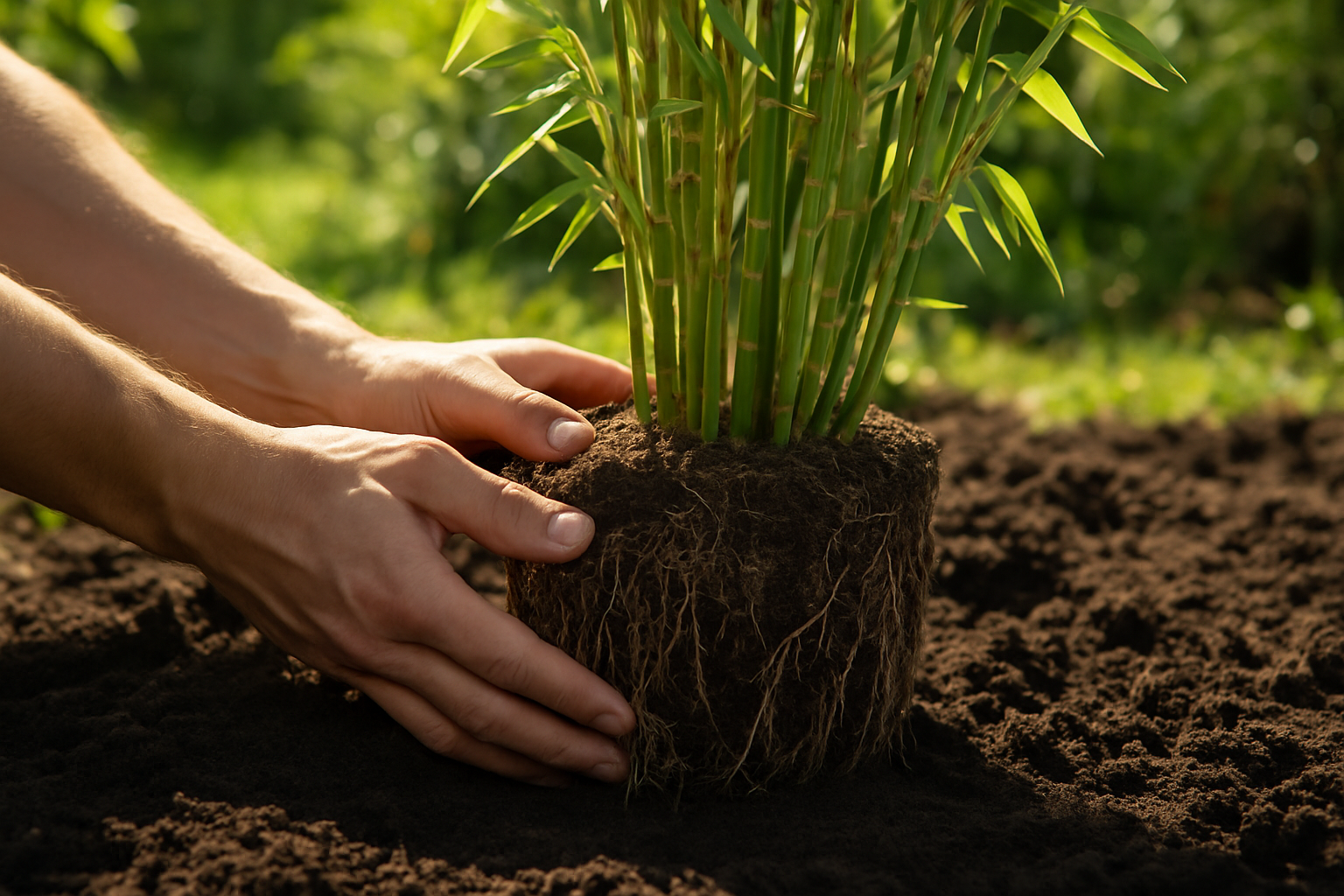
Bamboo rhizomes spread horizontally, so you need to dig out a wide circle around the clump — at least 12 inches out from the outermost culms for smaller varieties, more for larger ones. Don’t rush this step. The more of the root system you preserve, the better your chances of success. Use a sharp tool to cut through tough rhizomes cleanly rather than tearing them. A clean cut heals faster and reduces the risk of rot or disease.
Keep the Roots Moist at All Times
This is the step I completely skipped the first time, and it probably killed my plant faster than anything else. Once the roots are exposed to air, they start drying out immediately. Wrap the root ball in burlap or wet newspaper if you can’t replant right away. Even 30 minutes of dry air exposure on a warm day can damage bamboo roots significantly. Get that root ball into the ground as fast as humanly possible.
Prepare the New Hole First
Dig your new planting hole before you even touch the bamboo you’re moving. The hole should be about twice as wide as the root ball and roughly the same depth. Amend the soil with compost to give the roots a nutrient-rich environment to grow into. When you set the plant in, the top of the root ball should sit at or just slightly above the surrounding soil level. Backfill gently, tamping down to eliminate air pockets without compacting the soil too hard.
Water Deeply and Give It a Transplant Boost
After planting, water the area slowly and thoroughly so moisture reaches all the way down through the root zone. Then keep the soil consistently moist — not waterlogged, but never dry — for the first several weeks. Mulching heavily around the base helps retain moisture and regulates soil temperature, both of which are critical during this recovery period.
Tools and Products That Made a Real Difference
Once I committed to doing this properly, I invested in a few tools and products that genuinely changed my results. If you’re serious about giving your bamboo the best possible start, these are worth having on hand.
Root Cutting Saws
Bamboo rhizomes are tough, and a dull shovel edge tearing through them causes unnecessary damage. A dedicated root saw makes clean, precise cuts that heal faster. I’ve tried a few options and these are my favorites:
- Zenport S148 Root System Pruner Saw — The 5.9-inch blade is compact but incredibly effective for cutting through dense rhizomes in tight spaces. This is the one I reach for most often.
- Kings County Tools Japanese Hand Saw — The 30-degree cutting angle and serrated stainless steel blade make this a dream for cleaner cuts on larger root sections. It feels substantial and well-made in your hand.
- GROWIT Folding Pruning Saw — If you want one versatile tool that folds safely for easy transport and storage, this 11-inch saw with razor-sharp SK5 blade handles bamboo roots like a champ. Great for gardeners who don’t want to haul a lot of gear.
Transplant Fertilizers
Giving transplanted bamboo a nutritional boost at planting time encourages faster root establishment and helps the plant push through the stress of being moved. These are two products I’ve used with great results:
- Miracle-Gro Quick Start Planting and Transplant Starting Solution — This liquid fertilizer mixes right into your watering can and delivers nutrients directly to stressed roots. I use it for the first few waterings after transplanting.
- Dr. Earth Organic Starter and Transplant
Tag: bamboo care
-
How to Transplant Bamboo Successfully: I Learned by Killing My First One
-
Companion Planting With Bamboo: My Accidental Discovery Led to My Best Garden Ever
- Set 5 Lady Ferns Bare Roots — These are a fantastic starter if you want to fill in a shady bamboo understory quickly. Hardy and easy to establish.
- American Plant Exchange Live Autumn Fern – 6-Inch Pot — If you want a little extra color and drama, the copper-toned new growth on these is absolutely gorgeous against bamboo canes.
- Fiddlehead Fern Plant Rootstock — For that dramatic, architectural look in a woodland-style bamboo garden, fiddleheads are hard to beat.
- Back to the Roots 100% Organic Mulch – Coconut
I want to tell you about the day I accidentally created the most beautiful corner of my garden — right after I made what I was absolutely certain was a catastrophic mistake. There I was, on my knees in the dirt, surrounded by plants I had ordered in a panic from three different websites, muttering to myself that I had officially lost my mind. What started as a classic case of “I’ll just figure it out as I go” turned into the most rewarding experiment in bamboo companion planting I’ve ever stumbled into. And I mean stumbled — with full dramatic effect.
This post contains affiliate links. As an Amazon Associate, I earn from qualifying purchases.
Here’s the embarrassing part: I had ordered way too many plants. Not a little too many. An absolutely unhinged amount. I had gotten so excited reading about bamboo screening ideas that I went on a late-night shopping spree and ended up with two large bamboo specimens, several flats of ground cover, and approximately forty ferns that I had zero plan for. My husband walked outside, looked at the pile of boxes on the porch, and simply went back inside without saying a word. That silence said everything.
Why Bamboo Companion Planting Actually Makes a Lot of Sense
Before I tell you how the chaos resolved itself beautifully, let me back up and explain why bamboo companion planting is worth thinking about intentionally — even if your method is less “intentional” and more “desperate.” Bamboo is a powerhouse plant, but it creates a very specific microenvironment around it. The tall canes filter light, the roots are vigorous, and the soil underneath tends to stay consistently moist and slightly acidic from all that leaf litter and organic matter. That sounds like a challenge, but it’s actually an opportunity.
The right companion plants will thrive in that shady, moist understory — and in return, they help suppress weeds, protect the soil from erosion, and give your bamboo planting a lush, layered look that feels more like a curated woodland garden than a single-species screen. The key is choosing plants that genuinely enjoy shade and moisture rather than fighting the conditions bamboo creates.
The Best Companion Plants for Bamboo
Ferns: The Perfect Bamboo Neighbors
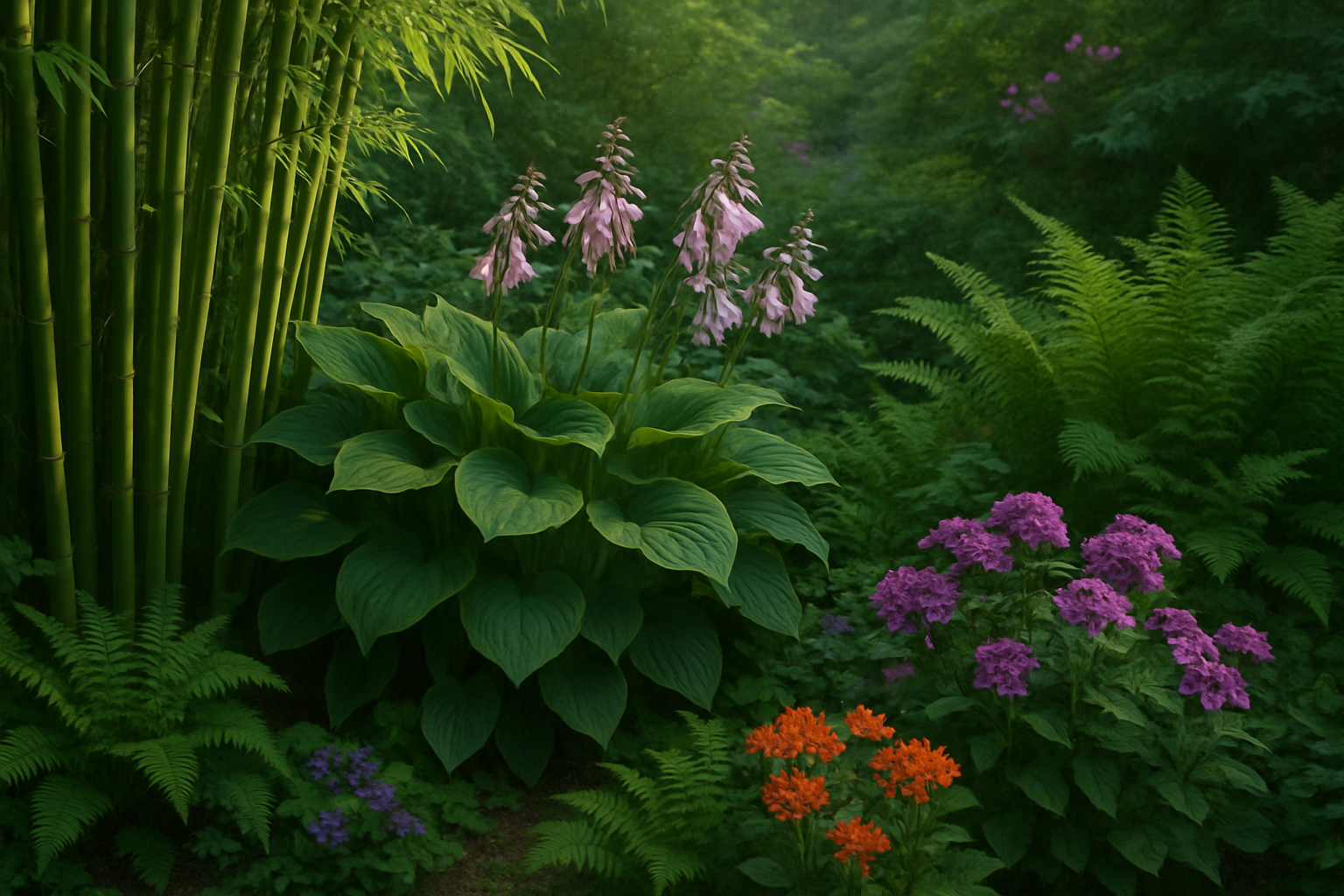
This is where my accidental genius comes in. Those forty ferns I panic-ordered? Turns out ferns and bamboo are practically made for each other. Ferns love the dappled shade that bamboo canopies provide, they tolerate the same moisture-retentive, slightly acidic soil conditions, and their lush, feathery texture creates a stunning visual contrast against bamboo’s tall, vertical canes. I basically stumbled into one of the most classic woodland plant pairings around.
There are several fern varieties that work especially well. Lady ferns are a great starting point — they’re adaptable, hardy across a wide range of climates, and their bright green fronds light up shady spots beautifully. Autumn ferns are another excellent choice, especially if you want a little visual drama; their new growth emerges in stunning copper and bronze tones before maturing to glossy green. And if you’re after something a little more architectural, fiddlehead ferns have that wonderful prehistoric look that makes a bamboo grove feel genuinely magical.
Other Plants That Play Well With Bamboo
- Hostas: Bold, dramatic foliage that thrives in shade and contrasts beautifully with bamboo’s fine-textured leaves.
- Astilbe: Feathery plumes of color that bloom in partial to full shade and love consistent moisture.
- Mondo grass or liriope: Excellent low-growing ground covers that fill in the base of bamboo plantings and handle shade gracefully.
- Hellebores: Shade-tolerant, evergreen, and they bloom in late winter when almost nothing else does.
- Japanese forest grass (Hakonechloa): A graceful, arching ornamental grass that glows golden in partial shade.
Practical Tips for Setting Up Your Bamboo Companion Planting
Get the Soil Ready First
Before you plant anything alongside your bamboo, take a moment to amend and mulch the area well. Bamboo roots can be competitive, so giving your companion plants a healthy, well-prepared bed helps them establish more quickly. A generous layer of mulch does double duty here — it retains moisture, moderates soil temperature, and breaks down over time to feed the soil. I’ve been really happy using organic mulch options that are gentle on both plants and the environment.
Plant in Layers
Think of your bamboo planting in vertical layers. The bamboo itself forms the tall canopy layer. Mid-height companions like ferns, hostas, and astilbe fill in the middle. And low ground covers or mulch handle the base layer closest to the soil. This layered approach not only looks incredible — it also means every inch of space is doing useful work, whether that’s suppressing weeds, preventing erosion, or supporting beneficial insects.
Watch the Moisture
Most bamboo companion plants that love shade also appreciate consistent moisture, which makes them naturally compatible. That said, avoid plants that demand bone-dry conditions or full sun — they’ll struggle in the microclimate bamboo creates. When in doubt, lean toward native woodland plants for your region, since they’re adapted to exactly the kind of dappled, moist conditions a bamboo grove tends to produce.
Tools and Plants I Actually Use
In the spirit of full transparency (and sharing the exact things that turned my fern-ordering frenzy into a success), here’s what I’d genuinely recommend for setting up a beautiful bamboo companion planting:
- Set 5 Lady Ferns Bare Roots — These are a fantastic starter if you want to fill in a shady bamboo understory quickly. Hardy and easy to establish.
- American Plant Exchange Live Autumn Fern – 6-Inch Pot — If you want a little extra color and drama, the copper-toned new growth on these is absolutely gorgeous against bamboo canes.
- Fiddlehead Fern Plant Rootstock — For that dramatic, architectural look in a woodland-style bamboo garden, fiddleheads are hard to beat.
- Back to the Roots 100% Organic Mulch – Coconut