I watched fifty dollars worth of bamboo turn yellow, then brown, then completely dead — and I had no one to blame but myself. I thought transplanting bamboo was just like moving any other plant: dig it up, plop it in a new hole, water it, done. I was spectacularly wrong. That failure sent me down a rabbit hole of research, trial, and eventually real success. Now I want to save you from making the same expensive, heartbreaking mistakes I did. If you’re trying to figure out how to transplant bamboo the right way, you’re in exactly the right place.
The Mistake That Started It All
My neighbor was dividing her massive golden bamboo clump a few summers ago and offered me a chunk of it for free. I was thrilled. I’d been wanting a privacy screen along my back fence for years, and this seemed like a gift from the gardening gods. She handed me a hacked-off section of rhizomes with a few culms still attached, and I drove home grinning.
I dug a hole, dropped it in, gave it a good splash of water from the hose, and walked away feeling like a genius. Within two weeks, every single cane had gone yellow. Within a month, the whole thing was a crispy brown ghost of itself. My neighbor felt terrible. I reminded myself — gently, but still — that we could have just bought privacy fencing for that amount of stress. The bamboo was dead. But I learned from it.
Here’s what I didn’t know then: bamboo is incredibly sensitive during transplanting, and the roots need serious care from the moment they leave the ground. Skip the right steps and you’re basically just planting a stick.
How to Transplant Bamboo: The Right Way to Do It
After my disaster, I spent weeks reading everything I could find. I talked to a local bamboo nursery owner and joined a few online gardening groups. What I learned completely changed how I approach this process, and my next transplant not only survived — it thrived. Here’s the method that actually works.
Timing Is Everything
The best time to transplant bamboo is early spring, just before new shoots begin to emerge. The plant is waking up and ready to push energy into new growth, which means it can recover from root disturbance much more quickly. Early fall is a decent second option in mild climates. Avoid transplanting in summer heat or the dead of winter — both extremes put enormous stress on an already vulnerable root system.
Dig Wide, Not Deep
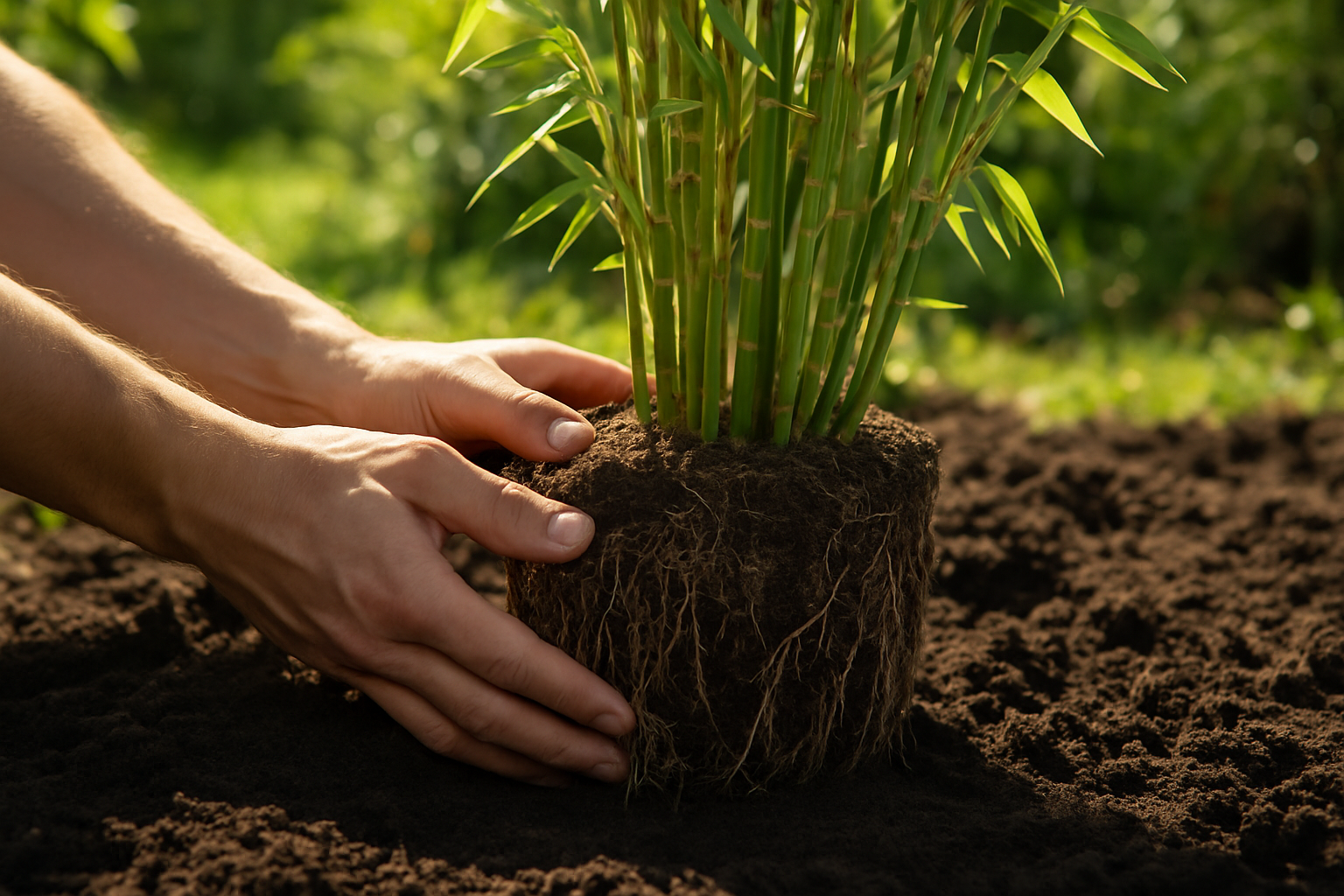
Bamboo rhizomes spread horizontally, so you need to dig out a wide circle around the clump — at least 12 inches out from the outermost culms for smaller varieties, more for larger ones. Don’t rush this step. The more of the root system you preserve, the better your chances of success. Use a sharp tool to cut through tough rhizomes cleanly rather than tearing them. A clean cut heals faster and reduces the risk of rot or disease.
Keep the Roots Moist at All Times
This is the step I completely skipped the first time, and it probably killed my plant faster than anything else. Once the roots are exposed to air, they start drying out immediately. Wrap the root ball in burlap or wet newspaper if you can’t replant right away. Even 30 minutes of dry air exposure on a warm day can damage bamboo roots significantly. Get that root ball into the ground as fast as humanly possible.
Prepare the New Hole First
Dig your new planting hole before you even touch the bamboo you’re moving. The hole should be about twice as wide as the root ball and roughly the same depth. Amend the soil with compost to give the roots a nutrient-rich environment to grow into. When you set the plant in, the top of the root ball should sit at or just slightly above the surrounding soil level. Backfill gently, tamping down to eliminate air pockets without compacting the soil too hard.
Water Deeply and Give It a Transplant Boost
After planting, water the area slowly and thoroughly so moisture reaches all the way down through the root zone. Then keep the soil consistently moist — not waterlogged, but never dry — for the first several weeks. Mulching heavily around the base helps retain moisture and regulates soil temperature, both of which are critical during this recovery period.
Tools and Products That Made a Real Difference
Once I committed to doing this properly, I invested in a few tools and products that genuinely changed my results. If you’re serious about giving your bamboo the best possible start, these are worth having on hand.
Root Cutting Saws
Bamboo rhizomes are tough, and a dull shovel edge tearing through them causes unnecessary damage. A dedicated root saw makes clean, precise cuts that heal faster. I’ve tried a few options and these are my favorites:
- Zenport S148 Root System Pruner Saw — The 5.9-inch blade is compact but incredibly effective for cutting through dense rhizomes in tight spaces. This is the one I reach for most often.
- Kings County Tools Japanese Hand Saw — The 30-degree cutting angle and serrated stainless steel blade make this a dream for cleaner cuts on larger root sections. It feels substantial and well-made in your hand.
- GROWIT Folding Pruning Saw — If you want one versatile tool that folds safely for easy transport and storage, this 11-inch saw with razor-sharp SK5 blade handles bamboo roots like a champ. Great for gardeners who don’t want to haul a lot of gear.
Transplant Fertilizers
Giving transplanted bamboo a nutritional boost at planting time encourages faster root establishment and helps the plant push through the stress of being moved. These are two products I’ve used with great results:
- Miracle-Gro Quick Start Planting and Transplant Starting Solution — This liquid fertilizer mixes right into your watering can and delivers nutrients directly to stressed roots. I use it for the first few waterings after transplanting.
- Dr. Earth 701 Organic Starter and Transplant Fertilizer
The Transplant Fertilizer That Actually Stops the Shock and Yellowing
What works
- The nutrients dissolve directly into your watering can, so they’re immediately available to damaged roots without requiring the plant to do extra work to break them down.
- I’ve seen new growth emerge faster and stronger when I use this for the first three to four waterings after planting — the difference between a bamboo that’s just surviving and one that’s actually pushing new culms.
- It’s gentle enough that you don’t have to worry about burning already-stressed roots, which is a real risk with granular fertilizers applied too soon after transplanting.
Transplant shock is what killed my first bamboo, and a lot of that damage happens because stressed roots can’t absorb nutrients fast enough to recover. Once I started using a liquid transplant solution in those critical first weeks, I stopped watching my newly planted bamboo turn yellow and start dying.
What doesn’t
- This is not a substitute for actually keeping the soil moist and doing the fundamentals right — I’ve seen people spray this on a transplant and then let it dry out, expecting the fertilizer to save it, and it doesn’t work that way.
- The bottle is small relative to what you might need if you’re transplanting multiple large clumps, so you may need more than one if you’re doing a whole privacy screen at once.
I doubted whether a liquid fertilizer could really make that much difference until I transplanted two bamboo sections side by side — one with this solution, one without — and watched the treated plant visibly outpace the other within three weeks. If you’re serious about giving your transplant every advantage, grab Miracle-Gro Quick Start Planting and Transplant Starting Solution before you dig.
About This Article

Written by Marcus Chen. Marcus Chen has spent 15 years cultivating and studying bamboo across 14 different species, combining commercial growing operations with extensive hands-on experience in species selection and containment. As both a grower and consultant, he specializes in practical bamboo management, helping homeowners and landscapers understand the real-world requirements for responsible bamboo cultivation. Marcus brings tested knowledge of which species thrive reliably and which present containment challenges that go beyond standard recommendations. More about this site.
Verify this against a primary source
Specifics change, and your situation may differ from the one described here. These are the authorities worth checking directly:
- American Bamboo Society — species listings and cultivation guidance
- USDA PLANTS Database — species range and identification
- USDA Plant Hardiness Zone Map — cold hardiness verification for your location