I get growth-rate questions constantly — how many inches a day, how many feet a year — but the question that actually determines whether a species belongs in someone’s yard is different: how tall does bamboo grow once it stops? I planted a “fast growing” bamboo along a fence line once without checking its mature height and spent two years topping a plant that was never going to stay at the 8 feet I wanted. Growth rate tells you the pace; mature height tells you whether you’ll regret the choice in year five.
The honest truth is that bamboo mature heights range wildly — from ornamental varieties that max out at 3 feet to timber species that tower past 60 feet. That spread means you need to know not just whether your bamboo grows fast, but where it actually stops. I’ve learned this through trial and error in my own garden, and I’m going to walk you through the species-by-species breakdown so you don’t repeat my mistakes.
Understanding Bamboo Height Categories
Bamboo doesn’t follow a one-size-fits-all height pattern. Instead, species fall into three practical categories based on their mature ceiling, and understanding which category you’re buying into is the first step toward a landscape you’ll actually love living with.
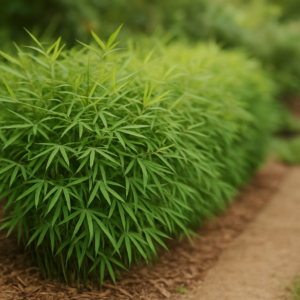
Dwarf and compact varieties (under 6 feet) are what most residential gardeners should reach for first. These are clumping types in almost all cases, which means they grow in a contained mound rather than spreading infinitely outward. They won’t shade out your entire yard or require annual limbing to keep them under control.
Mid-size running bamboos (8 to 20 feet) require serious root-barrier planning and maintenance commitment. These are the species that can get you in trouble if you plant them without containment infrastructure. They’re often chosen for screens, privacy walls, or dedicated groves where their spreading nature is actually an asset.
Giant timber bamboos (40 to 70+ feet) are beautiful, dramatic, and almost never appropriate for suburban yards. I mention them here because they exist in the nursery trade and people buy them without understanding what “mature height” actually means. If you want one, you need acreage, a commitment to management, and realistic expectations about whether your neighbors will appreciate a 60-foot wall of bamboo.
Common Dwarf and Compact Varieties: What to Expect
This is where most home gardeners find their answer to “how tall does bamboo grow” — and the good news is that these varieties are predictable, manageable, and genuinely ornamental.
Pleioblastus fortunei Dwarf Bamboo
This is my go-to for borders and tight spaces. It maxes out at 2 to 3 feet tall with narrow, delicate foliage. It’s clumping, slow-growing (about 2 to 4 inches per year once established), and won’t invade neighboring beds if you plant it in decent soil. I’ve had mine for four years in a 15-foot border, and it’s created exactly the texture I wanted without any sense of threat.
Fargesia robusta Campbell
If you want a taller clumping option that actually has presence, this one reaches 8 to 12 feet in ideal conditions. It’s upright, dense, and excellent for screening. The key word is “ideal conditions” — in my zone 7 garden with afternoon shade and consistent moisture, it stays closer to 9 feet. In warmer zones with more sun, it pushes toward 12. Either way, it’s a decision you make once and live with for a decade, so measure your space carefully.
Sasa palmata Nebulosa
This one’s a personal favorite for shade gardens — it grows 4 to 6 feet tall and spreads gradually (not aggressively) in clumping patterns. The large palmate leaves are genuinely showy, and it tolerates dappled light better than most species. Mature height here means you’re thinking groundcover-meets-accent-plant, not screen.
Mid-Size Running Bamboos: Height Meets Spread
These are the species that teach you why a root barrier isn’t optional — it’s foundational. When people say “bamboo took over my yard,” they’re usually talking about running varieties in this height range.
Phyllostachys aurea (Golden Bamboo)
Golden bamboo is beautiful, hardy, and reaches 15 to 25 feet at maturity. It’s fast — you’re looking at 2 to 3 feet of growth per year once established. The culms are a warm golden color (especially in sunlight), which is why it’s so tempting. But here’s what I learned the hard way: it needs a root barrier system, period. Without one, it will migrate toward softer soil and eventually emerge in your neighbor’s yard. I installed a 30-inch rigid HDPE barrier around mine five years ago, and it’s been perfect containment since then.
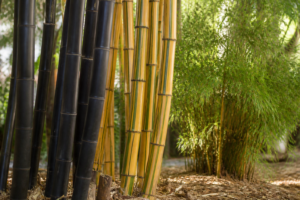
Phyllostachys nigra (Black Bamboo)
The culms start green and mature to glossy black over 2 to 3 years — it’s genuinely stunning. Mature height is 20 to 35 feet, depending on climate. Growth rate in established plants is aggressive: 3 to 4 feet per year. This is a running bamboo that demands respect. If you plant it, you’re committing to regular monitoring and a solid root barrier system. The payoff is a landscape feature that honestly looks like sculpture.
Giant Timber Species: When Height Becomes a Lifestyle
I include these not because they’re appropriate for most yards, but because understanding them helps you appreciate why mature height matters so much. These are real plants available from specialty nurseries, and people do plant them without understanding the commitment.
Phyllostachys edulis (Moso bamboo) matures at 40 to 60 feet. Dendrocalamus giganteus (Giant bamboo) pushes past 70 feet. These aren’t privacy screens — they’re forest canopy. They need acreage, they need climate zones warm enough to sustain them, and they need management infrastructure that most homeowners aren’t prepared for. If you have 5+ acres in zone 8 or warmer and you genuinely want a timber grove, go for it. Otherwise, look at the mid-size options.
Practical Steps to Choose the Right Height for Your Space
Here’s how I approach the decision now, after my initial fence-line mistake:
- Measure your intended planting zone vertically and horizontally. Mark the spot with stakes. Walk around it at different times of day. Visualize a mature plant at full height. Does it shade areas you want to keep sunny? Does it block views you want to preserve? Does it violate sight lines from your house or driveway?
- Check your USDA zone and your actual microclimate. A Fargesia robusta that reaches 12 feet in zone 8 might max out at 8 feet in zone 6. Call a local nursery or extension office. They’ve watched these plants grow in your actual conditions.
- For running varieties, calculate your barrier budget. A rigid HDPE root barrier system costs money and takes installation time. If you’re not ready to commit to that, choose clumping varieties instead. It’s not worth the regret.
- Start with one specimen if you’re uncertain. Plant it, observe it through a full growing season, and let it inform your next decision. A single clumping bamboo in a 3-foot pot takes up minimal space while you’re learning.
The mature height of bamboo is the single most important specification in your planting decision — more important than growth rate, more important than color or culm diameter, more important than whether it’s trendy right now. A plant that reaches 20 feet when you wanted 8 feet doesn’t become the plant you wanted; it becomes a landscaping project that demands constant management or eventual removal.
Start with a clear answer to “how tall does it get?” before you dig the hole. Your future self will thank you, and you’ll actually enjoy your bamboo garden instead of fighting it.
Pick your species based on mature height, match that height to your actual space, and plant with confidence. You’ve got this.
About This Article

Written by Marcus Chen. Marcus Chen has spent 15 years cultivating and studying bamboo across 14 different species, combining commercial growing operations with extensive hands-on experience in species selection and containment. As both a grower and consultant, he specializes in practical bamboo management, helping homeowners and landscapers understand the real-world requirements for responsible bamboo cultivation. Marcus brings tested knowledge of which species thrive reliably and which present containment challenges that go beyond standard recommendations. More about this site.
Verify this against a primary source
Specifics change, and your situation may differ from the one described here. These are the authorities worth checking directly:
- American Bamboo Society — species listings and cultivation guidance
- USDA PLANTS Database — species range and identification
- USDA Plant Hardiness Zone Map — cold hardiness verification for your location