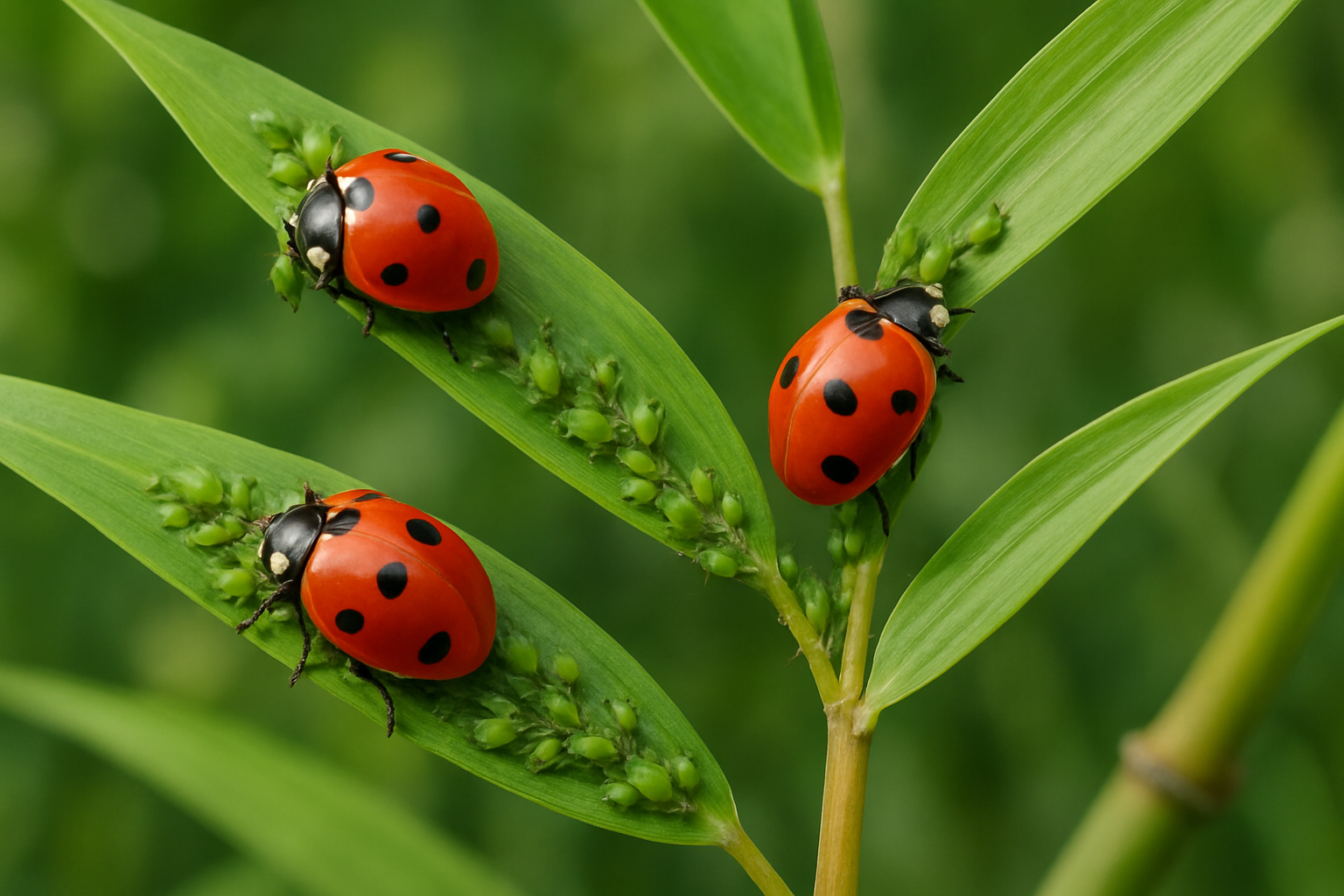
Category: Pests and Diseases

  • Bamboo Spider Mites: How to Identify, Treat, and Prevent an Infestation

    Bamboo Spider Mites: How to Identify, Treat, and Prevent an Infestation

    “`html

    Bamboo spider mites are tiny arachnid pests — most commonly Tetranychus urticae (the two-spotted spider mite) and Schizotetranychus celarius (the bamboo spider mite specifically) — that feed on bamboo leaves by piercing cells and sucking out their contents, causing visible damage and, in severe cases, significant defoliation. The good news is that with early identification and the right response, most bamboo plants recover fully without aggressive chemical intervention.

    How to Identify Bamboo Spider Mites

    Spider mite damage on bamboo follows a predictable pattern. Knowing what to look for early saves you from losing entire culms of leaves later in the season.

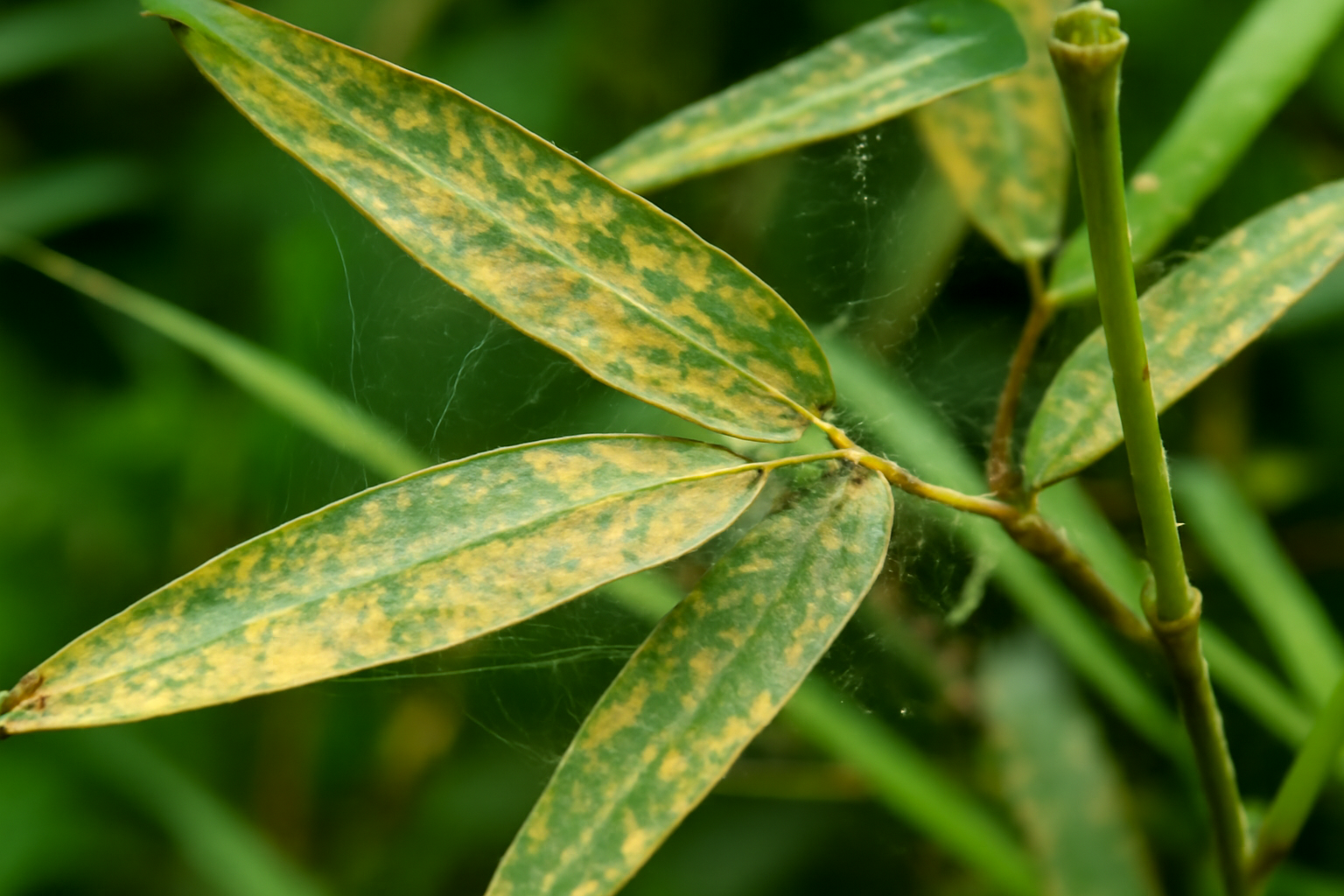
    • Stippled or speckled upper leaf surface: The first sign is a scattering of tiny yellow or pale green dots across the top side of the leaf. These dots are individual feeding wounds where mites have pierced the leaf cells.
    • Fine webbing on leaf undersides: Turn the leaf over. Spider mites produce delicate silk webbing that collects dust and makes the underside look dull or dusty. Heavy infestations produce thick, visible webs.
    • Bronzing or grayish discoloration: As feeding intensifies, leaves shift from yellow stippling to a dull bronze or silvery-gray cast. At this stage, cell damage is extensive.
    • Visible mites under magnification: Use a 10x hand lens or magnifying glass and examine the leaf underside in good light. You’ll see tiny red, brown, or pale moving dots — roughly 0.5 mm in diameter. Schizotetranychus celarius tends to appear slightly darker than the ubiquitous T. urticae.

    A quick field test: hold a sheet of white paper under a suspect leaf and tap it firmly. If mites are present, tiny specks will fall onto the paper and begin moving.

    Is It Spider Mites — Or Something Else?

    Several problems mimic spider mite damage on bamboo. Use this comparison to narrow down the cause before you treat.

    Problem Leaf Appearance Key Diagnostic Clue
    Spider mites Yellow stippling, bronzing, webbing Moving dots visible under magnification; webbing on leaf undersides
    Scale insects Yellowing, sticky residue (honeydew), sooty mold Stationary bumps on stems and leaf undersides; no webbing
    Normal seasonal leaf drop Uniform yellowing starting from inside of grove Occurs in spring; no stippling, no webbing, no pests visible
    Iron chlorosis Yellowing between leaf veins; veins remain green Interveinal pattern; typically affects new growth first; no webbing

    When and Why Infestations Occur

    Spider mite populations explode under specific conditions. Understanding the triggers helps you get ahead of outbreaks before they become serious problems.

    • Hot, dry summer weather: Mites reproduce rapidly when temperatures climb above 85°F (29°C) and humidity stays low. A single female T. urticae can produce up to 20 eggs per day under ideal conditions, with generations cycling every 5–7 days.
    • Drought-stressed plants: Bamboo weakened by insufficient water is far more vulnerable. Mites preferentially colonize stressed tissue, and stressed plants have less capacity to recover from feeding damage.
    • Dusty conditions: Dust on leaves suppresses the predatory mites and insects that naturally keep T. urticae and Schizotetranychus celarius populations in check.
    • Overcrowded groves: Dense plantings with poor air circulation create microclimates that favor mite establishment and make it harder to treat effectively.
    • Overfertilization with nitrogen: Excessive nitrogen pushes lush, soft new growth that mites find highly palatable.

    Bamboo in USDA Hardiness Zones 7–10 — where summers are hot and dry periods are common — tend to see the most persistent mite pressure. Growers in Zone 5–6 deal with mites less frequently but are not immune, particularly during heat waves.

    How to Treat a Spider Mite Infestation on Bamboo

    Match your response to the severity of the infestation. Over-treating is one of the most common mistakes bamboo growers make — broad-spectrum pesticides can kill the beneficial predatory insects that would otherwise keep mites in check naturally, making future outbreaks worse.

    Mild Infestation: Water Knockdown

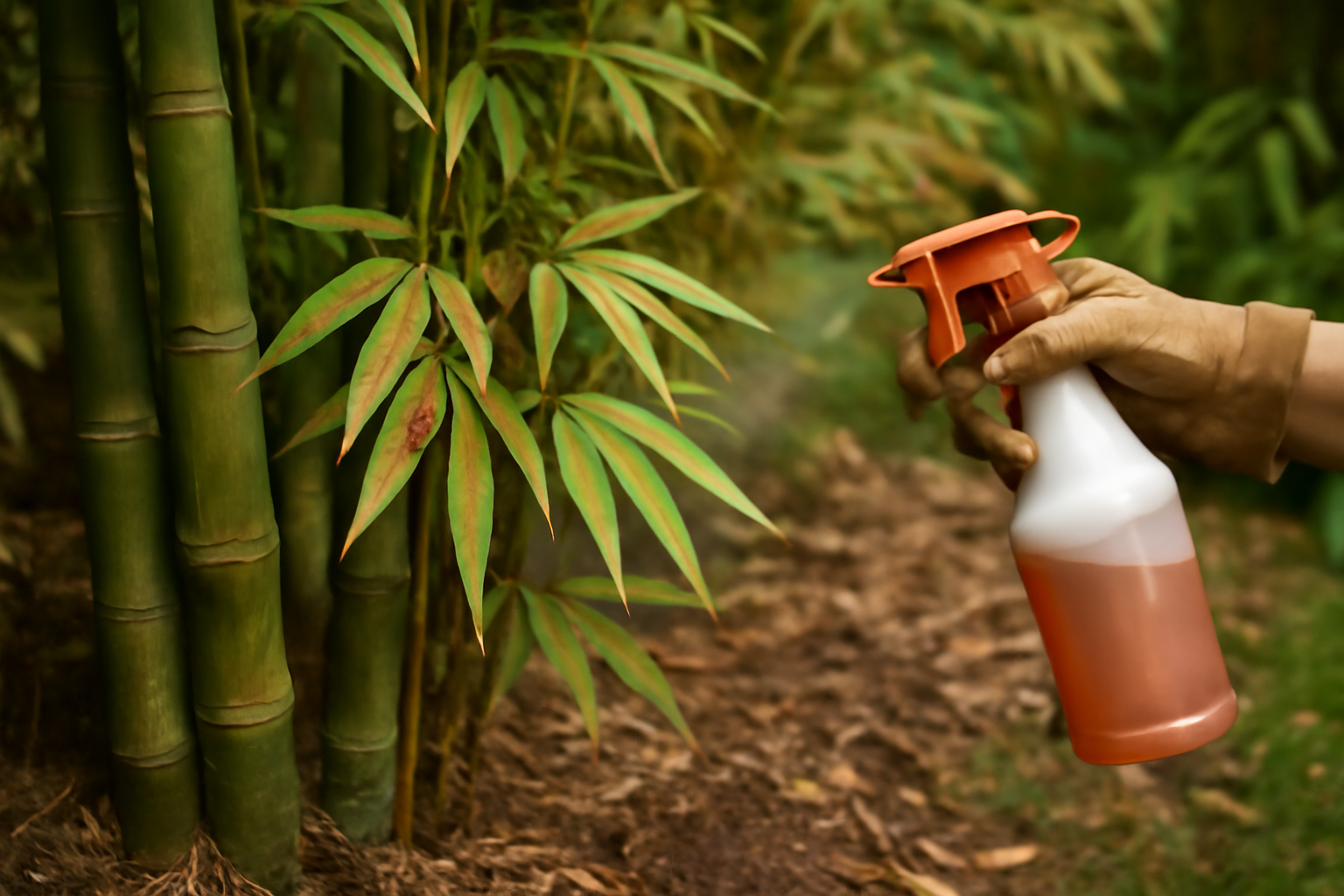
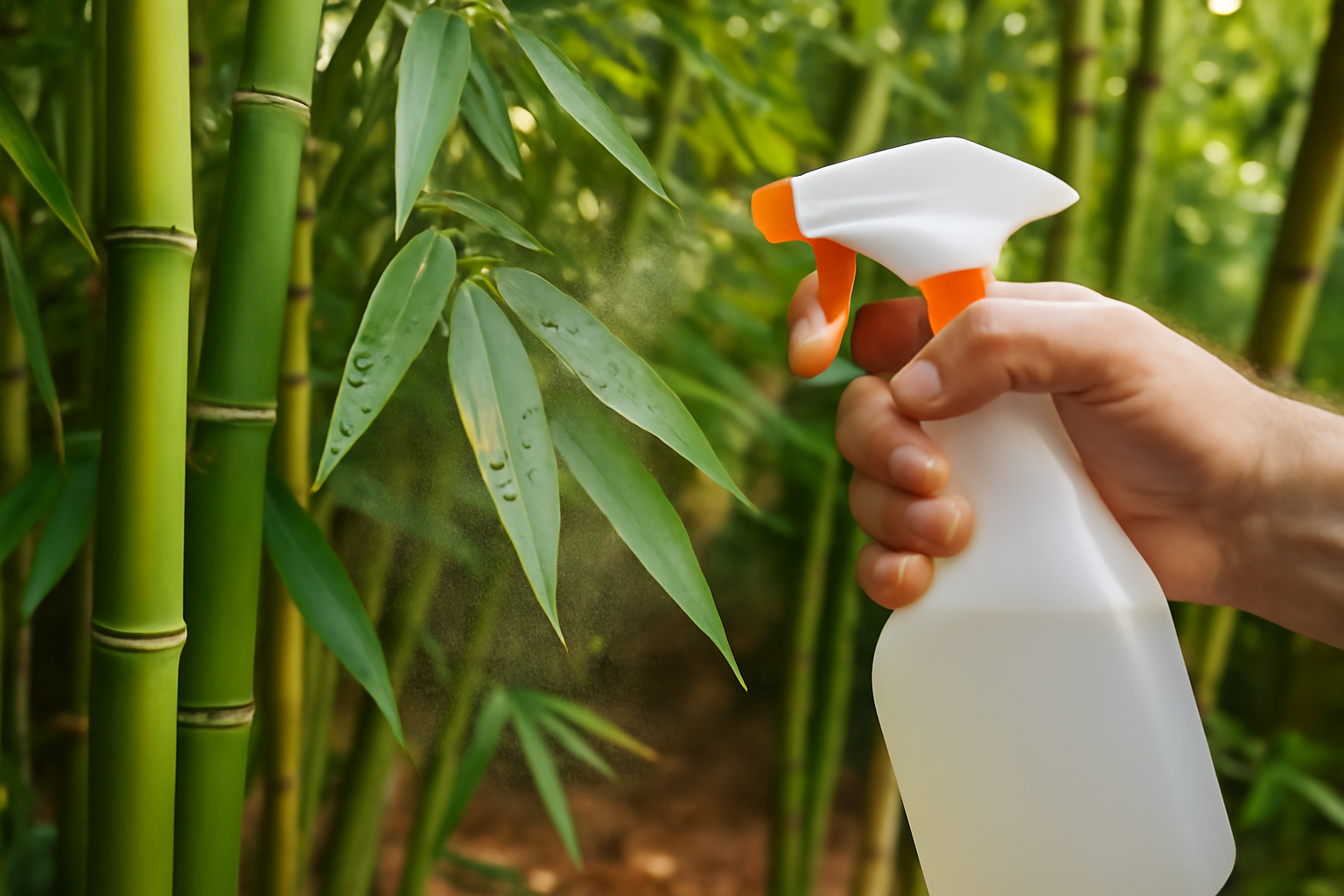
    For early or light infestations, a forceful spray of water is often all you need. Use a garden hose with a jet nozzle and thoroughly drench the undersides of affected leaves. Do this in the morning so foliage dries before nightfall. Repeat every 2–3 days for two weeks. Mites that are knocked off rarely make it back onto the plant, and this method causes zero harm to beneficial insects.

    Moderate Infestation: Insecticidal Soap or Neem Oil

    When stippling is widespread and webbing is visible across multiple culms, apply insecticidal soap solution (2–3% concentration) or neem oil mixed at the label rate. Coverage of leaf undersides is critical — mites living under webbing are protected from surface contact. Apply during cooler parts of the day to avoid leaf burn and repeat every 5–7 days for 3 applications. Neem oil also has some residual repellent effect that discourages reinfestation.

    Severe Infestation: Targeted Miticide

    If significant bronzing covers more than 30–40% of the canopy and populations are still climbing, a targeted miticide may be warranted. Products containing bifenazate or abamectin are effective against spider mites with lower toxicity to most beneficial insects compared to older broad-spectrum options. Rotate active ingredients between applications to prevent resistance development in mite populations.

    Prevention: The Most Effective Long-Term Strategy

    Healthy, well-managed bamboo is genuinely resistant to severe mite damage. Prevention is worth far more than any treatment after the fact.

    1. Water consistently: Maintain adequate soil moisture during dry spells. Deep watering 1–2 times per week during summer is generally preferable to frequent shallow watering. Drought-stressed bamboo is a mite magnet.
    2. Avoid excessive nitrogen fertilization: Lush, nitrogen-driven soft growth is the mites’ preferred food source. A balanced, moderate fertility program produces tougher leaf tissue that’s less vulnerable.
    3. Encourage predatory insects: Ladybugs (Coccinella septempunctata and related species), lacewings (Chrysoperla carnea), and predatory mites (Phytoseiulus persimilis) are natural mite predators. Avoid broad-spectrum sprays that harm them.
    4. Hose down foliage periodically: Even when mites aren’t a problem, periodic overhead watering washes off dust and keeps incipient populations from establishing.
    5. Thin overcrowded groves: Improving air circulation and light penetration reduces the humid, sheltered conditions that favor mite buildup.

    It bears repeating: bamboo is a resilient plant that can tolerate and recover from mild to moderate mite pressure without intervention beyond a strong spray of water and improved growing conditions. If you catch the problem at the stippling stage, maintain consistent irrigation, and avoid killing off the beneficial insects doing the work for you, most spider mite outbreaks resolve on their own before they cause lasting damage. Observe carefully, respond proportionally, and your bamboo will come through fine.

    “`

    🛒 Recommended Products

    Bonide Systemic Insect Control — kills spider mites on contact and provides residual protection on bamboo leaves

    View on Amazon →

    Garden Safe Insecticidal Soap — organic-approved treatment that suffocates spider mites without harsh chemicals

    View on Amazon →

    Neem Oil Ready-to-Use — disrupts spider mite reproduction cycles and deters re-infestation; safe for beneficial insects

    View on Amazon →

    As an Amazon Associate I earn from qualifying purchases.

  • Why Is My Bamboo Turning Yellow? Every Cause Explained (And How to Fix Each One)

    Why Is My Bamboo Turning Yellow? Every Cause Explained (And How to Fix Each One)

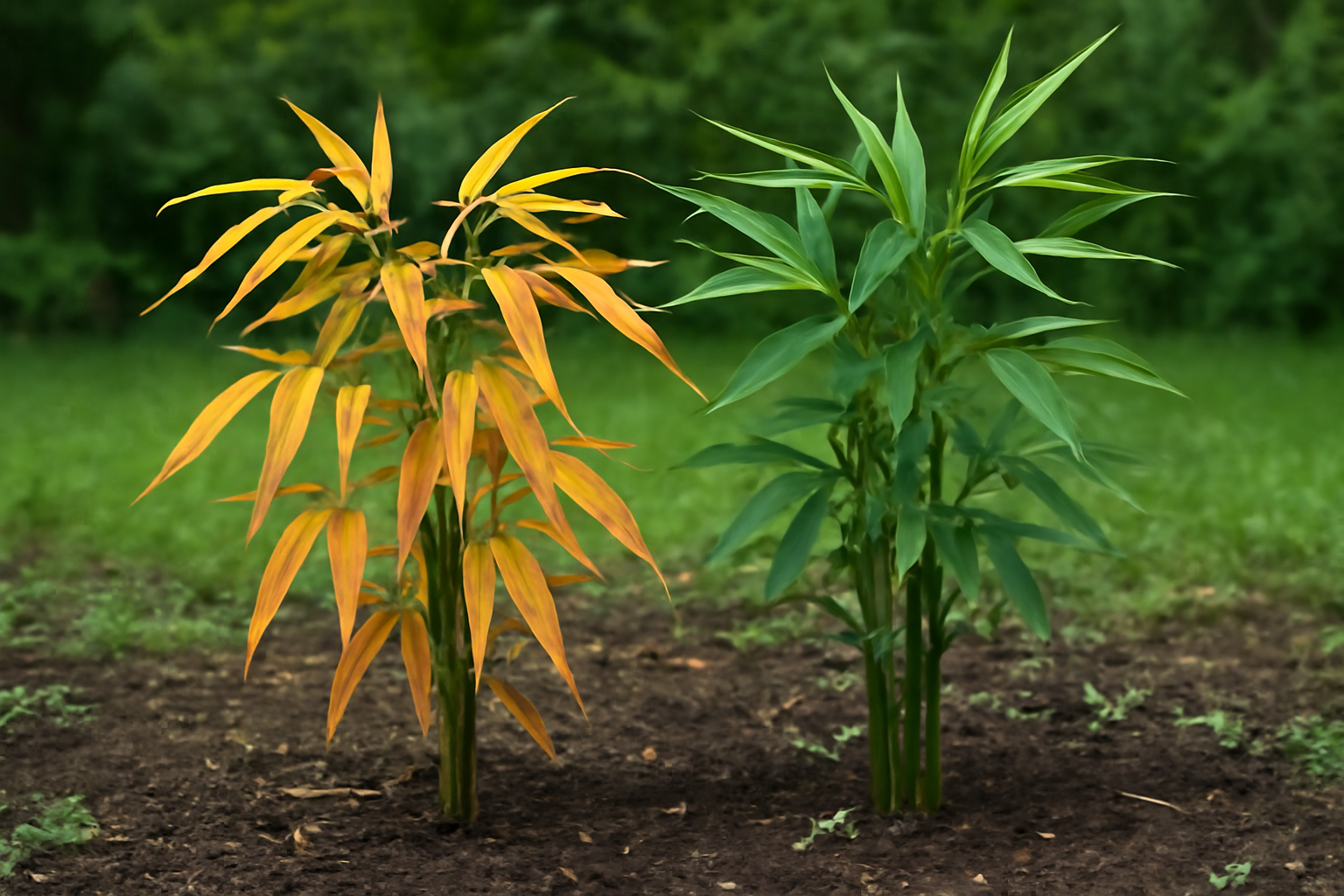
    Seeing your bamboo turning yellow can be alarming, especially when your plant looked perfectly healthy just days before. The good news is that yellow bamboo leaves are one of the most common issues bamboo owners face, and in most cases, the problem is entirely fixable once you understand what’s causing it. Before you panic, take a closer look at your plant — yellowing bamboo is rarely a death sentence, and with the right diagnosis, you can have it looking lush and green again in no time.

    If you’ve found yourself asking “why is my bamboo turning yellow,” the answer depends heavily on the pattern you’re seeing. Bamboo leaves turning yellow across the entire plant tells a very different story than yellowing that’s limited to the lower leaves, the inner canes, or fresh new growth. The location and spread of the yellowing are your biggest clues, and learning to read those signs is the first step toward solving the problem. It’s also worth noting that indoor lucky bamboo and outdoor garden bamboo operate in very different environments, which means they’re susceptible to different causes — from water quality and pot size indoors, to soil conditions and temperature stress outdoors.

    This guide is designed to walk you through every possible cause of bamboo turning yellow, whether you’re growing a delicate indoor arrangement or a towering garden grove. For each cause, you’ll find clear symptoms to help you identify what’s going on, along with practical solutions to get your bamboo back on track. Work through the sections that match what you’re seeing, and you’ll have your answer — and a recovery plan — in just a few minutes.

    The Short Answer: Yellow Bamboo Leaves Are Often Completely Normal

    If your bamboo leaves are turning yellow, there is a good chance nothing is wrong. Bamboo naturally sheds its older inner and lower leaves — typically in late summer through early autumn — as part of a healthy growth cycle. The trick is knowing the difference between normal leaf drop and a genuine problem that needs your attention.

    I learned this distinction the hard way during my first year growing Phyllostachys aurea. I spent three weeks adjusting watering schedules and adding fertilizer, convinced something was seriously wrong — only to watch the plant push out a flush of vigorous new growth a few weeks later. That experience taught me to diagnose before acting. Here is everything I now know about bamboo leaves turning yellow, organized by cause.

    Normal Yellowing vs. Something Actually Wrong

    Before running through the problem causes, it helps to understand what normal bamboo leaf drop looks like. Healthy bamboo replaces roughly one-third of its leaf mass each year. You will typically notice inner leaves — those shaded by the canopy — turning uniformly yellow and then falling off. The yellowing is clean and even, not blotchy or veined. New growth continues at the tips and on younger culms. The soil is not waterlogged, and the stems show no discoloration.

    If that description matches what you are seeing, and if it is happening between July and October, relax. Sweep up the leaves (they make excellent mulch) and let the plant do its thing.

    Everything below covers cases where the yellowing is a symptom of something that actually needs fixing.

    The 8 Real Causes of Bamboo Leaves Turning Yellow

    1. Natural Leaf Drop (Normal Seasonal Shedding)

    Symptoms: Even yellow coloring on older inner leaves, primarily in late summer or early autumn. Lower leaves on established culms. No other distress signs.

    Diagnosis test: Check the timing and location. If it is August through October, affecting shaded interior leaves only, and new tips are still green and active, this is normal.

    Fix: None needed. Leave the fallen leaves as mulch around the base to return nutrients to the soil.

    2. Overwatering and Root Rot

    Symptoms: Yellowing spreads across multiple leaves simultaneously, often accompanied by a musty smell at the soil surface. The base of younger culms may appear dark or soft. Soil stays wet days after watering.

    Diagnosis test: Push a finger 5–7 cm into the soil. If it feels soggy rather than moist, and drainage is poor, overwatering is the likely culprit. Check for soft, blackened roots if you can access them.

    Fix: Reduce watering immediately. Improve drainage by working coarse grit or perlite into the soil. For container-grown bamboo, ensure drainage holes are unobstructed. In severe cases, lift the plant, trim rotted roots back to healthy white tissue, and replant in fresh, well-draining mix.

    3. Drought Stress

    Symptoms: Leaves curl inward lengthwise before yellowing — this is the plant conserving moisture. Wilting is most visible during midday heat. Soil is dry more than 3–4 cm below the surface.

    Diagnosis test: Check soil moisture at 5 cm depth. If bone dry, drought stress is likely. Bamboo in fast-draining sandy soil or in containers is especially vulnerable during summer.

    Fix: Water deeply rather than frequently — aim for 2–3 times per week during summer heat, enough to wet the full root zone. Apply a 7–10 cm layer of organic mulch around the base to retain moisture. Most established bamboos need about 2.5 cm of water per week.

    4. Iron Deficiency (Interveinal Chlorosis)

    Symptoms: Yellowing appears between the leaf veins while the veins themselves remain distinctly green. This pattern — called interveinal chlorosis — typically shows on younger, newer leaves first, which is a key distinguishing feature.

    Diagnosis test: If the veined pattern is clear and concentrated on new growth, suspect iron deficiency. This is most common in alkaline soils (pH above 7.0), which lock up available iron even when it is present in the soil.

    Fix: Test your soil pH. If alkaline, apply a soil acidifier such as elemental sulfur, and use chelated iron rather than standard iron sulfate (chelated forms remain available at higher pH). A foliar spray of chelated iron at 2–3 g per liter can provide quick relief while longer-term soil correction takes effect.

    5. Nitrogen Deficiency

    Symptoms: Uniform pale yellowing with no veinal pattern, starting on the oldest leaves at the bottom of the plant and moving upward. Overall growth is slow and stems appear thin.

    Diagnosis test: If yellowing is even-toned and progresses from older to newer leaves, nitrogen is likely deficient. This is common in bamboo grown in poor soil or in containers without regular feeding.

    Fix: Apply a balanced fertilizer with a high nitrogen component — a 20-5-10 ratio works well for bamboo. Feed every 6–8 weeks during the growing season (spring through late summer). Avoid fertilizing after late summer, as this encourages soft new growth vulnerable to cold damage.

    6. Root Bound or Overcrowded Rhizomes

    Symptoms: Progressive yellowing and reduced vigor in an established plant, particularly one that has not been divided in several years. Roots may be visibly emerging from drainage holes or lifting container edges.

    Diagnosis test: For container bamboo, tip the pot and inspect. A mass of circling, densely packed roots with little soil visible confirms the plant is root bound. For garden-grown running bamboos, check whether rhizomes have exhausted the available space — a major reason why running bamboo varieties should be planted with a root barrier from the start to control spread and prevent rhizome stress.

    Fix: Divide and repot container plants every 2–3 years. Use a sharp spade or pruning saw to section the root mass. For garden bamboo, divide clumps by cutting through the rhizome mass with a mattock and removing outer sections.

    7. Cold Damage and Frost

    Symptoms: Brown or straw-colored leaf tips that gradually extend inward, followed by yellowing of entire leaves. Often appears suddenly in late autumn or after an unseasonable frost. Species like Phyllostachys bambusoides are hardy to around -15°C, while tropical species like Bambusa vulgaris show damage below 0°C.

    Diagnosis test: Check whether a frost event preceded the symptoms. Damage concentrated on tips and outer leaves facing prevailing wind is characteristic of cold injury.

    Fix: Remove damaged foliage once all frost risk has passed. Do not cut back culms until spring — they may still be alive even with yellow leaves. Apply a thick mulch over the root zone to protect rhizomes. Choose species appropriate for your hardiness zone.

    8. Spider Mites or Scale Insects

    Symptoms: Fine yellow stippling across the leaf surface, as though the leaf has been lightly scratched with a pin. You may notice fine webbing on the undersides of leaves (spider mites) or small brown or white bumps on culms and leaf undersides (scale). Sticky residue on leaves or nearby surfaces indicates scale insect honeydew.

    Diagnosis test: Hold a sheet of white paper under a branch and shake it. Spider mites will appear as tiny moving dots. Inspect the undersides of leaves with a magnifying glass.

    Fix: For spider mites, increase humidity around the plant and spray forcefully with water to dislodge colonies. Neem oil solution (5 ml per liter of water with a few drops of dish soap) applied weekly for three weeks is effective. For scale, scrub affected surfaces with a soft brush dipped in isopropyl alcohol, then follow with neem oil treatment.

    Quick Diagnostic Table

    Symptom You See Most Likely Cause First Fix to Try
    Even yellowing on inner/lower leaves, late summer Normal seasonal leaf drop No action needed
    Soggy soil, musty smell, soft culm bases Overwatering / root rot Reduce watering, improve drainage
    Leaves curling inward, dry soil, midday wilt Drought stress Deep water + mulch
    Yellow between green veins, new leaves first Iron deficiency (chlorosis) Chelated iron + soil pH test
    Uniform pale yellow, old leaves first, slow growth Nitrogen deficiency High-nitrogen fertilizer
    Declining vigor, roots escaping container Root bound / overcrowded Divide and repot or transplant
    Brown tips extending inward after cold weather Frost / cold damage Mulch roots, remove dead foliage in spring
    Stippled yellow dots, webbing, sticky residue Spider mites or scale insects Neem oil spray, inspect undersides

    A Practical Approach to Diagnosis

    When bamboo leaves start turning yellow, the single most useful thing you can do before reaching for fertilizer or the hose is to observe the pattern carefully. Where on the plant is the yellowing? What do the veins look like? Is the soil wet or dry? Did a frost pass through recently? Most causes have a distinct fingerprint once you know what to look for.

    Start with the table above, match your symptoms, then work through the corresponding fix systematically. Bamboo is genuinely resilient — most causes of yellowing are reversible with early attention — and once you have grown it through one full seasonal cycle, you will find you can read its signals quickly and confidently.

    🛒 Recommended Products

    Chelated Liquid Iron — corrects iron chlorosis (yellowing from iron deficiency), the most common cause of yellow bamboo leaves

    View on Amazon →

    Southern Ag Thiamethoxam Insecticide — treats spider mite and scale infestations that cause yellowing

    View on Amazon →

    Super Green Lucky Bamboo Fertilizer — restores nitrogen to fix pale yellow leaves caused by nutrient deficiency

    View on Amazon →

    As an Amazon Associate I earn from qualifying purchases. Prices and availability subject to change.

  • Bamboo Leaf Spot: The Fungal Disease That Looked Far Worse Than It Was

    Bamboo Leaf Spot: The Fungal Disease That Looked Far Worse Than It Was

    I still remember standing in my backyard on a Saturday morning, coffee going cold in my hand, staring at my beloved Phyllostachys aurea like someone had thrown a bucket of brown confetti all over it. Dozens — maybe hundreds — of leaves were spotted, yellowing, and dropping to the ground in little papery heaps. My stomach sank. After three years of nurturing that grove from a handful of rhizomes, I was convinced I was watching it die. It took me an embarrassing amount of frantic Googling, two panicked calls to a nursery, and about forty dollars in unnecessary products before I finally learned the truth: what I was dealing with was bamboo leaf spot disease, and while it looked absolutely catastrophic, it was far more manageable than I ever imagined.

    This post contains affiliate links. As an Amazon Associate, I earn from qualifying purchases.

    What Bamboo Leaf Spot Disease Actually Is (And Why It Freaked Me Out)

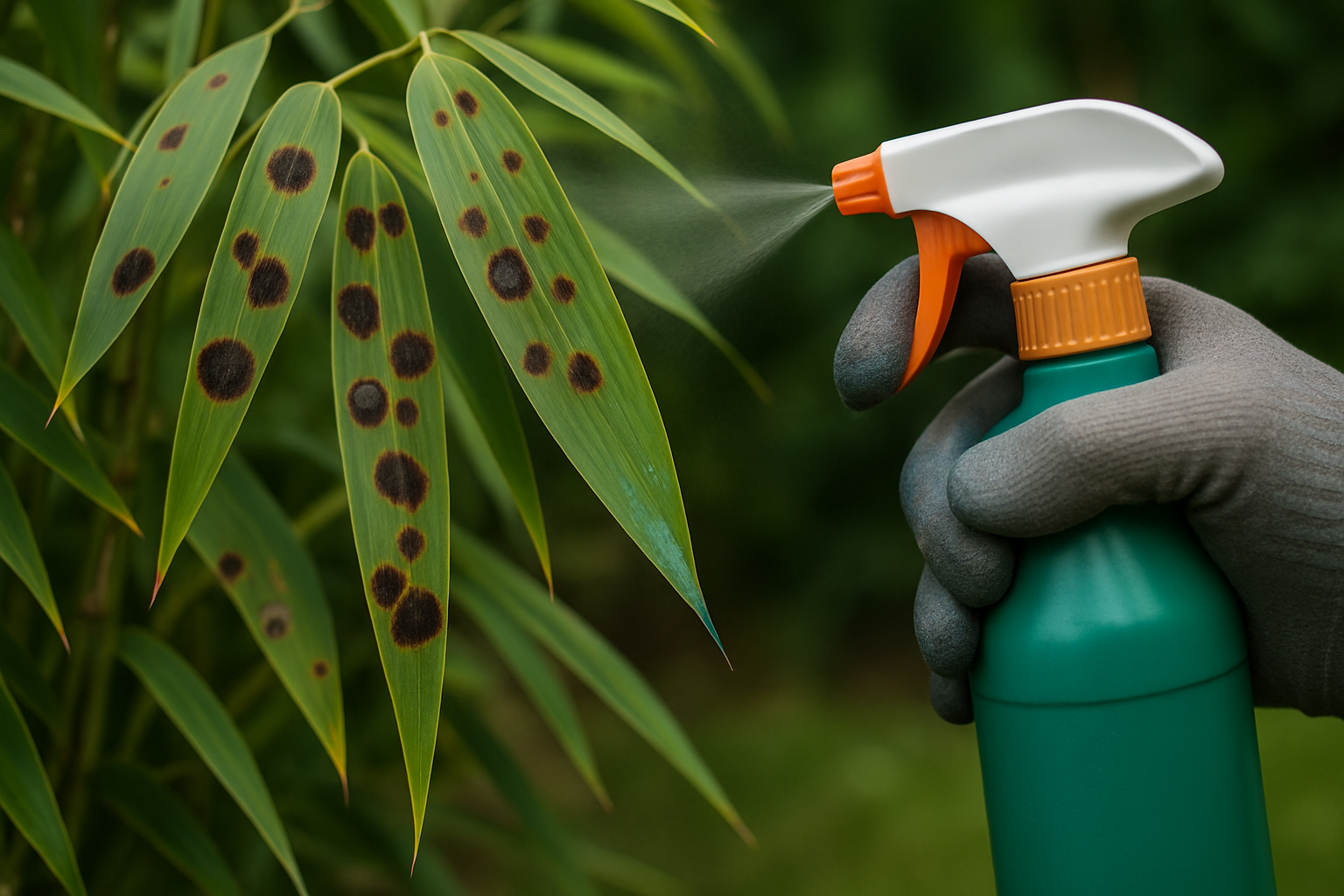
    Bamboo leaf spot is a fungal disease caused most commonly by species of Alternaria, Helminthosporium, or similar fungi that thrive in warm, humid, or wet conditions. The symptoms show up as small brown or tan spots on the leaves, often ringed with a yellow halo. As the infection progresses, those spots can merge, causing whole leaves to yellow and drop. When it hit my grove mid-summer after a stretch of rainy, muggy weather, it spread fast enough that I genuinely thought I was losing the entire planting.

    What made it worse was the timing. My neighbor had just complimented the grove two weeks earlier, telling me it was the most impressive thing on our street. I’d been so proud. And now here it was, looking like it had a terrible disease — which, technically, it did — but not one that spelled the end of the world. I just didn’t know that yet.

    Why Bamboo Gets Leaf Spot (And How to Recognize It)

    Fungal leaf spot on bamboo tends to show up when conditions favor fungal growth: prolonged leaf wetness, poor air circulation, overhead watering, and warm temperatures. It’s more of an opportunistic condition than a death sentence. Here’s what to look for:

    • Small, circular to irregular brown or reddish-brown spots on the leaf blades
    • A yellow or light green halo surrounding the spots
    • Spots that may merge together on severely affected leaves
    • Premature leaf drop, sometimes in large quantities
    • New growth that looks healthy even while older leaves are affected

    That last point is the one that finally gave me hope. Once I slowed down and really looked at my grove, I noticed the new shoots pushing up from the base were perfectly green and healthy. The fungus was attacking older foliage, not the heart of the plant. That was the turning point for me.

    How to Treat and Prevent Bamboo Leaf Spot

    Step 1: Improve the Growing Conditions First

    Before you reach for any spray, take a hard look at what’s going on in your grove. Fungal diseases love stagnant, moist air. Thin out overcrowded culms to improve airflow. Switch to ground-level watering instead of overhead sprinklers. Rake up and dispose of fallen infected leaves — don’t compost them, as the fungal spores can persist. These cultural changes alone can dramatically slow the spread of leaf spot and prevent it from coming back next season.

    Step 2: Apply a Fungicide When Needed

    For moderate to severe infections, a copper-based or sulfur-based fungicide is your best friend. These are well-established organic options that work against a broad range of fungal pathogens, including the ones responsible for leaf spot. The key is applying early and consistently — fungicides protect healthy tissue more than they cure infected tissue, so you’re essentially putting up a shield around what’s still green and good.

    I always apply in the early morning so the spray has time to dry before temperatures peak, and I make sure to coat both sides of the leaves. Repeat applications every seven to ten days during periods of wet weather.

    Step 3: Be Patient With Your Bamboo

    Bamboo is remarkably resilient. Even after a significant leaf drop event, a healthy, established grove will push new growth. The rhizome system underground is what drives the plant, and unless that’s compromised, you’re working with a survivor. Give it time, keep up with your treatments, and trust the process.

    Tools and Products I Recommend

    These are the products I either used myself or researched thoroughly when dealing with my own leaf spot outbreak. All of them are organic-friendly options that I feel good recommending to fellow bamboo growers.

    The Happy Ending I Almost Didn’t Stick Around For

    After my diagnosis spiral

  • Deer vs My Bamboo Garden: Three Deterrents, One Clear Winner

    Deer vs My Bamboo Garden: Three Deterrents, One Clear Winner

    • Layer your defenses. The most effective approach combines scent repellents at the

      I came outside one morning in my pajamas, coffee in hand, ready to admire my beautiful bamboo grove — and found a deer standing inside it, staring at me like I was the one trespassing. We locked eyes. She chewed slowly, deliberately, like she was making a point. That was the moment I knew I had a deer eating bamboo prevention problem, and absolutely zero plan for solving it.

      This post contains affiliate links. As an Amazon Associate, I earn from qualifying purchases.

      What followed was about six weeks of increasingly unhinged experiments, one genuinely embarrassing incident involving a garden hose and my own face, and eventually — mercifully — a solution that actually works. If you’re battling deer in your bamboo garden right now, stick with me. I’ll walk you through what failed spectacularly and what finally sent those beautiful, infuriating animals packing.

      Do Deer Actually Eat Bamboo?

      Let’s clear this up, because I spent an embarrassing amount of time in denial about it. Yes, deer eat bamboo. They’re especially fond of the young, tender shoots that emerge in spring, but they’ll also graze on leaves and strip lower canes during leaner months. Running bamboo varieties with more delicate foliage tend to attract more attention, but clumping types aren’t immune either.

      The frustrating part is that bamboo is actually pretty resilient. A healthy, established grove can handle some browsing without suffering permanent damage. But repeated deer visits — especially targeting the new shoots — can seriously stunt growth, thin your canopy, and turn a lush privacy screen into something that looks like it lost a fight. Which, to be fair, it did.

      So prevention matters. The trick is figuring out which prevention method doesn’t also make you look like a complete fool in front of your neighbors. (Spoiler: I failed at this.)

      Three Deer Eating Bamboo Prevention Methods I Tried (Ranked by Dignity Loss)

      Method One: Scent-Based Repellents

      I started here because it seemed the most sensible and the least likely to end in humiliation. Deer rely heavily on smell, and strong, unfamiliar scents — particularly anything that smells like predators or humans — are supposed to keep them at bay. I picked up some repellent stakes and gave them a shot.

      The Safer Brand Deer-Off Repellent Stations are a solid starting point — six waterproof stakes you push into the ground around your garden perimeter. They’re discreet, all-season, and don’t require any batteries or setup beyond pushing them into the soil. I also tried a set of scent-based deer and rabbit repellent pouches that you hang or stake around the garden bed.

      Did they work? Somewhat, and only at first. Deer are smart and adaptable. After a week or two, the same doe was back, calmly eating three feet from a repellent stake like it was garden décor. Scent repellents need to be rotated and refreshed regularly to stay effective, and on their own, they’re rarely enough for persistent deer pressure. Good as part of a layered strategy — not great as a solo act.

      Method Two: Manual Water Deterrence (The Dark Chapter)

      This is the part of the story I’m not proud of. After the repellent stakes underwhelmed me, I decided the problem was that I needed something more active. Something that would startle the deer in the moment. I didn’t have a motion-activated sprinkler yet, so I improvised.

      I ran a garden hose out to the bamboo grove, left it in a position I was convinced would cover the entry point the deer used, and connected it to a timer I had from an old drip irrigation setup. My plan was to have the hose kick on at dawn when the deer typically visited.

      What I had failed to account for was that I had pointed the hose roughly toward the patio. At 6:03 AM, I walked outside with my coffee to check if the system had worked, stepped directly into the activation zone, and received a full-pressure blast of cold water directly to the chest. I screamed. My neighbor two doors down later told me she heard it and assumed something terrible had happened. The deer, for the record, was not present and was almost certainly fine.

      So. Motion-activated sprinklers are a great idea. Just let them be the actual products designed for this purpose.

      Method Three: Motion-Activated Sprinklers (The Clear Winner)

      After I dried off and salvaged what remained of my dignity, I ordered a proper motion-activated sprinkler. This is where things turned around completely.

      Motion-activated sprinklers work by detecting movement via infrared sensor and triggering a sudden burst of water. For deer, this is genuinely startling and unpleasant — not harmful, just enough to associate your garden with an unpleasant surprise. Over time, they learn to avoid the area altogether. It’s humane, effective, and requires almost no effort on your part once it’s set up.

      I tested a few options, and here are the three worth knowing about:

      • Orbit 62100 Yard Enforcer — This is the gold standard and the one I ultimately kept in place long-term. It has day-only, night-only, and 24-hour modes, which is fantastic for targeting the specific times deer are most active without wasting water or batteries. The sensor range and arc are adjustable, and it connects to a standard hose. Highly reliable.
      • G-Jyuncyou Solar Motion-Activated Sprinkler — A solar-powered option with the bonus of flashing LED lights, which adds a visual deterrent on top of the water burst. Great if you want to avoid dealing with batteries and want something that works in a more exposed area of your yard.
      • Havahart Critter Ridder — A solid mid-range option from a trusted wildlife management brand. Covers a wide range of animals beyond deer, including smaller critters that might also be eyeing your garden. Good choice if you’re dealing with multiple types of visitors.

      Tips for Making Your Deer Eating Bamboo Prevention Strategy Actually Stick

      Even with the right tools, there are a few things I wish someone had told me before I wasted six weeks and one perfectly good cup of coffee.

      • Layer your defenses. The most effective approach combines scent repellents at the
  • Iron Chlorosis Turned My Bamboo Ghost-White: The Mystery I Finally Solved

    Iron Chlorosis Turned My Bamboo Ghost-White: The Mystery I Finally Solved

    I stood in my backyard staring at my prized Phyllostachys aurea, and my stomach dropped. The leaves — once a deep, glossy green — had turned a sickly, almost ghostly yellow-white. Not just a few leaves. Nearly the entire grove. I had spent three years and more money than I care to admit building that screen of golden bamboo, and it looked like it was dying right in front of me. I didn’t know it yet, but what I was looking at was bamboo iron chlorosis, and solving that mystery would take me on a two-month journey of frustration, failed fixes, and finally — one genuinely satisfying breakthrough.

    This post contains affiliate links. As an Amazon Associate, I earn from qualifying purchases.

    When “Just Add Fertilizer” Doesn’t Work

    My first instinct was nitrogen deficiency. I mean, yellowing leaves usually mean the plant needs feeding, right? So I dumped a generous helping of balanced granular fertilizer around the base of the grove and waited. Two weeks later, the leaves looked exactly the same — maybe even a little worse. I tried again with a higher-nitrogen formula. Nothing. At this point I was probably $80 into fertilizer that was doing absolutely zero good, and my spouse was starting to give me the look. You know the one. The we spent how much on this bamboo look.

    I finally sat down and did what I should have done from the start: I really looked at the pattern of the discoloration. The key detail I had been ignoring was that the leaf veins were staying green while the tissue between them turned yellow and then almost white. That is the classic signature of iron chlorosis — not nitrogen starvation, not overwatering, not a fungal disease. The plant had iron in the soil, almost certainly, but it could not absorb it. And there is a big difference between those two situations.

    Understanding Bamboo Iron Chlorosis: What’s Actually Happening

    Iron is one of the micronutrients bamboo needs to produce chlorophyll. Without enough available iron, the plant cannot synthesize chlorophyll properly, and the green fades out of the leaf tissue between the veins — a symptom called interveinal chlorosis. Here is the frustrating part: iron deficiency in bamboo is almost never about a lack of iron in the soil. It is almost always about pH.

    When soil pH climbs above about 6.5 to 7.0, iron molecules bond with other compounds and become chemically unavailable to plant roots. The iron is right there in the ground, locked away like money in a safe you cannot open. Bamboo — like azaleas, blueberries, and gardeninas — prefers slightly acidic soil in the 5.5 to 6.5 range. When that pH drifts upward, iron chlorosis follows. My soil test (which I really should have done in week one, lesson learned) came back at 7.4. That explained everything.

    A few things can push soil pH up over time: heavy watering with alkaline tap water, lime leaching from a nearby concrete foundation or pathway, or simply the natural mineral composition of your native soil. My bamboo was planted right alongside a concrete retaining wall. There was my culprit.

    The Two-Part Fix: Chelated Iron and Soil Acidification

    Once I understood what was actually wrong, the solution became clear — and it has two parts that work together. First, you give the plant a fast-acting dose of chelated iron to start recovering the foliage. Second, you bring the soil pH down so the problem does not come right back in a few months.

    Step One: Apply Chelated Liquid Iron

    Chelated iron is iron that has been chemically bonded to an organic molecule, which keeps it available to plant roots even in higher-pH conditions. It is the fast lane for getting iron into a struggling plant. You can apply it as a soil drench, or for even quicker results, spray it directly on the foliage — the leaves absorb it within hours. Within a week or two of my first application, I started seeing new growth come in with actual green color, and that was the first moment I exhaled in two months.

    Step Two: Acidify the Soil

    Chelated iron is a treatment, but acidifying the soil is the cure. Sulfur-based soil acidifiers lower pH gradually over several weeks, making the native iron in your soil permanently more available. You have to be patient — this is not an overnight process — but the results last. I applied a soil acidifier in early spring and tested the pH again eight weeks later. I had dropped from 7.4 down to 6.6. Not perfect, but well within the range where iron becomes available again. Combined with the chelated iron treatments, that grove came all the way back.

    Products That Genuinely Helped Me

    I went through a fair amount of trial and error before landing on products that actually worked. Here is what I ended up using and recommending to anyone dealing with the same problem.

    For Quick Iron Supplementation

    For Correcting Soil pH

    • Fertilome Soil Acidifier Plus Iron (1 Gallon) — My personal favorite for this job because it does double duty: it lowers pH with sulfur while simultaneously delivering iron. One product, two problems addressed. The gallon size is what I use for maintaining the entire grove.
    • Fertilome Soil Acidifier Plus Iron (32 oz) — Same excellent formula in a smaller size, which is perfect for spot-treating a single bamboo plant or trying it out before scaling up to the full gallon.

    My practical advice: start with a chel

  • Bamboo Leaf Scorch: My Very Public Confession About Over-Fertilizing

    Bamboo Leaf Scorch: My Very Public Confession About Over-Fertilizing

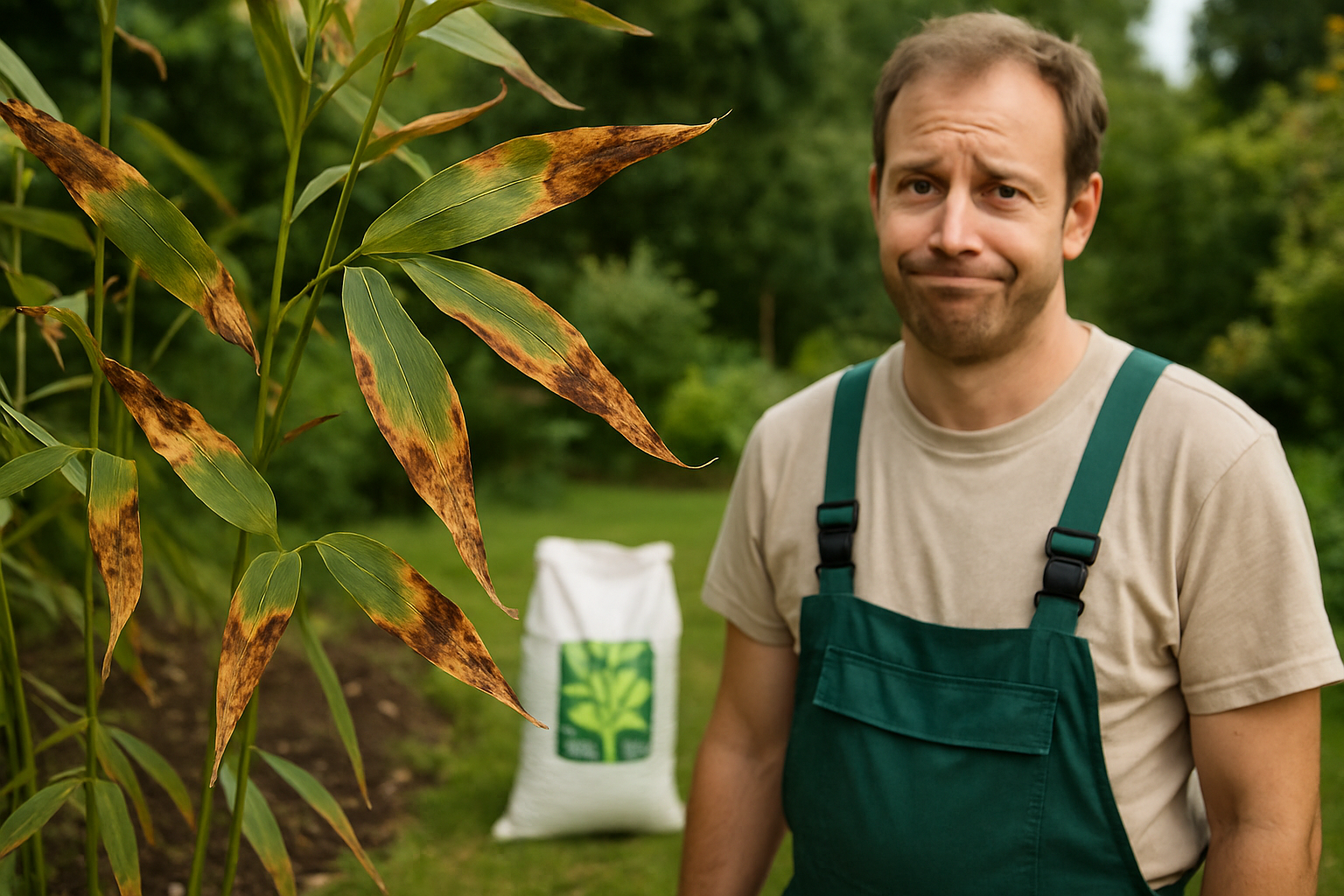
    I want to tell you about the day I stood in my backyard, coffee in hand, staring at my beloved golden bamboo grove and genuinely wondering if I had killed it. The leaves were curling, scorched brown at the tips like someone had run a lighter along each one, and I had absolutely no one to blame but myself. If you’ve ever Googled “bamboo leaf scorch fertilizer burn” in a mild panic at seven in the morning, welcome. You are among friends here.

    This post contains affiliate links. As an Amazon Associate, I earn from qualifying purchases.

    This is my very public confession about the time I decided that if a little fertilizer was good, a lot of fertilizer was obviously going to be absolutely spectacular. Reader, it was not spectacular. But the story does have a happy ending, and more importantly, I learned enough along the way to make sure you never have to recreate my particular brand of gardening chaos.

    How I Managed to Scorch an Entire Bamboo Grove

    It started with good intentions, as most gardening disasters do. My golden bamboo had been looking a little lackluster after a long winter, and I was eager to give it a boost heading into spring. I had just ordered a big bag of granular fertilizer, and when it arrived I did what any reasonable person does: I ignored the instructions entirely and applied roughly three times the recommended amount because, in my head, I was essentially giving my bamboo a spa treatment instead of a meal.

    I raked it in, watered it generously, and then stood back with the satisfied smugness of someone who has absolutely no idea what they’ve just done. Two weeks later, the tips of nearly every leaf in the grove had turned a crispy, unmistakable brown. The culms still looked okay, but the foliage looked like it had been through something deeply traumatic. Which, to be fair, it had. I had happened to it.

    What Bamboo Leaf Scorch From Fertilizer Burn Actually Looks Like

    Before we get to the fix, let’s make sure we’re talking about the same thing. Bamboo leaf scorch from fertilizer burn has a pretty recognizable signature, and it’s worth distinguishing from other issues like drought stress, wind burn, or fungal disease.

    • Browning starts at the leaf tips and edges, not in the center or as random spots
    • Leaves may curl or feel dry and papery at the affected areas
    • The damage is widespread across the plant, not isolated to one section
    • Symptoms appear relatively quickly after fertilizing, usually within one to three weeks
    • The soil may smell slightly acrid if you’ve really overdone it, or you may notice a white crusty residue near the root zone

    What’s happening underneath is a process called salt burn. Excess fertilizer salts in the soil draw moisture out of the roots through osmosis, essentially dehydrating the plant from the inside out even if the soil itself is wet. Your bamboo is thirsty despite being surrounded by water it can no longer properly absorb. It’s a cruel little irony.

    How to Treat and Recover From Bamboo Leaf Scorch Fertilizer Burn

    Here’s the good news: bamboo is incredibly resilient, and if you catch this early, recovery is very achievable. Here’s what I did, and what you should do too.

    Step 1: Flush the Soil Deeply

    The goal is to dilute and push those excess fertilizer salts down and out of the root zone. Water your bamboo deeply and slowly for several days in a row. We’re not talking a quick sprinkle — we’re talking a slow, steady soak that moves water all the way through the soil profile. If you applied granular fertilizer, try to physically remove any you can still see on the surface before flushing.

    Step 2: Check Your Soil Moisture Carefully

    One of my biggest mistakes during the recovery process was guessing at soil moisture and overwatering in my panic, which created a whole different set of problems. A good soil meter is genuinely one of the most useful tools you can have for bamboo care. I now use one religiously before I water or amend anything.

    Step 3: Be Patient With the Foliage

    The scorched leaves are not going to turn green again — that damage is done. But once the root zone recovers, your bamboo will push fresh new growth. Don’t strip the damaged leaves off in a frenzy. Let the plant drop them naturally, and focus your energy on soil recovery rather than cosmetic tidying.

    Step 4: Wait Before Fertilizing Again

    Give your bamboo at least six to eight weeks before you even think about feeding it again. When you do return to fertilizing, choose a slow-release or controlled-release formula that delivers nutrients gradually rather than all at once. Your bamboo will thank you quietly by simply not dying.

    Tools and Products I Actually Use Now

    After my fertilizer fiasco, I got serious about having the right tools on hand. Here’s what I recommend based on real, embarrassing, hard-won experience.

    For Monitoring Soil Conditions

    The YAMRON 4-in-1 Soil Moisture Meter is fantastic for bamboo growers because it measures soil moisture, pH, temperature, and sunlight intensity all in one device. Having that pH reading is especially useful after a fertilizer burn incident, since salt buildup can throw off your soil chemistry. The backlit LCD display makes it easy to read even in shaded grove conditions.

    If you have large container bamboo or deeper planting beds, the XLUX Long Probe Deep Use Soil Moisture Meter is a brilliant option. The extended probe reaches down into the root zone where it matters most, rather than just reading surface moisture that can be wildly misleading.

    Another solid all-rounder is this 4-in-1 Soil Moisture and pH Meter, which covers the same bases as the YAMRON at a slightly different price point. Great for those who want a backup meter or are equipping a larger garden.

    For Feeding Your Bamboo the Right Way

    Once you’re ready to fertilize again, do yourself a favor and use something formulated specifically for bamboo. The

  • I Thought My Bamboo Had a Rare Disease. It Was Just Mealybugs in Disguise.

    I Thought My Bamboo Had a Rare Disease. It Was Just Mealybugs in Disguise.

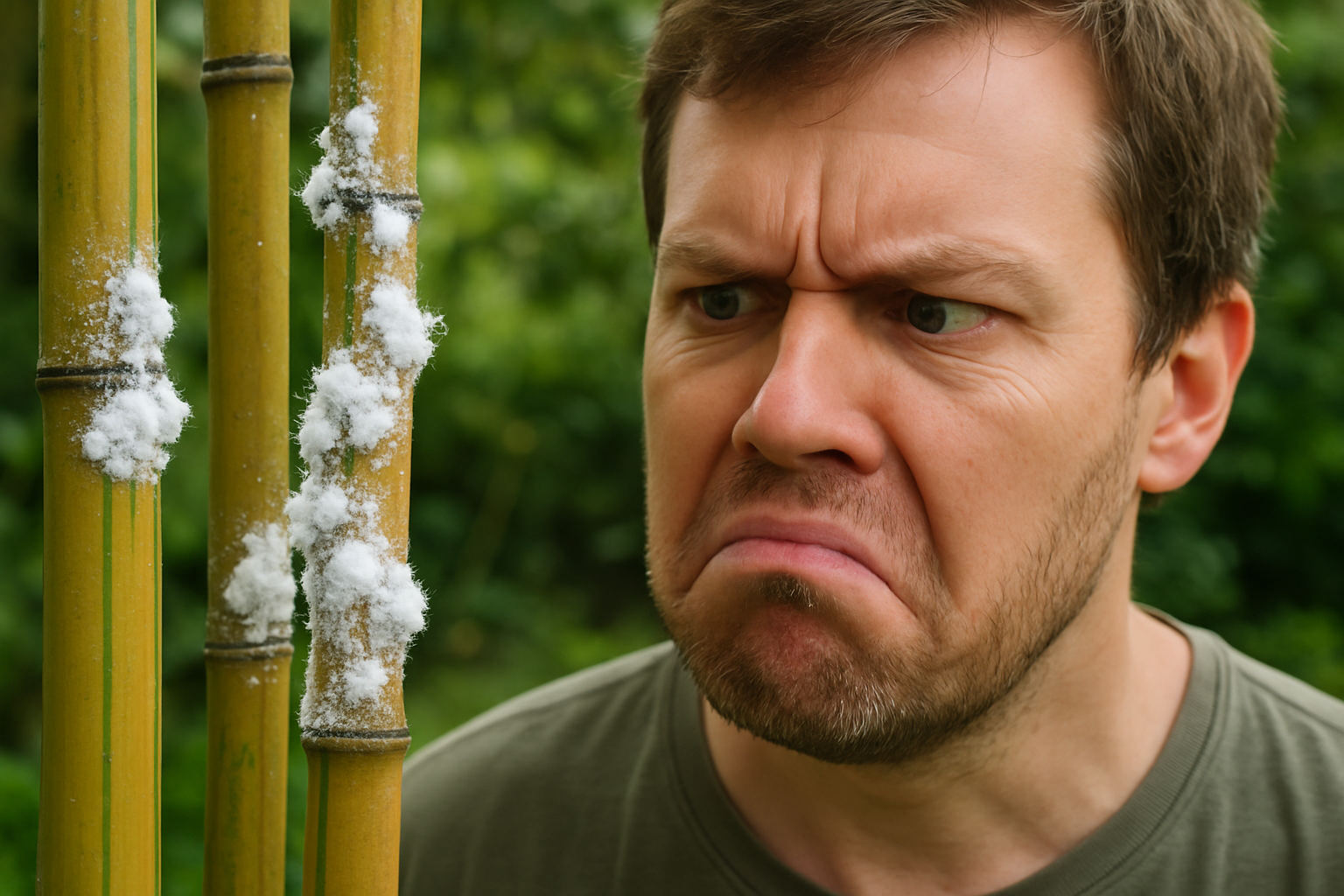
    I stood in my backyard last spring, squinting at my golden bamboo like a detective who had absolutely no business being a detective. There was white stuff on it. Fluffy, cottony, suspicious white stuff. I did what any reasonable person does in this situation — I immediately convinced myself my bamboo had contracted some obscure, possibly bamboo-ending fungal plague. I even wrote out a list of symptoms to describe to… whom, exactly? The bamboo doctor? Spoiler: the bamboo doctor does not exist. What I actually had was a completely common case of mealybugs on bamboo, and I spent two weeks panicking over what any experienced gardener would have spotted in about thirty seconds.

    This post contains affiliate links. As an Amazon Associate, I earn from qualifying purchases. If you click a product link and make a purchase, I may earn a small commission at no extra cost to you. I only recommend products I genuinely find useful for bamboo gardening.

    If you’re out here doing the same frantic Google spiral I did, first of all — welcome, you’re in good company. Second, take a breath. Mealybugs are annoying, but they are absolutely manageable, and your bamboo is almost certainly going to be fine. Let me walk you through what actually happened to mine, and more importantly, what I did to fix it.

    What Mealybugs on Bamboo Actually Look Like (And Why I Thought It Was Something Way Worse)

    Here’s where I really embarrassed myself. Mealybugs look like tiny, soft-bodied insects coated in a white waxy powder. They cluster at leaf joints, along stems, and in the tight spaces where leaves meet the culm. The result is these little cottony white tufts that — to an anxious bamboo parent — can look like fungus, mold, powdery mildew, or, in my personal nightmare scenario, some kind of bamboo-specific blight I had somehow introduced to my garden.

    I photographed the white patches from twelve different angles. I sent pictures to two friends, neither of whom garden. One said it looked like “some kind of foam.” The other said “just pull it off?” Reader, I should have listened to the second friend.

    The actual telltale signs of mealybugs are pretty distinct once you know what you’re looking for:

    • White, cottony or waxy residue concentrated at leaf joints and stem nodes
    • Tiny oval-shaped bugs visible underneath the fluff (cream or pale yellow in color)
    • Sticky residue on leaves or stems — this is honeydew, a byproduct mealybugs leave behind
    • Yellowing or wilting leaves on otherwise healthy bamboo
    • Sooty mold forming on honeydew deposits — this was the thing that made me truly spiral

    That last one — the sooty mold — was what pushed me over the edge. When mealybugs excrete honeydew, a secondary black mold can grow on it, which makes your bamboo look like it’s suffering from two problems simultaneously. It’s alarming. It’s also secondary. Fix the mealybugs, and the mold stops getting new food and eventually clears up on its own.

    How to Actually Get Rid of Mealybugs on Bamboo

    Once I finally accepted that I had bugs and not a plague, I got to work. There’s a logical order to treating a mealybug infestation, starting with the least aggressive methods and escalating only if needed.

    Step 1: Manual Removal First

    Before you reach for any product, physically remove as many mealybugs as you can. A strong blast of water from your garden hose dislodges a surprising number of them. Follow that up with a cotton swab or soft cloth dipped in rubbing alcohol — dab it directly onto the bugs and their cotton nests. The alcohol dissolves their waxy protective coating and kills them on contact.

    For this, I keep a spray bottle of high-concentration isopropyl alcohol on hand. I like the 99% Isopropyl Alcohol Spray in a 17 oz bottle — the spray format makes it easy to target specific clusters without soaking the whole plant, and the 99% concentration is fast-acting. If you’re treating a larger planting or want a bit more volume, the Volu-Sol 99% IPA in a 24 oz continuous mist spray bottle gives you a nice fine mist that’s great for getting into tight leaf joints. For a smaller, travel-sized option you can keep in a garden kit, the Safetec 70% Isopropyl Alcohol 2oz Spray Bottle works well for spot treatments on lighter infestations.

    One important note: always test rubbing alcohol on a small area first. Most bamboo handles it well, but diluting your 99% solution with water (roughly 1:1) is a good idea if you’re treating young or delicate growth.

    Step 2: Bioinsecticide for Persistent Infestations

    If manual removal doesn’t fully knock things back — and with a well-established infestation, it often won’t — a bioinsecticide is your next move. I’ve had great results with Grandevo CG Bioinsecticide. It’s derived from a naturally occurring soil bacterium and is effective against mealybugs, aphids, mites, and several other common bamboo pests. Because it’s a biological pesticide, it’s gentler on beneficial insects than many conventional options, which matters a lot if you’ve got pollinators visiting your garden. Mix according to the label directions and apply as a foliar spray, making sure to coat the undersides of leaves and the stem nodes where mealybugs hide.

    Step 3: Systemic Treatment for Serious or Recurring Problems

    For persistent, large-scale infestations — or if you’ve had mealybugs return season after season — a systemic insecticide that the plant absorbs from the inside is worth considering. The AceCap Insecticide Systemic Tree Implants are designed to be inserted into the plant itself, delivering insecticide directly into the vascular system so insects feeding on plant tissue are exposed to it. This is more of a serious intervention than a first-response tool, but for bamboo groves dealing with ongoing pest pressure, it’s a legitimate option. Follow the manufacturer’s instructions carefully and use it as part of an integrated approach rather than a standalone fix.

    Preventing Mealybugs From Coming Back

    Here’s the part I wish someone had told me before I had a full

  • Aphids on Bamboo: The Infested Summer That Accidentally Created a Ladybug Paradise

    Aphids on Bamboo: The Infested Summer That Accidentally Created a Ladybug Paradise

  • Root Rot Killed My 5-Year-Old Bamboo: The Overwatering Story I’m Ashamed Of

    Root Rot Killed My 5-Year-Old Bamboo: The Overwatering Story I’m Ashamed Of

    I stood in my backyard staring at a bamboo grove that had taken me five years to grow, and I knew something was terribly wrong. The culms had gone from vibrant green to a sickly yellow almost overnight, and when I finally dug down to investigate, the smell hit me first — that unmistakable, earthy rot that told me I was too late. Bamboo root rot had quietly destroyed everything I’d spent half a decade building, and the worst part? I did it to myself.

    This post contains affiliate links. As an Amazon Associate, I earn from qualifying purchases.

    I’m sharing this story because I’ve seen dozens of posts about pests and diseases written from a clinical distance. But this one is personal, a little embarrassing, and I hope it saves at least one of you from making the same expensive, heartbreaking mistake I did.

    How a Good Intention Turned Into a Garden Disaster

    It started the summer we had an unusual dry stretch. I panicked. My bamboo — a beautiful stand of Phyllostachys aureosulcata I’d been nurturing since the kids were in elementary school — looked a little droopy one afternoon, and I convinced myself it was desperate for water. So I watered it. Then I watered it again the next day. And the day after that. I even set up a soaker hose on a timer because I didn’t want to “forget.”

    What I didn’t realize was that the drooping was a temporary midday wilt — something bamboo does completely normally in high heat. It wasn’t a cry for water. It was just… Tuesday. By the time I noticed the yellowing leaves and mushy rhizomes, the roots had been sitting in waterlogged soil for nearly three weeks. My beautifully established grove was in serious trouble, and I had no one to blame but myself.

    My spouse didn’t say “I told you so,” but the look said everything. We had talked about redoing the back fence using that corner of the yard, and I’d insisted on keeping the bamboo. That conversation stung a lot more now.

    Understanding Bamboo Root Rot: What’s Actually Happening Underground

    Bamboo root rot is almost always caused by one of a handful of water mold pathogens — most commonly Phytophthora or Pythium species — that thrive in poorly drained, consistently wet soil. These aren’t true fungi, but they behave like them, colonizing the root system and cutting off the plant’s ability to take up nutrients and water. Ironically, the plant then shows symptoms that look like drought stress — yellowing, wilting, and leaf drop — which can trick an already worried gardener into watering even more.

    Here’s what made my situation worse: bamboo rhizomes spread horizontally, and once rot sets into the rhizome network, it can travel. By the time above-ground symptoms appear, significant underground damage has usually already occurred. Bamboo is remarkably resilient, but it is not immune to sustained waterlogged conditions.

    The warning signs I should have caught earlier:

    • Yellowing leaves that weren’t explained by seasonal shedding
    • Culms that felt soft or hollow near the base
    • A faint sour or musty smell near the soil line
    • Stunted or absent new shoot production during the growing season
    • Soil that stayed wet for days after watering or rain

    What I Did to Try to Save It (And What Actually Worked)

    Once I understood what I was dealing with, I went into recovery mode. I removed the most damaged culms first, cutting them at the base. Then I carefully excavated around the rhizome zone, removing visibly blackened and mushy sections. I let the soil dry out — really dry out — for over a week before doing anything else.

    One of the first things I did to the remaining root zone was treat it with a diluted hydrogen peroxide solution. Hydrogen peroxide introduces oxygen into the soil, which helps kill anaerobic pathogens like the ones responsible for root rot while being gentle enough not to destroy everything beneficial in the soil. I used a 3% solution sprayed directly onto the exposed root area and into the soil around the rhizomes.

    Tools I Used During Recovery

    For the hydrogen peroxide treatments, I kept a couple of options on hand depending on the scale of the application:

    Beyond the hydrogen peroxide, I also applied a phosphonate-based fungicide to the root zone. Phosphonates work differently from most fungicides — they’re taken up by the plant and actually help it fight off Phytophthora and Pythium from the inside. This was genuinely a game changer for what remained of my grove.

    Beyond the treatments, I also improved drainage in the area by working in coarse grit and compost, and I removed the soaker hose timer entirely. Manual watering only from that point forward.

  • Why Bamboo Leaves Turn Yellow: 6 Causes I Discovered the Embarrassing Way

    Why Bamboo Leaves Turn Yellow: 6 Causes I Discovered the Embarrassing Way