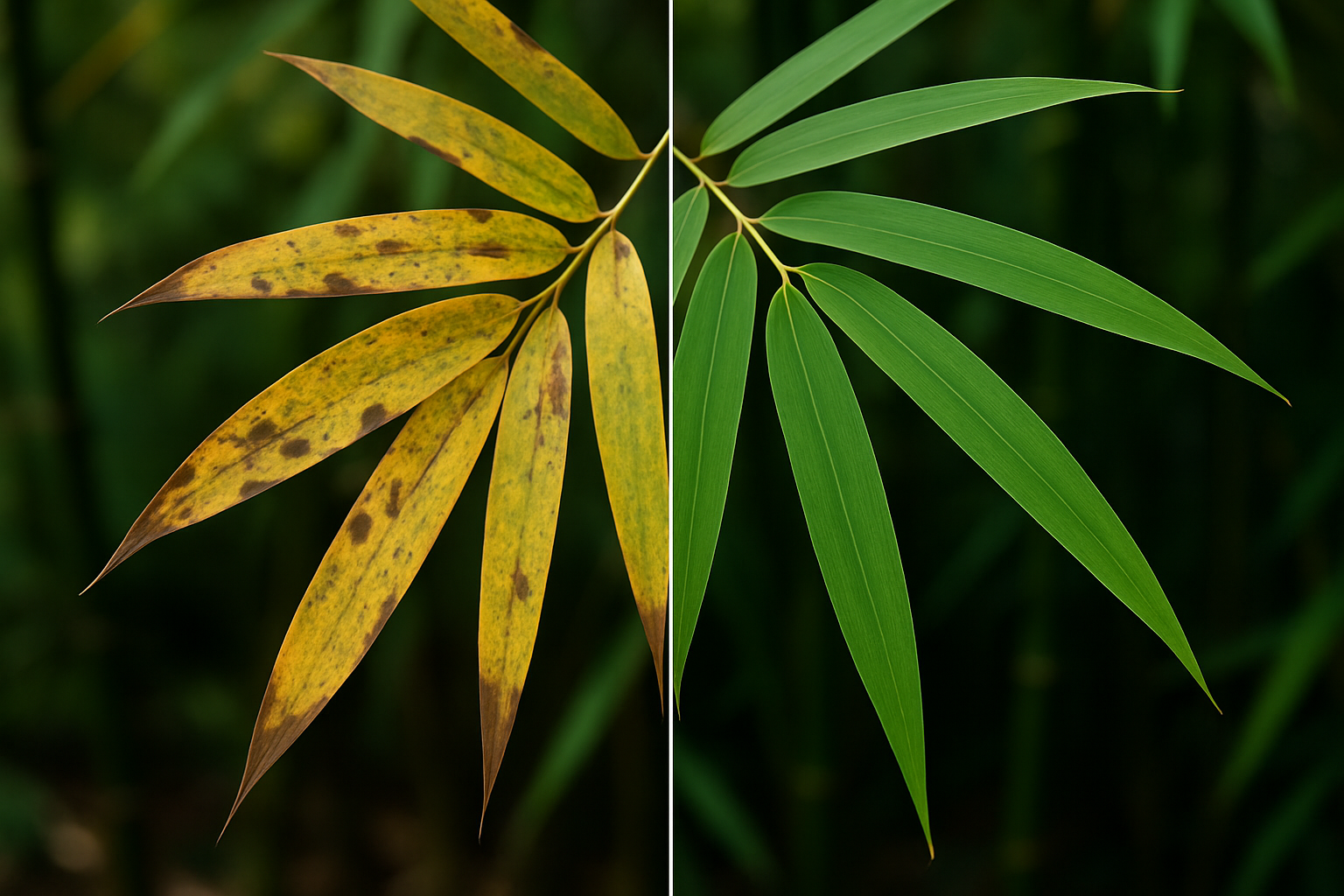
Last spring, I watched my Phyllostachys aureosulcata grove turn a sickly pale yellow-green over the course of six weeks, and I nearly convinced myself it was dying. The older leaves at the base of each culm turned first—a uniform, washed-out yellow that looked nothing like the crisp variegation the variety was supposed to show. I’d been treating it like a general nutrient problem for days before I realized what was actually happening: my bamboo had severe nitrogen deficiency, and once I understood the specific signature of that deficiency, the fix took less than two weeks to show results.
If your bamboo is yellowing and you’re wondering what’s wrong, here’s what I learned: nitrogen deficiency in bamboo looks dramatically different from other nutrient problems, and it’s one of the most common culprits because bamboo—being a grass—is a voracious nitrogen feeder. This post walks through exactly how to identify it, why it happens, and the concrete steps I used to bring my grove back to life.
Why Bamboo Starves for Nitrogen Faster Than You’d Expect
Here’s the fundamental thing most people don’t realize: bamboo is grass, not a tree. And grasses have metabolic demands completely different from woody plants. A single bamboo culm produces 3 to 4 new leaves per week during active growth season. That’s leaf material being built from scratch, constantly, for months. Chlorophyll synthesis—the engine that makes leaves green—is directly dependent on nitrogen availability.
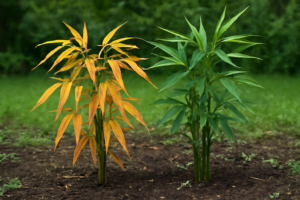
When nitrogen becomes limiting, your bamboo doesn’t stop growing, but it reallocates what little nitrogen it has to new growth. Older leaves lose their nitrogen first. That’s why the symptom is so distinctive: your lowest, oldest leaves yellow while the canopy top stays relatively green. It’s a nitrogen-deficient plant cannibalizing its own older tissue to feed new shoots.
I was losing about 30–40% of my mature leaf area before I caught it. My 4-year-old Phyllostachys aureosulcata grove had been established long enough that I’d gotten complacent about feeding it. I thought once a bamboo was established, it would just pull what it needed from the soil. Wrong. Established bamboo needs consistent nitrogen replenishment, especially if you’re harvesting culms or in a climate with significant rainfall that leaches nitrogen down below the root zone.
The Specific Visual Signature of Nitrogen Deficiency in Bamboo
This is where the diagnosis gets practical. Nitrogen deficiency has a look that’s unmistakable once you know it—and it’s completely different from iron chlorosis or magnesium deficiency, both of which also cause yellowing.
In nitrogen deficiency, you’ll see:
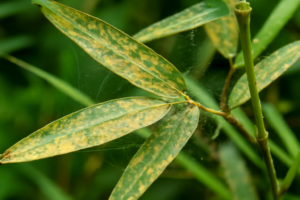
- Uniform pale yellow-green across the entire leaf blade, not striped, not just the veins, not just leaf margins. The whole leaf goes a soft, washed-out color.
- Bottom-up progression. Lower, mature leaves yellow first. Upper canopy remains darker green. If the yellowing were iron chlorosis, you’d see it hitting young leaves and vein patterns first.
- Leaf drop without browning. The yellowed leaves eventually abscise (drop), but they don’t typically turn brown or necrotic first. They just fade and fall.
- Smaller new growth. New culms and shoots will be thinner and shorter than normal, and new leaves will be smaller, because the plant is trying to build tissue without enough nitrogen.
My grove showed all four of these signs. The lower 18 inches of foliage was nearly gone by late May. The new culms I saw in late April were noticeably thinner than the previous year’s growth—maybe 10–15% narrower in diameter.
How I Diagnosed and Fixed It: A Real Chronology
The fix started with a soil test. I sent a sample to my local extension office in early May. The results came back showing nitrogen at 8 ppm—anything below 20 ppm is deficient for bamboo in active growth. Phosphorus and potassium were fine. Soil pH was neutral at 7.0. The problem wasn’t a locked-up nutrient; it was genuinely absent.
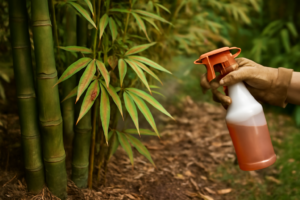
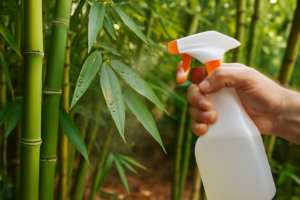
I applied a balanced bamboo-specific fertilizer immediately. I used Bamboo Plant Food, which is formulated specifically for the nitrogen demands of running and clumping bamboo species. The N-P-K ratio is 9-3-6, which leans heavily into nitrogen—exactly what I needed. I applied it at 2 pounds per 100 square feet of grove area, worked it lightly into the mulch layer, and watered it in deeply.
The timeline of recovery was revealing:
- Week 1–2: No visible change. I was impatient. Nitrogen uptake through roots takes time.
- Week 3: New leaf emergence started showing darker green. The newest unfurled leaves had much better color—a rich hunter green instead of pale sage.
- Week 4–5: Older yellowed leaves dropped rapidly, but they were being replaced. I could see new foliage filling in the gaps with normal, dark coloration.
- Week 6–8: The grove looked visibly bushier and greener. New culm diameter increased noticeably—the June shoots were about 12% thicker than the May ones.
Four weeks in, I did a second application at the same rate. Bamboo, especially during the peak growing season (late spring through early summer), benefits from split applications. The second dose kept nitrogen available as new tissue continued forming.
A Backup Option: When You Need Faster Results
If you’re dealing with severe deficiency and want quicker uptake, a liquid or water-soluble nitrogen source can work faster than granular fertilizer. For my situation, the granular approach was fine because I caught it in early May, before peak mid-summer heat stress. But if I’d noticed it in July, I might have used a foliar spray or a quick-dissolving formulation.
If you don’t have a bamboo-specific product on hand and need something immediately, an All Purpose NPK Fertilizer with an N ratio above 10 will work. You’ll just need to be more careful with application rates since it’s not formulated specifically for bamboo’s grass-type metabolism. Start at half the recommended rate for ornamental grasses and observe the response.
The key difference between bamboo-specific and general fertilizers is the trace micronutrient package and the release rate. Bamboo-specific products tend to have better boron and manganese inclusion, which support the rapid cell division happening in new shoots.
Preventing Nitrogen Deficiency Before It Starts
Once I got my grove back to healthy, I shifted thinking about maintenance differently. Here’s what prevents repeat episodes:
- Annual soil testing. Every spring, before active growth, get nitrogen levels checked. Aim to keep levels above 20 ppm during growing season.
- Organic matter addition. I added 2 inches of quality compost over the root zone in late fall that year. It breaks down slowly and provides steady nitrogen mineralization throughout the growing season—better than relying on single applications.
- Split feeding. One application in early spring, one in mid-spring, one in early summer. Three modest applications keep nitrogen steady instead of spiking and crashing.
- Adjust for your climate. If you live in a high-rainfall area (over 40 inches annually), nitrogen leaching is real. Budget for higher feeding rates. In drier climates, less leaching means you can space applications further apart.
My grove hasn’t shown deficiency symptoms since that year. I maintain a simple rhythm: spring soil test, three spaced fertilizer applications from March through June, fall compost amendment. Twenty minutes of work per year prevents six weeks of watching your bamboo fade.
The next time you see pale yellow-green foliage creeping up your bamboo from the base, you’ll know exactly what it is and exactly what to do about it. Nitrogen deficiency in bamboo is one of the most correctable problems in the garden—catch it, feed it, and move on.
About This Article

Written by Marcus Chen. Marcus Chen has spent 15 years cultivating and studying bamboo across 14 different species, combining commercial growing operations with extensive hands-on experience in species selection and containment. As both a grower and consultant, he specializes in practical bamboo management, helping homeowners and landscapers understand the real-world requirements for responsible bamboo cultivation. Marcus brings tested knowledge of which species thrive reliably and which present containment challenges that go beyond standard recommendations. More about this site.
Verify this against a primary source
Specifics change, and your situation may differ from the one described here. These are the authorities worth checking directly:
- American Bamboo Society — species listings and cultivation guidance
- USDA PLANTS Database — species range and identification
- USDA Plant Hardiness Zone Map — cold hardiness verification for your location