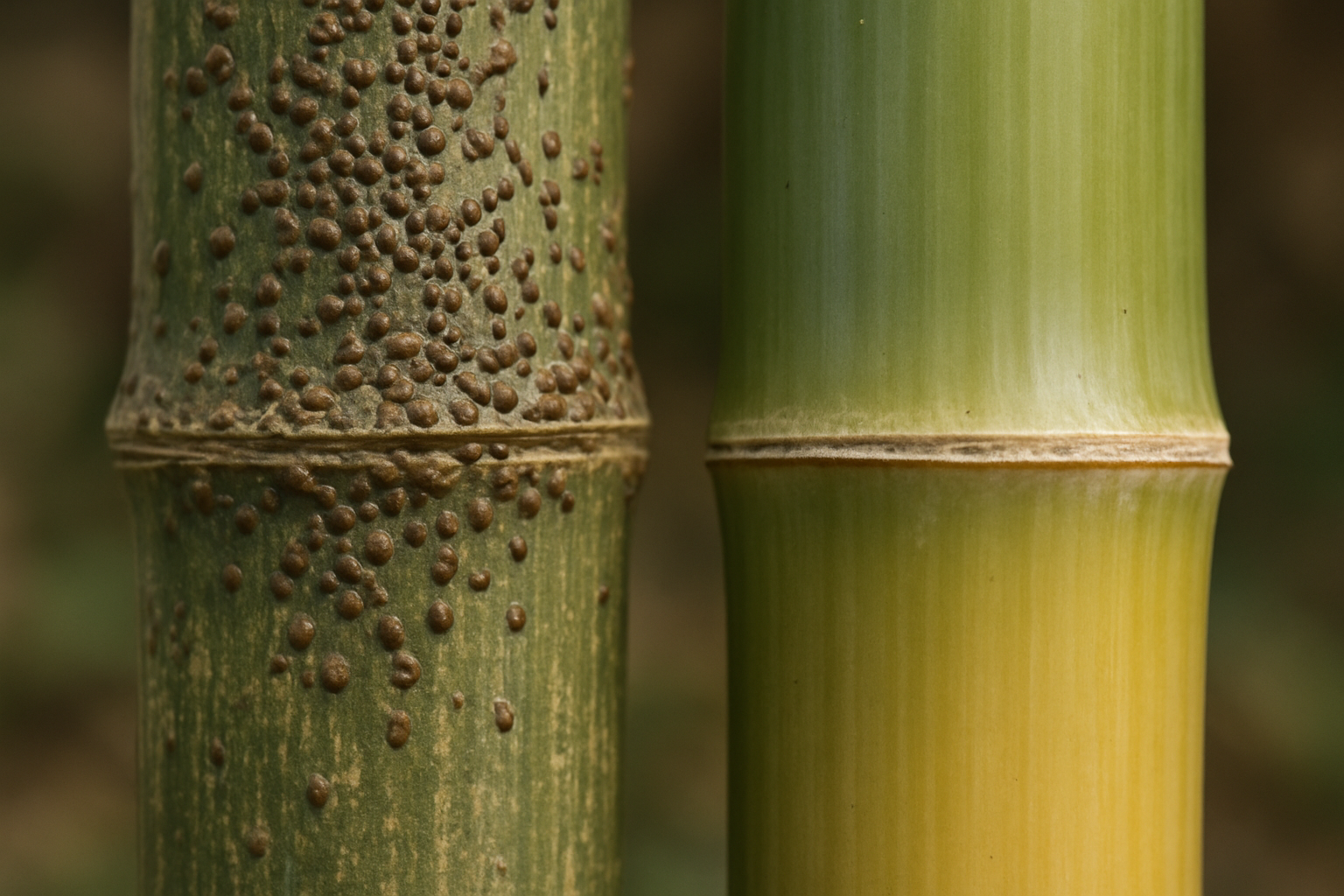
I still remember the morning I walked out to my bamboo grove and felt my stomach drop. What I thought were harmless little bumps on the culms were absolutely everywhere — and my prized Phyllostachys aureosulcata, the one I’d nursed from a small division for four years, was looking pale, stunted, and just… wrong. It took me another two weeks to finally diagnose what I was dealing with: scale insects on bamboo. By that point, I’d already lost a season of growth, spent money on the wrong treatments, and had consulted with other growers about whether we should just “rip it all out and start over.” This is the story of how I nearly lost my bamboo — and how I finally won.
How I Missed the Early Signs of Scale Insects on Bamboo
Here’s the thing about scale insects — they don’t look like bugs at first glance. They look like tiny, waxy lumps. Some look like little oyster shells. Some look like flat brown discs. For weeks, I genuinely thought I was seeing some kind of natural growth variation on my culms. By the time I got close enough with a magnifying glass and did my research, the infestation had spread from one clump to three.
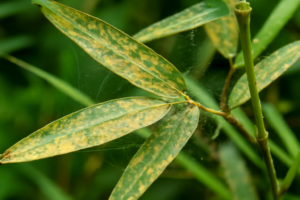
Scale insects feed by inserting their mouthparts into plant tissue and sucking out the sap. On bamboo, this shows up as yellowing or dropping leaves, weak new shoots, and a general decline in vigor. You might also notice a sticky residue on the culms or leaves — that’s honeydew, a byproduct of their feeding — which can then attract sooty mold, turning your beautiful bamboo a grimy black. It’s a cascading disaster, and it happens quietly.
The two most common types you’ll encounter are armored scale and soft scale. Armored scale (like oystershell scale) creates a hard, detachable waxy covering and is generally harder to kill with contact sprays. Soft scale produces a waxy coating that’s part of its body, and while it sounds less intimidating, it can spread honeydew more aggressively. Both are bad news for bamboo.
What Actually Works: My Treatment Protocol
I’ll be honest — my first two months of fighting this were a mess. I tried neem oil sprays I mixed myself (inconsistent results), I tried dish soap solutions (helped a little, not enough), and I spent one genuinely miserable afternoon scrubbing individual culms with a soft brush and rubbing alcohol. That last part actually does help on isolated infestations, but when scale has spread across multiple clumps, you need something more systematic.
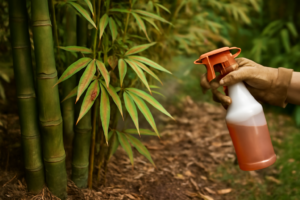
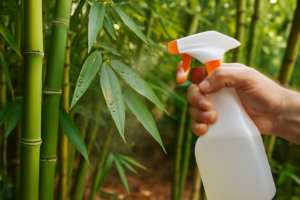
The turning point came when I switched to a proper horticultural oil — specifically, a refined paraffinic oil that smothers scale insects by blocking their breathing pores. Unlike neem oil, which can degrade quickly and smells absolutely terrible, horticultural oil is lightweight, effective, and breaks down cleanly in the environment. The key is thorough, repeat application — you have to coat every surface, including the undersides of leaves and the joints of culms, where scale loves to hide.
For a severe or stubborn infestation, I also added a systemic soil drench to my protocol. Systemics work differently — the plant absorbs the active ingredient through its roots, and when scale insects feed, they ingest it. This is especially useful for bamboo because the dense culm structure makes it genuinely hard to get full spray coverage. A systemic approach means you’re treating from the inside out.
Treatment Tips That Made the Difference
- Treat in the crawler stage when possible — newly hatched crawlers are the most vulnerable because they haven’t yet formed their protective covering
- Spray in the early morning or evening to avoid leaf scorch and to protect beneficial insects
- Apply horticultural oil at 7–14 day intervals for at least three treatment cycles
- Don’t forget the soil surface and the base of culms — scale can overwinter in debris
- After treatment, rake and remove fallen leaves and debris to reduce reinfestation sites
- Avoid over-fertilizing with nitrogen during an infestation — lush new growth attracts scale
The Products That Finally Turned Things Around
After a lot of trial and error, these are the specific products I used in my recovery protocol. I’m sharing the exact ones because details matter — not all horticultural oils are equal, and the concentration and formulation make a real difference.
The Oil Spray That Finally Broke the Scale Insect Cycle on My Aureosulcata
Horticultural oil is one of the few treatments that actually disrupts the scale insect life cycle on bamboo culms without systemic chemicals that can linger in the soil or affect new shoots. Once I switched from insecticidal soaps to a proper oil spray, the infestation stopped snowballing.
What works
- It actually suffocates the crawlers and eggs when you spray it directly on affected culms — I could see dead scales within 48 hours, which gave me real confidence I was finally winning.
- You can spray it during growing season without burning new foliage the way some harsher chemicals do, which matters when you’re trying to save a bamboo that’s already weakened.
- The 1 Quart concentrate stretches far — I mixed one bottle to treat my entire grove three times over the course of two months, which kept the cost reasonable for a prolonged battle.
What doesn’t
- It only works on contact — if you miss a single culm or miss the underside where scales hide, they’ll rebound, so you have to be obsessive about spray coverage every 7–10 days for at least 6 weeks.
- You can’t spray during hot afternoons or in full sun, which limits your treatment window and means you’re often out there at dawn or dusk when the mosquitoes are worse than the scale insects.
I almost gave up after week two when the infestation still looked heavy, convinced the oil wasn’t strong enough — but I’d skipped three days of treatment due to rain, and that’s when I learned that consistency matters more than product strength. Grab the Monterey Horticultural Oil 1 Quart concentrate and commit to a spray schedule, not just a one-off application.
About This Article

Written by Marcus Chen. Marcus Chen has spent 15 years cultivating and studying bamboo across 14 different species, combining commercial growing operations with extensive hands-on experience in species selection and containment. As both a grower and consultant, he specializes in practical bamboo management, helping homeowners and landscapers understand the real-world requirements for responsible bamboo cultivation. Marcus brings tested knowledge of which species thrive reliably and which present containment challenges that go beyond standard recommendations. More about this site.
Verify this against a primary source
Specifics change, and your situation may differ from the one described here. These are the authorities worth checking directly:
- American Bamboo Society — species listings and cultivation guidance
- USDA PLANTS Database — species range and identification
- USDA Plant Hardiness Zone Map — cold hardiness verification for your location