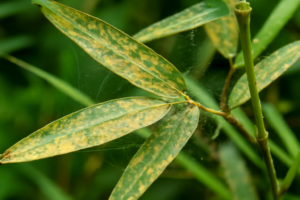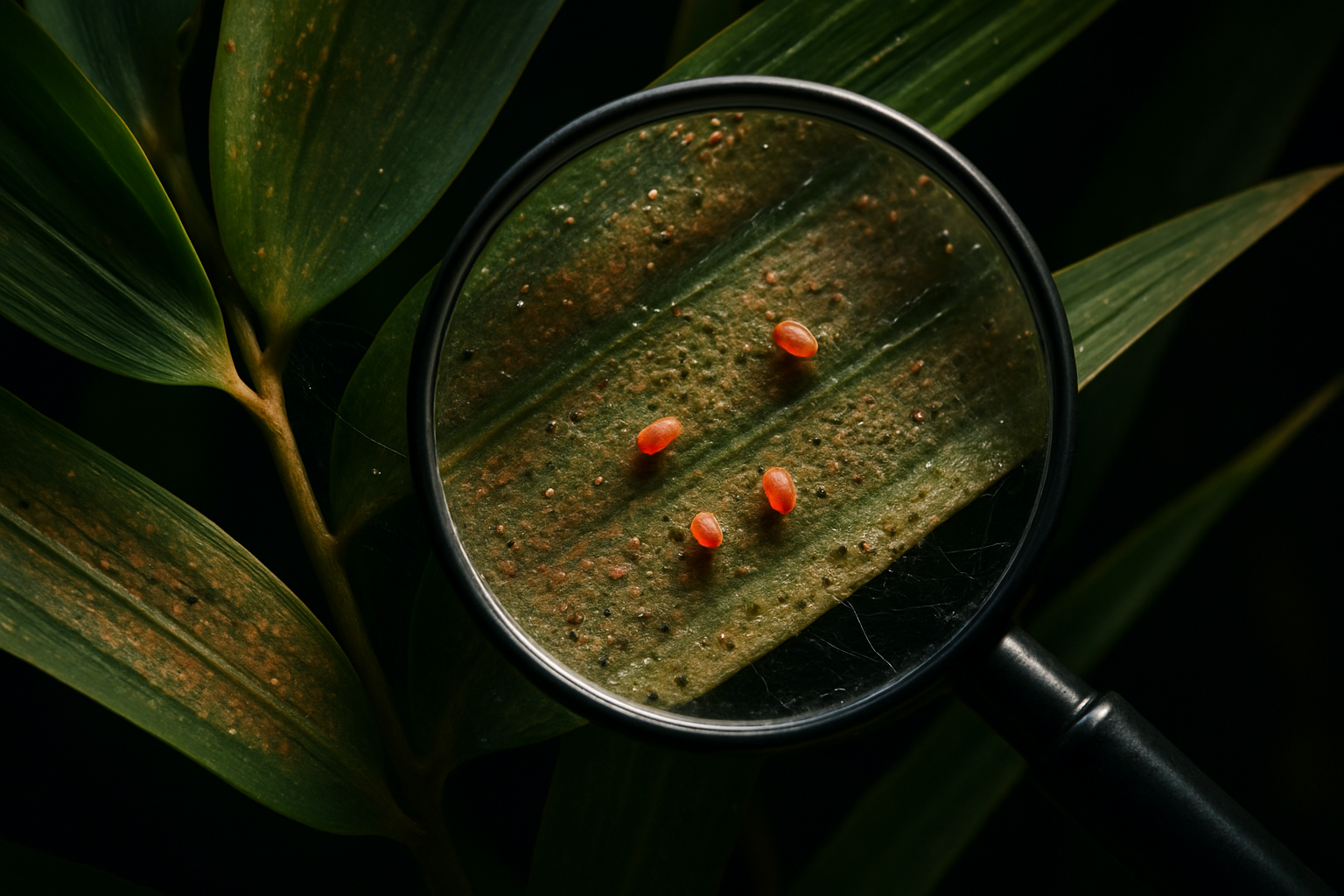
I still remember the morning I walked out to my bamboo grove and noticed something was terribly wrong. The leaves that had always been a deep, glossy green were pale, stippled, and lifeless — like someone had dusted them with ash overnight. I had no idea then that I was looking at a bamboo spider mites infestation, and I certainly had no idea how bad things were about to get. If you’re here searching for bamboo spider mites treatment options, I want you to know: I’ve been exactly where you are, and there is a way through this.
How a “Little Yellowing” Turned Into a Full-Blown Crisis
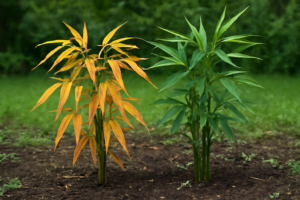
It started in late July during one of the hottest, driest summers our area had seen in years. I noticed a few yellow leaves on my Phyllostachys aurea — my beautiful golden bamboo that I’d been growing for nearly six years. I chalked it up to heat stress and made a mental note to water more. That was my first mistake.
Two weeks later, the yellowing had spread to nearly a third of the canes. Leaves were curling, dropping, and that strange pale stippling had moved across the entire eastern edge of my grove. My neighbor — a retired horticulturalist — came over, took one look, and said quietly, “You’ve got mites. Bad ones.” He handed me a magnifying glass and told me to look at the underside of a leaf. I did, and what I saw made my stomach drop. Tiny, almost invisible creatures were moving across a fine web of silk. Spider mites. Hundreds of them on a single leaf.
I spent that night reading everything I could find. What I learned scared me. Spider mites — particularly the two-spotted spider mite (Tetranychus urticae) — thrive in hot, dry conditions, reproduce at an explosive rate, and can devastate a bamboo grove in a matter of weeks if left unchecked. And I had left them unchecked for nearly a month.
Understanding Bamboo Spider Mites: What You’re Actually Dealing With
Spider mites aren’t insects — they’re arachnids, which is part of why many common insecticides do nothing to stop them. They pierce leaf tissue and suck out the contents of individual cells, which causes that telltale bronze or silver stippling pattern. As the damage accumulates, leaves yellow, dry out, and fall. In severe infestations, you’ll see fine webbing on the undersides of leaves and between stems.
Bamboo is particularly vulnerable during periods of drought stress. When a plant is already struggling to maintain moisture, its natural defenses are weakened, and spider mites move in fast. A few key things that make infestations worse:
- Hot, dry, dusty conditions — mites hate humidity
- Overuse of nitrogen-heavy fertilizers, which creates lush, tender growth mites love
- Killing off beneficial predatory insects with broad-spectrum pesticides
- Crowded plantings with poor air circulation
- Ignoring early warning signs like minor leaf stippling or faint webbing
I had checked nearly every box on that list. The summer heat, a recent fertilizer application, and my own delayed response had created perfect conditions for the mites to explode.
Bamboo Spider Mites Treatment: What Actually Worked for Me
Once I understood what I was dealing with, I attacked the problem from multiple angles. Here’s the honest, step-by-step approach that saved my grove.
Step 1: Water Blast First
Before reaching for any product, I used a strong jet of water from my garden hose to blast the undersides of as many leaves as I could reach. This physically dislodges mites and disrupts their colonies. It won’t eliminate them, but it knocks the population back immediately and makes your treatments more effective. I did this every other day throughout the treatment period.
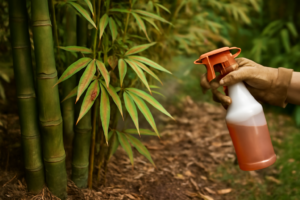
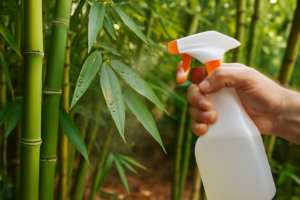
The Spray That Finally Stopped Spider Mites from Shredding My Leaves
Spider mites reproduce fast enough that you can watch a light infestation become a catastrophe in less than a week. I needed something that could hit them hard on contact and break their breeding cycle before they moved to the rest of my grove.
What works
- Spotted visible mite die-off within 24 hours of spraying affected canes — the stippled leaves started recovering their color by day three.
- Ready-to-use bottle meant I could get it on the grove immediately instead of mixing concentrate and wasting critical hours while populations exploded.
- The neem oil base smothers eggs and juveniles, not just adults, which meant one application actually broke the lifecycle instead of just pruning back visible damage.
What doesn’t
- You have to spray undersides of leaves thoroughly, and on a dense bamboo grove that means getting inside the canopy — it’s labor-intensive and my arms felt it for days.
- Neem oil is temperature-sensitive; I sprayed in afternoon heat once and got leaf burn, so timing your application to early morning or dusk is non-negotiable.
I almost gave up halfway through that first spray session because my shoulders were screaming and I couldn’t tell if the mites were actually dying or just dispersing, but I forced myself to finish the second day and saw the results. Bonide Captain Jack’s Neem Oil Ready-to-Use Spray is what stopped the spread in my grove.
About This Article

Written by Marcus Chen. Marcus Chen has spent 15 years cultivating and studying bamboo across 14 different species, combining commercial growing operations with extensive hands-on experience in species selection and containment. As both a grower and consultant, he specializes in practical bamboo management, helping homeowners and landscapers understand the real-world requirements for responsible bamboo cultivation. Marcus brings tested knowledge of which species thrive reliably and which present containment challenges that go beyond standard recommendations. More about this site.
Verify this against a primary source
Specifics change, and your situation may differ from the one described here. These are the authorities worth checking directly:
- American Bamboo Society — species listings and cultivation guidance
- USDA PLANTS Database — species range and identification
- USDA Plant Hardiness Zone Map — cold hardiness verification for your location