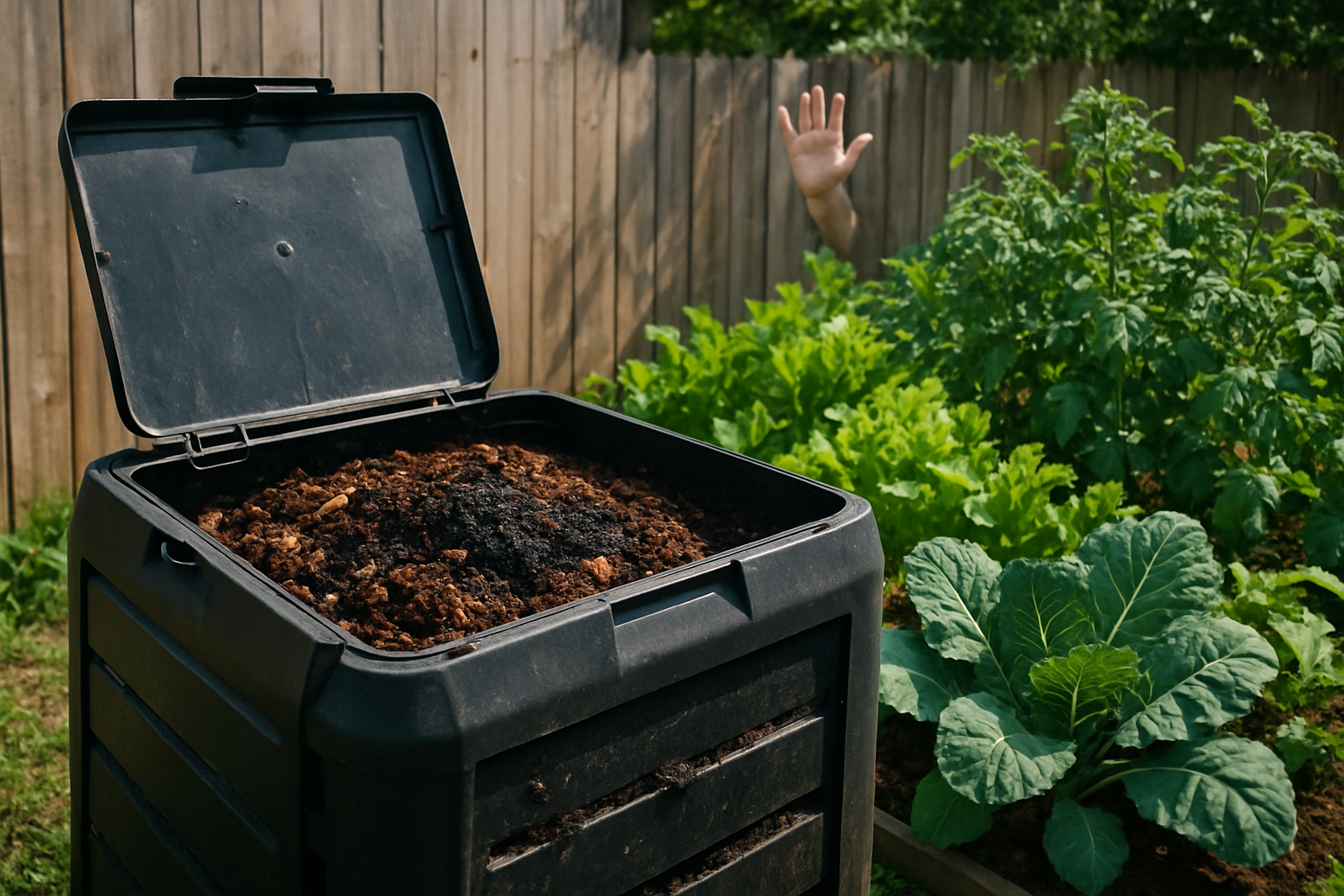
Last summer, my neighbor Janet stopped waving at me. Not a cold shoulder exactly — more of a pointed avoidance that only people who’ve lived next to each other for eight years can pull off with such surgical precision. The culprit? My compost pile. Specifically, the smell coming off my compost pile, which had apparently crossed the property line and taken up permanent residence in her yard. I didn’t fully understand what had gone wrong until I discovered bamboo charcoal compost methods — and honestly, that discovery didn’t just rescue my garden, it rescued my friendship.
But before we get to the happy ending, let me back up and tell you exactly how I turned a beautiful composting setup into what Janet diplomatically called “a genuine biohazard situation.”
When My Compost Pile Went Completely Off the Rails
I’d been composting for about three years without any real trouble. I had a nice three-bin system in the corner of my yard, I was turning it regularly, and I genuinely felt good about what I was doing for my soil. Then I decided to go big. I added a massive batch of bamboo cuttings from a trim I’d done on my running bamboo, layered in some kitchen scraps, grass clippings, and coffee grounds — and then promptly got slammed with a brutal two-week work project that left me no time for the garden.
When I finally walked outside on a Saturday morning, the smell hit me before I even reached the back door. Anaerobic. Sulfuric. The kind of odor that makes you genuinely reconsider your life choices. Janet was standing at her fence with the expression of a woman who had been suffering in polite silence for far too long. That was the last time she waved.
I spent the next two weekends trying to fix things the traditional way — aerating, adding more brown material, adjusting moisture levels. I made progress, but the smell lingered. The pile was sluggish. And every time I glanced toward Janet’s yard, I felt a small, specific kind of shame that gardeners know well: the shame of a pile gone wrong.
How Bamboo Charcoal Compost Changed Everything
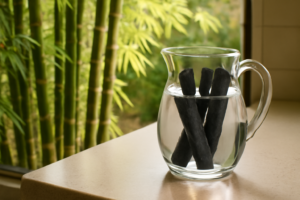
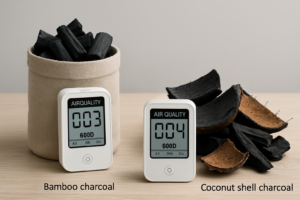
I’d been reading about biochar on a few gardening forums and kept seeing bamboo charcoal mentioned as a powerful compost amendment. The science behind it genuinely fascinated me. Bamboo charcoal — and biochar in general — is created through a process called pyrolysis, where organic material is burned at high temperatures in a low-oxygen environment. The result is a highly porous carbon structure that acts almost like a sponge in your compost and soil.
Here’s why that matters for a struggling compost pile:
- Odor absorption: That porous structure physically traps volatile compounds — the ones responsible for the sulfur and ammonia smells that come from anaerobic decomposition.
- Microbial housing: The tiny pores create a protected habitat for beneficial microbes, giving your compost’s decomposer community a place to thrive and multiply.
- Moisture regulation: Biochar helps balance moisture in the pile — absorbing excess water that leads to anaerobic conditions and slowly releasing it when things dry out.
- Long-term soil benefit: Once that finished compost goes into your garden beds, the charcoal stays active in the soil for hundreds — sometimes thousands — of years, continuing to improve structure and nutrient retention.
Bamboo makes an especially excellent source material for biochar because bamboo grows so rapidly and densely, producing a highly structured carbon that’s particularly effective as a soil amendment. If you’re already growing bamboo, you’re sitting on a future resource. But for immediate help with a compost problem, a quality commercial biochar product is the practical move.
What I Actually Did (Step by Step)
Once I understood the mechanism, I put together a rescue plan for my pile. Here’s exactly what I did over the course of about ten days.
Step 1: Aerate First
Before adding anything, I turned the entire pile aggressively to reintroduce oxygen. Anaerobic decomposition is the root cause of that horrible smell, so you have to break it up first. I used a long-handled garden fork and worked through the pile in layers, pulling material from the center outward.
Step 2: Add the Biochar in Layers
As I rebuilt the pile, I sprinkled biochar generously between layers — roughly one part biochar to every ten parts of compost material by volume. I worked it throughout the pile rather than just dropping it on top. The distribution is what makes it effective.
Step 3: Accelerate the Microbial Activity
A sluggish pile needs a microbial jumpstart alongside the biochar. I used a compost accelerator to reintroduce active microbial cultures and speed up the decomposition that had essentially stalled out. The combination of biochar (which houses microbes) and an accelerator (which delivers them) works remarkably well together.
Step 4: Balance the Carbon-to-Nitrogen Ratio
My pile had gone heavy on nitrogen-rich greens, which is a classic cause of anaerobic conditions. I added shredded cardboard, dried leaves, and some of those bamboo culm pieces I had on hand (bamboo is a fantastic brown material for compost) to bring things back into balance.
Step 5: Maintain and Monitor
I turned the pile every three days for the first two weeks and checked moisture levels regularly. With proper aeration and the biochar doing its job, I could smell the difference within 72 hours. Not perfect — but dramatically, noticeably better.
The Charcoal Fix for Compost Odor That Actually Stops the Smell Before It Crosses the Property Line
Bamboo charcoal is a game-changer for odor control in active compost piles, especially when you’re composting high-nitrogen materials (like bamboo trimmings and kitchen scraps) that turn anaerobic and smell like death. A few handfuls layered through your pile absorbs volatile compounds and keeps the aerobic bacteria working instead of letting the whole thing become a neighbor-repelling gas factory.
What works
- The smell actually stops within 3–4 days of adding charcoal — not masked, but genuinely suppressed at the source, because the charcoal absorbs sulfur compounds before they volatilize.
- A 24 Qt bag lasts an entire season on a 4×4 pile if you layer it every 6 inches, which means you’re not replacing it constantly or going broke on odor control.
- The finished compost is darker, richer-looking, and the charcoal particles actually stay in the final product — adding micropores that improve water retention in soil (especially helpful for bamboo rhizome zones).
What doesn’t
- It’s not a substitute for turning your pile — if your compost is already compacted and waterlogged, charcoal won’t fix the anaerobic core, and you’ll still get smell.
- The 24 Qt size is bulky to store and split between seasons, so if you only compost seasonally (fall leaf drop, spring cleanup), you might waste product or run out mid-season.
I was skeptical the first week — Janet still wasn’t waving — but I honestly couldn’t smell the pile from my back door anymore, which felt like a miracle after months of that funky, rotten-egg stench. That’s when I ordered the Char Bliss Organic Biochar — 24 Qt (Best Value for Larger Piles) in bulk and committed to the method.
About This Article

Written by Marcus Chen. Marcus Chen has spent 15 years cultivating and studying bamboo across 14 different species, combining commercial growing operations with extensive hands-on experience in species selection and containment. As both a grower and consultant, he specializes in practical bamboo management, helping homeowners and landscapers understand the real-world requirements for responsible bamboo cultivation. Marcus brings tested knowledge of which species thrive reliably and which present containment challenges that go beyond standard recommendations. More about this site.
Verify this against a primary source
Specifics change, and your situation may differ from the one described here. These are the authorities worth checking directly:
- American Bamboo Society — species listings and cultivation guidance
- USDA PLANTS Database — species range and identification
- USDA Plant Hardiness Zone Map — cold hardiness verification for your location