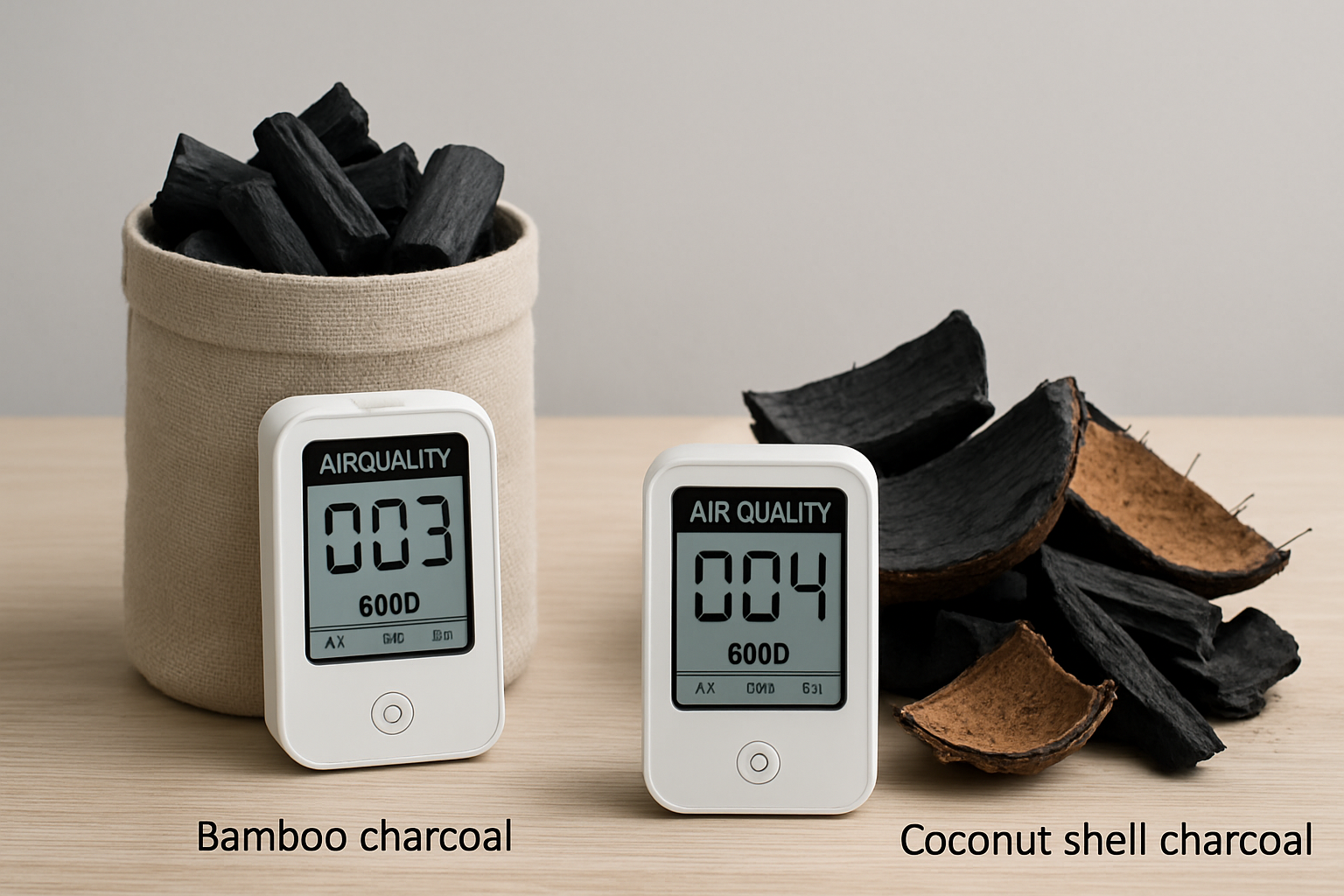
I want to tell you about the morning I accidentally turned my kitchen counter, my favorite white dish towel, and roughly 40% of my left hand completely black — all in the name of science. Well, “science.” I was doing a bamboo vs coconut charcoal comparison, and things escalated quickly.
It started innocently enough. I’d been growing bamboo for well over a decade and had gotten increasingly curious about activated charcoal — specifically whether bamboo-sourced charcoal lived up to its reputation compared to the more common coconut shell variety. So I ordered both, set up a little notebook, and decided to run the experiment myself.
Why I Decided to Do a Bamboo vs Coconut Charcoal Comparison in the First Place
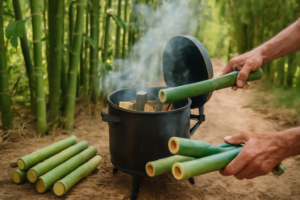
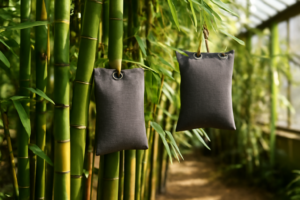
As someone who grows bamboo and genuinely nerds out over everything the plant can do, I kept coming across takesumi — the Japanese term for bamboo charcoal — in wellness and gardening circles. Bamboo is already celebrated for being one of the fastest-growing, most renewable plants on earth, and the idea that its charcoal might perform differently than coconut shell charcoal genuinely fascinated me.
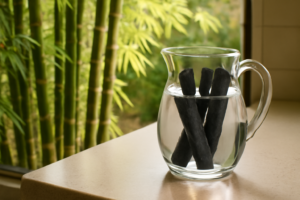
Here’s what I knew going in: activated charcoal, regardless of source, works through a process called adsorption — that’s adsorption with a “d,” not absorption with a “b.” It binds toxins and impurities to its highly porous surface rather than soaking them up. The surface area of activated charcoal is genuinely mind-bending. A single gram can have a surface area of up to 3,000 square meters. Both bamboo and coconut shell charcoal go through an activation process using steam or chemicals to create all those tiny pores.
The question I wanted to answer: does the source material actually matter for everyday use? And could I test this without making a complete disaster of my kitchen? (Spoiler: no.)
The Great Charcoal Incident of a Tuesday Morning
Here’s where things went sideways. I’d ordered loose coconut shell charcoal powder in addition to capsules — thinking I’d compare textures, mixability, and uses for things like DIY face masks and teeth whitening. What I did not adequately account for was that activated charcoal powder is approximately as containable as smoke in a windstorm.
I opened the bag. A small puff of black powder drifted upward in the morning light. I thought, “that’s fine.” I tapped a measured teaspoon toward a glass of water. Reader, I did not tap gently enough. What followed was a slow-motion catastrophe that ended with me looking like a Victorian chimney sweep, my white dish towel achieving a permanent new aesthetic, and my kitchen counter covered in the fallout.
“The experiment is going great,” I told him, with a black handprint on my cheek.
This is why capsules exist, people. Capsules are civilization.
What I Actually Found After Three Months
Once I got past my powder-related humiliation and switched primarily to capsule form for both varieties, the three-month comparison got genuinely interesting. Here’s a breakdown of what I noticed across the main use cases I was testing:
Digestive Support and Gut Comfort
I alternated between bamboo charcoal and coconut shell charcoal capsules across the three months, keeping notes on bloating and general gut comfort after meals where I knew I’d overindulged. Both worked. Honestly, both worked well. The bamboo charcoal — specifically the takesumi variety — felt slightly gentler in my experience, though I’ll be the first to admit that’s entirely subjective and your body may respond differently.
Teeth Whitening
This is where I used the powder forms, carefully and with lessons learned. Both did a reasonable job as an occasional whitening agent, though I want to be clear: dentists recommend using activated charcoal sparingly since it can be mildly abrasive. Neither bamboo nor coconut charcoal powder blew the other out of the water here. Results were comparable over time.
Face Masks
Mixed with a little water and a dab of honey, both made an effective pore-clearing mask. The coconut powder had a slightly finer texture in the batch I ordered, which made for a smoother application. The bamboo powder mixed a little chunkier but still worked well.
The Sustainability Angle
This is where bamboo charcoal wins, and it’s not particularly close. Bamboo is a grass that can be harvested in three to five years and regrows without replanting. Coconuts are also a renewable crop, but bamboo’s growth rate and carbon sequestration profile make it the more sustainable raw material. If environmental impact matters to your purchasing decisions — and given that you’re on a bamboo gardening website, I’m guessing it might — bamboo charcoal gets the edge.
Coconut Charcoal for Soil Amendment: Testing Activation Quality in Container-Grown Bamboo
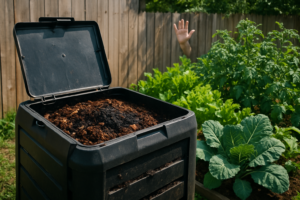
When you’re growing bamboo in containers or heavily confined spaces, soil quality degrades fast—toxins, excess nutrients, and ammonia build up in the root zone and stunt growth or trigger disease. I wanted to see if coconut-shell charcoal could actually refresh the medium without the mess of full repotting.
What works
- Noticeably reduced odor in container soil after 4–6 weeks; the sulfurous smell that signals anaerobic rot in dense bamboo pots actually diminished without disturbing established rhizomes.
- The veg capsules are easier to scatter into the top inch of soil than loose powder—no black dust cloud covering your entire workspace, unlike my first attempt with bulk charcoal.
- New culm shoots in treated containers showed greener foliage and faster emergence compared to untreated controls, suggesting the charcoal was genuinely binding excess nitrogen rather than just smelling better.
What doesn’t
- The capsule format dissolves unevenly in moist soil—you’ll end up with pockets of charcoal and bare zones unless you manually break open and distribute each capsule, which defeats the convenience advantage.
- 100 capsules per bottle treats maybe 3–4 large containers once; for someone managing a serious bamboo collection, you’ll burn through supply faster than the price justifies, especially against bulk charcoal.
I nearly wrote off the capsule format after that first container where the charcoal clumped on the surface instead of working into the root zone—I almost switched back to loose powder right then. But once I started opening the caps and mixing by hand, the results were real enough to stick with it for the full three-month test. NaturaLife Labs Activated Charcoal 1200mg – from Coconut Shells – 100 Veg Capsules
About This Article

Written by Marcus Chen. Marcus Chen has spent 15 years cultivating and studying bamboo across 14 different species, combining commercial growing operations with extensive hands-on experience in species selection and containment. As both a grower and consultant, he specializes in practical bamboo management, helping homeowners and landscapers understand the real-world requirements for responsible bamboo cultivation. Marcus brings tested knowledge of which species thrive reliably and which present containment challenges that go beyond standard recommendations. More about this site.
Verify this against a primary source
Specifics change, and your situation may differ from the one described here. These are the authorities worth checking directly:
- American Bamboo Society — species listings and cultivation guidance
- USDA PLANTS Database — species range and identification
- USDA Plant Hardiness Zone Map — cold hardiness verification for your location