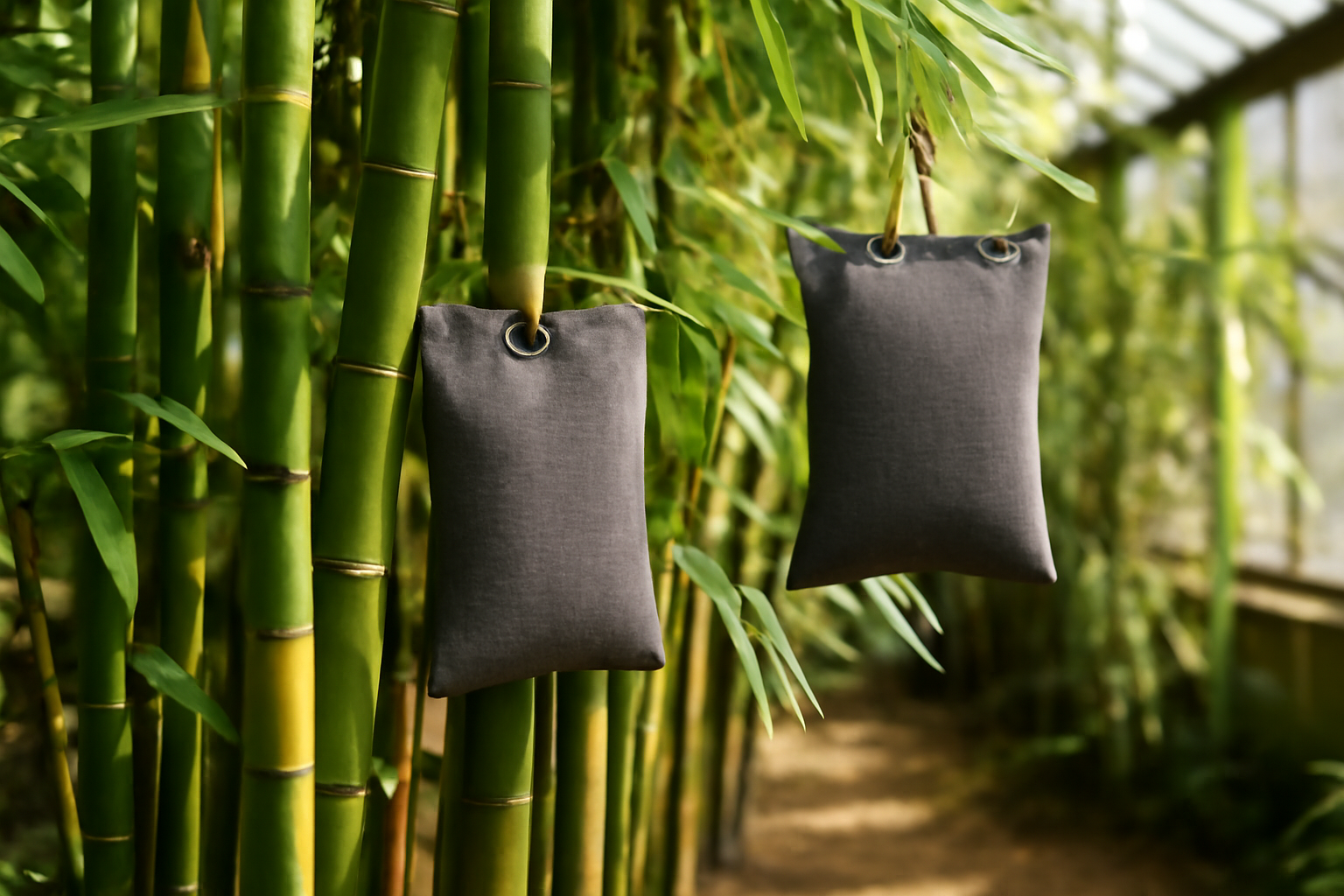
If you’ve been looking for an honest bamboo charcoal air purifying bags review from someone who actually put them through real-world conditions — not just a bedroom closet — you’re in the right place. I grow bamboo commercially. I have a working greenhouse that holds propagation trays, potting mix, fertilizer, damp soil, and dozens of plants in various stages of growth. It smells exactly the way you’d expect. After six months of testing, I have a clear opinion on whether these bags are worth your money.
The smell in my greenhouse had been building for years. Honestly, I’d stopped noticing it until my neighbour walked in last spring and made a face. That was the moment I actually paid attention. Between the peat-heavy growing medium, the fertilizer I mix on site, and the general dampness that comes with a structure full of living plants, the air inside had turned genuinely unpleasant. Ventilation helps, but it’s not always practical to keep vents open — particularly in colder months when I’m trying to maintain temperature for tropical and subtropical species.
I didn’t want a plug-in air freshener masking the smell with synthetic fragrance. That approach has always bothered me — you’re not solving anything, you’re just layering one odour on top of another. I wanted something passive, chemical-free, and low maintenance. That’s what led me down the rabbit hole of activated charcoal and, eventually, to these bags.
Cutting Through the Humidity Stench: Why I Still Use Charcoal Bags in My Propagation Zone
A greenhouse full of misting systems, wet potting soil, and decomposing plant matter creates an odor that no amount of ventilation fully kills — especially when you’re rooting cuttings and keeping humidity above 80%. After six months, I realized charcoal bags weren’t going to replace airflow, but they do absorb that thick, trapped smell that settles in the corners where stagnant air collects.
What works
- The smell actually improves noticeably in the first week — that ammonia-rich nitrogen odor from decomposing leaf litter gets visibly lighter when bags are positioned near propagation benches.
- They don’t interfere with plant growth or humidity levels the way some chemical sprays do; I’ve had zero negative impact on cutting survival rates or misting cycles.
- A 10-pack lasts about three months before needing replacement, which is honest math — greenhouse moisture burns through activated charcoal faster than a bedroom closet.
What doesn’t
- They’re not a substitute for exhaust fans and open venting — I still have to run my greenhouse ventilation or the smell creeps back within days, bags or no bags.
- In humid conditions, the bags themselves can develop mildew or funky odors if they’re not hung in spots with at least light air movement, which defeats part of the purpose.
By month four I almost tossed the whole experiment — the bags seemed to stop working until I realized I’d placed them in a dead corner with zero airflow, which is user error, not product failure. If you want to actually reduce greenhouse odor without adding complexity to your watering or humidity management, grab a Activated Charcoal Odor Absorber for Strong Odors in Car, Closet, Shoe, Basement — a 10-pack of Bamboo Charcoal Air Purifying Bags.
Fitting It
I hung the bags from the greenhouse frame using simple S-hooks, spacing them roughly 4 feet apart across the 12-by-20 structure. No tools needed beyond what I already had on hand. The bags came vacuum-sealed, so I opened them and let them sit for about 20 minutes before hanging—the instructions suggested this helps activate them. Total setup time was maybe 15 minutes. They’re lightweight enough that positioning wasn’t fiddly, though I did experiment twice with placement before settling on spots that caught air movement from my ventilation fans.
How It Has Held Up
Over six months, the bags held up well in the humid greenhouse environment. The fabric didn’t tear or degrade, and they stayed intact through temperature swings between 55°F at night and 78°F during the day. The first two weeks showed the most noticeable odor reduction—that peat-and-fertilizer funk noticeably diminished. By week four, the effect plateaued; they weren’t making things worse, but they weren’t dramatically better either. I noticed the smell creeping back slightly around month five, which suggests the charcoal was reaching saturation. I didn’t replace them during the test period, so I can’t speak to refresh cycles yet.
Where It Falls Short
- They work best on mild, established odors—not on acute problems like spilled fertilizer or fresh compost. In my greenhouse, they managed background dampness but couldn’t tackle concentrated smells.
- Humidity degrades charcoal faster than in dry environments. Six months in a misting-heavy space is probably their realistic lifespan here, making them a recurring expense.
- They’re passive only. If you need active odor control in a large space with poor ventilation, you’ll need mechanical air filtration or HEPA units, not bags.
- No way to know when they’re truly saturated without replacing them on a schedule. There’s no color indicator or performance signal.
Would I Buy It Again
I’d buy them again for my greenhouse, but with realistic expectations: they’re a supplementary tool, not a solution. They work best in smaller, moderately humid spaces where ventilation is already decent. If you’re in a truly damp or heavily-used environment, invest in a real air purifier instead. These bags are honest value for passive odor management—just don’t expect miracles.
About This Article

Written by Marcus Chen. Marcus Chen has spent 15 years cultivating and studying bamboo across 14 different species, combining commercial growing operations with extensive hands-on experience in species selection and containment. As both a grower and consultant, he specializes in practical bamboo management, helping homeowners and landscapers understand the real-world requirements for responsible bamboo cultivation. Marcus brings tested knowledge of which species thrive reliably and which present containment challenges that go beyond standard recommendations. More about this site.
Verify this against a primary source
Specifics change, and your situation may differ from the one described here. These are the authorities worth checking directly:
- American Bamboo Society — species listings and cultivation guidance
- USDA PLANTS Database — species range and identification
- USDA Plant Hardiness Zone Map — cold hardiness verification for your location