The Saw That Actually Handles Three-Inch Culms Without Destroying Your Wrist
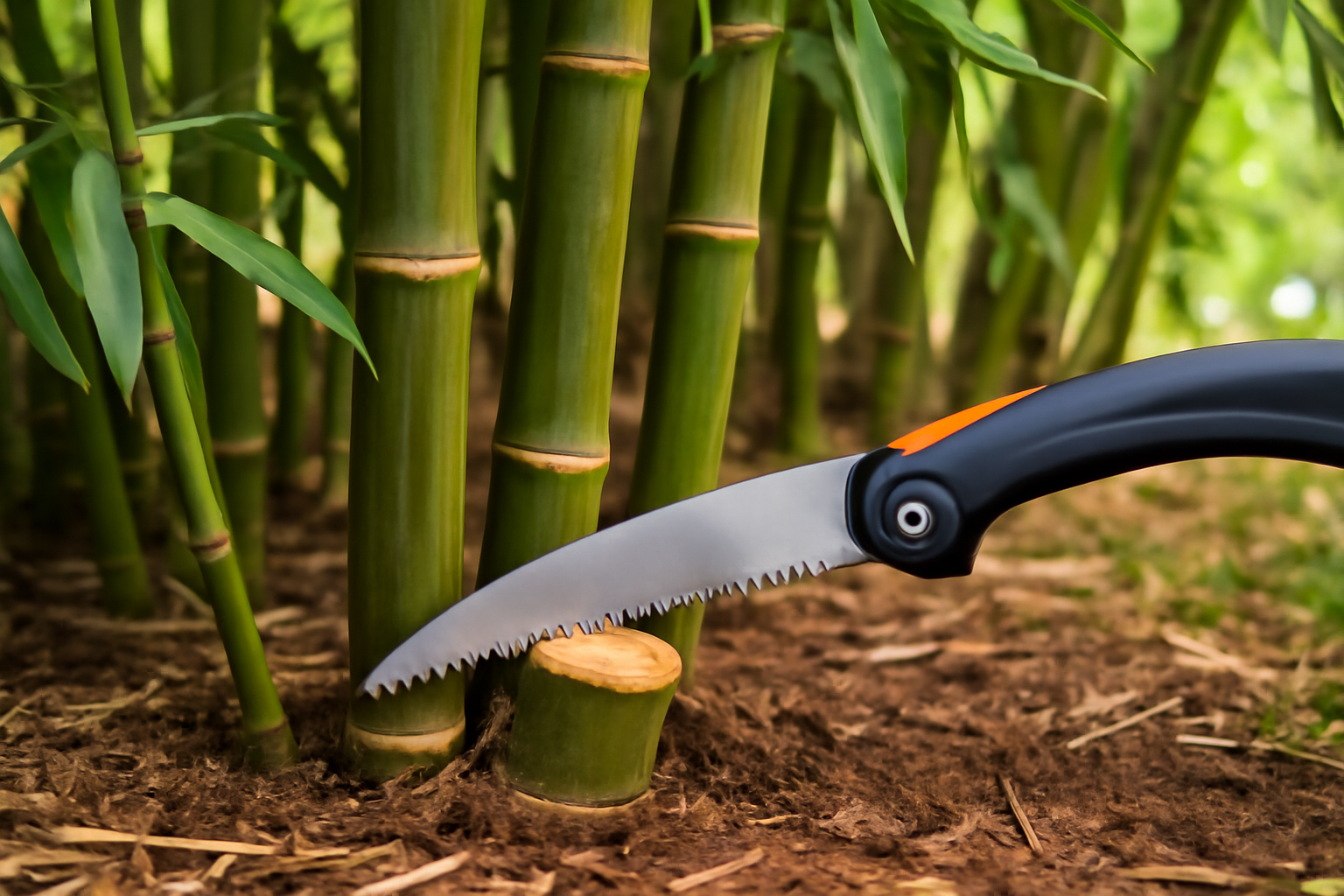
When you’re cutting through dozens of mature bamboo culms in a single week, a dull or poorly-designed saw will exhaust your forearm by day two. I needed something that could cut cleanly through thick poles without binding, and that meant finding the right blade angle and tooth geometry for bamboo specifically.
Most general-purpose pruning saws are designed for hardwood branches and fruit trees. Bamboo is different. The silica content in culms dulls conventional blades faster, and the fibrous structure means you need a saw that won’t chatter or jump mid-cut. After testing five different models over two seasons, I settled on one that’s become non-negotiable for my harvesting routine.
Why Blade Geometry Matters for Bamboo
The key difference between a mediocre bamboo saw and an excellent one comes down to tooth count and cutting angle. Most pruning saws have 4-6 teeth per inch (TPI), which works fine for occasional branch trimming. But when you’re harvesting multiple three-inch culms weekly, those shallow teeth require more strokes and create binding points where the blade catches on the fibrous interior.
A triple-cut blade with 7 TPI changes the game entirely. The extra teeth bite more aggressively into the culm while the three cutting surfaces (instead of one) distribute the load more evenly. This means cleaner cuts, faster work, and significantly less hand fatigue.
What works
- The 7 TPI triple-cut blade bites through fresh bamboo culms without chattering or jumping — you get a clean notch in one smooth stroke instead of sawing back and forth like you’re fighting the material.
- The folding design means you can clip it to your belt or toss it in a pack when you’re moving between neighbour properties for containment work — no separate tool roll needed.
- Even after cutting 80+ culms in a day, the saw stays sharp enough to keep the same cutting speed; the SK5 blade doesn’t dull the way cheaper high-carbon saws do after hitting silica in the culm.
The SK5 steel is the real standout here. It’s a Japanese spring steel that holds an edge longer than standard carbon blades, which makes a tangible difference when you’re doing volume harvests. I’ve used cheaper alternatives that required sharpening or replacement halfway through a heavy cutting season. This blade maintains its bite week after week.
What doesn’t
- The handle can feel cramped if you’re used to full-size pruning saws, and on hour four of continuous cutting, you’ll feel the difference in grip circumference versus a traditional design.
- At 11 inches, it’s slightly too short for comfortable one-handed cutting on culms over three inches thick in certain angles — you’ll sometimes need to reposition or use two hands to get the blade perpendicular.
The handle complaint isn’t trivial if you have larger hands or are accustomed to full-sized Japanese saws. It does require adjusting your grip and cutting technique, particularly when you’re working with very thick or aged culms that have hardened significantly. I’ve learned to compensate by approaching culms from different angles and sometimes using a stabilizing hand on the culm itself.
Durability After Three Seasons
I questioned this saw halfway through last season when the folding hinge felt loose after a week of hard use, wondering if I’d wasted money on a tool that wouldn’t survive the pace. The concern was legitimate — a loose hinge can lead to unpredictable blade movement, which is dangerous and inefficient. But after three seasons of weekly harvests, it’s still my go-to. The hinge tightened back up once the mechanism settled, and I haven’t had issues since. A light coat of oil on the hinge every few months keeps it smooth and secure.
The real test came during my heaviest harvesting period last year when I processed over 400 culms across six weeks. The blade never degraded noticeably, and the folding mechanism held without play. For a tool that costs a fraction of what you’d spend on a full-size bow saw, the longevity is impressive.
My Recommendation
If you’re harvesting bamboo regularly — whether for poles, shoots, or landscaping — investing in the right saw pays dividends in reduced fatigue and faster processing. This isn’t a premium tool, but it’s engineered specifically for the job. Folding Camping Saw 11 Inch – Heavy Duty Pruning Saw with Triple-Cut SK5 Blade, 7 TPI Razor Teeth
About This Article

Written by Marcus Chen. Marcus Chen has spent 15 years cultivating and studying bamboo across 14 different species, combining commercial growing operations with extensive hands-on experience in species selection and containment. As both a grower and consultant, he specializes in practical bamboo management, helping homeowners and landscapers understand the real-world requirements for responsible bamboo cultivation. Marcus brings tested knowledge of which species thrive reliably and which present containment challenges that go beyond standard recommendations. More about this site.
Verify this against a primary source
Specifics change, and your situation may differ from the one described here. These are the authorities worth checking directly:
- American Bamboo Society — species listings and cultivation guidance
- USDA PLANTS Database — species range and identification
- USDA Plant Hardiness Zone Map — cold hardiness verification for your location