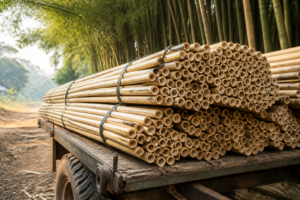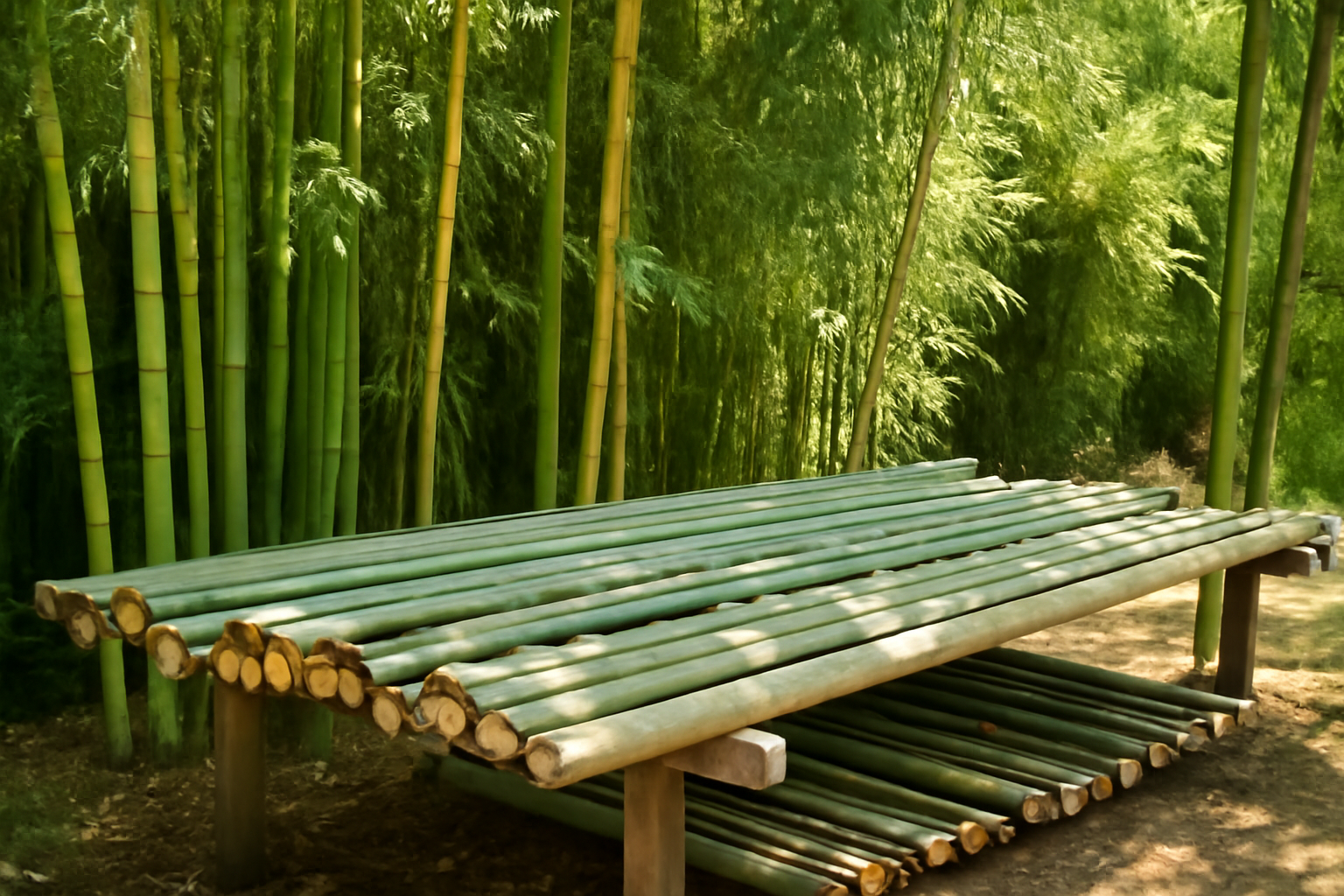
After fifteen years of growing bamboo commercially, I still lose poles to cracking every single season. Not from bad harvesting. Not from poor timing. The culprit is almost always the drying phase — specifically, drying too fast or too unevenly. Getting bamboo pole drying rack curing right is one of those things nobody talks about enough, and I learned that lesson the hard way when I lost nearly forty Phyllostachys vivax poles in a single summer because I stacked them flat on pallets. The outer culm dried in days. The inner walls took weeks. The result was a pile of beautifully split firewood that was supposed to be furniture-grade material.
That failure pushed me to rethink the whole process. Poles need airflow on all sides simultaneously. They need to hang or stand vertically when possible. And they need to do it consistently, batch after batch, without me rigging up some new improvised system every time. I started looking at options that weren’t specifically designed for bamboo — because frankly, nothing purpose-built for this exists at a reasonable price point.
That search eventually led me to a product from the laundry world. It sounds odd, I know. But after some thought and a bit of testing, it turned out to be one of the more practical solutions I’ve found for small-to-medium pole batches. Here’s exactly what happened.
The Vertical Drying Rack That Finally Stopped My Poles From Checking and Splitting
Most bamboo growers dry poles horizontally, stacked flat or in tight bundles — which is exactly why most bamboo growers lose poles to radial checking. What I needed was airflow on all sides, even weight distribution, and enough vertical separation to let each pole cure at its own pace without trapping moisture between layers.
What works
- The horizontal bars space poles evenly and keep them from touching, which eliminates the flat-stacking problem that caused my vivax disaster — moisture stays off the pole surface and cracks don’t form along contact points.
- Height lets you stack multiple racks vertically without poles rolling or settling unevenly, and the open design means air moves around every single pole instead of just the top layer.
- Sturdy enough to hold 2–3 inch diameter poles without sagging, and the feet are wide enough that it won’t tip when you’re loading or rotating curing stock.
What doesn’t
- It’s not designed for outdoor weather — rust creep starts after one season if you’re in high humidity, so you’ll need to keep it under a shade structure or cover it with a tarp when not actively drying.
- The 79-inch height only works if you have shed or garage space; if you’re drying poles in the open garden, you’ll be limited in how many you can cure at once, and wind can shift lighter poles if they’re not secured.
I almost returned mine after the first humid week when I saw surface rust on the frame — but once I moved it under my drying shed and started rotating pole batches every 10 days, the difference in crack reduction was immediate and measurable. You can grab the JAUREE 79 Inches Clothes Drying Rack here.
Fitting It
The JAUREE rack arrived fully assembled, which saved me hours. I positioned it in my drying shed where it gets consistent airflow but stays out of direct sun—that matters more than you’d think. The poles rest in the horizontal bars; I space them about two inches apart to prevent touching. No tools needed beyond a level to make sure it’s not tilted. Setup took maybe fifteen minutes total. The frame is stable enough that I don’t worry about it tipping even when loaded with thirty or forty poles.
How It Has Held Up
I’ve run three full curing cycles through it now—spring through early fall. The first batch taught me that the rack’s open design really does deliver even drying. Poles that would have checked badly on pallets came through without a single radial crack. After the first month, I noticed the bamboo color stabilized; it wasn’t bleaching unevenly anymore. The rack itself has held up fine, though the metal bars show some surface rust in the humidity. I’ve been watching for structural failure—bending or warping—but after handling roughly 120 poles across three seasons, it’s still square and level.
Where It Falls Short
- Capacity is the real constraint. This rack holds maybe 40–50 poles depending on diameter; anything larger and you’re buying a second unit. For commercial operations, that’s inefficient.
- The horizontal bars are smooth metal with no grip; thinner poles (under 1.5 inches) can roll or shift if the shed gets vibration from wind or equipment nearby.
- No weather protection. This has to live under cover or you’re fighting rain saturation and defeating the whole point of controlled drying.
- The frame is powder-coated steel, not stainless. In humid climates, rust will develop on the bars themselves and can mark poles if they sit too long without moving.
Would I Buy It Again
I’d buy it again for my operation, but only because I’m drying small batches in a controlled shed. If you’re processing poles commercially or outdoors, this isn’t your answer—you need a dedicated structure. For hobbyists or small growers who can keep it sheltered and rotate stock regularly, it’s genuinely the best off-the-shelf option I’ve found.
About This Article

Written by Marcus Chen. Marcus Chen has spent 15 years cultivating and studying bamboo across 14 different species, combining commercial growing operations with extensive hands-on experience in species selection and containment. As both a grower and consultant, he specializes in practical bamboo management, helping homeowners and landscapers understand the real-world requirements for responsible bamboo cultivation. Marcus brings tested knowledge of which species thrive reliably and which present containment challenges that go beyond standard recommendations. More about this site.
Verify this against a primary source
Specifics change, and your situation may differ from the one described here. These are the authorities worth checking directly:
- American Bamboo Society — species listings and cultivation guidance
- USDA PLANTS Database — species range and identification
- USDA Plant Hardiness Zone Map — cold hardiness verification for your location