The first time I harvested my own bamboo shoots I made every mistake in the book — pulled them too late, skipped the boiling step, and ended up with something bitter enough to make my face pucker. Bamboo shoots are one of the most overlooked harvests a backyard grower can get from their grove, but there is a real technique to doing it safely and well. Learning how to harvest edible bamboo shoots properly means understanding which species to grow, recognizing the exact window when shoots emerge, and preparing them correctly so what lands on your plate is tender, mild, and genuinely delicious instead of tough or aggressively bitter.
I’ve now harvested shoots from the same grove for five seasons, and I’ve learned that patience and precision matter more than speed or brute force. This guide walks you through everything I wish I’d known on day one.
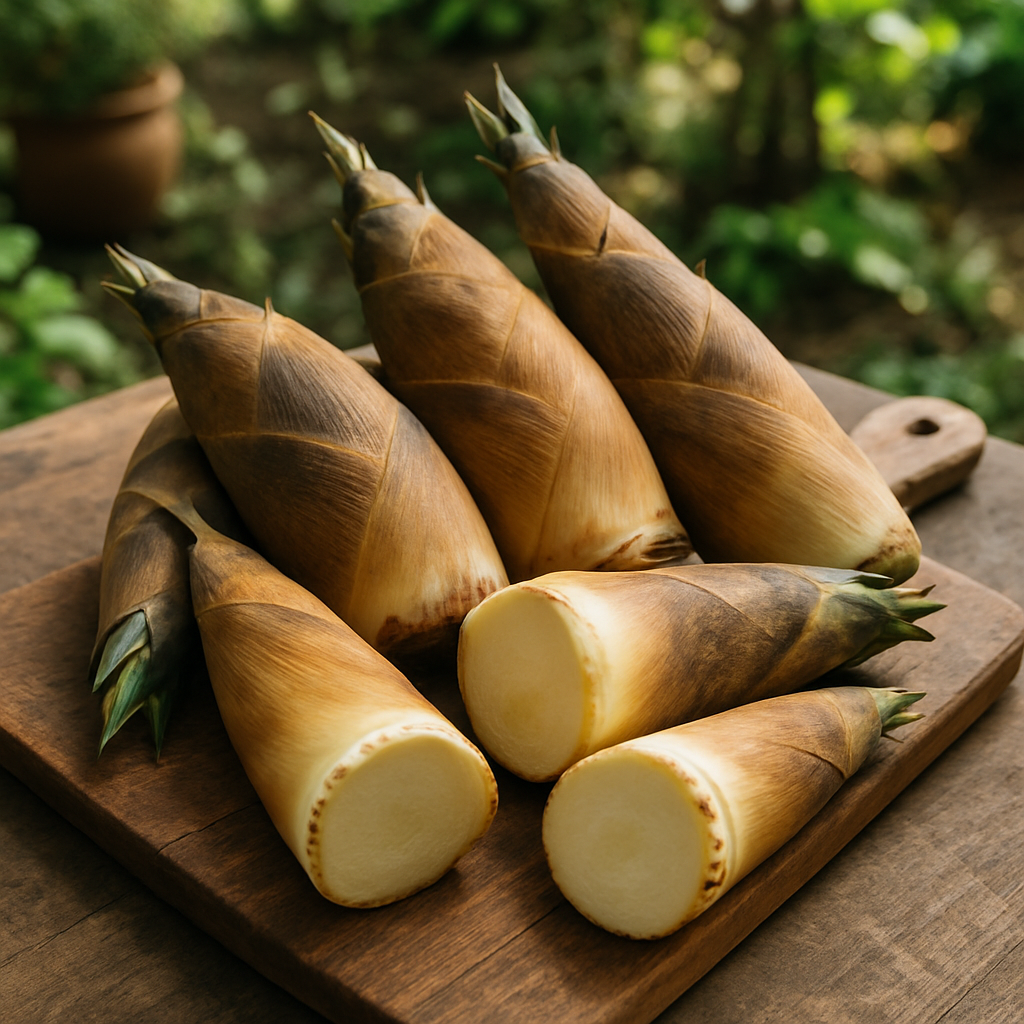
Choose the Right Bamboo Species for Eating
Not all bamboo produces edible shoots. Some species are either too bitter, too fibrous, or simply not cultivated for food. Before you harvest anything, you need to know what’s actually growing in your garden.
The most reliable edible bamboos are running varieties — plants that spread via underground rhizomes. Phyllostachys edulis, the timber bamboo or mōsōchiku in Japanese, produces the largest, meatiest shoots and is the standard commercial variety. A single shoot can reach 4–6 inches in diameter and tastes mild and slightly sweet when harvested and prepared correctly. Phyllostachys pubescens is another excellent choice with similar characteristics.
Phyllostachys bissettii, which many of us grow as an ornamental or privacy screen, also produces edible shoots, though they’re smaller and a bit more assertively flavored. I actually prefer them now — they’re tender and nutty if you catch them at exactly the right moment.
Before you head into the grove, get a dedicated cutting tool — using whatever dull knife is sitting in your kitchen drawer will slow you down and bruise the shoots. A compact folding knife like the CABUGE folding mushroom and foraging knife works well for bamboo shoots too — the wooden handle gives you a decent grip when you’re crouched down in the dirt cutting at awkward angles. It folds safely for carrying through the grove and won’t cost you much, which matters when you’re already spending money just keeping bamboo contained.
Clumping bamboos like Fargesia species rarely produce shoots worth harvesting. They grow slowly, produce very small shoots, and tend to be tougher and more bitter. Stick with running varieties if you’re serious about eating your harvest.
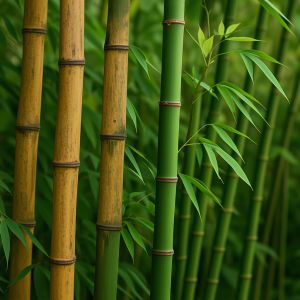
If you’re unsure what you have, take a photo of the culm (stem) and leaf structure and post it to a bamboo gardening forum or contact your local nursery. Misidentification leads to disappointment at dinner time.
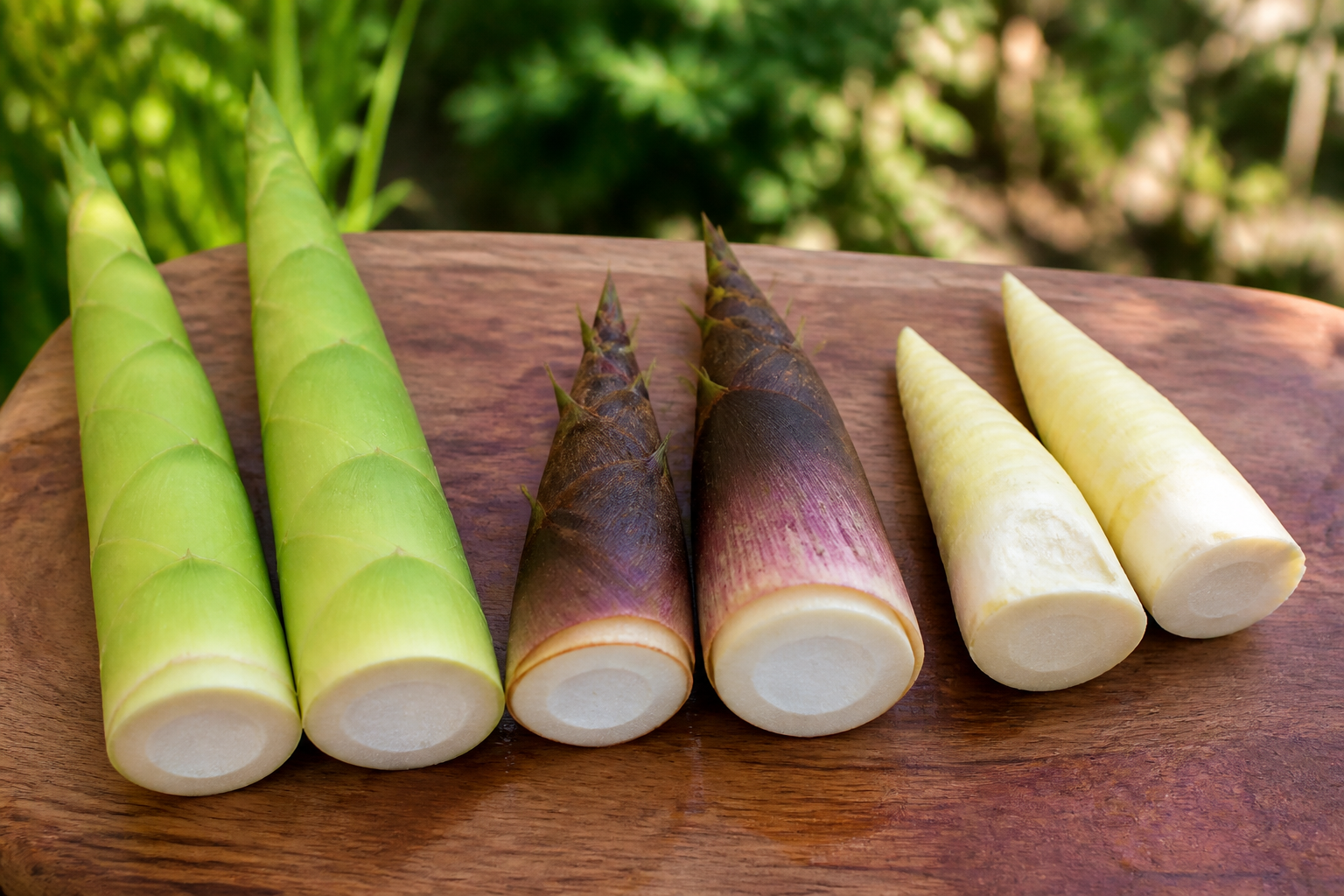
Understand the Emergence Window
Timing is everything. Shoots emerge over a concentrated period — usually 4–6 weeks — and you have a narrow window to harvest each individual shoot. Miss that window and the shoot toughens, the flavor becomes increasingly bitter, and it begins to unfurl leaves and drain its energy.
In most temperate climates, Phyllostachys shoots emerge in spring, typically between March and May, depending on your hardiness zone and local soil temperature. The exact timing varies by region — I’m in zone 7b and my grove usually starts poking through by mid-April, but I have friends in zone 5 who don’t see shoots until late May.
Here’s what actually tells you shoots are coming: soil temperature. Shoots begin to emerge when soil temperature reaches and sustains around 60–65°F (15–18°C). Check your grove’s soil in early spring with a simple soil thermometer. When temps are climbing steadily and staying above 60°F at dawn, you’re in the window. Start checking daily.
The best shoots are harvested when they’re still mostly underground — just a few inches of the pale tip visible at soil level. This is the tender stage. Once a shoot is 8–12 inches tall and leafy, it’s technically harvestable but will be stringier and more bitter than an earlier shoot from the same rhizome.
How to Harvest Edible Bamboo Shoots: Step by Step
Harvesting is straightforward, but technique matters. Do it wrong and you stress the rhizome.
When you’re moving fast through a spring flush, a curved blade makes clean angled cuts much easier than a straight edge does. The Fiskars folding produce harvest knife has an ergonomic handle and a stainless curved blade that folds away cleanly between cuts, which I appreciate when I’m moving from shoot to shoot without stopping. It’s a practical tool that holds up to repeated use without fussing over it.
- Inspect daily during emergence season. Walk your grove every morning if possible, or every other day at minimum. Shoots can emerge suddenly and toughen in just 48 hours of warm weather.
- Identify shoots at the right stage. You’re looking for pale, firm shoots with just the tip visible above the soil line — typically 2–4 inches of shoot showing. The shoot should feel slightly waxy and should snap cleanly if you bend it gently. If it bends without snapping, it’s too old.
- Loosen the soil around the shoot. Use a small shovel or cultivator to gently excavate around the base of the shoot. You need to expose the lowest 6–8 inches so you can see where the shoot attaches to the rhizome. This takes about 30 seconds per shoot and prevents damage.
- Cut cleanly at the rhizome attachment. Use a sharp knife — I use a small Japanese hori-hori knife or a serrated garden knife — and cut the shoot at a slight downward angle where it connects to the rhizome. A clean cut heals faster than a torn or crushed base. Do not pull or twist the shoot; pulling risks damaging the rhizome and future shoots.
- Backfill the soil immediately. Once you’ve cut the shoot, push the soil back around the rhizome and firm it gently. This protects the cut and the rhizome from drying out and infection.
- Harvest strategically. Don’t take every shoot from one rhizome. Leave at least one or two shoots to grow into mature culms, which will support the plant’s energy needs next season. A mature grove can support harvesting about 30–50% of shoots, but if your grove is young or stressed, take fewer.
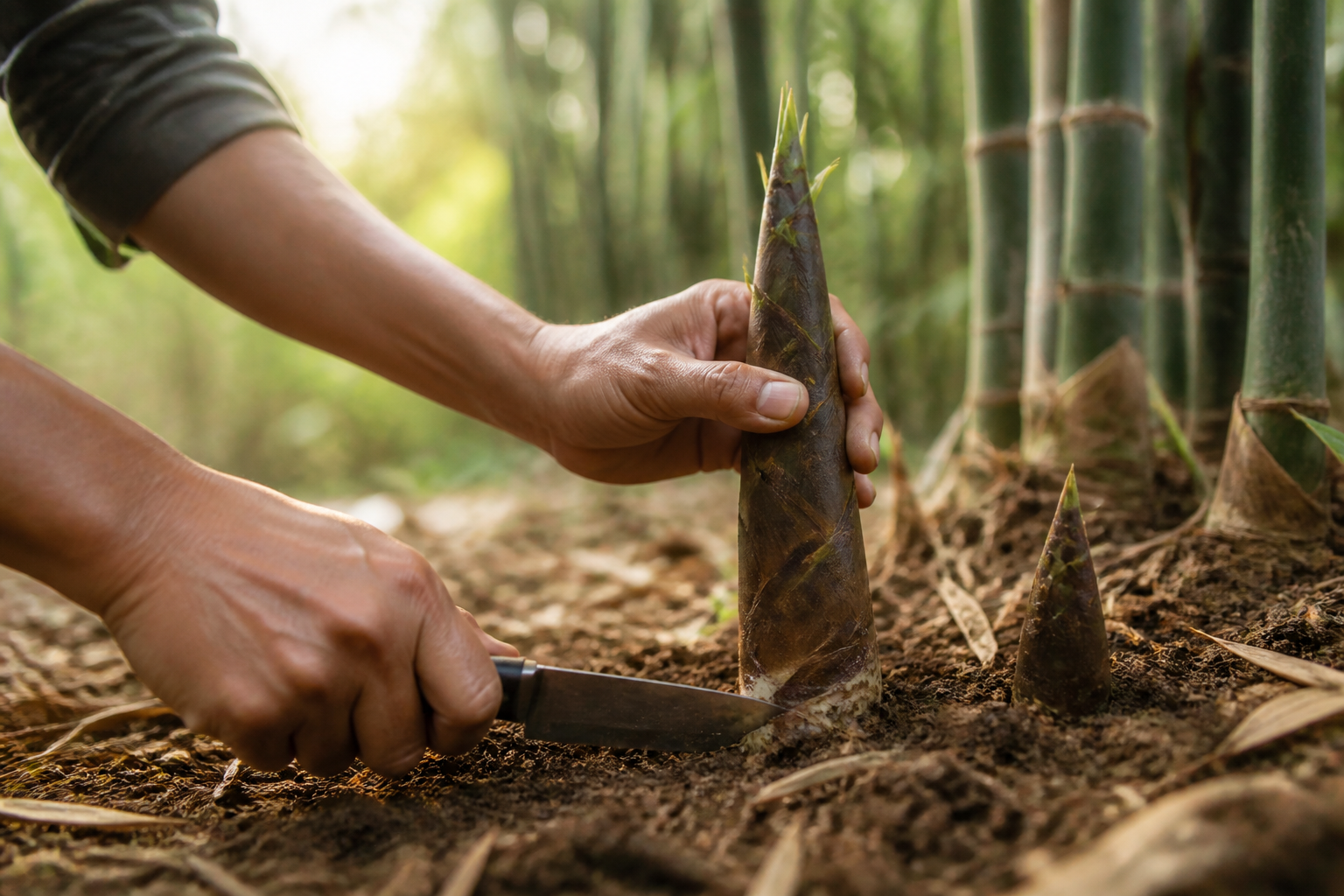
A healthy mature Phyllostachys edulis grove might produce 5–15 harvestable shoots per square meter of established planting, depending on age, soil fertility, and moisture. A young grove (less than 3 years old) produces far fewer — sometimes only a handful the first season. Be patient with a new planting.
Preparing Shoots for Cooking: Removing Bitterness
Here’s where I made my biggest early mistake. I assumed fresh shoots could go straight into the pan. They can’t — not if you want edible results.
Raw bamboo shoots contain glucosides and compounds that taste intensely bitter and slightly astringent. Boiling removes these compounds. This isn’t optional; it’s the essential step that transforms a shoot from inedible to delicious.
- Clean the shoot immediately after harvest. Rinse away soil. Use a vegetable brush if needed. Do this within a few hours of harvest — the sooner you process, the better the texture.
- Remove the outer sheath. Peel away the tough, fibrous purple or mottled outer leaves with your hands. Bend them back and snap them off. You’ll remove 2–4 layers until you reach the pale inner tissue. This is edible once cooked, though it’s slightly tougher than the interior. Many cooks discard it; I keep it for stocks and pickles.
- Slice the shoot lengthwise or into rounds. Slice into roughly 1/4-inch rounds or cut lengthwise into quarters. This exposes more surface area to boiling water and helps bitterness leach out faster.
- Boil for 20–30 minutes in plain water. Place sliced shoots in a pot of unsalted water and bring to a rolling boil. Simmer for 20 minutes at minimum — I usually go 25–30 minutes. The water will turn slightly brown or tan; that’s the bitter compounds leaching out. This is normal and necessary.
- Drain and rinse in cool water. Taste a small piece. It should taste mild, slightly sweet, and tender — not harsh or acrid. If it’s still bitter, boil again for another 10 minutes. Some shoots, especially late-season ones, need two boils.
- Use or store your prepared shoots. Boiled shoots can be refrigerated in a sealed container for up to 5 days, or frozen in water (in an ice cube tray or freezer bag) for up to 3 months.
After boiling, shoots are ready to stir-fry, add to soups, pickle, roast, or serve in salads. The texture is tender and slightly al dente, and the flavor is clean and subtle — almost like a cross between a heart of palm and a very mild artichoke.
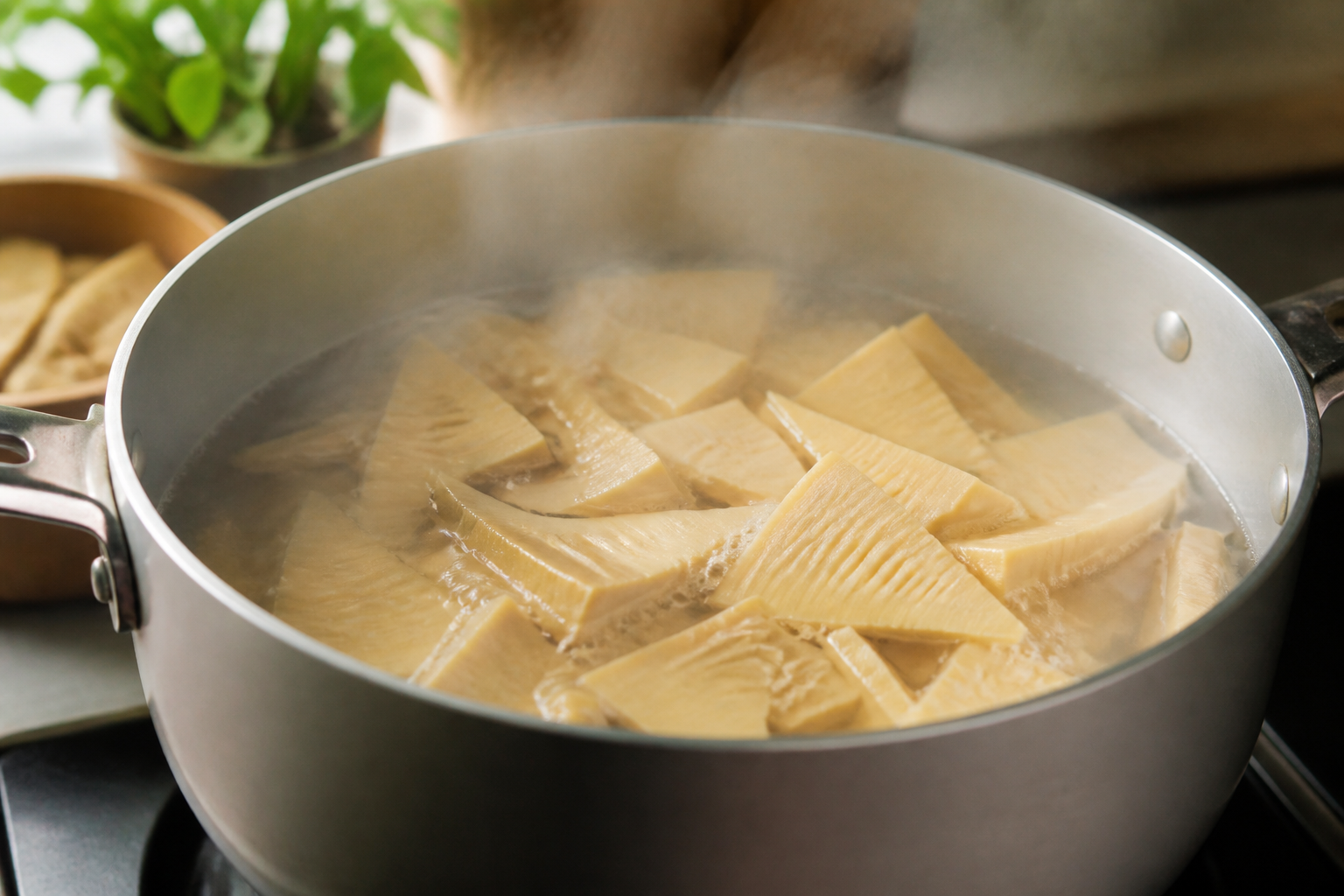
I’ve learned that a simple preparation — tossed with sesame oil, soy sauce, garlic, and a touch of white miso — is often the best way to let the shoots shine. But they’re versatile and freeze beautifully, so you can experiment through the off-season.
Common Mistakes to Avoid
- Harvesting too late. Shoots that have unfurled leaves or are more than 12 inches tall are past their prime. They’ll be tougher and more bitter.
- Skipping the boil. I can’t stress this enough. Boiling is not optional. Raw or lightly steamed shoots taste bitter and astringent.
- Pulling or twisting the shoot. This damages the rhizome. Always cut cleanly with a knife.
- Over-harvesting from a single rhizome. Leave at least one shoot to grow into a mature culm. The grove needs that photosynthesis.
- Harvesting from a young grove. Wait until the grove is at least 2–3 years old and has a good root system before you start taking shoots. Harvesting too early weakens the whole planting.
One more thing: if you live in an area where bamboo is considered invasive, check local regulations before you plant. Some states and regions have restrictions on running bamboos. A contained grove with a good rhizome barrier is always safer than hoping for containment.
Once you’re back at the kitchen and ready to prep your haul, a longer blade with a serrated edge makes quick work of trimming the tough outer sheaths before cooking. The Fiskars 6-inch serrated harvesting knife comes with a sheath, so it’s easy to store safely and grab again next harvest without digging through a drawer. If you’re going to put in the labour of growing and harvesting your own shoots, it’s worth having a knife that can handle both the field work and the prep work.
Conclusion: Your First Harvest Awaits
Learning how to harvest edible bamboo shoots is one of those gardening skills that feels like discovering a secret. Once you’ve done it right — once you’ve pulled that first tender, properly prepared shoot from your own soil and tasted its clean, sweet flavor — you’ll understand why bamboo has been cultivated for food in Asia for thousands of years.
The process is simple: choose the right species, recognize the emergence window, harvest cleanly, and prepare with proper boiling. None of it is difficult. What it requires is patience, daily attention during the season, and willingness to learn from a few early mistakes (as I certainly did).
If you already have a bamboo grove — edible or ornamental — check what species you have. If it’s a running Phyllostachys, you’ve already been sitting on a seasonal harvest. This spring, start watching your grove at soil temperature 60°F, and try harvesting a few shoots. Boil them properly, taste them, and taste the difference that technique makes.
Your harvest is waiting. Go pick some shoots.
About This Article

Written by Marcus Chen. Marcus Chen has spent 15 years cultivating and studying bamboo across 14 different species, combining commercial growing operations with extensive hands-on experience in species selection and containment. As both a grower and consultant, he specializes in practical bamboo management, helping homeowners and landscapers understand the real-world requirements for responsible bamboo cultivation. Marcus brings tested knowledge of which species thrive reliably and which present containment challenges that go beyond standard recommendations. More about this site.
Verify this against a primary source
Specifics change, and your situation may differ from the one described here. These are the authorities worth checking directly:
- American Bamboo Society — species listings and cultivation guidance
- USDA PLANTS Database — species range and identification
- USDA Plant Hardiness Zone Map — cold hardiness verification for your location