Key Takeaways
- Bamboo rhizomes are thin, shallow, and cannot crack intact modern foundations, well casings, or solid PVC pipes—they lack the lateral pressure of tree roots.
- Will bamboo roots reach my well? Modern steel or PVC casings are completely safe; older terracotta or clay wells with existing cracks are at potential risk.
- Bamboo rhizomes can exploit existing damage: cracks in concrete, gaps in old clay pipes, undermined soil, and weak expansion joints.
- Running bamboo should be planted at least 10 feet from foundations without a barrier, 5–10 feet with a barrier; 15–20 feet from wells with barrier protection recommended.
- Septic drain fields require 30-foot setback for running bamboo; 10–15 feet minimum for clumping varieties.
- A 30-inch deep, 60-mil HDPE root barrier is the most effective preventive measure for planting near sensitive infrastructure.
Will Bamboo Roots Reach My Well? Understanding the Real Risk
One of the most common concerns homeowners raise is whether will bamboo roots reach my well and contaminate their water supply or compromise the integrity of the casing. The short answer is: modern wells are virtually safe from bamboo root damage, but context matters enormously.
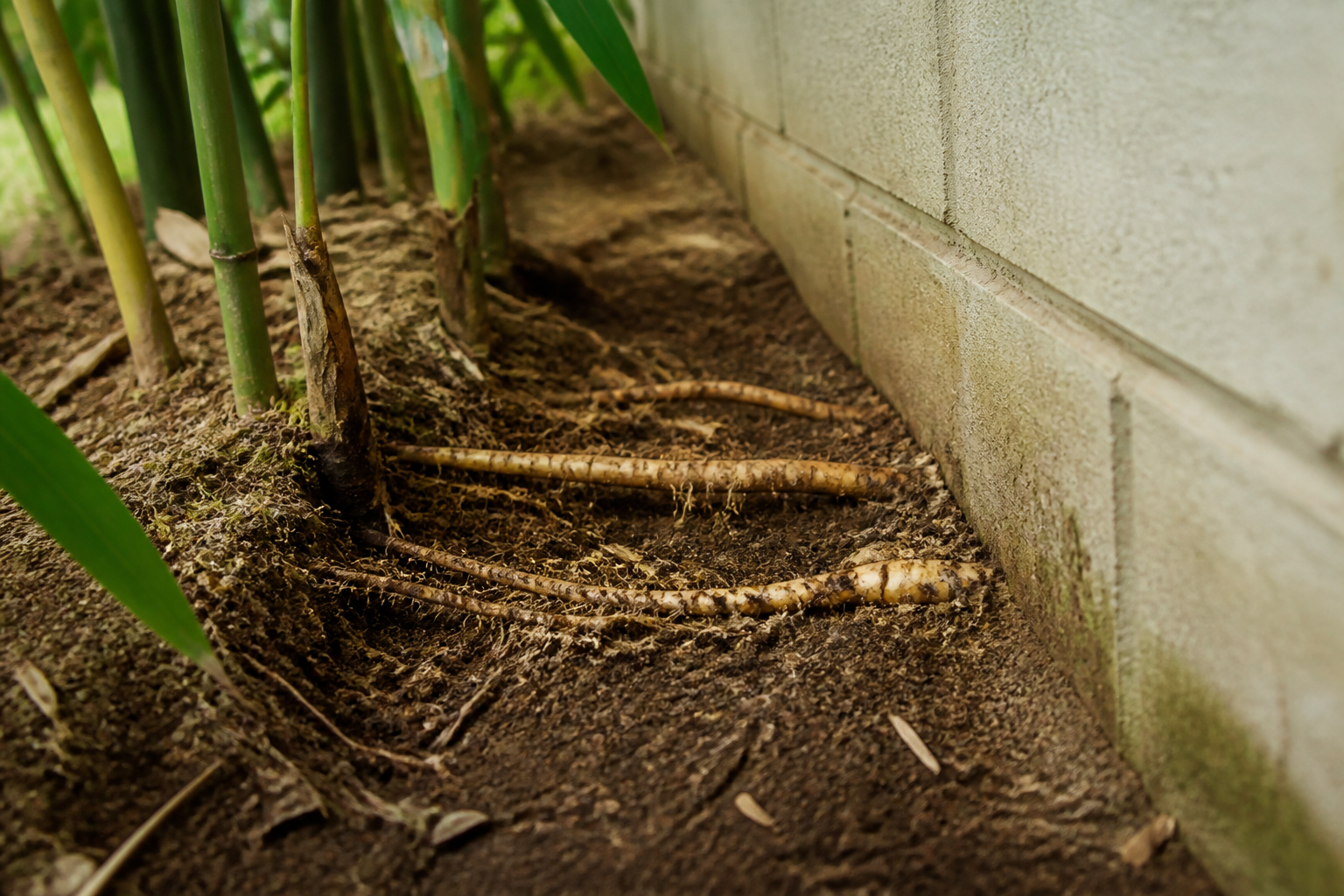
Bamboo does not produce a single taproot like trees. Instead, it spreads via underground stems called rhizomes. These rhizomes are typically thin (¼ to ½ inch diameter), fibrous, and shallow—rarely penetrating deeper than 18 inches in the soil. This architectural difference is critical: bamboo rhizomes cannot exert the lateral cracking pressure that woody tree roots generate over decades. A healthy bamboo rhizome system will spread horizontally and deflect around solid obstacles rather than bore through them.
However, the age and condition of your well casing determines real-world risk. Evaluate your own situation before you plant:
Modern Steel or PVC Well Casings
Wells constructed in the last 40–50 years typically feature seamless steel casings or solid PVC pipe. These materials are completely resistant to bamboo rhizome penetration. Even aggressive running bamboo species like Phyllostachys edulis (Moso bamboo) cannot breach intact PVC or steel. The risk is functionally zero, assuming the casing has no pre-existing holes or cracks.
Older Terracotta, Clay, or Tile Casings
Wells drilled or dug before 1970 may use terracotta tile, clay pipe, or even unlined brick. These materials are porous and brittle. If existing cracks or mortar gaps are already present, bamboo rhizomes—like any invasive root—can enter and exploit those weak points. This is the genuine risk scenario, though uncommon in residential settings.
Safe Planting Distance from Wells
TerraBamboo recommends planting bamboo at least 15–20 feet from any well head as a precautionary buffer, regardless of well type. This distance accommodates horizontal rhizome spread and provides practical clearance for future well maintenance or replacement. For properties where wells are closer (5–15 feet from desirable planting zones), installing a 30-inch deep root barrier on the side facing the well is essential insurance.
Bamboo Roots and Foundation Damage: What Modern Science Shows
The question of bamboo roots foundation damage often stems from horror stories about tree roots lifting concrete or cracking masonry. But bamboo operates differently. TerraBamboo’s cultivation specialists have observed that modern poured concrete foundations and concrete block construction—when properly cured and free of cracks—remain unaffected by bamboo rhizome pressure.
Bamboo rhizomes are thin and do not generate the lateral wedging force of a 2-inch oak root. Instead, they will naturally deflect sideways when encountering a solid foundation. The real concern emerges in two scenarios:
Foundations at Risk: Older or Compromised Structures
Rubble stone foundations (common in homes pre-1950) have irregular mortar joints and gaps. Bamboo rhizomes can penetrate loose mortar and widen cracks over time, causing differential settling. Similarly, foundations with existing expansion joint cracks or water damage in basement walls provide entry points. In these cases, rhizome infiltration becomes a secondary problem compounding existing structural weakness.
Safe Distance from Foundation
For modern foundations in good condition, planting running bamboo 5–10 feet away with a root barrier installed is adequate protection. Without a barrier, TerraBamboo recommends 10+ feet minimum clearance. For clumping bamboo varieties (non-spreading species like Fargesia robusta), distance requirements are substantially reduced because clumping bamboos have limited horizontal spread.
Bamboo Roots and Underground Pipes: Clay, Cast Iron, and PVC
The question of bamboo roots underground pipes requires distinguishing between pipe materials and condition. This is where bamboo root damage to infrastructure becomes a practical reality—not from bamboo’s pressure, but from its opportunism.
Modern PVC, ABS, and Copper Pipes
Solid, undamaged PVC, ABS plastic, and copper water or drain lines are completely safe from bamboo rhizome penetration. Bamboo cannot chew through plastic or metal. The only exception: if PVC or ABS pipe already has a crack, hole, or loose fitting, root exudates and rhizomes can enter through that opening—but this is true of any plant root, not unique to bamboo.
Old Clay, Terracotta, and Cast-Iron Sewer Lines
Homes with sewer laterals installed before 1970 often have unlined clay tile, terracotta, or cast-iron pipes. These materials degrade over decades. Joints crack, clay becomes porous, and cast iron rusts. In these conditions, bamboo rhizomes will enter cracks and roots—just as tree roots do—causing blockages and structural failure of the lateral. This is a legitimate concern requiring either barrier installation or planting distance.
If you have an old sewer lateral, conduct a CCTV inspection before planting bamboo nearby. If the line shows root infiltration from existing vegetation or visible cracks, install a sturdy root barrier between the bamboo and the line.
Bamboo Near Septic Tank and Drain Field Systems
Bamboo planted near a septic system requires special care. The question of bamboo near septic tank involves both mechanical interference and biological disruption.
The Drain Field Rule
The drain field (or leach field) of a septic system should remain free of any woody plant, including bamboo. Roots—whether from bamboo, trees, or shrubs—can infiltrate drain line openings and disrupt the percolation of treated effluent. What I would advise:
- Running bamboo: plant no closer than 30 feet from the drain field boundary
- Clumping bamboo: plant no closer than 10–15 feet, with a root barrier advisable at 10-foot distance
- Septic tank itself: maintain a 10-foot clearance for access and future pumping
These distances prioritize system longevity and prevent expensive repairs from root interference.
How Far Do Bamboo Roots Spread? Species and Spread Rates
Understanding how far do bamboo roots spread is essential for planning safe distances from wells, foundations, and infrastructure. Spread varies dramatically by bamboo type.
| Bamboo Type | Species Example | Growth Pattern | Average Annual Spread (Running) | Maximum Depth | Ideal Root Barrier Depth |
|---|---|---|---|---|---|
| Running bamboo (Phyllostachys) | P. edulis (Moso), P. aureosulcata | Horizontal via long-necked rhizomes | 3–6 feet/year (optimal conditions) | 12–18 inches | 30 inches minimum |
| Running bamboo (Pleioblastus) | P. simonii, P. viridistriatus | Aggressive horizontal spread | 4–8 feet/year | 10–16 inches | 24–30 inches |
| Clumping bamboo (Fargesia) | F. robusta, F. nitida | Vertical culms, minimal spread | 0–2 feet/year | 8–12 inches | Not typically required |
| Clumping bamboo (Bambusa) | B. multiplex, B. oldhamii | Tight clumps, slow expansion | 1–3 feet/5 years | 10–14 inches | 18–24 inches if needed |
Key insight: Running bamboo species spread aggressively and horizontally. After 5–10 years without barriers, a running bamboo grove can advance 15–60 feet from its origin point. Clumping bamboos are localized, expanding slowly outward from the original planting center.
If will bamboo roots reach my well is your concern and your well is 25 feet away, uncontrolled running bamboo could eventually reach that distance within a decade—not because of cracking pressure, but because of horizontal rhizome expansion into available soil.
Installing a Root Barrier: Specifications and Best Practices
For sensitive areas near wells, foundations, or underground pipes, a bamboo root barrier well installation is the most reliable solution. TerraBamboo’s specialists recommend these specifications:
Root Barrier Material Specifications
- Material: High-density polyethylene (HDPE), 60-mil thickness or greater
- Depth: 30 inches below finished grade (minimum)
- Height above grade: 2–4 inches, slightly angled to guide rhizomes downward and prevent climbing
- Overlap: Seams should overlap by at least 12 inches and be sealed with HDPE-compatible tape or sealant
- Perimeter: Form a complete continuous barrier; gaps allow rhizome bypass
Installation Steps
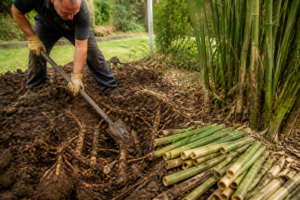
- Excavate a trench 30 inches deep on the side of the bamboo grove facing the infrastructure you wish to protect
- Lay HDPE barrier vertically, pressing it firmly into the trench bottom
- Overlap seams by 12 inches and seal with HDPE tape on both sides
- Allow 2–4 inches of barrier to protrude above ground to catch shallow lateral rhizomes
- Backfill with compacted soil, avoiding sharp rocks that could puncture the barrier
- Inspect annually for breaches or settlement that could expose the top edge
A properly installed HDPE barrier creates an effective 30-year+ defense against rhizome spread. TerraBamboo recommends upgrading distances (e.g., from 10 feet to 5 feet) when a barrier is in place.
Safe Planting Distance Summary Table
| Infrastructure | Safe Distance Without Barrier | Safe Distance With Root Barrier | Bamboo Type Recommendation | Notes |
|---|---|---|---|---|
| Modern poured concrete foundation | 10+ feet | 5–10 feet | Running or clumping | Good condition only. Inspect for cracks first. |
| Older rubble/stone foundation | 15+ feet | 10–15 feet | Clumping preferred | Higher risk. Reinspect barrier every 2–3 years. |
| Modern steel/PVC well casing | 15–20 feet | 10–15 feet | Either | Risk is minimal; distance is precaution for maintenance access. |
| Old clay/terracotta well | 20+ feet | 15 feet + barrier | Clumping only | Inspect well condition. Consider relining. |
| Modern PVC/ABS sewer lateral | 8–10 feet | 5 feet | Either | Undamaged pipe is safe; cracks allow infiltration. |
| Old clay sewer lateral | 15–20 feet | 10 feet + barrier | Clumping preferred | CCTV inspect first. High root infiltration risk. |
| Septic drain field (running bamboo) | 30+ feet | N/A—barrier not sufficient; maintain 20+ feet | N/A | Roots disrupt drain function. Choose distance or relocate system. |
| Septic drain field (clumping bamboo) | 15 feet | 10–15 feet with barrier | Clumping only | Much safer than running types. Monitor annually. |
The Real Long-Term Risk: Rhizome Spread and Future Excavation
Beyond acute structural damage, the practical challenge homeowners face is bamboo root damage stemming from spread and removal difficulty. While will bamboo roots reach my well has a reassuring answer in most cases, the question of long-term property planning is more complex.
About This Article

Written by Marcus Chen. Marcus Chen has spent 15 years cultivating and studying bamboo across 14 different species, combining commercial growing operations with extensive hands-on experience in species selection and containment. As both a grower and consultant, he specializes in practical bamboo management, helping homeowners and landscapers understand the real-world requirements for responsible bamboo cultivation. Marcus brings tested knowledge of which species thrive reliably and which present containment challenges that go beyond standard recommendations. More about this site.
Verify this against a primary source
Specifics change, and your situation may differ from the one described here. These are the authorities worth checking directly:
- American Bamboo Society — species listings and cultivation guidance
- USDA PLANTS Database — species range and identification
- USDA Plant Hardiness Zone Map — cold hardiness verification for your location