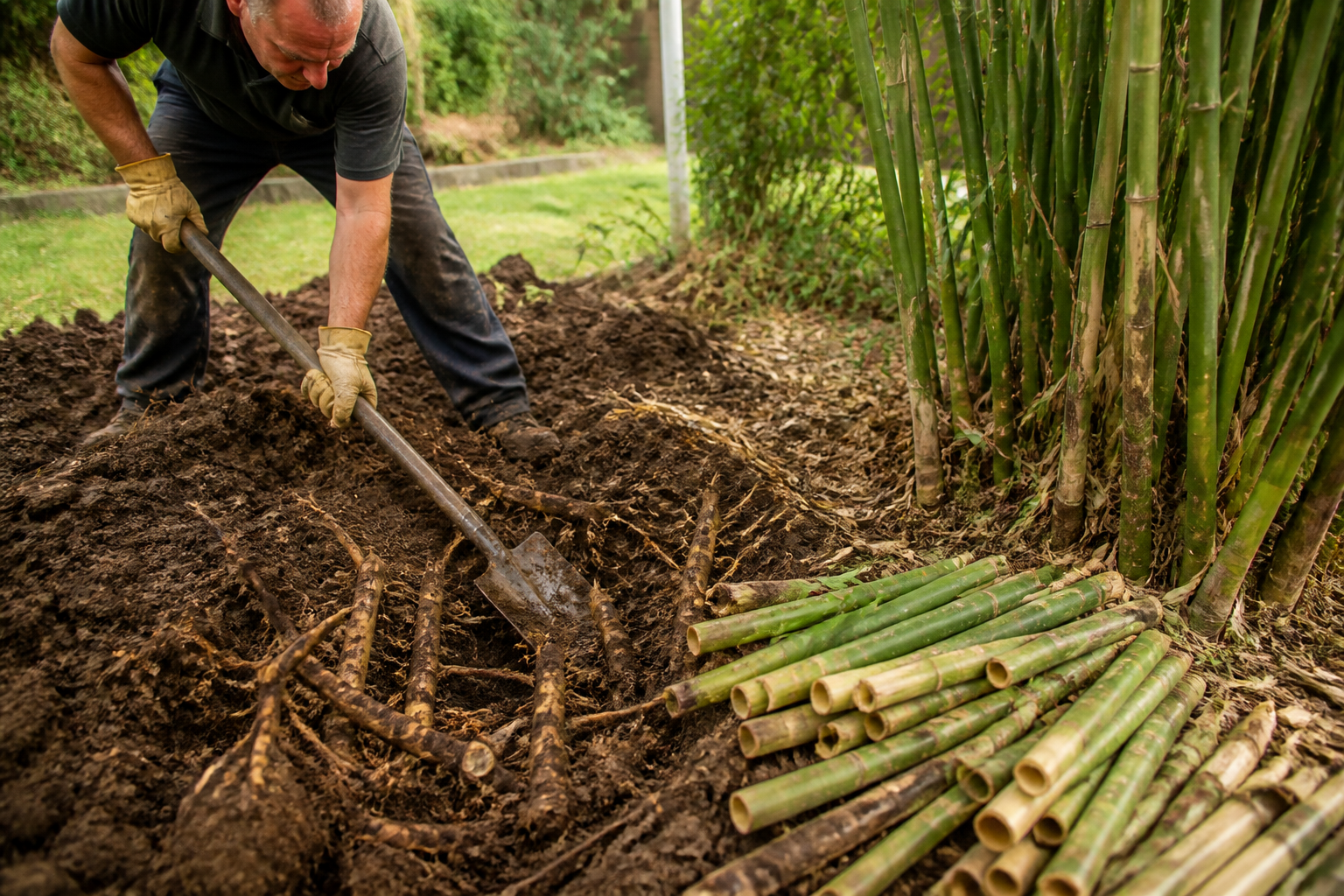
I planted bamboo fifteen years ago thinking I was being clever. “It grows anywhere,” I thought. “It’s basically indestructible.” Well, I was right about one thing—it is indestructible. The problem is, I wanted to destroy it.
After years of battling an out-of-control running bamboo colony that had spread across half my backyard, I finally learned what actually works. I’ve tried every method—some worked brilliantly, others wasted months of my time. Here’s what I learned from my own expensive mistakes.
Method 1: Excavation (The Nuclear Option)
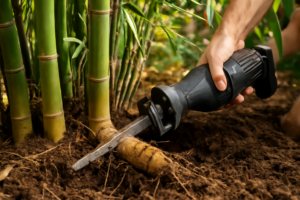
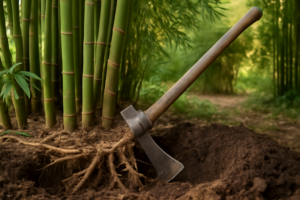
This is the only truly permanent method, and it’s also the most brutal. I had to excavate a 400-square-foot section of my backyard where the bamboo had established itself. It took a contractor with a small excavator, a dumpster, and three days of my life I’ll never get back.
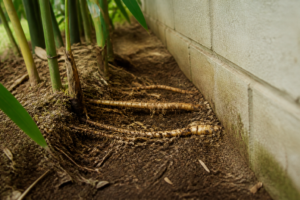
The bamboo root system (rhizomes) extends horizontally in all directions, often much further than the visible above-ground culms. I had to dig down about 18 inches and remove absolutely everything—soil, roots, every fragment. You have to be thorough here. If you leave even small rhizome pieces behind, they’ll regenerate.
The cost was significant—around $1,200 for the excavation plus disposal. But once I did it, that section was dead. Completely. No regrowth. That was three years ago, and I’ve had zero bamboo return from that area.
My honest take: excavation works 100% of the time, but only if you’re dealing with a manageable area and you have the budget for it. For larger infestations or if you’re renting, this isn’t practical. Also, you’ll need to refill and amend the soil afterward, which adds more cost and effort.
Method 2: Glyphosate Herbicide (The False Hope)
Everyone tells you glyphosate (like Roundup) will kill bamboo. It won’t. Or rather, it almost certainly won’t kill mature established bamboo. I sprayed the foliage liberally, followed instructions perfectly, and watched my bamboo laugh at me while it kept growing.
Here’s why: bamboo’s rhizomes are underground and well-protected. Spraying the leaves doesn’t reach them. The herbicide might damage the above-ground culms temporarily, which feels encouraging, but the root system remains untouched and happy to send up new shoots.
I wasted about six weeks and $80 on various herbicide products before I accepted this wasn’t working. The only way herbicide has any shot is if you cut the bamboo repeatedly to exhaust the rhizome reserves—which takes 2-3 years of constant cutting, and even then, it’s not guaranteed.
The exception: some people report limited success with cutting new shoots and immediately applying concentrated glyphosate to the fresh cut. I tried this and got maybe 30% damage to the root system. Better than nothing, but nowhere near permanent. I eventually abandoned this approach.
Method 3: Smothering with Tarping (The Patient Approach)
This is the method I used for most of my backyard, and it actually works—but you need to understand the timeline. Smothering takes 12-24 months minimum, possibly longer in my climate.
The process: I cut the bamboo as short as possible, then covered the entire area with heavy-duty landscape fabric or thick plastic sheeting (I used 6-mil black plastic). I weighted down the edges with soil, rocks, and wood to prevent light from creeping in. The goal is to starve the rhizomes of light completely.
For the first 6-8 weeks, I saw new shoots pushing up under the tarp constantly. This is normal and honestly kind of alarming when you see the plastic puffing up. I just pushed them down or poked holes and cut them. Eventually, the shoots became weaker and more infrequent. By month four, almost nothing was emerging.
I kept the tarps in place for 18 months total. When I finally removed them, the rhizomes were dead or dying. A few weak shoots emerged over the next few months, but they were sparse enough that hand-pulling finished them off. One year later, essentially zero regrowth.
Cost-wise, this was under $200 for materials. Time-wise, it required patience and checking the area occasionally, but it wasn’t labor-intensive. The downside: your yard looks terrible under tarps for a year and a half. Also, the plastic kills existing grass and plants—so you’re clearing that area completely.
The Reality Check on Timeline
Here’s what everyone wants to hear but nobody likes: killing established bamboo permanently takes time. If you’re hoping for a quick fix, you’re going to be disappointed. The excavation is fastest at 3-7 days of actual work, but it’s expensive. Smothering takes over a year. Repeated cutting to eventually deplete the rhizome takes 2-3 years of consistent effort.
There’s no magic spray. There’s no weekend solution. This is one of those gardening problems where you pick your poison: money, time, or physical labor. Usually some combination of all three.
What Actually Worked For Me
I used a combination approach: excavation for the worst-affected area, smothering for the mid-sized patches, and repeated cutting + monitoring for the edges. Three years later, the bamboo is gone from about 85% of where it was. That remaining 15%? I’ve just contained it with root barriers and annual maintenance, which I should have done in the first place.
If I could go back and tell younger me one thing: don’t plant running bamboo near anything you care about. And if you inherit it or discover it spreading, deal with it early when it’s small. A tiny patch is exponentially easier to kill than an established grove.
Bamboo is beautiful, fast-growing, and useful. It’s also relentless. Respect it as a plant, plan your approach carefully, and give yourself realistic expectations about time and cost. You’ll be much happier with the process—and the results.
The Barrier That Finally Stopped My Rhizomes at the Property Line
Running bamboo doesn’t respect fences or property lines—its rhizomes tunnel underground and emerge 20 feet away without warning. A physical root barrier is the only thing that actually stops this spread before it becomes your neighbor’s problem too.
What works
- Creates a genuine underground wall that forces rhizomes to either turn back or climb up and over—giving you visible escape points you can actually manage instead of invisible spread.
- When installed at 24-30 inches deep along the perimeter, it stops lateral spread within the first growing season, not after years of creeping expansion across your yard.
- The rigid material doesn’t degrade like cloth or landscape fabric—I’ve had mine in place for eight years and it’s still intact and functional as a barrier.
What doesn’t
- Installation is backbreaking labor if you’re doing it around an existing bamboo stand—you’re digging down 2+ feet in dense, root-choked soil, not a weekend project.
- Won’t stop bamboo that’s already escaped beyond where you install it; this is containment for living clumps, not a cleanup tool for spread that’s already happened.
I nearly gave up halfway through installation when I hit a solid mat of old rhizomes and questioned whether anything short of complete excavation would help.
About This Article

Written by Marcus Chen. Marcus Chen has spent 15 years cultivating and studying bamboo across 14 different species, combining commercial growing operations with extensive hands-on experience in species selection and containment. As both a grower and consultant, he specializes in practical bamboo management, helping homeowners and landscapers understand the real-world requirements for responsible bamboo cultivation. Marcus brings tested knowledge of which species thrive reliably and which present containment challenges that go beyond standard recommendations. More about this site.
Verify this against a primary source
Specifics change, and your situation may differ from the one described here. These are the authorities worth checking directly:
- American Bamboo Society — species listings and cultivation guidance
- USDA PLANTS Database — species range and identification
- USDA Plant Hardiness Zone Map — cold hardiness verification for your location