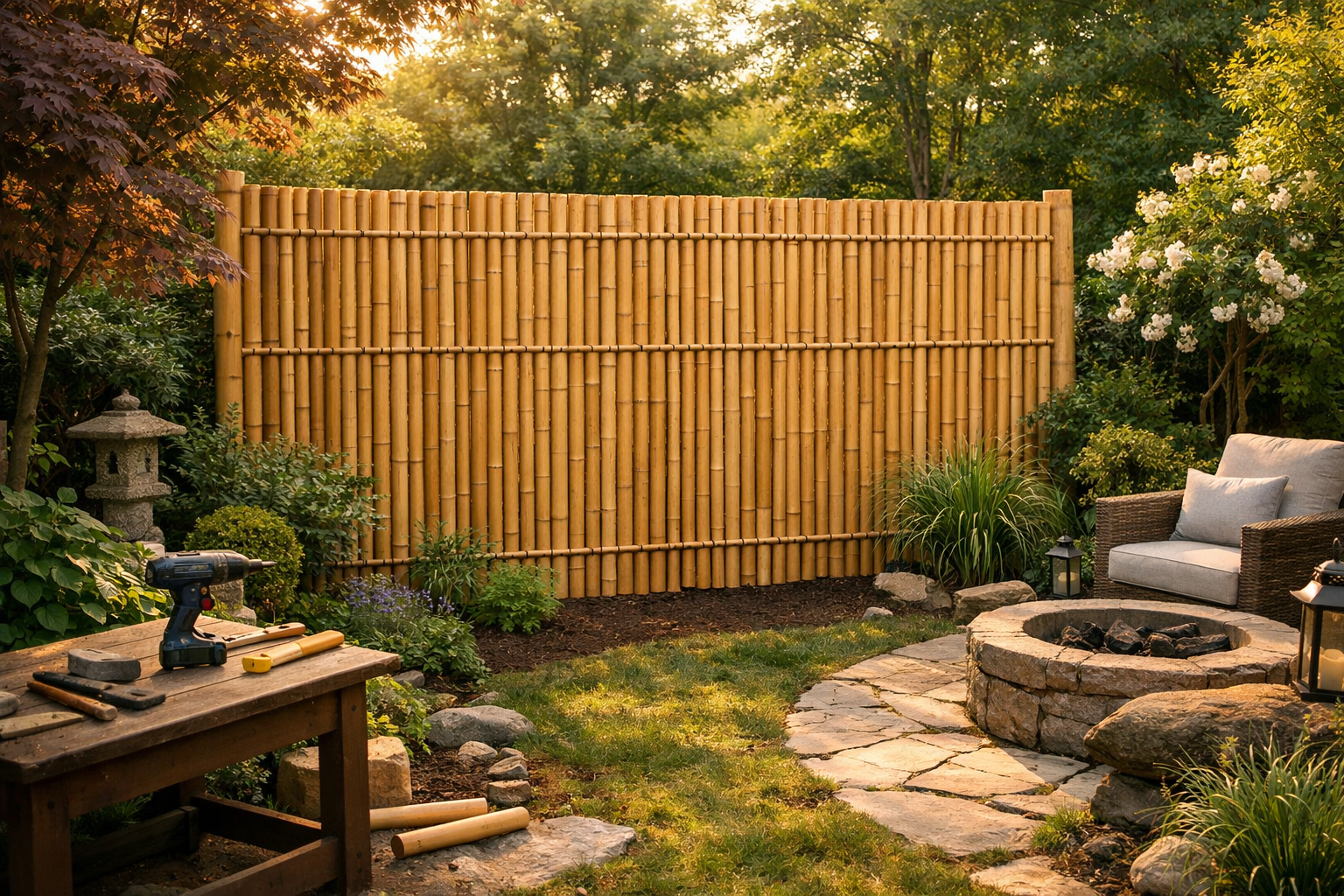
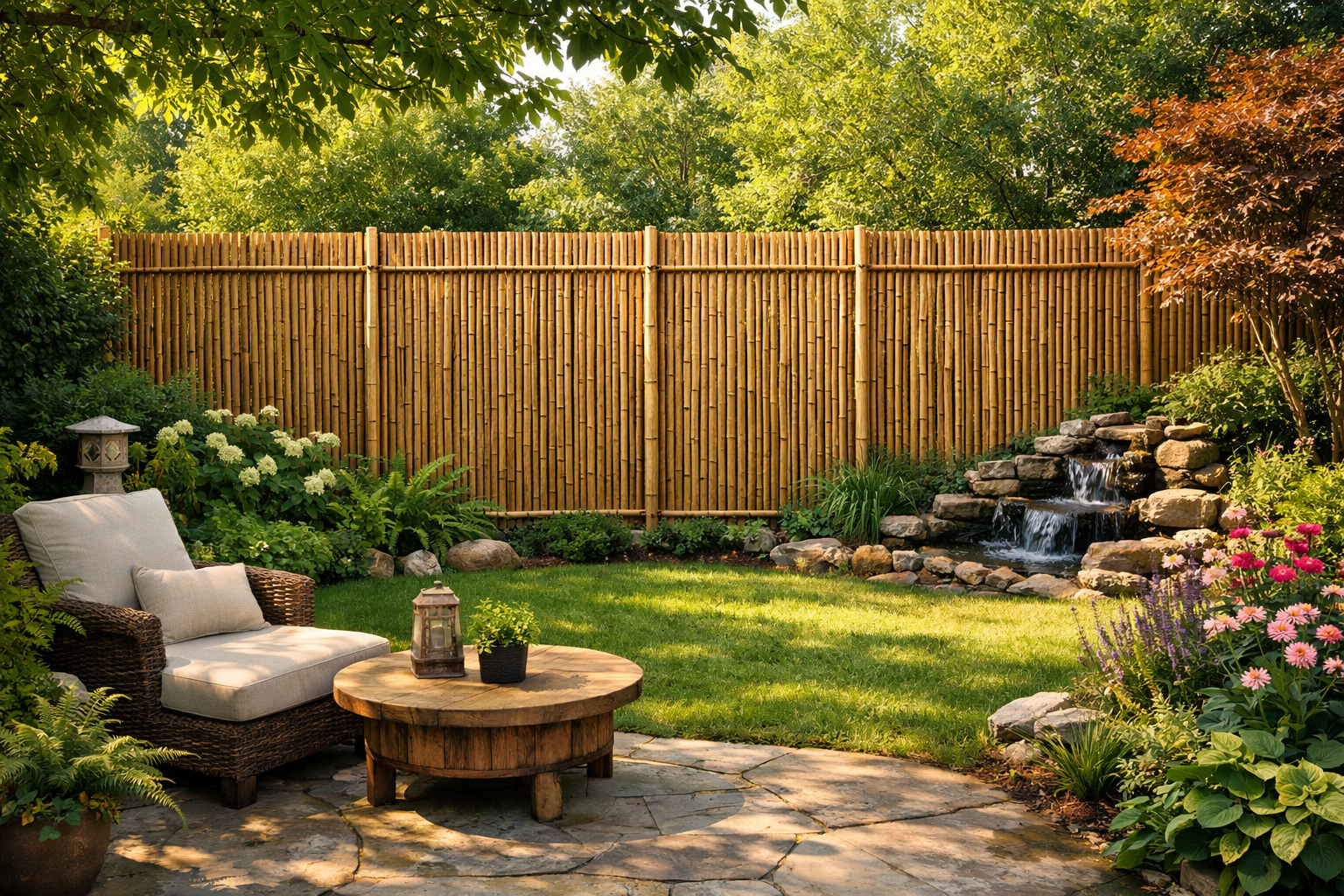
Category: Bamboo Privacy Screens & Fencing

  • Bamboo Fence vs Bamboo Screen: Which Is Right for Your Yard?

    Bamboo Fence vs Bamboo Screen: Which Is Right for Your Yard?

    This post contains affiliate links. As an Amazon Associate I earn from qualifying purchases at no extra cost to you.

    Last summer I was standing in my backyard holding a cold coffee, staring at two completely different bamboo installations and wondering why I’d never written about this. On my left: a solid bamboo fence running along the property line, doing the serious work of blocking my neighbor’s very enthusiastic garden gnome collection. On my right: a loose, airy bamboo screen draped along my patio pergola, doing something far more decorative and breezy. Both made from bamboo. Both technically called “bamboo fencing” in half the product listings I’ve ever read. But the bamboo fence vs bamboo screen differences couldn’t be more real once you actually live with both. If you’re trying to figure out which one belongs in your yard, I’ve made enough mistakes for both of us — let me walk you through what I’ve learned.

    Bamboo Fence vs Bamboo Screen: Which Is Right for Your Yard? — image 1

    What Actually Makes a Bamboo Fence Different From a Bamboo Screen?

    I used to use these terms interchangeably, and honestly so do a lot of sellers online. That’s part of what makes shopping for these products genuinely confusing. But after installing both, I’ve come to think of them as tools with different jobs — even if they look similar at a quick glance.

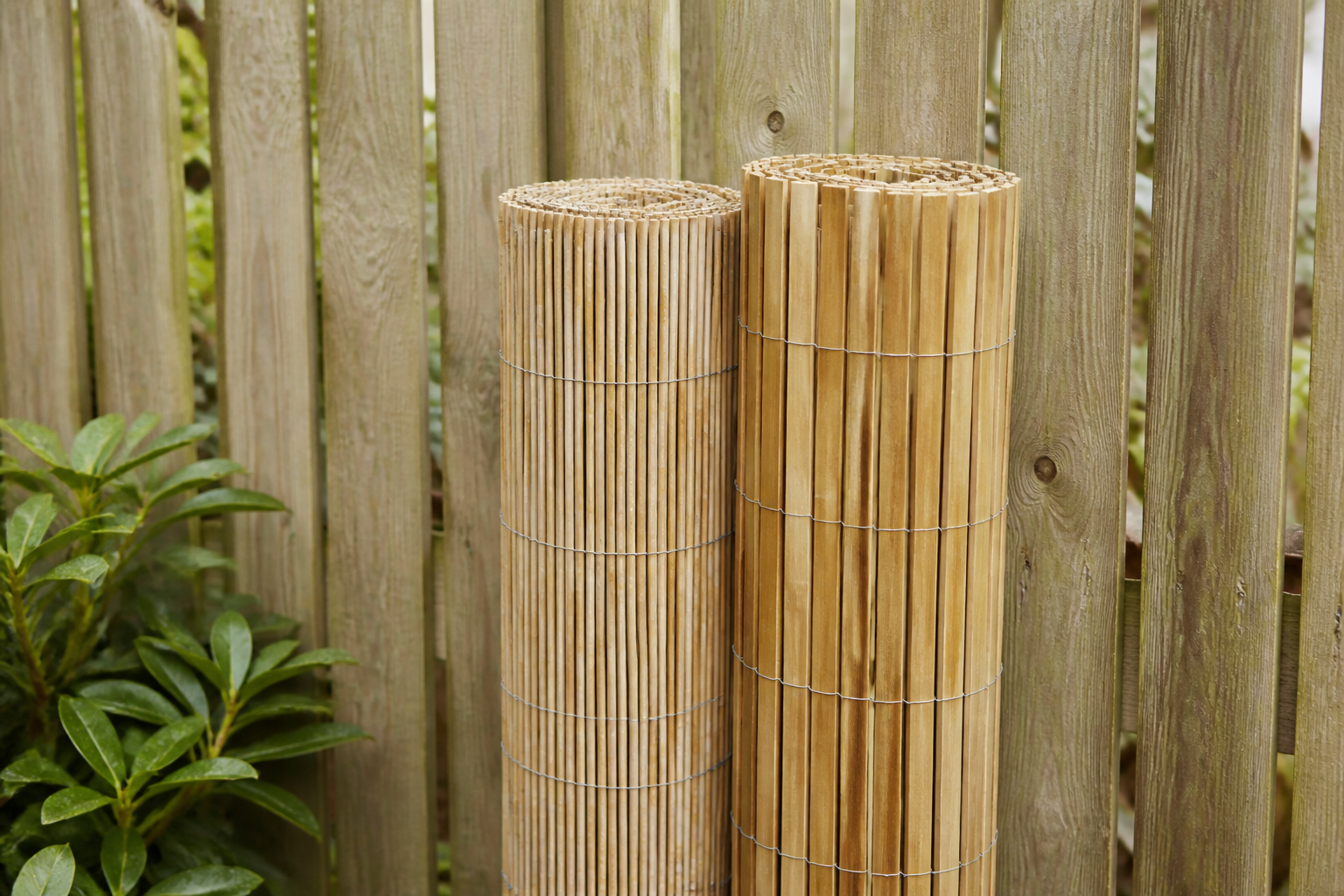
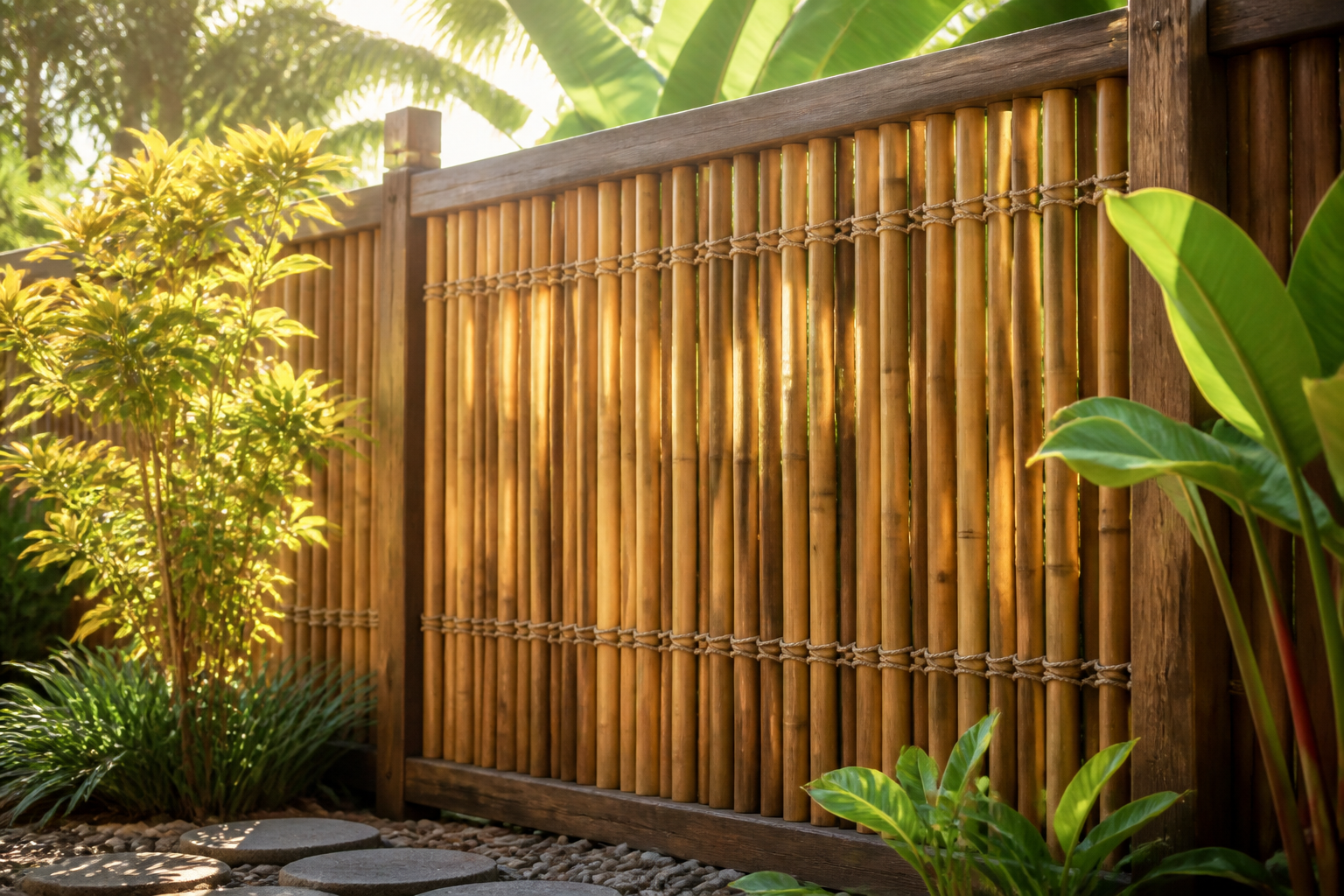
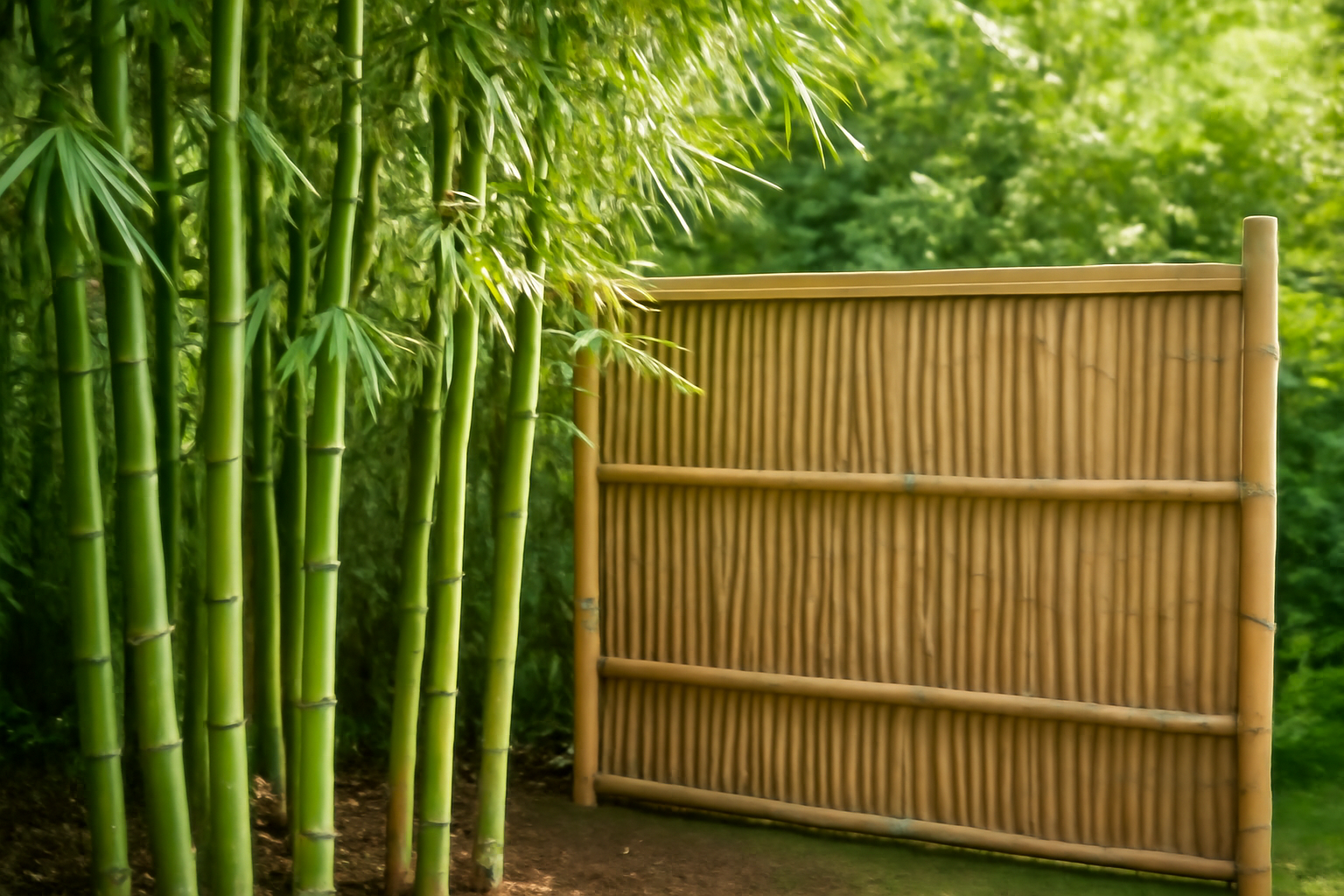
    A bamboo fence is built for structure and permanence. It uses thicker, more rigid bamboo poles or slats, and it’s typically mounted on a solid framework — fence posts, wooden rails, or an existing chain-link structure. The goal is a defined boundary. It blocks views, reduces noise to some degree, and gives your yard a clear edge. When I put up the fence along my property line, I used a roll from Forever Bamboo Natural Bamboo Fencing Decorative Rolled Fence Panel (0.75 in D x 6 ft H x 8 ft L). The poles are thick and sturdy, and once it was wired to my existing fence frame, it felt genuinely solid. It’s not going anywhere in a light wind.

    A bamboo screen, on the other hand, is more flexible in every sense of the word. It’s usually made from thinner bamboo slats or even reed material, woven or tied together with wire or twine. It rolls up easily, installs quickly, and works beautifully as a temporary or semi-permanent visual divider. It’s the difference between building a wall and hanging a curtain — both block your view, but only one of them is meant to move with the seasons.

    When a Bamboo Fence Is the Right Call

    If your goal involves any of the following, you probably want a fence rather than a screen:

    • Defining a clear property boundary
    • Blocking a persistent sightline from a neighbor’s window or elevated deck
    • Adding structure to a yard that currently has none
    • Creating a backdrop for a garden bed or water feature
    • Covering an ugly chain-link fence permanently

    Bamboo fencing is one of those projects that looks intimidating but is actually very manageable if you take your time. I’d recommend picking up some YIDIE Garden Stakes Sturdy Metal Fence Posts (5 Ft, Pack of 50) if you’re building a freestanding run — they’re plastic-coated steel, which means they hold up against moisture far better than plain metal stakes, and having extras on hand saves you a mid-project hardware store run (ask me how I know).

    For the bamboo material itself, I’ve had great luck with thicker slat rolls for fence applications. The 6.5ft x 13ft Bamboo Slat Screening Roll is a solid option — it’s wide enough to cover a decent run without seaming, and the natural slat construction gives it that clean, structured look that reads as a proper fence rather than a decorative add-on.

    Bamboo Fence vs Bamboo Screen: Which Is Right for Your Yard? — image 2

    When a Bamboo Screen Is the Better Choice

    Here’s where I’ll be honest: I reach for a bamboo screen more often than a fence these days, because most of my outdoor projects are about atmosphere rather than boundaries. Screens are ideal when you want to:

    • Add privacy to a balcony or apartment patio
    • Divide a large patio into cozier zones
    • Create a backdrop for outdoor dining or a seating area
    • Add texture and warmth to a bare fence or wall
    • Install something quickly without digging post holes

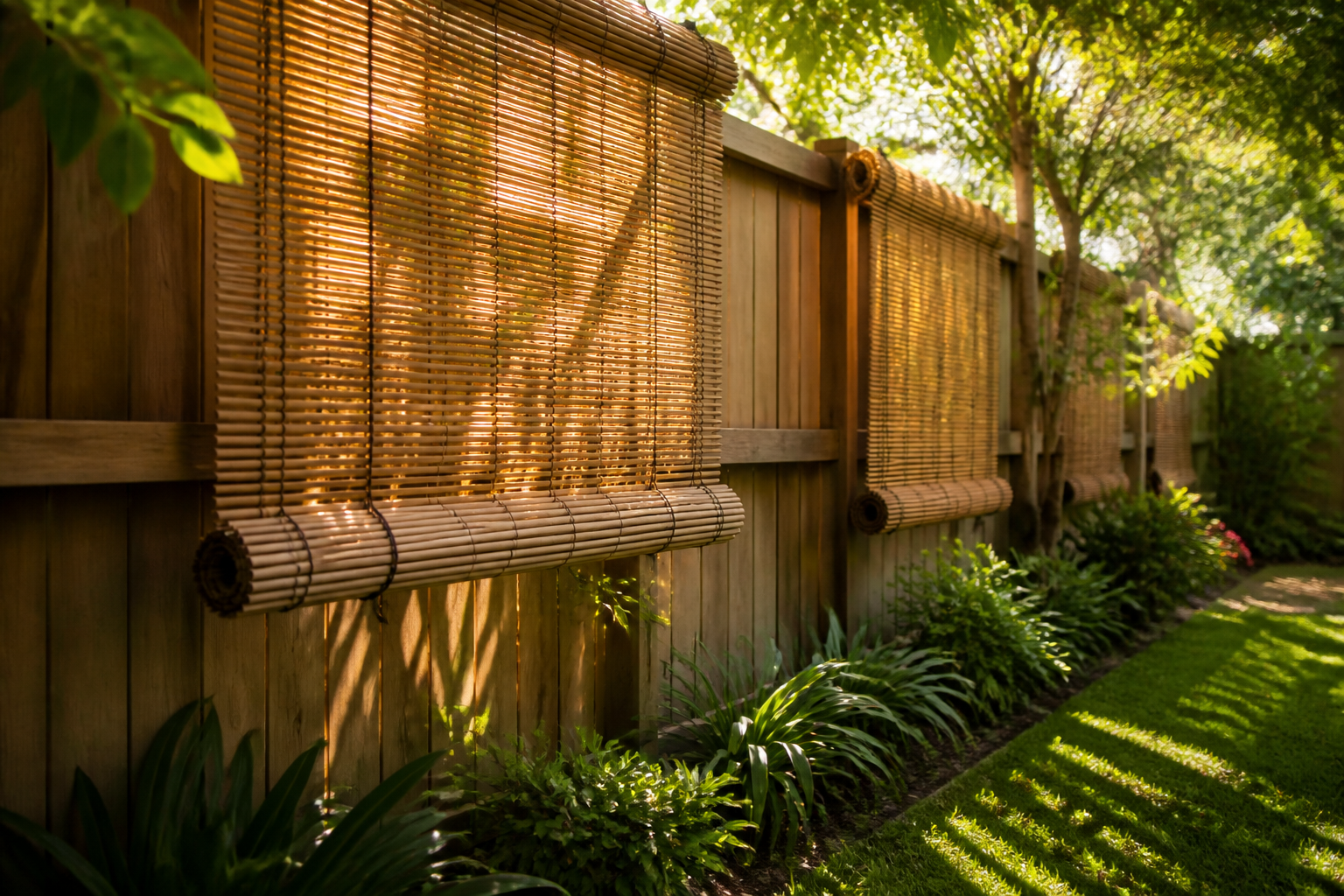
    The material choice matters here too. Thinner bamboo slat screens and natural reed screens behave slightly differently. Reed screens — made from dried reeds bundled together — have a softer, more organic look and excellent airflow. They’re my go-to for the patio area because they filter light beautifully without fully blocking it. The VEVOR Reed Fencing Roll (5.5 x 16.4 Ft Natural Reed Screen Curtain) is one I’ve recommended to several friends — it’s a generous size, the brown tones look warm and natural, and it’s sturdy enough to handle wind without ripping apart after one season.

    If you need something for a smaller balcony space, the Natural Reed Fencing Roll (available in 3/4/5/6ft heights, Coffee, 2.6 x 6.6ft) is a great compact option that even comes with cable zip ties — which, if you’ve ever tried to wire one of these up on a breezy afternoon by yourself, you will absolutely appreciate.

    For a more polished slat-style screen on the patio, the Sprigra Bamboo Slat Fence (4ft x 13ft) sits nicely in between — it has the clean lines of a proper bamboo fence but the flexibility and easy installation of a screen. I’d call it the middle-ground option, and that’s not a criticism. Sometimes the middle ground is exactly where you need to be.

    Bamboo Fence vs Bamboo Screen: Which Is Right for Your Yard? — image 3

    The Practical Stuff: Installation, Longevity, and Maintenance

    Let’s talk about what actually happens after you unroll one of these things in your yard, because that’s where the fence vs screen differences really show up in daily life.

    Installation

    Bamboo fencing needs a frame. Full stop. If you try to hang a heavy bamboo fence roll from a pergola the way you would a screen, it’s going to sag or pull the structure. You need posts, rails, and proper fasteners. The upside is that once it’s in, it’s in. Bamboo screens, especially the reed variety, can go almost anywhere. I’ve zip-tied them to patio railings, woven them through pergola slats, and even used them as a temporary room divider for an outdoor party.

    Longevity

    Properly mounted bamboo fencing can last 5 to 10 years depending on your climate and whether you seal or oil it periodically. Bamboo and reed screens tend to have a shorter lifespan — usually 3 to 5 years before they start looking weathered — but they’re also much cheaper to replace. I think of screens as seasonal investments and fences as longer-term ones. Neither answer is wrong; it just depends on your planning horizon.

    Maintenance

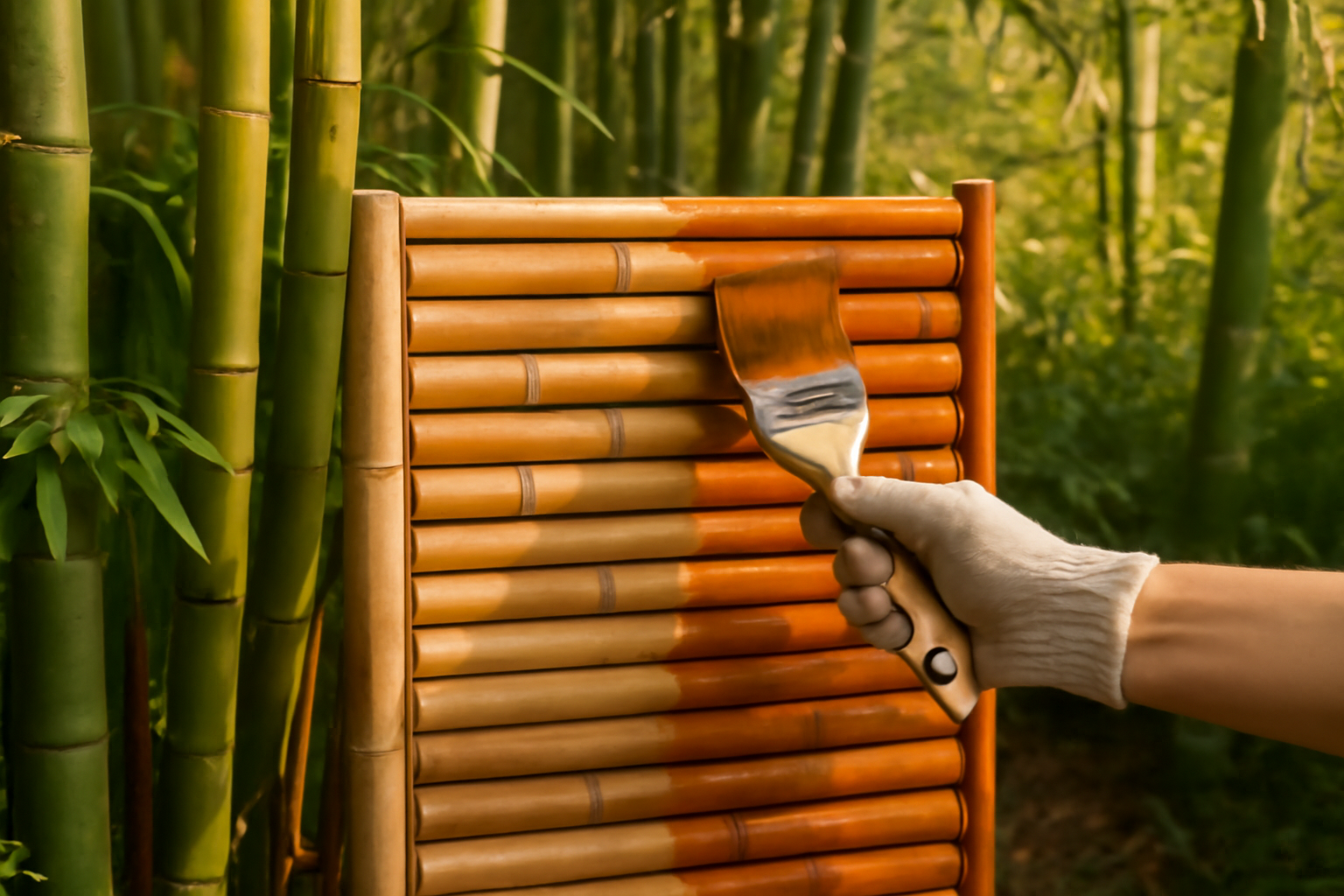
    Both benefit from a rinse-down in spring to remove mildew and debris. Bamboo fencing can be treated with tung oil or outdoor bamboo sealant to extend its life. Reed screens are harder to treat because of their texture, so replacement is usually the more practical option when they fade. If you want to get maximum life out of any bamboo installation, keep it off direct ground contact and make sure water can drain away from the base — that’s the single biggest thing that shortens bamboo’s outdoor lifespan.

    One more tip: if you’re building out a full fence run and need to anchor rolls between larger posts, BOVITRO Bamboo Stakes (4FT, 25 Pack) are handy for creating temporary support points while you work — and they do double duty in the garden once the project’s done, so nothing goes to waste.

    If you want a longer fence run and prefer something in a natural reed style, the Natural Reed Fencing Roll (6FT x 16.4FT, Brown) gives you excellent coverage and a warm, natural finish that works with almost any outdoor palette.

    Bamboo Fence vs Bamboo Screen: Which Is Right for Your Yard? — image 4

    My Final Recommendation: Bamboo Fence vs Bamboo Screen Differences Come Down to One Question

    After living with both in my yard, here’s the honest summary of bamboo fence vs bamboo screen differences: ask yourself whether you need a boundary or an atmosphere. If the answer is a boundary — something permanent, structural, and reliable — invest in proper bamboo fencing and mount it right. If the answer is atmosphere — warmth, privacy, texture, a sense of enclosure without construction — a bamboo or reed screen will get you there faster, cheaper, and with far less swearing involved.

    My personal recommendation for most homeowners starting out: begin with a screen. The 6.5ft x 13ft Bamboo Slat Screening Roll is a great starting point for patios and yard dividers, and the VEVOR Reed Fencing Roll is my top pick for balconies and pergola applications. Once you understand what you actually want from your outdoor space — which sometimes takes a season or two of living in it — you can graduate to a proper fence installation with much more confidence about where it belongs.

    Have you installed either one in your yard? I’d genuinely love to hear what worked and what didn’t — drop a comment below. And if you’re still not sure which direction to go, describe your space and I’ll do my best to point you toward the right option.

    META_DESCRIPTION
  • How Long Does Bamboo Fencing Last? Honest Answer After 3 Years of Real-World Testing

    How Long Does Bamboo Fencing Last? Honest Answer After 3 Years of Real-World Testing

    This post contains affiliate links. As an Amazon Associate I earn from qualifying purchases at no extra cost to you.

    It was a gray Tuesday morning in November — the kind where the rain has been going since Thursday and you have genuinely stopped noticing — when I walked out to my back fence and just stood there with my coffee going cold. I had installed bamboo fencing along my back property line about three years prior, mostly because I was tired of staring at my neighbor’s very ambitious chicken coop situation. And standing there in the drizzle, I found myself wondering: so how long does bamboo fencing last, really? Not the number that shows up on product pages. The real answer. The one you get after three Pacific Northwest winters have had their way with something.

    I went looking online and found what I always find: vague ranges like “5 to 20 years” with zero context, zero conditions, zero honesty about the variables that actually matter. So here is my actual, lived, slightly humbling account of what happened to my bamboo fencing over three years of real weather, real neglect, and one incident involving a very large branch that I will get to.

    How Long Does Bamboo Fencing Last? Honest Answer After 3 Years of Real-World Testing — image 1

    What I Installed and Why It Matters

    Context matters enormously with bamboo fencing because not all bamboo fencing is the same material in any meaningful sense. My original install was a rolled bamboo slat fence — individual bamboo poles, roughly three-quarters of an inch in diameter, wired together horizontally. I attached it to an existing wooden frame with zip ties and a few galvanized staples, which felt smart at the time and turned out to be partially right.

    If I were starting over today, I would look closely at options like the 6.5ft x 13ft Bamboo Slat Screening Roll or the Forever Bamboo Natural Bamboo Fencing Rolled Fence Panel, which is a 6 ft by 8 ft roll with nicely uniform 0.75-inch poles. The diameter and density of the poles genuinely affect how long the fencing holds up, because thicker poles shed water better and take longer to degrade from the inside out. Thin, tightly packed reed-style fencing behaves completely differently from chunky pole-style fencing, and lumping them together in a lifespan estimate is part of why all those online answers are useless.

    The other enormous variable is your climate. I am in the Pacific Northwest. We get somewhere between 37 and 55 inches of rain per year depending on the year, and the humidity in winter is genuinely oppressive. If you are in Arizona or Southern California, your bamboo fencing is going to outlast mine by years, possibly by a decade. Please hold that in mind as you read what follows.

    Year by Year: What I Actually Observed

    Year one was basically fine. I will be honest: I felt smug about year one. The fence looked great, the color was warm and golden, and the chickens were successfully hidden. I did nothing to maintain it, which I mention not as a point of pride but because I think most people’s real maintenance schedule is “approximately nothing for the first year” and it is worth being accurate about that.

    Year two is where it got interesting. By the following fall, some of the poles near ground level had started to develop a grayish cast. A few had visible dark spotting — early-stage mold or mildew working into the surface. The wire holding the rolls together was still structurally sound, but two sections where I had used basic zip ties instead of galvanized wire had started to fail, and one corner of the fence was sagging in a way that felt sad more than catastrophic. I trimmed some overgrown shrubs that had been pushing against one section and that helped more than I expected.

    Year three brought the branch incident. A bigleaf maple dropped a limb in a February windstorm — not a twig, a genuine limb — directly onto a four-foot section of the fence. Two poles snapped cleanly. A third was cracked but still attached. I patched it with a section I had left over from the original install, which worked fine, but it reminded me that bamboo fencing is not structurally forgiving in the way that a wooden board fence is. It is beautiful and natural and it does not love impact.

    How Long Does Bamboo Fencing Last? Honest Answer After 3 Years of Real-World Testing — image 2

    By the end of year three, here is an honest summary of the fence’s condition:

    • The upper two-thirds of the fence: still solid, color faded to a pleasant silver-gray, structurally sound
    • The bottom six inches in any section near soil: noticeably degraded, one section showing real softness when pressed
    • The section under a roof overhang: looked almost like new, which told me everything about what rain exposure actually does
    • Two patched poles from the branch incident: fine, honestly unnoticeable once the whole fence faded to the same gray

    The Factors That Actually Determine Longevity

    After three years of watching this thing weather in real time, here is what I believe actually controls the answer to how long bamboo fencing lasts — more than the brand, more than the price point.

    Ground Contact Is the Enemy

    Any bamboo pole sitting directly on soil or wicking moisture up from pavement is going to degrade dramatically faster than poles that have airflow beneath them. The bottom of my fence that was closest to a raised planter — where the soil was right up against the poles — looked noticeably worse than sections with a few inches of clearance. If you can install your fencing so the bottom edge clears the ground by even two or three inches, do it.

    Hardware Matters More Than the Bamboo

    The wire connecting the poles on quality panels will outlast the bamboo itself if you choose galvanized or stainless. Basic zip ties, meanwhile, UV-degrade and fail in two to three years in a wet climate. If you are attaching panels to a frame, use proper galvanized staples or stainless zip ties rather than whatever is in the junk drawer. Solid metal fence posts — something like the YIDIE Garden Stakes Sturdy Metal Fence Posts — give you a structural backbone that does not rot alongside the bamboo, which means replacing the bamboo facing later without rebuilding the whole structure.

    Sealing Changes the Timeline Significantly

    I did not seal my original fence. I now know that a penetrating wood sealant or tung oil applied at installation and every two years after can meaningfully extend bamboo fencing life, potentially pushing even a wet-climate installation from five years to eight or beyond. It is not glamorous work but it is the single highest-leverage maintenance action available to you.

    Fence Style Affects Lifespan

    Rolled reed-style fencing — where the individual reeds are very thin and tightly bound — has a different relationship with moisture than chunky pole fencing. Reed fencing tends to look weathered faster but can also dry out faster between rains. Products like the VEVOR Reed Fencing Roll in a 5.5 by 16.4 foot size, or the Natural Reed Fencing Rolls with cable zip ties available in multiple heights, are great for decorative privacy screens and balconies where they are partially sheltered. For full outdoor exposure in a rainy climate, I would weight my investment toward thicker-pole options. That said, even the reed-style Natural Reed Fencing Roll in a 6 ft by 16.4 ft size will serve you well for several seasons in drier regions or in sheltered spots.

    How Long Does Bamboo Fencing Last? Honest Answer After 3 Years of Real-World Testing — image 3

    Realistic Lifespan Expectations by Climate

    Since nobody else wants to give actual numbers, here is my best honest estimate based on my experience and what I have read from other gardeners in various regions. These assume decent installation but real-world maintenance levels — meaning occasional, not obsessive.

    • Pacific Northwest, high rainfall: 4 to 6 years for lower-grade panels; 6 to 9 years for quality thick-pole panels with sealing
    • Midwest and Southeast, moderate humidity and summer heat: 5 to 8 years
    • Desert Southwest, low humidity: 10 to 15 years is genuinely achievable
    • Coastal areas with salt air: closer to the Pacific Northwest range, possibly shorter if directly exposed to spray
    • Sheltered balcony or patio installations anywhere: add 3 to 5 years to any of the above

    If you are installing on a balcony or a sheltered patio and want something that is going to look sharp for years with minimal fuss, something like the Sprigra Bamboo Slat Fence in a 4 ft by 13 ft roll is a really solid choice — well-constructed, versatile, and the sheltered exposure is going to be much kinder to it than what my fence went through.

    One thing nobody talks about enough: even when bamboo fencing starts to look weathered and gray, it is often still structurally doing its job. The aesthetic decline happens before the structural decline in most cases. So if you hate the gray color but the fence is still standing firm, that is a sealant-and-stain problem, not a replacement problem. I actually came around to loving the silver-gray look of aged bamboo — it feels intentional in a Japanese garden sort of way, which I am choosing to believe was always the plan.

    How Long Does Bamboo Fencing Last? Honest Answer After 3 Years of Real-World Testing — image 4

    My Honest Recommendation After Three Years

    Here is the bottom line from someone who has watched bamboo fencing age through real winters rather than reading a spec sheet: bamboo fencing is genuinely worth it, but go in with accurate expectations and do two things I did not do.

    First, seal it at installation. Use a penetrating outdoor wood sealant, let it dry fully, then install. Budget an afternoon every two years to reapply. This one step likely adds two to four years to the lifespan and keeps the color warmer longer if that matters to you.

    Second, keep it off the ground. A small clearance gap between your lowest pole and the soil is worth more than any product upgrade you can make. If you need to anchor the structure, use metal posts rather than wood ones so the structural support outlasts the facing.

    If I were buying today for a full outdoor installation in a rainy climate, I would start with

  • How to Install Bamboo Privacy Screens: A Step-by-Step Guide for Complete Beginners

    How to Install Bamboo Privacy Screens: A Step-by-Step Guide for Complete Beginners

    It was a Saturday morning, coffee in hand, staring at my neighbor’s bathroom window that looked directly into my patio. I’d been tolerating it for two years. That day, I finally decided to do something about it. By 2 p.m., I had a bamboo privacy screen installed, a few sore knuckles, and an enormous sense of satisfaction. If you’re searching for how to install bamboo privacy screen panels at home, I want you to know: you absolutely can do this yourself, even if you’ve never done a home improvement project in your life.

    This post contains affiliate links. As an Amazon Associate I earn from qualifying purchases at no extra cost to you.

    How to Install Bamboo Privacy Screens: A Step-by-Step Guide for Complete Beginners — image 1

    What You’ll Need Before You Start

    Before I walked outside that Saturday, I spent about 20 minutes gathering supplies. This is the step I’d tell my past self to take more seriously. I made three trips back into the house for things I forgot. Learn from my chaos.

    The Bamboo Screening Panel

    This is obviously the star of the show. I used a 6.5ft x 13ft Bamboo Slat Screening Roll for my patio fence, and it covered the full length I needed with a bit left over to trim. The slats are tightly woven, the color is a warm natural tan, and the whole roll is surprisingly lightweight for how sturdy it feels once it’s up.

    If you have a shorter fence or a balcony railing situation, the Sprigra Bamboo Slat Fence 4ft x 13ft is a great option. It’s designed specifically for balconies and poolside areas, and the size makes it easier to handle if you’re working alone in a smaller space. That would have been my pick if I were wrapping a railing rather than a full fence panel.

    For thicker, more traditional-looking bamboo poles rather than flat slats, the Forever Bamboo Natural Bamboo Fencing Roll (6ft H x 8ft L) is beautiful. The poles are 0.75 inches in diameter, and this one gives a more tropical, lush aesthetic. I almost chose it, and I still might use it on a second section of my yard.

    Posts, Stakes, and Fasteners

    You’ll need something to attach your bamboo screen to. If you’re working with an existing fence, you may just need zip ties or garden wire. If you’re creating a freestanding screen, you’ll need posts. I used the YIDIE Garden Stakes Sturdy Metal Fence Posts (5ft), which are plastic-coated steel and incredibly easy to drive into the ground. They’re sold in a pack of 50, which sounds like a lot, but I used eight of them and I’ll use the rest for tomatoes this summer.

    I also kept a handful of BOVITRO 4ft Natural Bamboo Stakes on hand for any extra horizontal support I needed. They blended in perfectly with the bamboo screen and cost almost nothing.

    Here’s your full materials checklist:

    • Bamboo privacy screen roll (sized for your space)
    • Metal or wooden fence posts
    • Zip ties or galvanized garden wire
    • Mallet or post driver
    • Measuring tape
    • Wire cutters or scissors
    • Work gloves (trust me on this one)
    • A helper, or at least a bungee cord to hold one end temporarily
    How to Install Bamboo Privacy Screens: A Step-by-Step Guide for Complete Beginners — image 2

    Step-by-Step: How to Install a Bamboo Privacy Screen

    Okay, here’s where we get into the actual process. I’m going to walk you through exactly what I did, including the mistakes I made so you don’t repeat them.

    Step 1: Measure Your Space

    Before you unroll anything, measure the area you want to cover. Height and length. Write it down. I thought I had it memorized and I did not. I ordered exactly the right length and nearly cut too much off because I was guessing. Measure twice, cut once — the oldest advice in the world, and I almost ignored it.

    Step 2: Set Your Posts or Identify Your Attachment Points

    If you’re attaching to an existing fence or wall, look for the structural points — fence rails, posts, or brackets — where you’ll tie your bamboo screen. Mark them with a piece of tape or chalk.

    If you’re going freestanding, drive your metal posts into the ground every four to six feet along your planned screen line. I used a rubber mallet and it went faster than I expected. Get them at least 12 inches deep for stability, deeper if your soil is soft or if you live somewhere with wind.

    Step 3: Unroll and Position the Screen

    This is the step where a helper really earns their keep. Unroll the bamboo screen along the fence or post line. Hold it at the desired height — mine needed to clear the top of the existing fence rail by about six inches for full privacy coverage. If you’re working solo, bungee one end temporarily to a post while you position the other end. I learned this trick after about 15 minutes of the screen flopping back on me.

    Step 4: Attach the Screen

    Start at one end and work your way across. Use zip ties or galvanized wire to secure the screen to each post or fence rail. I did the top edge first along the whole length, then went back and did the bottom, then added a middle row. This three-row attachment approach keeps everything taut and prevents sagging over time.

    Attach a tie every 12 to 18 inches along each rail. It sounds like a lot, but this is what keeps your screen looking neat and professional rather than droopy and sad. I made the mistake of spacing mine too far apart on the first section and had to go back and add more. Take your time here.

    Step 5: Trim Any Excess

    If your screen is longer than your fence run, use wire cutters to snip the connecting wire between slats and trim to length. The slat rolls cut cleanly once you’ve identified where the wire runs. Take your time here — a crooked cut shows.

    How to Install Bamboo Privacy Screens: A Step-by-Step Guide for Complete Beginners — image 3

    Tips I Wish Someone Had Told Me

    Four hours of trial and error generated a few lessons. Here are the ones that would have saved me the most time and frustration.

    Don’t Skip the Gloves

    Bamboo edges and the wire holding slats together are both surprisingly sharp. I have a small collection of nicks on my palms from not wearing gloves for the first 30 minutes. Wear the gloves.

    Let It Breathe Before Final Attachment

    Unroll your bamboo screen and let it sit in the sun for an hour before you attach it. This lets it relax and flatten out, which makes for a tidier final result. I skipped this and dealt with some slight waviness for the first week until it settled on its own.

    Consider Reed Panels for Windy Areas

    If your space gets significant wind, a reed-style panel can actually be a better choice than thick bamboo slats because the reeds flex rather than catch wind like a sail. The VEVOR Reed Fencing Roll (5.5 x 16.4 ft) is excellent for this. It provides great privacy while being more wind-tolerant than the heavier slat panels. For a budget-friendly version, this Natural Reed Fencing Roll with Cable Zip Ties included is a clever buy — the zip ties are already in the package, which is one less thing to forget at the hardware store.

    Seal It If You Want It to Last

    Bamboo is naturally durable, but a coat of clear outdoor sealant extends its life significantly, especially in rainy climates. I applied sealant to mine in the fall after installation and it’s held up beautifully through a full winter. This is optional but genuinely worth doing.

    Bigger Rolls Save Time on Long Fence Runs

    If you’re covering more than 10 feet, get a larger roll rather than seaming multiple smaller ones. Seams are noticeable and add extra work. The Natural Reed Fencing Roll at 6ft x 16.4ft is a great pick for longer runs. It comes in brown, it’s generously sized, and one roll handled my entire fence line without any seaming needed.

    How to Install Bamboo Privacy Screens: A Step-by-Step Guide for Complete Beginners — image 4

    My Final Recommendation and Where to Start

    If I were starting over today with what I know now, here’s exactly what I’d tell a first-timer: the how to install bamboo privacy screen process is genuinely straightforward, and you don’t need to overthink it. Pick your panel based on your space — slat rolls for structured, modern fences, reed panels for wind-exposed or balcony situations — set your posts properly, attach in three rows, and give yourself a full morning rather than rushing through it.

    For most backyards and patios, I’d start with the April 23, 2026

  • Best Bamboo Fencing Panels on Amazon: What I Actually Installed in My Backyard

    Best Bamboo Fencing Panels on Amazon: What I Actually Installed in My Backyard

    I still remember standing in my backyard last spring, staring at a stack of bamboo fencing rolls piled against the garage wall like some kind of botanical crime scene. Four different products. Four separate Amazon orders. One very patient spouse who had stopped asking questions. I had set out to find the best bamboo fencing panels Amazon had to offer, and instead I had accidentally turned our driveway into a bamboo warehouse. But here is the thing — that slightly embarrassing experiment gave me something genuinely useful: a real, side-by-side comparison of products that most reviewers only ever buy once.

    This post contains affiliate links. As an Amazon Associate I earn from qualifying purchases at no extra cost to you.

    If you are trying to add privacy to a patio, cover a chain-link fence, or just make your backyard feel less like a fishbowl, I want to save you the trouble I went through. Below is my honest ranking of what I tested, installed, and in one case quietly returned.

    Best Bamboo Fencing Panels on Amazon: What I Actually Installed in My Backyard — image 1

    Why I Kept Ordering (And What I Was Actually Looking For)

    My backyard situation is pretty common. I have a wooden fence on two sides, but the back runs along a shared alley that is just open enough for the neighbors to see directly onto our patio. I wanted something that looked natural, did not require concrete footings, and could go up on a Saturday without borrowing tools I do not own. Bamboo fencing panels seemed like the obvious answer. The problem is that “bamboo fencing” on Amazon covers a surprisingly wide range of products — from thick, solid bamboo slat rolls to thin reed screens that are really more decorative curtain than fence.

    Here is what I was grading each product on:

    • Actual privacy coverage (no gaps you could read a newspaper through)
    • Ease of installation solo or with one other person
    • How it looked after a few weeks of weather
    • Value for the square footage covered

    With that rubric in mind, here is how each product stacked up.

    The Rankings: From “Do Not Bother” to “Genuinely Excellent”

    Last Place: VEVOR Reed Fencing Roll (5.5 x 16.4 ft)

    I want to be careful here because the VEVOR Reed Fencing Roll is not a bad product — it is just not what I needed it to be. This is a reed screen, not a bamboo slat panel, and that distinction matters more than I realized when I clicked “Buy Now.” The reeds are thin and bundled tightly, which gives it a lovely rustic texture, but the coverage has gaps. On a bright sunny day with the light behind it, you can absolutely see silhouettes through it. It excels as a decorative divider, a backdrop for an outdoor party, or a sun filter on a pergola. For true backyard privacy against a shared alley? It fell short. It also felt the flimsiest of the four when I unrolled it.

    Third Place: Natural Reed Fencing Rolls (6 ft x 16.4 ft, Brown)

    The Natural Reed Fencing Rolls in 6 ft x 16.4 ft impressed me more than the VEVOR, mainly because the 6-foot height actually covered what I needed it to cover. The reeds here were slightly thicker and the weave tighter, so light bleed was reduced. I used it temporarily along one section while I figured out my long-term plan, and it looked genuinely attractive tied to my existing wooden fence posts. The brown color aged gracefully even after two weeks of mixed weather. My hesitation is durability: after about three weeks, a few of the wire ties holding the reeds together started showing rust. That is a small fix — you can replace them with zip ties — but it told me something about the long-term story. Good for seasonal use or covered spaces. Less ideal as a permanent backyard solution.

    Best Bamboo Fencing Panels on Amazon: What I Actually Installed in My Backyard — image 2

    Second Place: Forever Bamboo Natural Bamboo Fencing Panel (6 ft H x 8 ft L)

    Now we are getting into real bamboo territory. The Forever Bamboo Natural Bamboo Fencing Decorative Rolled Fence Panel uses 0.75-inch diameter bamboo poles wired together horizontally, and the difference in solidity is immediately obvious when you pick it up. This thing has real weight and structure. Unrolled along my fence line, it looked exactly like the bamboo fencing you see in upscale garden centers, and it provided excellent coverage. The 6 ft x 8 ft dimensions are also easy to work with — smaller panels mean easier handling solo.

    So why second place? Primarily cost per square foot. You get 48 square feet per panel, and covering a 20-foot fence line at 6 feet tall means you need multiple panels, which adds up quickly. The construction quality is genuinely superior, and if budget is not a primary concern, this one could easily be your winner. It also pairs beautifully with the YIDIE Metal Fence Posts if you are mounting it independently rather than against an existing structure.

    Honorable Mention: Sprigra Bamboo Slat Fence (4 ft x 13 ft)

    The Sprigra Bamboo Slat Fence earns a genuine mention because the slat construction — flat bamboo pieces rather than round poles — gives it a very clean, modern look that some people will actually prefer. Coverage is solid, and the 13-foot length means fewer seams when covering longer runs. I did not rank it higher because the 4-foot height was simply not enough for my situation. If you have a shorter fence line, a balcony railing, or a garden bed border to screen, this one might actually beat everything else on this list. The value is excellent and installation was genuinely fast.

    Best Bamboo Fencing Panels on Amazon: What I Actually Installed in My Backyard — image 3

    The Winner: 6.5 ft x 13 ft Bamboo Slat Screening Roll

    The product I actually kept installed — the one still sitting in my backyard right now as I write this — is the 6.5 ft x 13 ft Bamboo Slat Screening Roll. It hits every single thing I was looking for, and it did so without making me feel like I had overspent.

    Here is what stood out immediately upon unrolling it:

    • The 6.5-foot height cleared the top of my fence posts with enough overlap to prevent any sight lines from the alley
    • The flat bamboo slat construction created genuinely dense coverage — no gaps, no light bleed
    • The 13-foot length covered the bulk of my back fence in a single roll without awkward seams
    • The natural color was warm and rich, not the bleached-out tan you see with cheaper reed products

    Installation took me about 45 minutes with a friend holding one end. I attached it to my existing wooden fence posts using zip ties every 12 inches — honestly, the included zip ties were better quality than I expected. If you are going freestanding, grab a pack of the YIDIE Garden Stakes Metal Fence Posts, which are solid, plastic-coated steel and drive into most ground types without a post-hole digger.

    After six weeks of spring weather including a heavy rainstorm and two windy stretches, the panel looks almost exactly as it did on day one. The bamboo has begun developing that slight silvery patina that natural bamboo gets when it weathers, which I actually prefer to the bright original color. No splitting, no unraveling at the edges, and the wire stays tight.

    For anyone doing a larger project and needing a smaller or differently sized option, I would also look at the Sprigra Bamboo Slat Fence (4 ft x 13 ft) for lower sections, or grab the Natural Reed Fencing Roll with Cable Zip Ties if you need a small accent section or a balcony topper — it comes in several height options and the included zip ties are a genuinely thoughtful touch. I also keep a bundle of BOVITRO Natural Bamboo Stakes nearby for any smaller garden projects or securing loose sections of rolled fencing at ground level.

    Best Bamboo Fencing Panels on Amazon: What I Actually Installed in My Backyard — image 4

    My Final Recommendation and What to Buy First

    If you are searching for the best bamboo fencing panels Amazon offers for genuine backyard privacy — not decoration, not a seasonal screen, but real coverage that holds up — start with the 6.5 ft x 13 ft Bamboo Slat Screening Roll. It beats everything else I tried on height, coverage density, value per square foot, and staying power through actual weather. I bought two rolls and have zero regrets. My backyard finally feels like a backyard instead of a performance stage.

    If your fence line is shorter or you need something for a balcony or patio divider rather than a perimeter fence, the Forever Bamboo Natural Bamboo Fencing Panel is the quality pick, and the Sprigra Bamboo Slat Fence is the value pick for shorter installations. Both are solid choices that I would recommend to anyone without hesitation.

    Have you installed bamboo fencing in your yard? Drop a comment below and let me know what worked for you — I am always looking for new products to test, and apparently my garage has not reached capacity yet.

  • Bamboo Privacy Screen vs Wood Fence: Why I Switched and Never Looked Back

    Bamboo Privacy Screen vs Wood Fence: Why I Switched and Never Looked Back

    This post contains affiliate links. As an Amazon Associate I earn from qualifying purchases at no extra cost to you.

    It was a Saturday morning in late June when I finally admitted defeat. I was standing in my backyard holding a rotted cedar plank that had basically crumbled in my hand, staring at the gap it left in my fence — a gap wide enough for my neighbor’s dog to stroll through at will. Seven years of staining, patching, power washing, and re-nailing, and this was where we ended up. That morning I started seriously researching the bamboo privacy screen vs wood fence question, and two years later, I have not once regretted what I did next.

    Bamboo Privacy Screen vs Wood Fence: Why I Switched and Never Looked Back — image 1

    The Real Cost of My Cedar Fence (It Was More Than I Thought)

    Let me paint you the full picture, because I think people dramatically underestimate what a wood fence actually costs you over time — and I was one of those people.

    When I put in the cedar fence, I was pretty proud of myself. Cedar is naturally rot-resistant, everyone said so. It looked gorgeous. My backyard felt like a real grown-up space for the first time. For about two years, I had almost no complaints.

    Then the maintenance cycle began. Year three, I noticed the boards were starting to gray and dry out. Bought a deck and fence stain, spent a full weekend applying it. Year four, a few boards warped. Year five, I found a wasp nest tucked between two planks on the south-facing side — something I only discovered because I reached my hand in there without looking first, which was a completely terrible decision. Year six, rot showed up at the base of several posts. Year seven: the crumbling-plank Saturday.

    When I actually sat down and added up what I had spent — materials, stain, sealant, replacement boards, the occasional handyman visit when a post needed resetting — I was genuinely a little sick. The maintenance costs over seven years had added up to nearly half the original installation price, all over again. And the fence still looked tired.

    That is when bamboo started looking a lot more interesting.

    What I Actually Installed (And How It Works)

    I want to be upfront here: I did not rip out my old fence posts. The cedar posts were still structurally sound — it was the boards between them that had given up. So what I did was attach bamboo screening panels directly to my existing post framework. If you are starting from scratch, you will want solid posts, and I will mention a helpful option for that in a moment.

    For the main run of fence along my back property line, I used the 6.5ft x 13ft Bamboo Slat Screening Roll. These are full-size panels made from natural bamboo slats woven together, and they cover a serious amount of ground. Two panels handled most of my back fence, and the coverage was genuinely impressive. The slats sit tight enough that you have real privacy — my neighbor cannot see into my yard from his deck at all, which is the entire point.

    For a shorter section near my patio, I went with the Forever Bamboo Natural Bamboo Fencing Decorative Rolled Fence Panel, which comes in a 6ft x 8ft size that fit perfectly in that tighter space. The bamboo poles on this one are thicker — about three-quarter inch diameter — which gives it a more substantial, tropical look that I am genuinely obsessed with.

    If you have a balcony, a pool surround, or a smaller garden section to screen, the Sprigra Bamboo Slat Fence 4ft x 13ft is worth looking at. It is a slimmer profile panel that works beautifully in spaces where you need privacy without the visual weight of a full-height fence.

    Bamboo Privacy Screen vs Wood Fence: Why I Switched and Never Looked Back — image 2

    Bamboo Privacy Screen vs Wood Fence: The Honest Breakdown

    Okay, here is where I get into the actual head-to-head comparison, because I think this is what most people searching for the bamboo privacy screen vs wood fence debate really want to know. Let me go category by category.

    Installation

    Bamboo wins easily. Rolling out a bamboo panel and zip-tying or wiring it to existing posts took me about forty-five minutes for the whole back fence run. A wood fence requires posts set in concrete, boards cut to length, and nails or screws driven one by one. Even for a handy person, a full wood fence installation is a weekend project minimum. Bamboo can be done in an afternoon.

    Privacy

    Both do the job, but in slightly different ways. A solid wood fence gives you an absolute visual block. Bamboo slat panels get very close to that — you can see light through the tiny gaps between slats, but people cannot see through. For most residential privacy situations, bamboo is completely adequate. Reed-style panels, like the VEVOR Reed Fencing Roll in 5.5×16.4 ft, offer a softer, slightly more open look that is beautiful but a bit less opaque — great for decorative dividers and balconies.

    Maintenance

    This is where bamboo absolutely destroys wood. In two years, I have done essentially nothing to my bamboo fence. No staining. No sealing. No replacing individual boards. I spray it off with the hose if it gets dusty, and that is genuinely the extent of my maintenance. Wood fences need to be stained or sealed every one to three years, and boards need replacing as they rot or warp. The labor difference over a decade is enormous.

    Appearance

    This is subjective, but I will tell you what my actual guests say when they come into my backyard now: they comment on how warm and natural and almost resort-like it feels. The bamboo has a texture and color that softens the whole space. A cedar fence, even when freshly stained, has a more utilitarian look. Bamboo feels intentional in a way that I find really satisfying.

    Cost

    Bamboo panels are genuinely affordable, especially when you factor out the maintenance costs over time. Reed-style options like the Natural Reed Fencing Roll with cable zip ties are available in smaller sizes that are very budget-friendly for anyone who wants to test the look before committing to a full run. For larger projects, the Natural Reed Fencing Roll in 6ft x 16.4ft gives you excellent coverage at a price that compares very favorably to equivalent wood materials.

    Bamboo Privacy Screen vs Wood Fence: Why I Switched and Never Looked Back — image 3

    A Few Things to Know Before You Install

    I want to be honest about a few things that the bamboo enthusiasm can sometimes gloss over.

    First, bamboo panels need a solid framework to attach to. They are not self-supporting the way a wood fence is. If you are starting from scratch without existing posts, you will need to set posts first. I would recommend the YIDIE Garden Stakes Sturdy Metal Fence Posts for a lightweight, affordable post option that works well for bamboo panel attachment — especially for shorter decorative runs, garden sections, or balcony setups where you are not digging into concrete.

    Second, bamboo panels will weather and change color over time. They start out a warm golden tan and gradually shift to a more silvery gray, similar to how cedar grays out. Some people love this look. If you want to slow the color change, a light application of teak oil or outdoor wood sealer on the panels once a year will help preserve the original tone.

    Third, if you have a garden alongside your fence and need stakes for plants that are growing up against or near the bamboo structure, natural Bamboo Stakes in 4ft lengths are a gorgeous complement — they match the visual language of the fence and keep your whole garden looking cohesive and intentional. I use these everywhere in my vegetable beds now.

    Here is a quick summary of what to keep in mind:

    • Bamboo panels require a post framework for support — plan accordingly
    • They will gray over time without occasional oil treatment
    • Slat panels offer more privacy than reed-style panels
    • Most panels attach easily with zip ties or galvanized wire
    • Avoid direct contact with standing water at the base — airflow underneath extends life significantly
    Bamboo Privacy Screen vs Wood Fence: Why I Switched and Never Looked Back — image 4

    My Final Verdict on Bamboo Privacy Screen vs Wood Fence

    Two years in, and the bamboo privacy screen vs wood fence question has a clear answer in my backyard: bamboo won, and it was not particularly close.

    I have spent almost nothing on maintenance. My yard looks better than it ever did with cedar. The installation took an afternoon rather than a weekend. My neighbor’s dog has not visited uninvited in two years. And every time I sit on my patio, I actually enjoy looking at the fence instead of mentally cataloguing what needs fixing on it. That last part turns out to matter more than I would have predicted.

    If you are dealing with a tired, rotting, or high-maintenance wood fence, I genuinely encourage you to at least price out bamboo panels before you commit to another round of cedar boards and stain. Start with the 6.5ft x 13ft Bamboo Slat Screening Roll for a full fence run, or grab the Sprigra Bamboo Slat Fence 4ft x 13ft if you are working with a smaller space or want to test the look first. Either way, I think you are going to like what you find.

    Have you made the switch from wood to bamboo, or are you still weighing your options? Drop a comment below — I would love to hear what your specific situation looks like and help you figure out the best path forward.