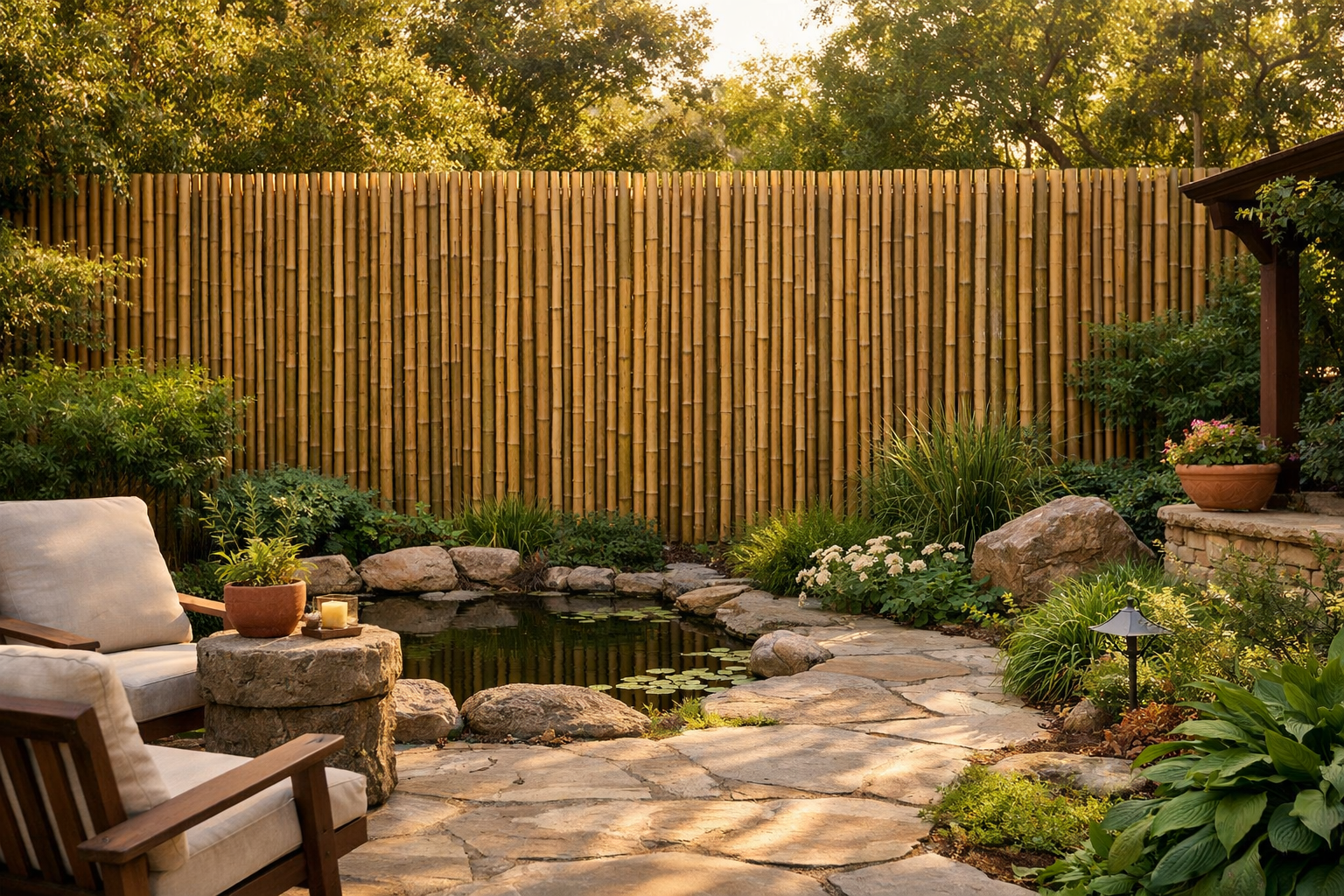
It was a Saturday morning in late June when I finally admitted defeat. I was standing in my backyard holding a rotted cedar plank that had basically crumbled in my hand, staring at the gap it left in my fence — a gap wide enough for my neighbor’s dog to stroll through at will. Seven years of staining, patching, power washing, and re-nailing, and this was where we ended up. That morning I started seriously researching the bamboo privacy screen vs wood fence question, and two years later, I have not once regretted what I did next.
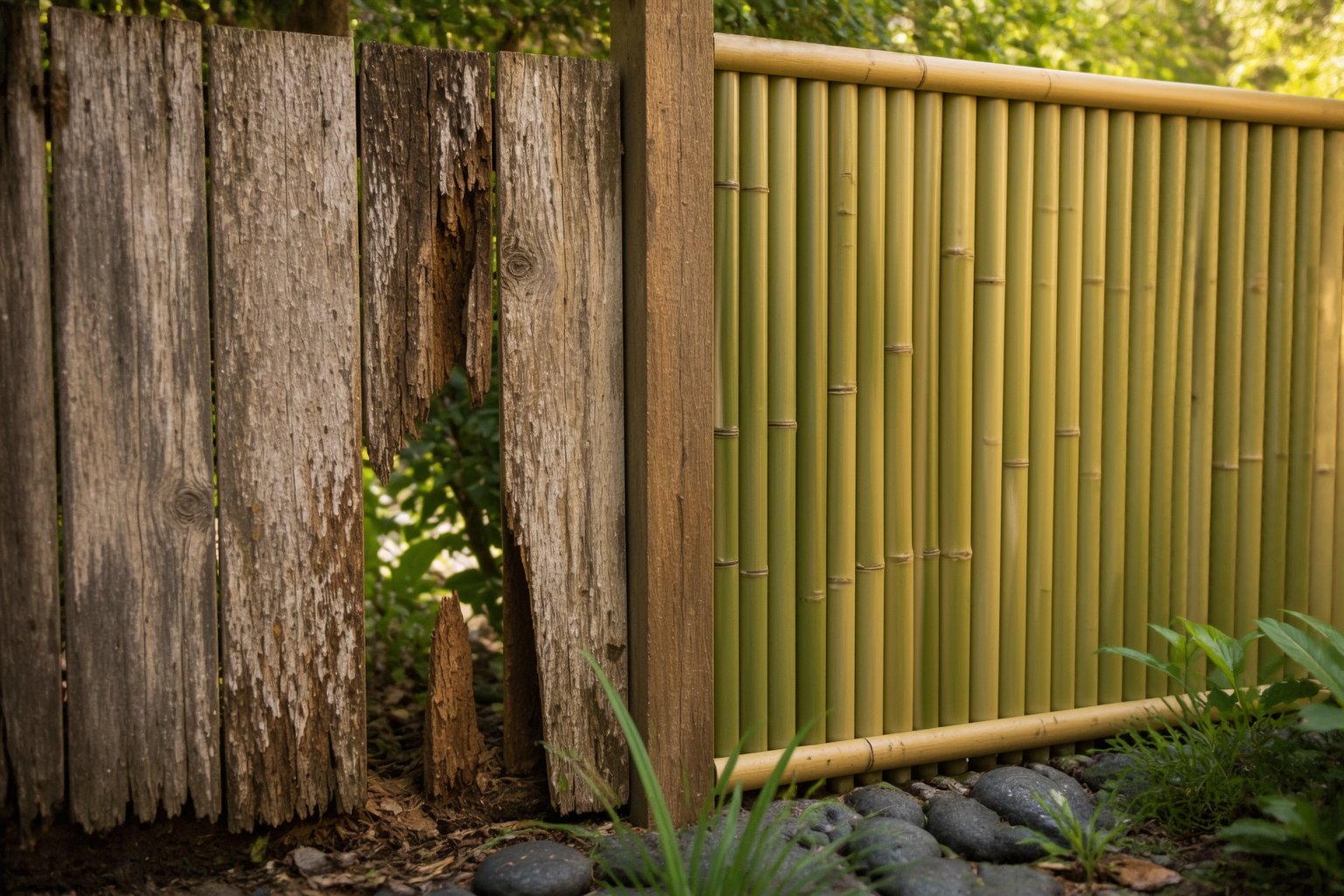
The Real Cost of My Cedar Fence (It Was More Than I Thought)
Let me paint you the full picture, because I think people dramatically underestimate what a wood fence actually costs you over time — and I was one of those people.
When I put in the cedar fence, I was pretty proud of myself. Cedar is naturally rot-resistant, everyone said so. It looked gorgeous. My backyard felt like a real grown-up space for the first time. For about two years, I had almost no complaints.
Then the maintenance cycle began. Year three, I noticed the boards were starting to gray and dry out. Bought a deck and fence stain, spent a full weekend applying it. Year four, a few boards warped. Year five, I found a wasp nest tucked between two planks on the south-facing side — something I only discovered because I reached my hand in there without looking first, which was a completely terrible decision. Year six, rot showed up at the base of several posts. Year seven: the crumbling-plank Saturday.
When I actually sat down and added up what I had spent — materials, stain, sealant, replacement boards, the occasional handyman visit when a post needed resetting — I was genuinely a little sick. The maintenance costs over seven years had added up to nearly half the original installation price, all over again. And the fence still looked tired.
That is when bamboo started looking a lot more interesting.
The Screening Roll That Finally Let Me Stop Replacing Fence Boards Every Summer
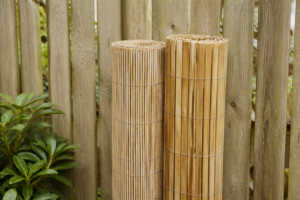
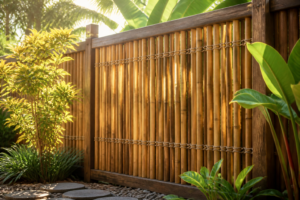
When you’re switching from wood to a bamboo privacy screen, you need material that won’t split, rot, or warp the way cedar does after a few seasons of weather. The right screening roll is the difference between a two-year maintenance cycle and actual durability.
What works
- The slats stay tight and uniform across multiple seasons—no cupping, warping, or the kind of gaps that invite pests and wind noise that plagues wood fences after year three.
- Installation is genuinely faster than building a traditional fence frame, and the weight is manageable enough for one person to handle and secure with basic posts and hardware.
- Natural bamboo color weathers gracefully to a soft gray rather than turning black with mold or splintering like neglected wood—it looks intentional, not abandoned.
What doesn’t
- You’ll still need sturdy support posts or a frame—this is screening, not a standalone structure, so planning your post spacing is non-negotiable or the whole thing will sag within a season.
- The 13ft length means you’re committing to cutting and fitting panels if your property width doesn’t divide evenly, which takes time and creates waste.
I was genuinely skeptical the first winter—watched for the same rot patterns I’d seen in my fence—but by spring I realized I was checking it out of habit, not because anything needed fixing. If you’re ready to stop the annual maintenance cycle, grab a Bamboo Privacy Fence Roll 6ft x 13ft and start measuring your posts.
About This Article

Written by Marcus Chen. Marcus Chen has spent 15 years cultivating and studying bamboo across 14 different species, combining commercial growing operations with extensive hands-on experience in species selection and containment. As both a grower and consultant, he specializes in practical bamboo management, helping homeowners and landscapers understand the real-world requirements for responsible bamboo cultivation. Marcus brings tested knowledge of which species thrive reliably and which present containment challenges that go beyond standard recommendations. More about this site.
Verify this against a primary source
Specifics change, and your situation may differ from the one described here. These are the authorities worth checking directly:
- American Bamboo Society — species listings and cultivation guidance
- USDA PLANTS Database — species range and identification
- USDA Plant Hardiness Zone Map — cold hardiness verification for your location