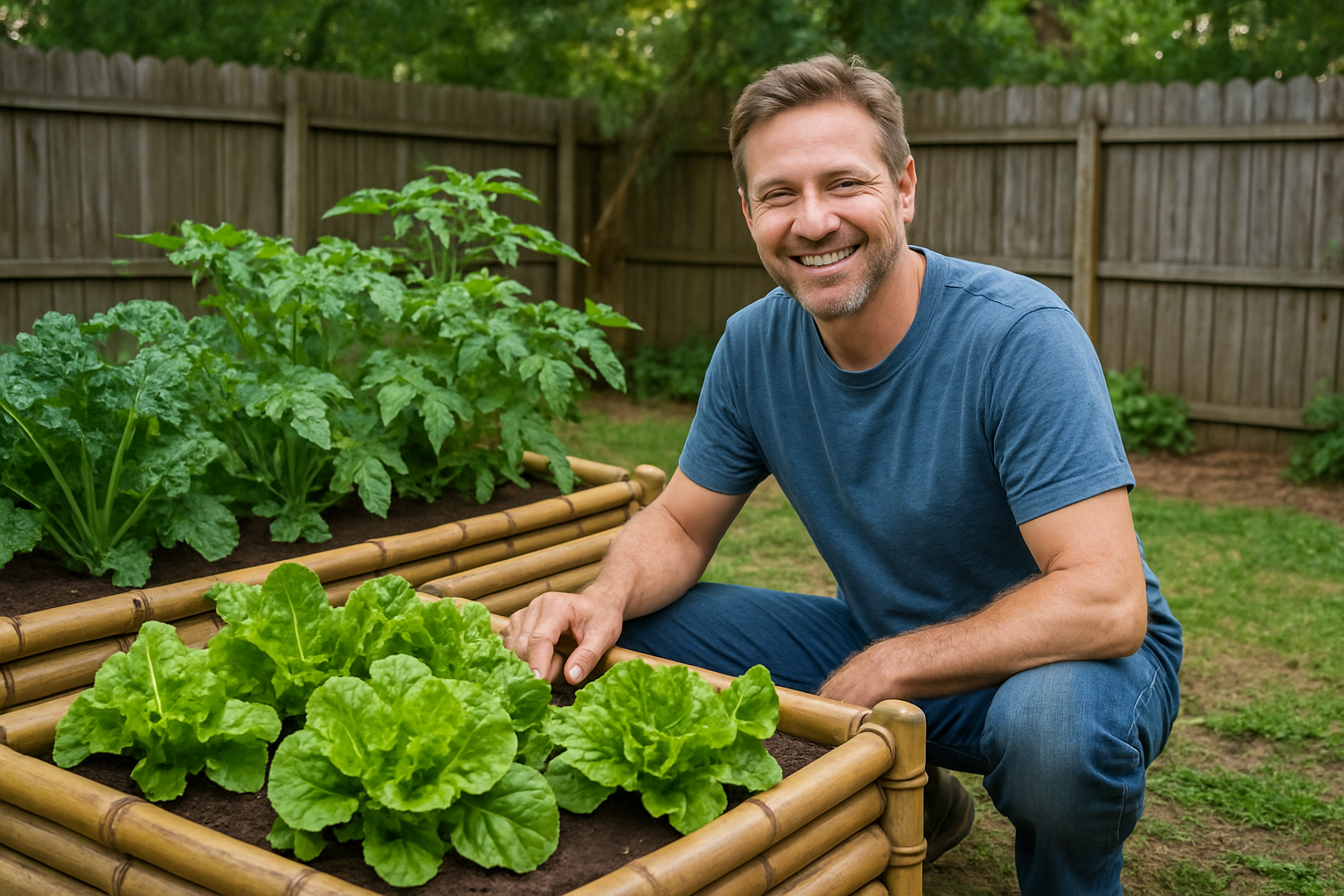
I still remember standing in my backyard on a humid July afternoon, staring at a patch of sad, yellowing tomato plants and fighting back actual tears. I had spent nearly $300 that spring — on seeds, soil amendments, a fancy drip irrigation kit — and every single thing I planted looked like it wanted to die. The ground was clay-heavy, poorly draining, and apparently hostile to anything I wanted to grow. A neighbor stopped by and gave me that look — the one that said “maybe gardening just isn’t your thing” — and I have never wanted to prove someone wrong more in my life. That’s when I started researching bamboo raised garden beds DIY projects, and honestly? It changed everything.
Why My In-Ground Garden Was Doomed From the Start
Here’s the thing nobody tells you when you move into a house with a big backyard: square footage does not equal good growing conditions. Our soil had been compacted for years under a lawn that had seen better decades. Drainage was terrible. I’d dump a watering can on the surface and watch it pool and sit there like a tiny, mocking pond. Roots couldn’t penetrate. Nutrients leached out. And because everything was at ground level, I was constantly battling slugs, fungal issues from poor airflow, and a bad back from crouching down to tend to plants that were basically already giving up.
After my third failed attempt in as many seasons, I was ready to pave the whole thing over and call it a patio. But before I did, I fell down a very wonderful internet rabbit hole about raised bed gardening — and specifically, about using bamboo as a building and support material. It was like a lightbulb moment. Raised beds would let me completely sidestep the terrible native soil. Bamboo would give me sustainable, flexible, beautiful structure. I was back in business.
Bamboo Raised Garden Beds DIY: What Makes Bamboo Such a Smart Choice
If you’ve spent any time on this site, you already know bamboo is remarkable stuff. But let me give you the gardening-specific highlights, because they’re genuinely impressive.
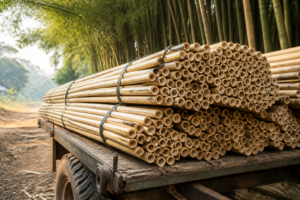
First, bamboo is naturally rot-resistant. Mature, properly cured bamboo contains silica and tannins that help it resist moisture damage far better than untreated softwoods. For raised beds — where the material is constantly adjacent to damp soil and watered regularly — that durability matters enormously. Second, bamboo is incredibly strong for its weight. A bamboo cane the diameter of your thumb can support serious structural loads. Third, and maybe most importantly for my purposes, bamboo is sustainable. It’s a grass, not a tree, and it can be harvested without killing the plant. That felt right for a garden built around growing living things.
For DIY raised bed projects, here are a few practical bamboo tips I picked up along the way:
- Use mature culms. Bamboo harvested at 3–5 years of age has the best strength and rot resistance. Younger canes are still green and more prone to splitting and decay.
- Seal cut ends. The hollow interior of bamboo can trap moisture and accelerate decay. Sealing cut ends with beeswax, linseed oil, or even exterior wood glue extends the life of your canes significantly.
- Elevate contact points. Where bamboo meets soil directly, it will degrade faster. Use galvanized hardware or concrete footings to keep structural joints above the soil line when possible.
- Choose the right species. Moso bamboo is a popular choice for structural projects due to its large diameter and density. For smaller support stakes and trellises within your raised beds, thinner-walled species work beautifully.
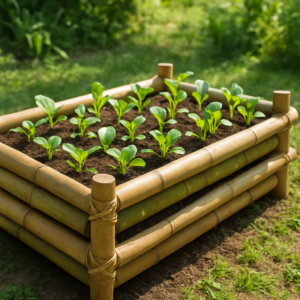
- Lash, don’t just nail. Traditional bamboo joinery using twine, zip ties, or wire is often stronger than nails or screws, which can split canes. Jute twine is my personal favorite — it looks gorgeous and biodegrades naturally.
You can use bamboo to build full raised bed frames, internal trellis systems for climbing vegetables, shade structures, or decorative edging. The creative options really are endless once you start thinking in bamboo.
Tools and Products That Made My Setup So Much Easier
Now, I want to be honest with you: I’m a DIYer, but I’m not a carpenter. Some parts of my raised bed setup I built with bamboo and elbow grease. Other parts, I leaned on some really well-designed pre-made beds that made the whole project manageable without requiring a workshop full of power tools. Here’s what I actually used and recommend:
Raised Beds as a Bamboo Grower’s Secret Weapon: Soil Control Without the Spread
When you’re growing bamboo near vegetables or ornamentals, poor native soil isn’t your only enemy — rhizome containment is. A raised bed filled with fresh, amended soil gives you complete control over what’s touching your roots and what’s happening underground, without relying on plastic barriers that degrade or shift over time.
What works
- The built-in bed liner actually contains shallow-running bamboo rhizomes better than I expected — I’ve grown clumping bamboo in one for two seasons now with zero escape attempts into surrounding beds.
- Heavy-gauge metal sides won’t rot or warp like wood, so you’re not replacing the entire structure every 4-5 years when bamboo’s relentless moisture regime takes its toll.
- The depth (usually 12″ or deeper) is actually sufficient for mid-sized clumping varieties, and the extra soil layer acts as a secondary defense against any rhizomes that test the liner edges.
What doesn’t
- The liner itself is just a barrier, not a guarantee — running bamboo varieties can still probe and eventually puncture it if you’re not monitoring regularly or if drainage backs up and creates pressure.
- Assembly is genuinely tedious for the larger sizes, and getting the liner seated evenly takes longer than the product photos suggest.
I had one moment of real panic when I noticed a rhizome had actually breached the corner seam after my second summer, which made me question whether raised beds were just a false sense of security. But catching it early meant one quick patch with pond sealant and a lesson learned — paired with actual inspections, the VINGLI Heavy Duty Raised Garden Bed with Bed Liner became my most reliable containment tool.
About This Article

Written by Marcus Chen. Marcus Chen has spent 15 years cultivating and studying bamboo across 14 different species, combining commercial growing operations with extensive hands-on experience in species selection and containment. As both a grower and consultant, he specializes in practical bamboo management, helping homeowners and landscapers understand the real-world requirements for responsible bamboo cultivation. Marcus brings tested knowledge of which species thrive reliably and which present containment challenges that go beyond standard recommendations. More about this site.
Verify this against a primary source
Specifics change, and your situation may differ from the one described here. These are the authorities worth checking directly:
- American Bamboo Society — species listings and cultivation guidance
- USDA PLANTS Database — species range and identification
- USDA Plant Hardiness Zone Map — cold hardiness verification for your location