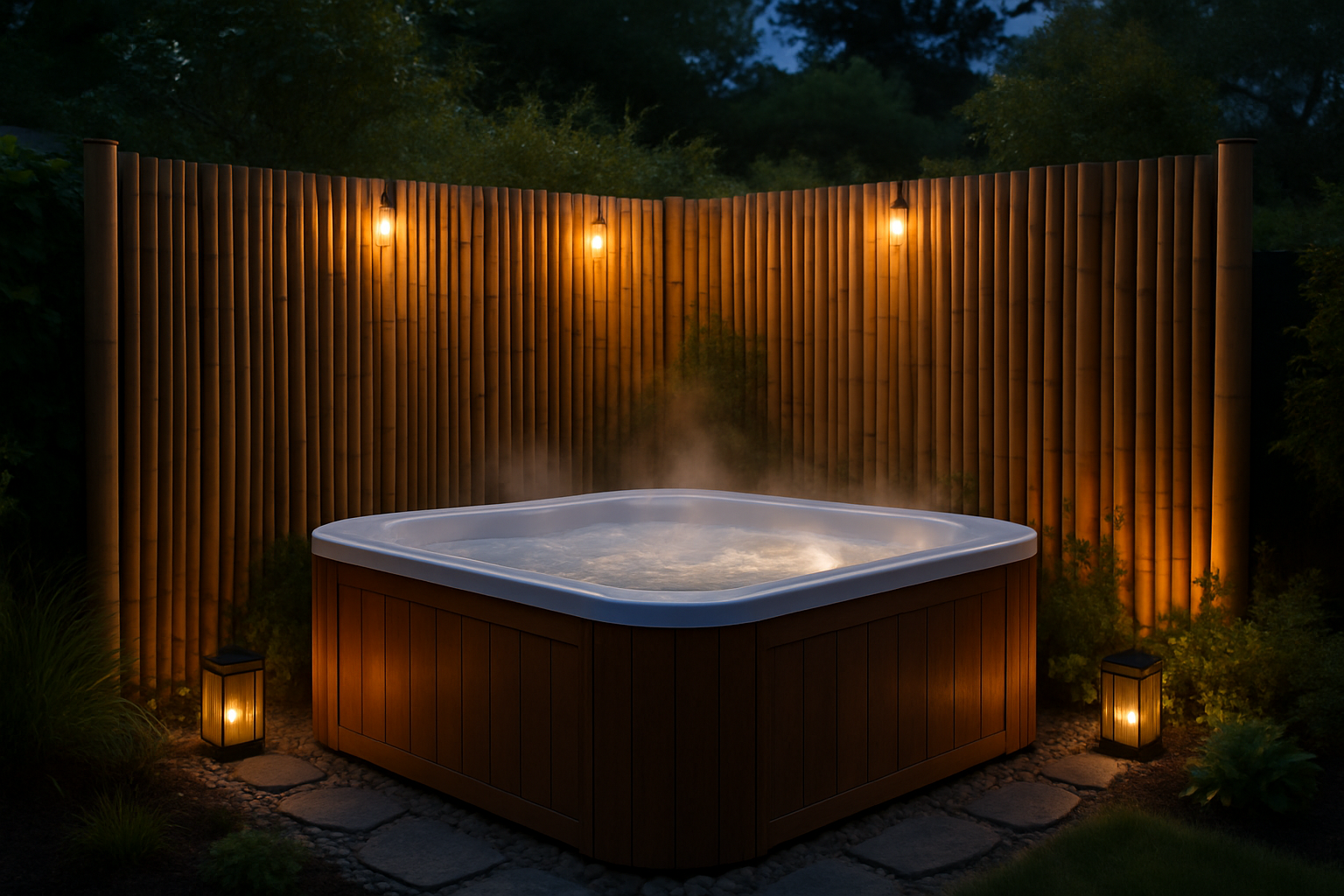
Last summer, I nearly lost my mind over a hot tub. Not because of anything scandalous — but because I spent $4,200 on a spa installation without telling my neighbors, and then discovered the backyard had zero privacy. They could see everything from their deck. I used the tub exactly once before the awkward wave-and-nod from next door convinced me to cover it with a tarp and pretend it didn’t exist. For three months, that $4,200 investment sat underneath a blue plastic sheet while tension quietly built. What saved me — and honestly, what saved my sanity — was stumbling onto the idea of a bamboo privacy screen hot tub DIY project that I could actually pull off myself on a tight budget.
Why I Chose Bamboo (And Why You Probably Should Too)
When I started pricing out privacy solutions, I nearly had a second financial heart attack. Wooden privacy fences quoted at $800 to $1,500 for the section I needed. Vinyl panels weren’t much better. And landscaping with fast-growing shrubs meant waiting two or three years before we’d actually have any privacy.
Bamboo kept coming up as an alternative, and the more I researched it, the more it made sense. Bamboo is naturally weather-resistant, especially when treated or sealed. It handles humidity beautifully — which matters a lot when you’re installing something right next to a hot tub that’s constantly producing steam. It’s also genuinely beautiful in a way that feels organic and intentional, not like you slapped up a cheap screen to hide something.
The other thing I loved? Bamboo works in layers. You can combine roll fencing, structural poles, and potted bamboo accents to build something that looks designed, even if you’re a total DIY beginner. Which I absolutely was.
Planning Your Bamboo Privacy Screen Hot Tub DIY Project
Before you buy a single thing, spend an afternoon sitting in your hot tub (or just standing near it) and figuring out exactly where you need coverage. I made the mistake of assuming I needed to screen the entire perimeter. In reality, I only needed to block two sightlines: the neighbors’ elevated deck to the northeast, and the side yard along our fence line.
Measure Twice, Order Once
Walk the area and mark out your coverage zones with stakes and string. Note the height you need — for most hot tub situations, you want at least 5 to 6 feet of solid screening. Also think about whether you need a freestanding structure or something you can attach to an existing fence or wall. That decision changes everything about your materials list.
Think About Airflow and Moisture
Hot tubs produce a lot of steam, and steam accelerates rot in untreated wood. Bamboo handles moisture better than most woods, but you still want some airflow through your screen rather than a completely sealed wall. Reed-style bamboo fencing is ideal here because the natural gaps allow air circulation while still blocking sightlines effectively.
The Products That Made My Build Work
I want to be honest about what I used so you can replicate this without the trial and error I went through. Here’s exactly what I’d recommend for a hot tub bamboo screen project:
Reed Fencing: The Fast Privacy Layer That Actually Holds Up Against Wind and Sun
When you’re building a bamboo privacy screen fast, you need a material that won’t rot, won’t gap as it settles, and won’t make your neighbors question your taste. Reed fencing panels bridge the gap between raw bamboo poles and finished screening — they’re durable enough to last 3–5 seasons outdoors, and they install in an afternoon.
What works
- The panels are pre-woven tight enough that neighbors genuinely can’t see through them, even in winter when live bamboo thins out — I tested this from three angles before declaring victory.
- They’re lightweight enough to mount on DIY bamboo pole frames without requiring concrete footings or engineering, which saves real money and digging time.
- Unlike solid wood panels, they let wind pass through rather than acting like a sail, so they don’t stress your frame during storms or shift with seasonal temperature changes.
What doesn’t
- The reeds start to flatten and compress after year two if you’re in a wet climate, creating small gaps at the top and bottom where light (and neighbor sight lines) creep back in.
- Installation requires dead-straight pole framing — any sagging or tilting in your bamboo frame becomes immediately visible in the panel line, and correcting it mid-season is painful.
I almost pulled down my first panel installation after two months because UV damage made the top edge look ragged, but I realized I’d mounted it slightly angled — once I re-leveled the frame, the panels settled in properly and held for four full years. Bamboo Fence Reed Fencing 4 Feet High Bamboo Privacy Screen
About This Article

Written by Marcus Chen. Marcus Chen has spent 15 years cultivating and studying bamboo across 14 different species, combining commercial growing operations with extensive hands-on experience in species selection and containment. As both a grower and consultant, he specializes in practical bamboo management, helping homeowners and landscapers understand the real-world requirements for responsible bamboo cultivation. Marcus brings tested knowledge of which species thrive reliably and which present containment challenges that go beyond standard recommendations. More about this site.
Verify this against a primary source
Specifics change, and your situation may differ from the one described here. These are the authorities worth checking directly:
- American Bamboo Society — species listings and cultivation guidance
- USDA PLANTS Database — species range and identification
- USDA Plant Hardiness Zone Map — cold hardiness verification for your location