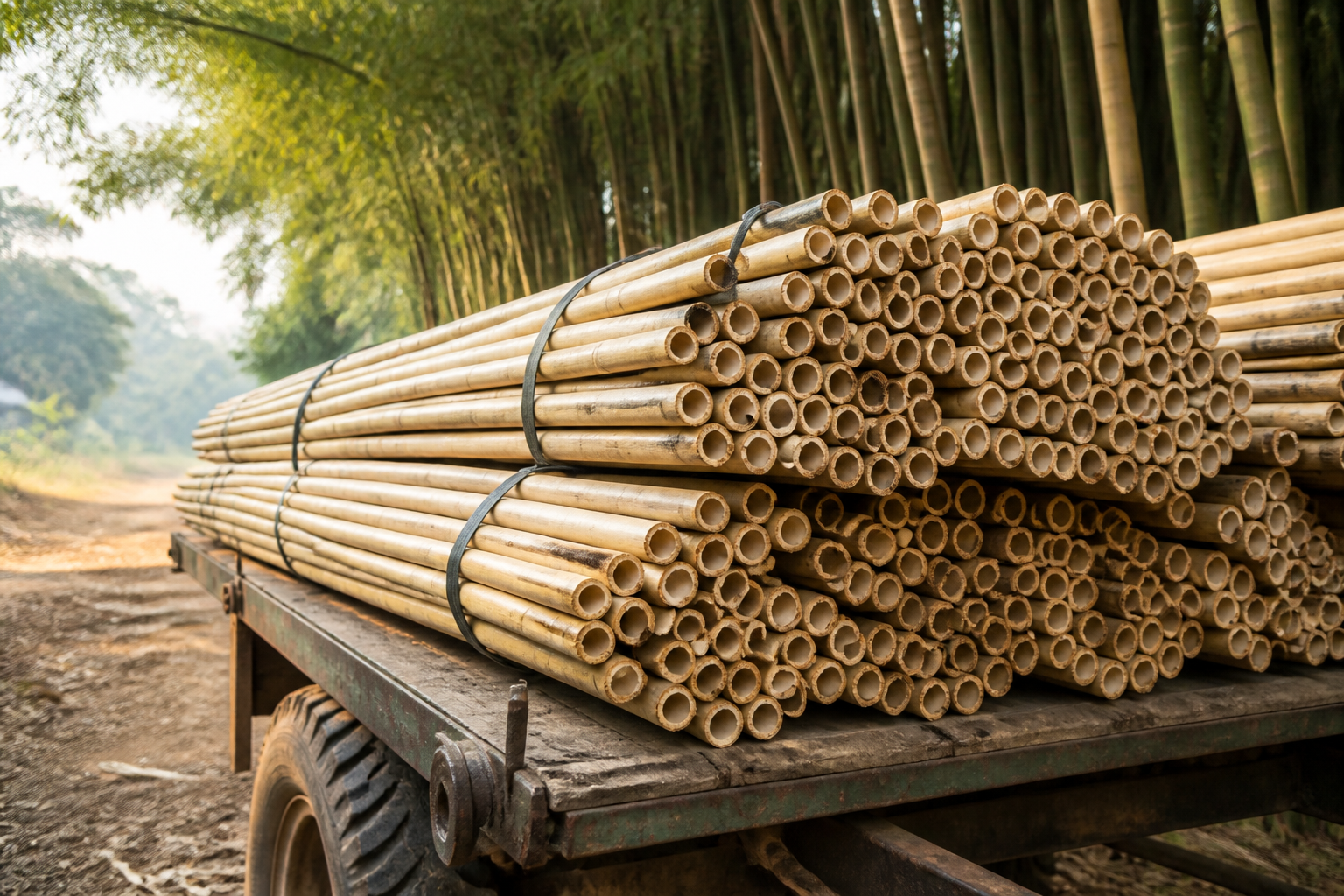
Let me start with the thing most people don’t want to hear, because it will save you a weekend. If you just dug out or cut down a stand of bamboo and you’re standing next to a pile of green culms wondering what it’s worth, the honest answer is: as poles, close to nothing. Freshly cut bamboo is heavy with water, it splits as it dries unevenly, it grows mould in a stack if the air can’t move through it, and it costs a fortune to ship because it’s long and bulky. Nobody who buys poles for a living wants a random mixed pile of green, unsorted, uncured culms of unknown species.
That doesn’t mean it’s worthless. It means the value isn’t in the pile — it’s in what you do to the pile. Value comes from selecting the good culms, curing them properly, cutting them to a spec somebody actually buys, and finding the buyer who collects. Or it comes from selling something that isn’t a pole at all: live divisions, rhizomes, craft stock, shoots. I’ve sold all of these over fifteen years of growing bamboo commercially in the Southeast, and I’ve also thrown away more culms than I’ve sold, usually because I cut them at the wrong time or stacked them wrong. This post is the directory: who buys bamboo, where they are, and what determines whether the sale is worth your time.
What Actually Sells
“Bamboo” isn’t one product. It’s at least seven, with completely different buyers.
Cured poles, sorted by diameter and length
This is the product most people picture. Buyers are landscapers, privacy-screen installers, fence and trellis builders, garden centres, market gardeners who need bean poles, and occasionally builders doing structural or decorative work.
What sets the price: straightness first, then diameter, then usable length, then wall thickness, then the absence of splits and mould. A pole with a hairline crack running two feet down from the cut end is firewood to a fence builder. Larger diameters and longer clean lengths command disproportionately more, not proportionately more — a big, straight, thick-walled pole is a different product from a skinny one, not just a bigger one, and buyers who need that size have very few alternatives locally. Consistency matters as much as size. A buyer who orders fifty poles wants fifty poles that look like each other.
Live divisions and potted plants
For a homeowner with an established grove, this is very often the highest-margin thing you own. A division that costs you an hour with a mattock and a pot of soil sells to somebody who wants a privacy screen next season. Named ornamental cultivars and clumping species do best, because those buyers are shopping deliberately rather than looking for free plants.
Spring is the season. Divisions taken and potted in late winter to early spring, given time to root before the heat, sell in the window when everybody is planning their garden. Divisions dug in the middle of a Southeastern August mostly die, and a dead plant is a refund and a bad review.
Rhizome cuttings
Propagation stock. Lighter than a potted plant, ships in a box, and appeals to growers and hobbyists who are comfortable starting from a rhizome section rather than buying an established plant. Timing is critical — rhizomes need to be dug and shipped when they’re dormant or just breaking, and they need to arrive moist.
Craft-grade short sections and off-cuts
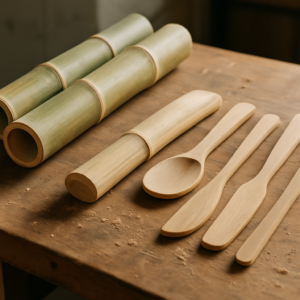
Every pole harvest generates material that isn’t a pole: the tapered tops, the sections either side of a defect, culms that are too short. Cut to uniform lengths, cured, sanded and bundled, this sells to crafters, aquascapers, teachers, model builders, and people making wind chimes and plant markers. The margin per pound is far better than poles because it ships in a normal parcel box.
Edible shoots
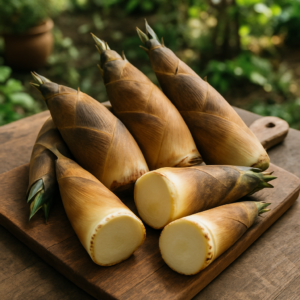
Some species produce genuinely good shoots and there is real local demand, particularly near communities that cook with them. Two hard caveats. First, palatability depends entirely on species — some are excellent, some are bitter, and some require proper preparation before eating. Second, selling food is regulated. Depending on where you live, selling fresh produce may require registration, inspection, or compliance with cottage food or farmers market rules. Check before you advertise, not after.
Leaves, tops and chips
Low value, but not zero. Chipped bamboo makes decent mulch and composts well, and gardeners will sometimes take it for the cost of collecting it. Treat this as a disposal cost avoided rather than a revenue line — realistically it’s local pickup, cash or free, and its value is that you don’t pay to haul it away.
Standing grove sold as a harvesting right
Underrated. You sell access: a buyer comes with saws and a trailer, cuts what they want, and hauls it off. You do no work, you take a much lower price per pole, and in exchange your grove gets thinned. I’ve done this when I’ve been too busy to harvest properly, and it’s a clean transaction if you write down in advance which culms they can take and where they can drive. Craft buyers, small builders, and other growers all do this.
The Channels: Where to Actually List It
Local classifieds and marketplace apps
Facebook Marketplace, Craigslist, Nextdoor and local buy/sell groups. If you only use one channel, use this one. It is the best place to sell poles and live plants for a single reason: the buyer collects, so shipping never enters the conversation. Freight is the thing that kills most bamboo sales, and local pickup deletes it.
For live plants, “buyer digs it themselves” is a completely legitimate and surprisingly popular listing. You price it low, the buyer brings a spade and a tarp, and you get thinning done for free plus cash. Be specific in the ad about what they’re digging, how hard the ground is, and that they need to bring their own tools — otherwise you’ll spend Saturday lending out your mattock.
The practical catch: no-shows and lowballers. Take good photos in daylight, state a firm price, and say clearly whether you’ll help load.
Etsy and craft marketplaces
Right channel for cured, uniform, cut-to-length craft stock and for finished items — trellises, plant markers, candle holders, chimes, aquarium decor. Wrong channel for bulk poles, because Etsy buyers expect shipping included and long items destroy your margin.
What works here is consistency and presentation. A bundle of twelve pieces cut to the same length, sanded, photographed on a clean background, described precisely by diameter and length, will outsell a better-quality pile of mixed material photographed on grass.
eBay
Best for anything with a high value-to-weight ratio: rhizome sections, craft bundles, small quantities of specialty material, and seed where a species has actually flowered and set viable seed (rare, and don’t claim it unless you have it). eBay’s advantage is that its completed-listing data is public, which makes it the single most useful pricing research tool available to you — more on that below.
Bamboo societies, plant forums and specialist groups
Regional bamboo society chapters run plant sales, and there are active forums and social groups full of collectors. These are the most knowledgeable buyers you’ll meet, and they will pay meaningfully more for correctly identified species. They will also correct you, publicly, if you’ve mislabelled something. That’s a feature — get your ID right and this becomes a repeat market.
Local plant sales, farmers markets and swaps
Spring plant sales run by garden clubs, master gardener programs and botanical gardens are a good outlet for potted divisions, and the booth fee is usually small. Farmers markets can work for plants and, where permitted, shoots. The catch is that you’re committing a whole morning, so bring enough inventory to justify it.
Garden centres and nurseries (wholesale)
An independent nursery will buy divisions wholesale, but understand what you’re signing up for. They expect consistent pot sizes, uniform plant quality, accurate labelling with the correct botanical name, and — most importantly — reliable supply. A one-time offer of thirty pots is more hassle than it’s worth to them. If you can deliver the same product every spring, you become a supplier. Start by walking in with three finished, labelled pots and asking what they’d need to see.
Landscapers and privacy-screen installers
These are the best pole customers a small grower can have, because they buy in quantity, repeatedly, and they collect. A landscape crew building bamboo fencing or shade structures will take everything you have if the poles are consistent. Find them by looking at who’s doing that work locally and calling them directly. One good landscaper relationship is worth a hundred classified ads.
Craft and hobby specialists
Narrow, but they pay well for exactly the right material. Fly-rod makers want a specific species with particular fibre characteristics and will reject anything else outright — don’t assume your grove qualifies. Instrument makers, particularly flute makers, want specific wall thickness and internode spacing. Aquascapers want small, clean, untreated pieces. Trellis and fence builders want straight, mid-diameter poles in quantity. These buyers find you through search, so describe your material precisely: species, diameter range, wall thickness, internode length, cured or green.
Garden and construction trade
For genuinely large structural poles there’s a trade market, but be realistic: most domestic groves in the US don’t produce the diameters that market wants at volume, and it competes against imported material. If you have a mature timber-species grove producing consistently large culms, it’s worth pursuing. If you have a hedge of small-diameter running bamboo, it isn’t.
How to Price It (Without Me Making Up Numbers)
I won’t quote per-pole figures, because bamboo pricing is intensely local and any number I gave you would be wrong somewhere. What I can give you is the list of variables and a reliable method.
The variables that set price:
- Species — named, identified species beat “bamboo”
- Diameter — the biggest single driver for poles, and non-linear
- Cured vs green — green is worth a fraction of cured
- Usable length before the taper gets too thin
- Straightness and freedom from splits, mould and insect damage
- Quantity and consistency across the batch
- Who transports it — collection versus delivery versus shipping changes everything
- Local supply — if bamboo grows wild in ditches near you, poles are cheap; if it doesn’t, they aren’t
The method: search sold and completed listings in your own region for the same diameter and length, on the same channel you plan to sell on. Not asking prices — sold prices. Then price against that. Freight dominates this market, so a price in another state tells you almost nothing about yours. Do the same for potted divisions by checking what local nurseries charge for the same species in a comparable pot.
If you want to see how this plays out in practice, I’ve written up the real numbers from my own pole harvest, and separately what I got for bamboo I removed from my own yard. Those are my figures in my market, not a price list — but they show what the work-to-revenue ratio actually looks like.
The Practicalities That Decide Whether It’s Worth Doing
Curing takes months, not days
This is the step people skip and it’s the step that creates the value. Cut at the right time of year, stacked with airflow, kept out of direct sun and rain, poles need months to dry down to a stable state. Skip it and your customer’s fence splits in the first hot spell and you don’t get a second order. I’ve covered when to cut and how to cure poles and specifically curing poles without cracking, which is where I made my most expensive mistakes.
Practically, this means the pile you cut today isn’t sellable stock until next season. Plan accordingly.
Shipping poles is brutal
Bamboo poles are light but long and bulky, which is exactly the profile that dimensional weight pricing punishes. Carriers charge on the space a package occupies, not its weight, and long parcels attract oversize surcharges on top. The freight on a bundle of eight-foot poles will routinely exceed what the poles are worth. This is the single biggest reason the local market dominates pole sales — and why craft-cut short sections, which fit a normal box, are often more profitable per pound than the poles they came from.
Know your species
Buyers pay more when they know exactly what they’re getting, and an incorrect label ends a nursery or reseller relationship instantly. If you genuinely don’t know what you have, say so — “unidentified running bamboo, approximately X inches diameter” is honest and still sells. Guessing at a species name and being wrong is worse than admitting ignorance. Your local extension office or a regional bamboo society can often help with ID.
Check the law before you advertise running bamboo
This matters and people ignore it. Some jurisdictions restrict the sale or distribution of running bamboo species, and a few list certain bamboos as regulated or noxious. Selling live running bamboo where it’s restricted can put you on the wrong side of local rules and, in some places, expose you to liability if it spreads to a neighbour. Check your state and municipal rules before you list live plants or rhizomes of a running species. I’ve put together a starting point on whether the species is legal to plant where you are, but confirm locally — rules change and municipalities add their own.
The volume reality
Selling bamboo for meaningful money is a supply business. It depends on a grove you harvest year after year, curing capacity so you always have stock ready, and a handful of repeat buyers who know you’ll deliver. A one-off pile from a removal job can produce a decent afternoon’s cash. It can’t produce a business. If you’re deciding whether to keep the grove, that’s the actual question: are you willing to run it as a crop?
If You Just Removed a Load and Want It Gone Profitably
Here’s my honest ranking, best to worst, for someone with a fresh pile and no intention of becoming a bamboo grower.
- Sell live divisions before you finish removing. If any of the grove is still standing, list divisions locally on a dig-your-own basis. This is the fastest money and it reduces the work still ahead of you.
- Sell the standing remainder as a harvesting right. Let a craft buyer or small builder cut and haul what they want.
- Select and cure the best fifty poles. Pick only straight, thick-walled, undamaged culms. Cure them properly and sell them next season locally. Everything else, don’t bother.
- Cut craft stock from the good off-cuts. Uniform short sections, cured and bundled, ship in a box and sell online.
- Offer the green bulk free for pickup. Somebody will take it for stakes or garden use, and you avoid disposal fees.
- Chip the rest for mulch. Use it yourself or give it away.
Notice what’s not on that list: shipping green poles, or trying to sell an unsorted pile as a lot. I’ve watched people spend three weekends photographing and listing green bamboo and end up hauling it to the dump anyway. Sort ruthlessly, cure what deserves it, and let the rest go.
Frequently Asked Questions
How much can I sell bamboo for?
It depends far too much on your location for a single number to be useful. Price is driven by species, diameter, whether the poles are cured, length, straightness, quantity, and who does the transporting. The reliable method is to search sold listings in your own region for the same diameter and length and price against those. Two things are consistent everywhere: cured is worth several times green, and large-diameter straight poles are worth disproportionately more than small ones.
Can I sell bamboo I dug out of my yard?
Yes, with two conditions. First, check whether your state or municipality restricts the sale or distribution of the species you have — some running bamboos are regulated in some places. Second, be realistic about form. Live divisions, potted up in spring, sell well locally. Green cut culms sell poorly until they’ve been sorted and cured. Rhizomes sell to propagators. The dug-out material is worth something; it just isn’t worth much in the state it comes out of the ground.
Who buys bamboo near me?
Start with landscapers and privacy-screen installers, independent garden centres, local fence and trellis builders, market gardeners who need stakes, and the buyers who find you on Facebook Marketplace or Craigslist. Regional bamboo society chapters are worth joining for both plant sales and contacts. If there’s a community near you that cooks with bamboo shoots, that’s a seasonal market too — check food-selling rules first.
Is it better to sell poles or live plants?
For most homeowners, live plants. Divisions and potted plants take much less processing time than curing poles, they sell in a clear seasonal window, and the margin per hour of your labour is usually better — especially for named ornamental or clumping species. Poles make more sense if you have a mature grove producing large diameters consistently and you’re willing to build curing capacity and repeat buyers.
Can I ship bamboo poles to buyers online?
You can, but the economics usually don’t work. Poles are long and bulky, so dimensional weight pricing and oversize surcharges mean the freight often costs more than the bamboo. That’s why local pickup dominates the pole market. If you want to sell online, sell what fits a normal parcel box: cured craft-length sections, rhizome cuttings, small bundles and finished items.
About This Article

Written by Marcus Chen. Marcus Chen has spent 15 years cultivating and studying bamboo across 14 different species, combining commercial growing operations with extensive hands-on experience in species selection and containment. As both a grower and consultant, he specializes in practical bamboo management, helping homeowners and landscapers understand the real-world requirements for responsible bamboo cultivation. Marcus brings tested knowledge of which species thrive reliably and which present containment challenges that go beyond standard recommendations. More about this site.
Verify this against a primary source
Specifics change, and your situation may differ from the one described here. These are the authorities worth checking directly:
- American Bamboo Society — species listings and cultivation guidance
- USDA PLANTS Database — species range and identification
- USDA Plant Hardiness Zone Map — cold hardiness verification for your location