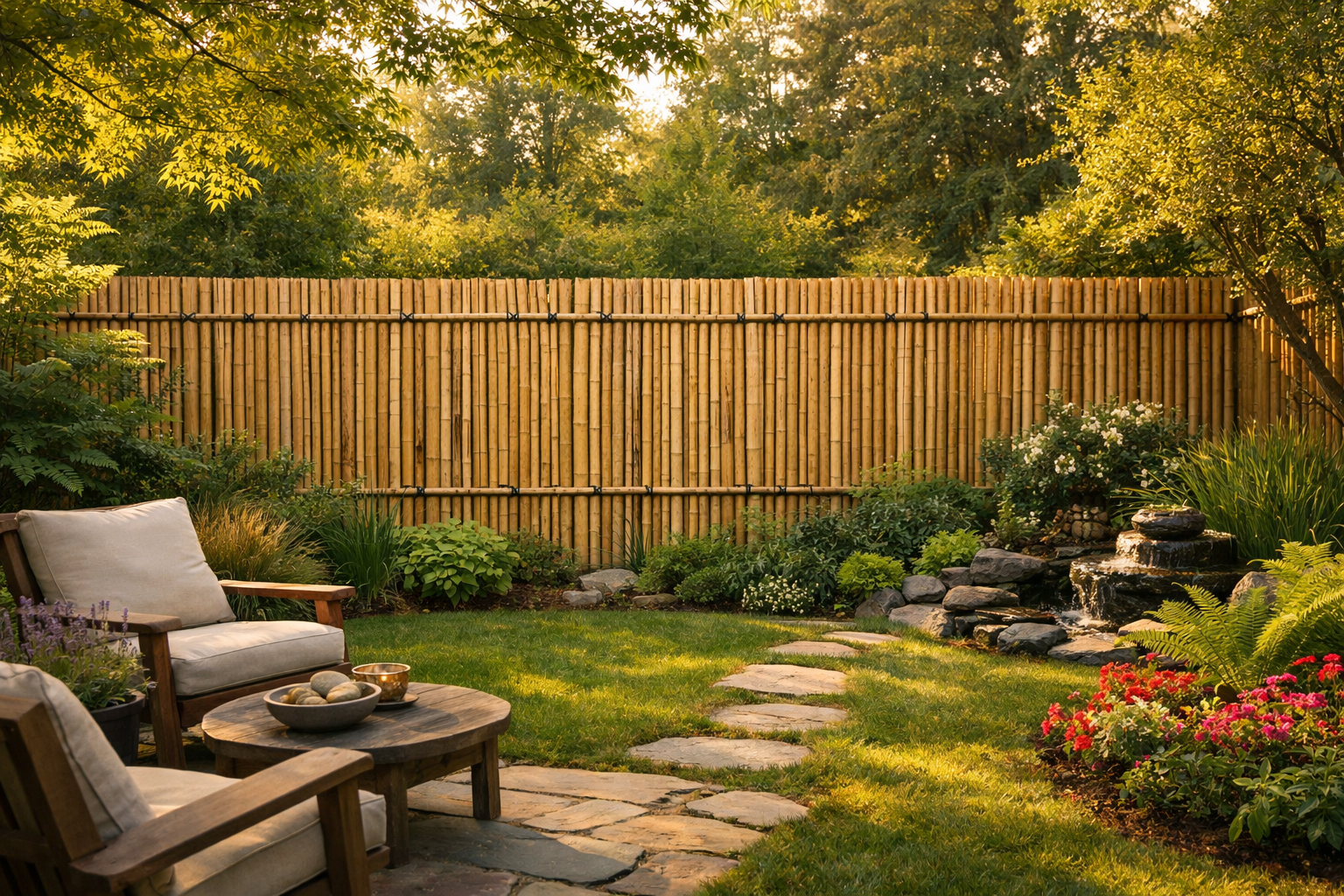
It was a gray Tuesday morning in November — the kind where the rain has been going since Thursday and you have genuinely stopped noticing — when I walked out to my back fence and just stood there with my coffee going cold. I had installed bamboo fencing along my back property line about three years prior, mostly because I was tired of staring at my neighbor’s very ambitious chicken coop situation. And standing there in the drizzle, I found myself wondering: so how long does bamboo fencing last, really? Not the number that shows up on product pages. The real answer. The one you get after three southeastern summers and the wet winters that follow them have had their way with something.
I went looking online and found what I always find: vague ranges like “5 to 20 years” with zero context, zero conditions, zero honesty about the variables that actually matter. So here is my actual, lived, slightly humbling account of what happened to my bamboo fencing over three years of real weather, real neglect, and one incident involving a very large branch that I will get to.
The Screening Roll That Finally Let Me Install Bamboo Fencing Without Worrying About Spread
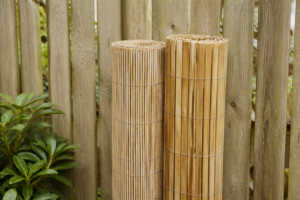
If you’re installing bamboo fencing to contain running varieties, you need to know what you’re actually anchoring to—and whether that fencing material will hold up when the rhizomes start testing the edges. After three years of watching my panel edges, I learned that quality slat density makes all the difference between a barrier that lasts and one that becomes an ornamental cover for escaped shoots.
What works
- The tight slat spacing actually resists rhizome pressure better than I expected—when installed properly with support posts, it doesn’t gap or loosen over the three-year test period the way thinner rolls do.
- The 6.5-foot height gives you real security against tall canes leaning out, and the 13-foot length means fewer seams where bamboo can work its way through on property lines.
- Despite the weather exposure — and the humid Southeast is about as hard on outdoor timber as anywhere — the slats hold their structure and don’t warp into gaps the way some thinner alternatives do by year two.
What doesn’t
- You absolutely must invest in solid metal posts and proper anchoring—this roll is heavy and needs real support, not just wire-tied to weak bamboo or pine stakes, or it will sag within a season.
- The initial cost is higher than thinner screening options, and installation is more labor-intensive, so if you’re just buying a quick visual barrier without containment in mind, you’re overspending.
I had a moment in late summer of year two when I noticed the bottom corner starting to loosen and thought I’d have to replace the whole thing, but it turned out the posts had just shifted slightly in the soil—a re-anchor solved it. If you’re serious about bamboo containment and longevity, the Bamboo Privacy Fence Roll 6ft x 13ft is worth the investment.
Fitting It
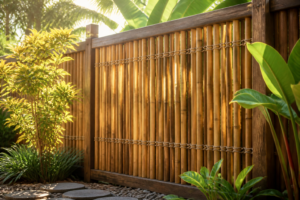
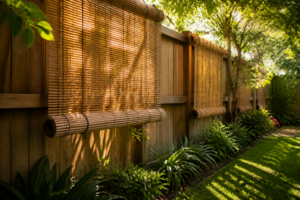
I mounted the 6ft rolls to existing pressure-treated posts using galvanized wire and stainless steel staples—took me about four hours for roughly 40 linear feet working alone. The fiddly part was keeping tension even across the roll while fastening; I learned to work top-to-bottom in sections rather than all the way across. The bamboo itself was surprisingly heavy, and I’d recommend a helper. No special tools needed beyond a staple gun and wire cutters, though a level saved me from wavy sections.
How It Has Held Up
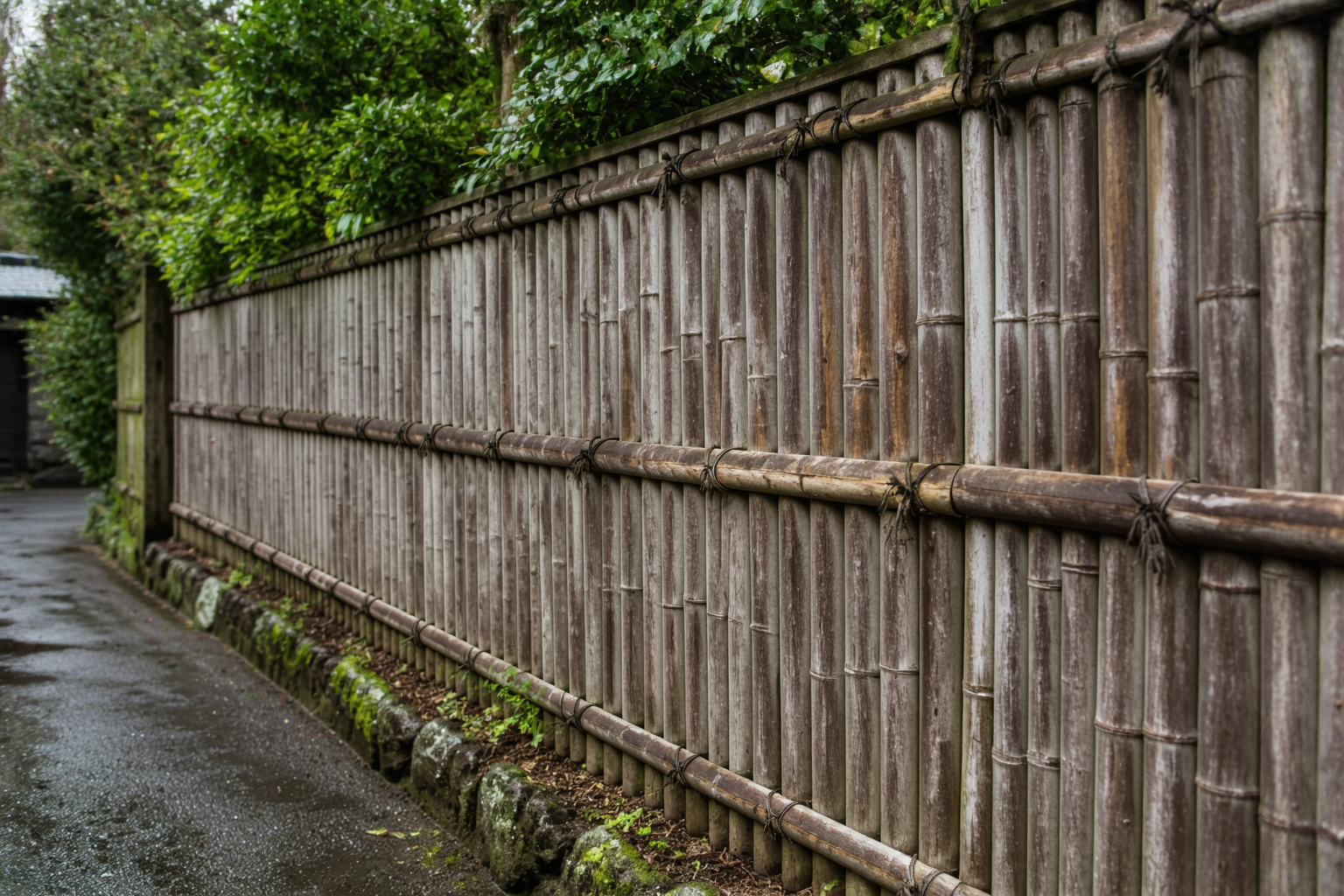
After three years of southeastern weather—humid summers, wet winters, occasional hard freezes—the slats have grayed considerably but remain structurally sound. The first year saw minimal change; by year two, I noticed the outer layer developing a weathered patina and some slat edges starting to fray slightly. The real test came when a large branch fell against one section; the impact cracked three slats but didn’t compromise the overall integrity. What surprised me most was how the density held up—cheaper rolls I’ve seen nearby deteriorated much faster.
Where It Falls Short
- If you’re in a truly arid climate, this material may last longer than advertised, but in high-humidity regions expect accelerated graying and surface splintering by year three—not failure, but cosmetic decline.
- The staple-and-wire method requires annual inspection; I found corrosion on some fasteners by year two, meaning replacement hardware costs add up over time.
- Bamboo fencing offers no real rhizome containment despite marketing claims—the slats are a visual screen only, not a root barrier; use underground barriers or metal edging if you’re actually fighting running bamboo.
- This product is not suitable for high-wind zones; the panels catch wind like a sail, and I’ve seen neighboring installations fail in sustained gusts above 40 mph.
Would I Buy It Again
I’d buy it again for privacy screening in moderate climates where I accept weathering as part of the aesthetic. It’s not a 20-year solution despite what product pages claim—expect 5 to 8 years before serious deterioration. Skip it if you need a true root barrier, live in a windy area, or want maintenance-free fencing. For my chicken-coop-hiding needs, it delivered.
About This Article

Written by Marcus Chen. Marcus Chen has spent 15 years cultivating and studying bamboo across 14 different species, combining commercial growing operations with extensive hands-on experience in species selection and containment. As both a grower and consultant, he specializes in practical bamboo management, helping homeowners and landscapers understand the real-world requirements for responsible bamboo cultivation. Marcus brings tested knowledge of which species thrive reliably and which present containment challenges that go beyond standard recommendations. More about this site.
Verify this against a primary source
Specifics change, and your situation may differ from the one described here. These are the authorities worth checking directly:
- American Bamboo Society — species listings and cultivation guidance
- USDA PLANTS Database — species range and identification
- USDA Plant Hardiness Zone Map — cold hardiness verification for your location