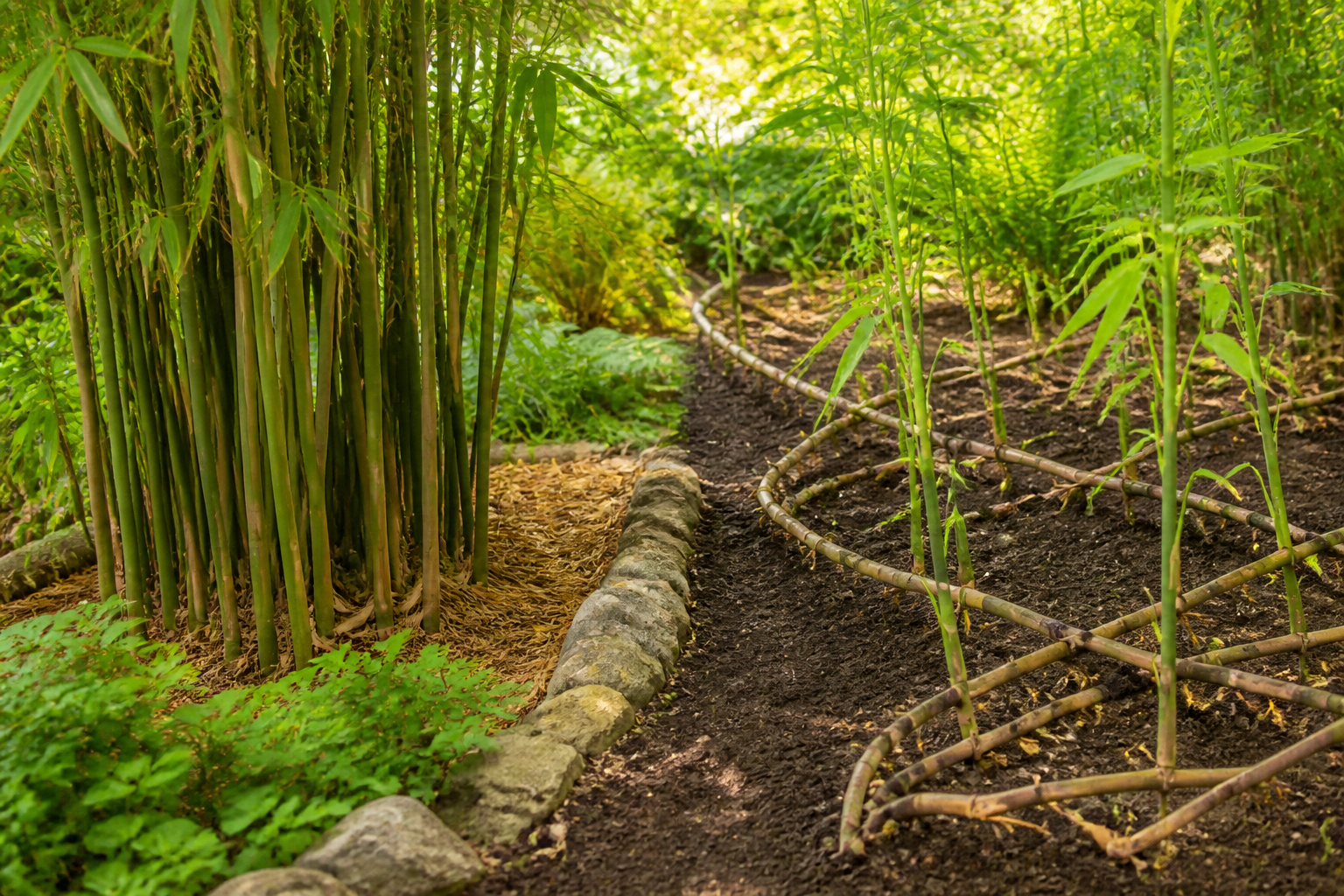
Key Takeaways
- Bamboo is either clumping (pachymorph rhizomes) or running (leptomorph rhizomes)—two fundamentally different growth patterns determined by rhizome architecture
- Running bamboos like Phyllostachys aurea (Golden bamboo) spread aggressively and require root barriers or containment; clumping species like Fargesia robusta expand slowly and stay in place
- Many popular species commonly mistaken for clumping—including Black bamboo and Moso—are actually running bamboos requiring active management
- You can identify rhizome type by digging and inspecting underground growth: pachymorph rhizomes branch upward steeply; leptomorph rhizomes run horizontally and spread far
- Cold-hardy clumping options like Fargesia murielae thrive in temperate zones (Zone 4–5) without becoming invasive
Is Bamboo Clumping or Running? Understanding the Fundamental Difference
One of the most critical questions any bamboo grower must ask is: “Is bamboo clumping or running?” The answer determines whether your bamboo remains a well-behaved garden feature or becomes an invasive nightmare spreading across your property and into your neighbors’ yards.
The distinction comes down to rhizome architecture—the underground root system that fundamentally controls how bamboo expands:
- Clumping bamboo (pachymorph rhizomes): Rhizomes curve sharply upward within 1–2 feet of the parent culm, creating tight, localized clumps that expand slowly (3–6 feet per year maximum). Culms emerge in dense clusters.
- Running bamboo (leptomorph rhizomes): Rhizomes grow horizontally and travel far from the parent plant, sometimes 10–30+ feet annually. New culms pop up unpredictably across wide areas, earning the label “invasive” in many regions.
This is not a matter of species preference or care style—it’s hard-wired into each species’ genetic architecture. Understanding whether your chosen bamboo is clumping or running is essential before planting.
Why This Matters: Invasiveness, Containment, and Property Harmony
The difference between clumping and running bamboo has profound practical implications for homeowners and landscapers.
Running bamboo is invasive by nature. Once established, running species spread relentlessly. New shoots emerge far from where you planted them, crossing property lines, invading gardens, and damaging hardscaping. In some U.S. states and Canadian provinces, planting running bamboo without containment is illegal. Your neighbor can sue for property damage.
Clumping bamboo is safe to plant in most jurisdictions without barriers. Expansion is predictable and manageable. The plant remains largely where you put it, growing outward in a gradually widening mound rather than sending rhizomes far underground.
For most residential growers, this single distinction—is bamboo clumping or running—should drive the species selection decision entirely.
The Complete Species Guide: Is Bamboo Clumping or Running?
Below is TerraBamboo’s comprehensive reference table identifying whether major commercial and ornamental species are clumping or running, plus hardiness zones and key growth characteristics:
| Species (Scientific Name) | Common Name | Type | Hardiness Zone | Growth Rate / Key Notes |
| Phyllostachys aurea | Golden Bamboo | RUNNING | Zone 6–11 | 5–8 ft/year; extremely invasive; cold-hardy but requires root barrier |
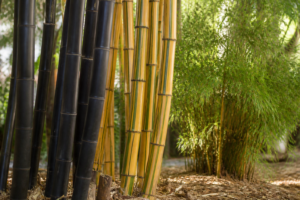
| Phyllostachys nigra | Black Bamboo | RUNNING | Zone 7–10 | 3–5 ft/year; commonly mistaken for clumping; striking dark culms; spreads persistently |
| Phyllostachys edulis | Moso Bamboo | RUNNING | Zone 7–10 | Up to 3 ft/day growth; largest temperate species (60–80 ft); highly invasive |
| Phyllostachys bambusoides | Japanese Timber Bamboo | RUNNING | Zone 7–10 | 4–6 ft/year; large culms; requires containment |
| Phyllostachys bissettii | Bissettii Bamboo | RUNNING | Zone 5–10 | 4–6 ft/year; among the coldest-hardy running species; dense screening potential with barriers |
| Fargesia murielae | Umbrella Bamboo | CLUMPING | Zone 4–5 | 3–6 ft/year; reliable cold hardiness; ideal for northern temperate gardens |
| Fargesia robusta | Campbell Bamboo | CLUMPING | Zone 4–5 | 3–6 ft/year; upright culms; excellent screening; no barrier needed |
| Fargesia dracocephala | Dragon Bamboo | CLUMPING | Zone 5–9 | 2–4 ft/year; slower-growing clumping option; fine foliage |
| Chusquea culeou | Chilean Bamboo | CLUMPING | Zone 6–9 | 2–4 ft/year; cold-hardy clumper; solid wood culms; minimal spread |
| Bambusa oldhamii | Giant Timber Bamboo | CLUMPING | Zone 9–11 | 6–8 ft/year; massive tropical clumps; requires warmth |
| Bambusa multiplex | Hedge Bamboo | CLUMPING | Zone 7–11 | 3–5 ft/year; dense, ornamental clumps; excellent for hedges |
| Dendrocalamus asper | Giant Bamboo | CLUMPING | Zone 9–11 | 5–7 ft/year; largest clumping bamboo; tropical climate only |
| Pseudosasa japonica | Arrow Bamboo | RUNNING (slow) | Zone 6–10 | 2–3 ft/year; spreads gradually; hardier running type |
| Sasa species | Sasa Bamboo | RUNNING | Zone 5–9 | 1–2 ft/year; low-growing groundcover running types; can still be invasive |
| Indocalamus tessellatus | Large-Leaf Bamboo | RUNNING | Zone 5–9 | 1–3 ft/year; broad leaves; spreads as groundcover |
Running Bamboo Species: High-Risk Plants Requiring Containment
The running bamboos—all Phyllostachys species—dominate the market because they grow tall and fast. But this vigor comes with a price: they are invasive by nature and require serious containment strategies.
Phyllostachys aurea (Golden Bamboo) is perhaps the most infamous. Its golden-hued culms are attractive, and its cold hardiness (Zone 6) makes it tempting for northern growers. However, is golden bamboo clumping or running? It is definitively running—spreading 5–8 feet per year and often much faster in warm conditions. Without a root barrier, Golden bamboo becomes unmanageable within 3–5 years.
Phyllostachys nigra (Black Bamboo) is frequently mistaken for clumping because people assume its dense foliage and refined appearance reflect clumping growth habits. In reality, is black bamboo clumping or running? It is running. Black bamboo spreads 3–5 feet annually and requires root barrier installation to prevent escape.
Phyllostachys edulis (Moso Bamboo) is the largest temperate bamboo, reaching 60–80 feet tall with culms 6+ inches in diameter. Is moso bamboo running or clumping? It is running—and aggressively so. Moso can grow 3 feet in a single day and spread 10–20 feet annually. It is banned in several states and requires industrial-grade root barriers if planted at all.
Clumping Bamboo Species: Safe, Non-Invasive Options
Clumping species are the answer for growers who want bamboo without environmental liability. These plants stay put and spread predictably.
Fargesia species are the gold standard for cold-hardy clumping bamboo. Fargesia murielae and Fargesia robusta both thrive in Zone 4–5, making them viable for northern U.S. and Canadian gardens. Fargesia growth rate is typically 3–6 feet per year, expanding gradually in a tight mound. No root barrier is necessary.
Fargesia dracocephala is an excellent slower-growing option (2–4 ft/year), hardy to Zone 5, with delicate foliage and restrained expansion.
For warm climates, Bambusa oldhamii (Giant Timber Bamboo) and Dendrocalamus asper produce massive, dense clumps without running. Bambusa multiplex (Hedge Bamboo) is a versatile clumping species suited to Zone 7–11, excellent for hedges and screening.
How to Tell If Your Bamboo Is Clumping or Running: Identification Methods
If you inherit an established bamboo planting or purchase an unlabeled plant, how do you determine whether it is clumping or running? There are two field inspection methods:
Method 1: Excavate and Inspect the Rhizome System
Carefully dig around the base of the bamboo 1–3 feet away from the main culm cluster. Expose the rhizomes just below the soil surface.
- Clumping (pachymorph): Rhizomes are thick, short, and curve sharply upward within 12–24 inches of the parent culm. They branch upward steeply, creating a tightly clustered root system.
- Running (leptomorph): Rhizomes are thin, long, and run nearly horizontal. They extend far from the parent plant—sometimes 10–30+ feet. You may see rhizomes traveling under your feet without branching upward for long distances.
Method 2: Observe Culm Emergence Pattern Over One Growing Season
Mark the outer perimeter of culm emergence in spring. Track where new shoots emerge as the season progresses.
- Clumping: All new culms emerge near the perimeter of the existing clump, expanding the mound gradually outward. Expansion is uniform and predictable.
- Running: New culms pop up far from the main clump—10, 20, or 50+ feet away—seemingly at random. Expansion is non-uniform and accelerates over years.
If You Already Planted Running Bamboo: Containment Solutions
If you have already established running bamboo on your property, do not panic. Root barriers can contain spread effectively—but only if properly installed before the bamboo establishes.
Heavy-duty root barriers made of 60-mil HDPE plastic or reinforced composite materials are the industry standard. These barriers must:
- Be buried 24–36 inches deep (below the typical rhizome zone)
- Extend 12 inches above ground to prevent rhizomes from escaping over the top
- Be installed with overlapping seams and sealed joints
- Be monitored annually for breaches and damage
For homeowners and landscapers managing running bamboo, we recommend the West Bay Heavy-Duty Bamboo Root Barrier system. Available in multiple lengths to suit different project scales, these barriers feature industrial-strength 60-mil HDPE material designed specifically for bamboo containment:
- West Bay 20ft x 24in Root Barrier – ideal for smaller garden installations or targeted containment zones
- West Bay 35ft x 24in Root Barrier – mid-range solution for average residential plantings
- West Bay 50ft x 24in Root Barrier – comprehensive protection for larger properties or commercial applications
These barriers are HDPE construction, UV-resistant, and designed to last 20+ years when properly maintained. They are the most cost-effective way to prevent running bamboo from becoming a liability.
Making Your Species Choice: A Decision Framework
The decision tree I use when choosing bamboo:
- Check your hardiness zone. Does your climate support cold-hardy clumping species like Fargesia murielae (Zone 4–5) or Chusquea culeou (Zone 6)? If yes, choose clumping exclusively.
- Confirm your space constraints. Do you have room for a clumping mound 10–15 feet in diameter? If yes, clumping species are optimal. If you need tall screening in tight spaces, running bamboo with a root barrier may be acceptable.
- Check local regulations. Some jurisdictions ban running bamboo entirely. Verify before purchasing.
The Root Barrier That Finally Stopped My Running Bamboo from Invading the Neighbor’s Yard
If you’ve decided running bamboo is worth the risk—or you’re stuck with it and need to contain it fast—a solid root barrier isn’t optional, it’s survival. I learned this the hard way after Phyllostachys aurea crept under my fence line one summer.
What works
- 24-inch depth actually stops rhizomes—they probe for gaps but rarely push through solid HDPE when installed correctly; I’ve dug alongside mine at year three and found zero breakthrough attempts.
- The 20-foot length covers a modest running patch without needing to stitch multiple barriers together, which cuts down on the overlap weak points where escapes happen.
- Installation is manageable solo if you trench carefully—it doesn’t require special tools beyond a spade and landscape fabric staples, and you can do it in one afternoon.
What doesn’t
- You have to bury it completely below soil level or bamboo will just creep over the top edge—this means digging a trench deep enough to set it, not just laying it flat on the surface.
- It won’t stop bamboo that’s already escaped on the neighbor’s side; it only prevents *new* spread from your planting area, so timing matters.
I almost ripped mine out after year one when I spotted a single shoot outside the line—until I realized it was a rogue that had escaped *before* installation—but that near-panic convinced me the barrier was actually working. If running bamboo is in your plan, grab the West Bay 50ft x 24in x 60mil Tree Root Barrier before you plant.
About This Article

Written by Marcus Chen. Marcus Chen has spent 15 years cultivating and studying bamboo across 14 different species, combining commercial growing operations with extensive hands-on experience in species selection and containment. As both a grower and consultant, he specializes in practical bamboo management, helping homeowners and landscapers understand the real-world requirements for responsible bamboo cultivation. Marcus brings tested knowledge of which species thrive reliably and which present containment challenges that go beyond standard recommendations. More about this site.
Verify this against a primary source
Specifics change, and your situation may differ from the one described here. These are the authorities worth checking directly:
- American Bamboo Society — species listings and cultivation guidance
- USDA PLANTS Database — species range and identification
- USDA Plant Hardiness Zone Map — cold hardiness verification for your location