A culm is the above-ground, woody stem of a bamboo plant—essentially the pole or cane you see growing out of the ground. If you’ve ever held a piece of bamboo and wondered what you were actually looking at, or spent an hour in a nursery catalog trying to decode why one supplier lists “1.5-inch culm diameter” and another talks about “pole length,” this post is for you. A culm is hollow, segmented, and incredibly strong for its weight, which is why bamboo poles have been used for everything from fishing rods to scaffolding for centuries. Once you understand what a culm is, and how it connects to the rest of the bamboo plant’s hidden architecture, suddenly all those growing decisions—from spacing to harvesting to knowing which poles work for your trellis project—start making actual sense.
I spent my first year growing bamboo nodding along every time a nursery catalog or a pole supplier mentioned “culm diameter” or “node spacing” without actually knowing what those words meant. I know I am not alone—half the emails I get use the word “stalk” for four different plant parts. Once I actually learned the anatomy, a lot of decisions got easier: why some poles split when you drill them and others do not, why the papery sheaths falling off my new culms every spring is not a disease, why “culm” and “cane” and “stalk” are not interchangeable once you are picking poles for a project.
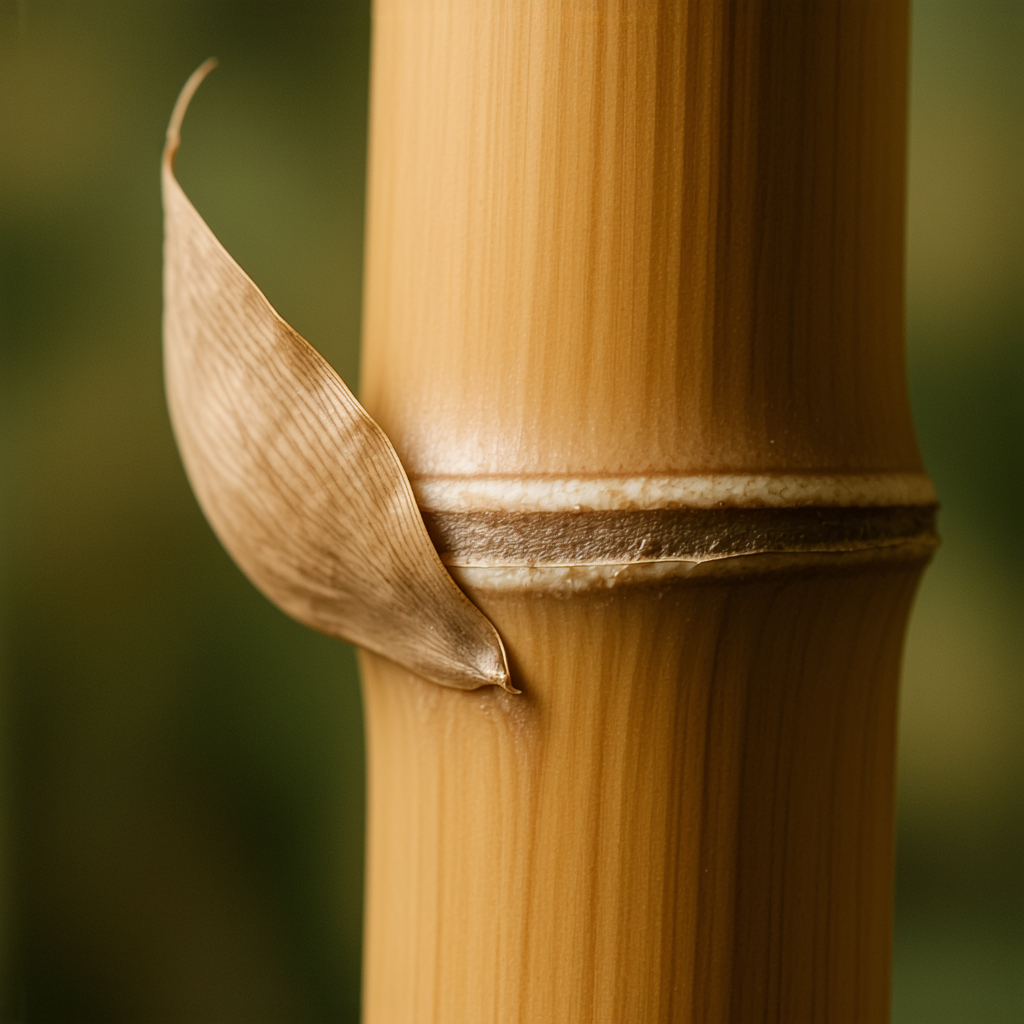
What Is a Culm? The Main Stem Above Ground
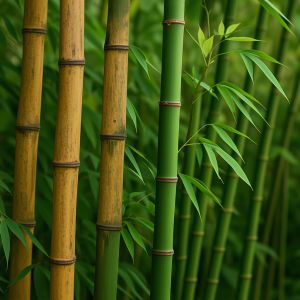
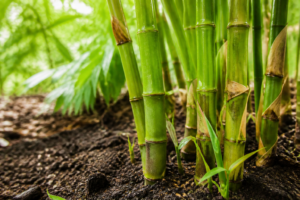
Let’s start with the fundamentals. A culm of bamboo is the individual woody stem that grows upward from the ground. Think of it as the trunk of a bamboo plant—except bamboo doesn’t have one trunk. Most bamboo plants produce multiple culms per year, each one emerging fresh from the root system and reaching its full height within a single growing season. This is wild if you think about it: a running bamboo like Phyllostachys edulis can send up culms that reach 60 feet tall in just eight to twelve weeks.
The culm is hollow, which is one reason bamboo is so remarkable as a building material. That hollow core means you get incredible strength-to-weight ratio. A culm is also segmented—divided into sections by internal walls called diaphragms, which sit at those visible bumps you see running along the pole called nodes. The space between two nodes is called an internode.
When someone mentions “culm diameter” in a plant description, they’re talking about the thickness of that main stem. A small ornamental running bamboo like Phyllostachys aurea might have culm diameters of half an inch to one inch. A timber bamboo like Moso (Phyllostachys edulis) will range from 2 to 6 inches, depending on growing conditions and age. That diameter is useful information because it tells you both how sturdy the mature poles will be and how much space you need to give the plant.
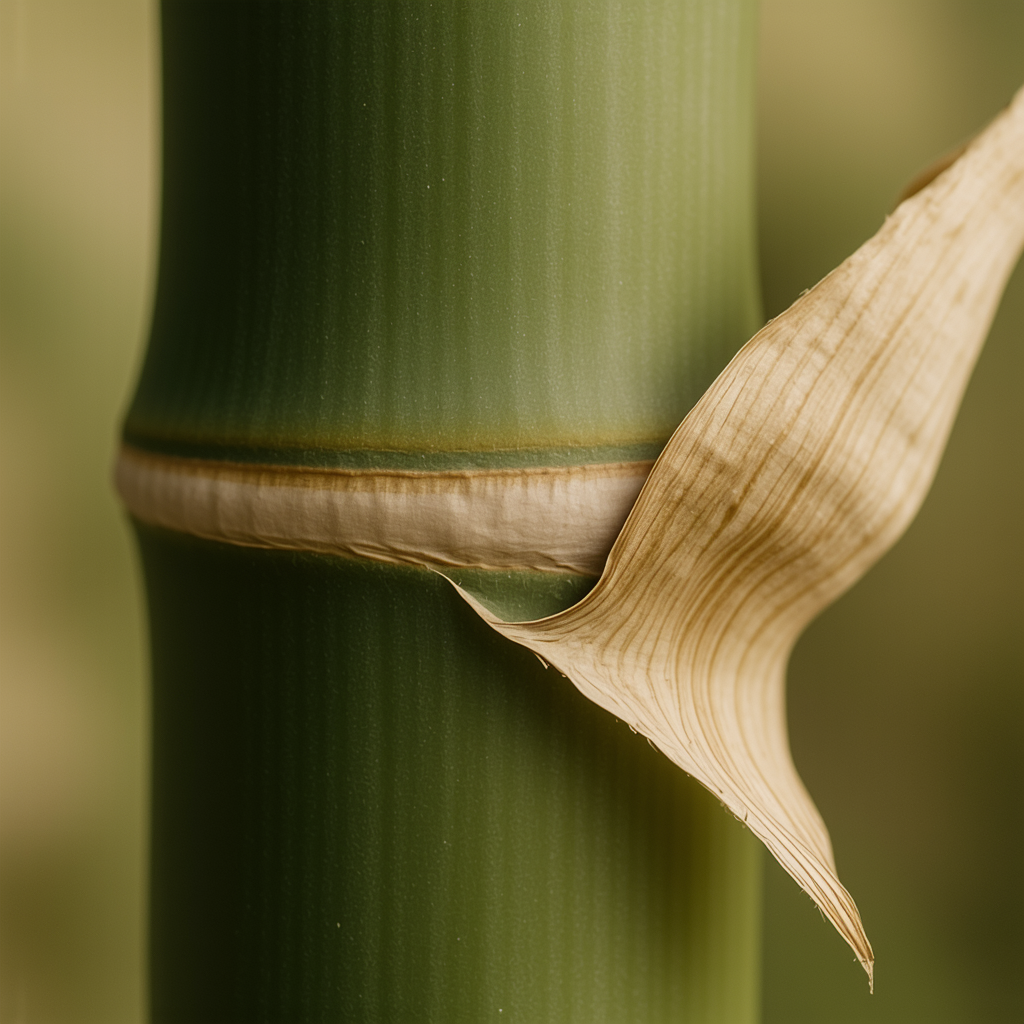
Nodes and Internodes: The Segmented Structure
If the culm is the main actor, nodes are the plot points. A node is the solid section where the culm is divided. You can see and feel these bumps running up the length of any bamboo pole. They’re not just aesthetic—they’re structural. Each node contains that internal diaphragm I mentioned, which is why bamboo poles are so hard to split lengthwise and why they hold up under pressure.
The internode is the hollow section between two consecutive nodes. This is where most of the length of the culm lies. The relationship between node spacing and culm diameter varies by species. A running bamboo might have tight node spacing—maybe 4 to 8 inches between nodes. A large timber species like Moso can have internodes 12 to 18 inches long. Tighter node spacing generally means more structural strength, because you have more internal bracing.
Here’s something I learned the hard way: if you’re drilling holes in bamboo poles for a project, always drill between the nodes, not through them. Drilling through a node can cause the pole to crack or split unpredictably because you’re going through solid wood rather than the hollow section. If you need attachment points at specific intervals, measure twice, confirm you’re in the internode space, and use a sharp drill bit.
Sheaths: The Protective Wrapper
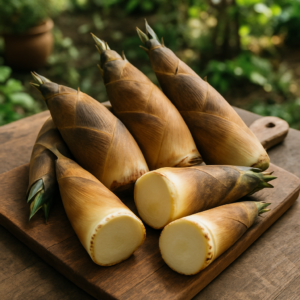
When a culm first emerges from the ground, it’s wrapped in protective papery structures called sheaths. These are modified leaves—each one encasing a segment of the developing culm. They’re usually brown or mottled, sometimes fuzzy, and they look a bit like corn husks. On young culms, the sheaths are firmly attached. As the culm matures and hardens, those sheaths dry out and fall away naturally, usually within the first season or two.
I remember my first spring watching my new Phyllostachys edulis culms and panicking when the sheaths started peeling off in big papery strips. I thought I had a fungal disease. I didn’t. This is completely normal and healthy. The sheaths will litter your garden for a few weeks, but they break down quickly and add organic matter to your soil.
Some gardeners collect the fresh sheaths because they’re actually useful—they’re food-safe and decorative, and can be dried and used for wrapping or crafting. If you’re going to harvest sheaths, do it when they’re still fresh and pliable, before they get too brittle.
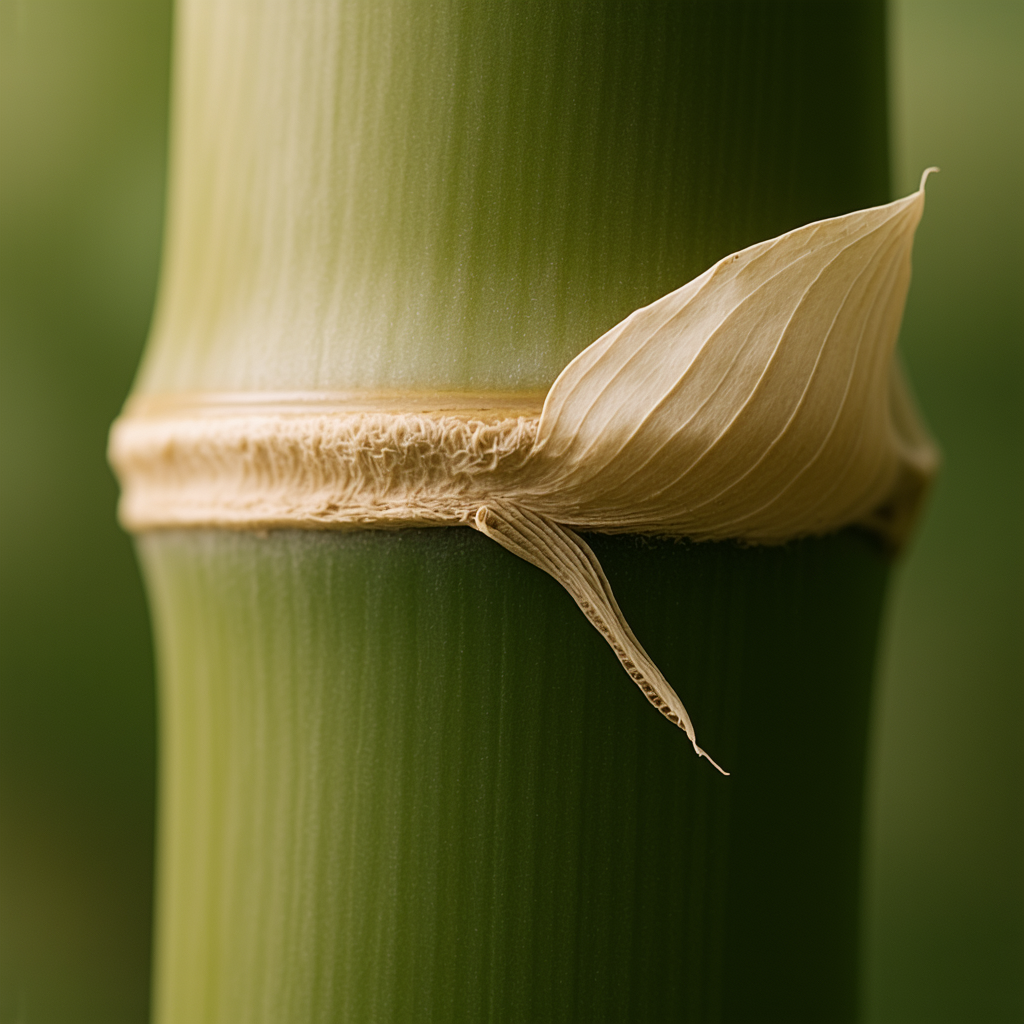
Rhizomes: The Underground Network
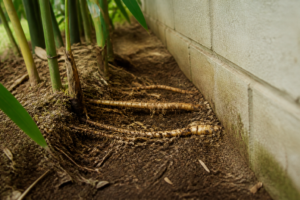
The culm is only half the story. Below ground is where bamboo gets truly remarkable. Rhizomes are the underground stems—a network of horizontal runners that connect all the culms of a single plant and give rise to new shoots each year. Understanding rhizomes is essential for knowing why bamboo spreads the way it does and how to manage it.
There are two main types of rhizomes, and they determine whether your bamboo is “clumping” or “running.” Clumping bamboos, like most Fargesia species and Bambusa species, have pachymorph rhizomes—short, thick, and tightly packed. These stay close together, creating that dense mound shape. Running bamboos, like Phyllostachys species, have leptomorph rhizomes—thin, long, and far-ranging. A single running rhizome can travel 10 to 15 feet or more in a season, popping up new culms along its path.
If you’re growing running bamboo, you need a rhizome barrier. I use a physical barrier of 40-mil HDPE plastic, installed 2 feet deep and extending 12 inches above ground. It needs to be continuous with no gaps—rhizomes are persistent and will find any weakness. Install the barrier when you plant, not three years later when the bamboo has already escaped into your neighbor’s yard (yes, I learned this one the hard way too).
Rhizomes also store energy. When you harvest culms, you’re not killing the plant—you’re just removing that year’s growth. The rhizomes remain intact underground and will send up new culms the following season. A mature rhizome system can keep producing culms for 50 years or more.
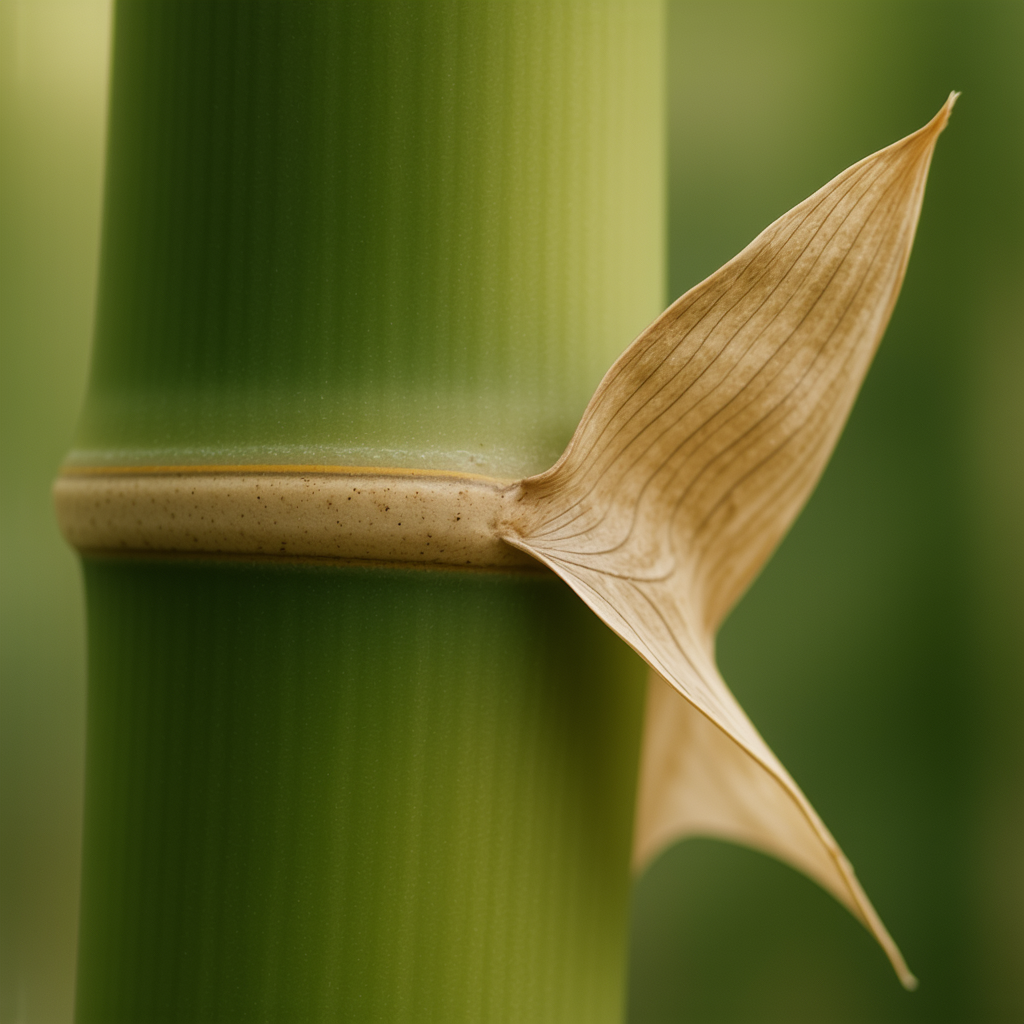
How It All Works Together: A Practical Example
Let me tie this together with a real example. You plant a Phyllostachys nigra (black bamboo) in spring. The rhizome system—already present in the nursery container—begins sending up new culms. The first culm emerges from the ground wrapped in sheaths. Over eight weeks, it grows to its full height of maybe 25 feet, hardening as it goes. The culm diameter reaches about 2 inches, with nodes spaced roughly 10 inches apart. The sheaths fall off by mid-summer. That culm will stay on the plant for 15 to 20 years, gradually darkening and becoming denser.
Meanwhile, the rhizome system keeps expanding outward (because P. nigra is a runner—hence the barrier you installed). Each year, new culms emerge from different points along those rhizomes. Some years you might get 10 new culms, some years 3, depending on weather and whether you fertilized. By year three, you’ve got a productive grove with multiple culms at different ages, all connected by a thriving rhizome network.
If you want to thin the grove or harvest poles, you cut culms at their base where they meet the rhizome. The cut itself heals, the rhizome survives, and new shoots emerge the next season. Understanding this cycle is why experienced bamboo growers rarely panic about pruning or harvesting—you’re working with a regenerative system, not an annual crop.
Why This Matters for Your Projects
Knowing the anatomy of bamboo transforms how you approach projects. When you’re sourcing poles for a trellis or fence, you now understand why culm diameter and node spacing matter for strength and stability. When you’re designing a new planting bed, you know how to calculate spacing based on the mature culm thickness. When you’re harvesting, you know you’re not killing the plant—you’re working with one part of a much larger system.
Most importantly, once you know what you’re looking at, all those nursery descriptions and pole supplier specs suddenly make sense. You’re not just reading words; you’re understanding the plant.
The next time you’re standing in front of a bamboo plant or holding a pole, take a moment to run your hand along the culm, feel the nodes, look at the scars where sheaths have fallen. You’re touching an incredibly efficient biological system that’s been doing this for millions of years. And now you understand how it works.
Start with one simple action: if you’re already growing bamboo, spend an afternoon measuring and documenting your culms. Write down the culm diameter, count the internodes in a 12-inch section, note how far apart the nodes are. You’ll learn more from direct observation than from any book. And if you’re planning your first bamboo planting, use this knowledge to choose the right species for your space and your project. Anatomy informs everything that comes next.
About This Article

Written by Marcus Chen. Marcus Chen has spent 15 years cultivating and studying bamboo across 14 different species, combining commercial growing operations with extensive hands-on experience in species selection and containment. As both a grower and consultant, he specializes in practical bamboo management, helping homeowners and landscapers understand the real-world requirements for responsible bamboo cultivation. Marcus brings tested knowledge of which species thrive reliably and which present containment challenges that go beyond standard recommendations. More about this site.
Verify this against a primary source
Specifics change, and your situation may differ from the one described here. These are the authorities worth checking directly:
- American Bamboo Society — species listings and cultivation guidance
- USDA PLANTS Database — species range and identification
- USDA Plant Hardiness Zone Map — cold hardiness verification for your location