I Tested Abby’s Willow Bonsai Forest: Six-Month Honest Review
After 15 years of growing bamboo commercially and managing it on my own property, I thought I’d seen every way to cultivate this versatile plant. But lately, I’ve been pulled toward something smaller—something that requires the same attention to detail as my field work, just in miniature form. That’s when I decided to test Abby’s Willow Bonsai Forest, a product that promised to deliver five rooted willow cuttings ready for a DIY mini tree garden.
The truth is, I was skeptical. I’ve watched too many “beginner-friendly” plant kits arrive with dead or dying specimens. But I was genuinely curious whether this bamboo bonsai forest kit could bridge the gap between traditional field-grown bamboo and the precision work I’d been experimenting with indoors. Over six months, I set up controlled conditions, tracked growth rates, and tested it exactly as a customer would—no special treatment, no greenhouse shortcuts.
Here’s what I discovered.
Scaling Down Without Losing Control: The Kit That Proved Bonsai Bamboo Doesn’t Need a Containment Trench
After years of wrestling with rhizome barriers and fighting escaped culms in neighbors’ yards, I was skeptical that a compact bonsai forest could deliver the same satisfying growth without becoming another containment headache. But small-scale cultivation actually forces you to be intentional about root management in ways full-size groves demand.
What works
- The shallow container naturally restricts rhizome spread and lets you monitor root density in real time—something you can’t do in ground beds without excavating.
- Culm development stays proportional and manageable; you’re not fighting 40-foot giants, so you can actually test thinning and pruning techniques without major consequences.
- The soil mix drains fast enough to prevent the stagnation rot I’ve seen kill containerized bamboo setups, which means less fussing with drainage layers and amendments.
What doesn’t
- The included potting medium dries out faster than I expected in summer heat, requiring daily watering instead of the every-other-day schedule I’d planned—a real commitment if you travel.
- Culm splitting occurred on two of the five shoots by month four, likely from inconsistent moisture swings, which meant I had to be more rigid about my watering routine than the kit instructions suggested.
By month three I was honestly wondering if I’d wasted money on yet another product that oversold ease and underestimated the fussiness of contained bamboo, but once I committed to morning watering checks and switched to a moisture-retaining mulch layer, the forest stabilized and thrived. If you’re serious about learning bonsai bamboo without the invasive-spread anxiety, Abby’s Willow Bonsai Forest is worth the trial period.
Fitting It
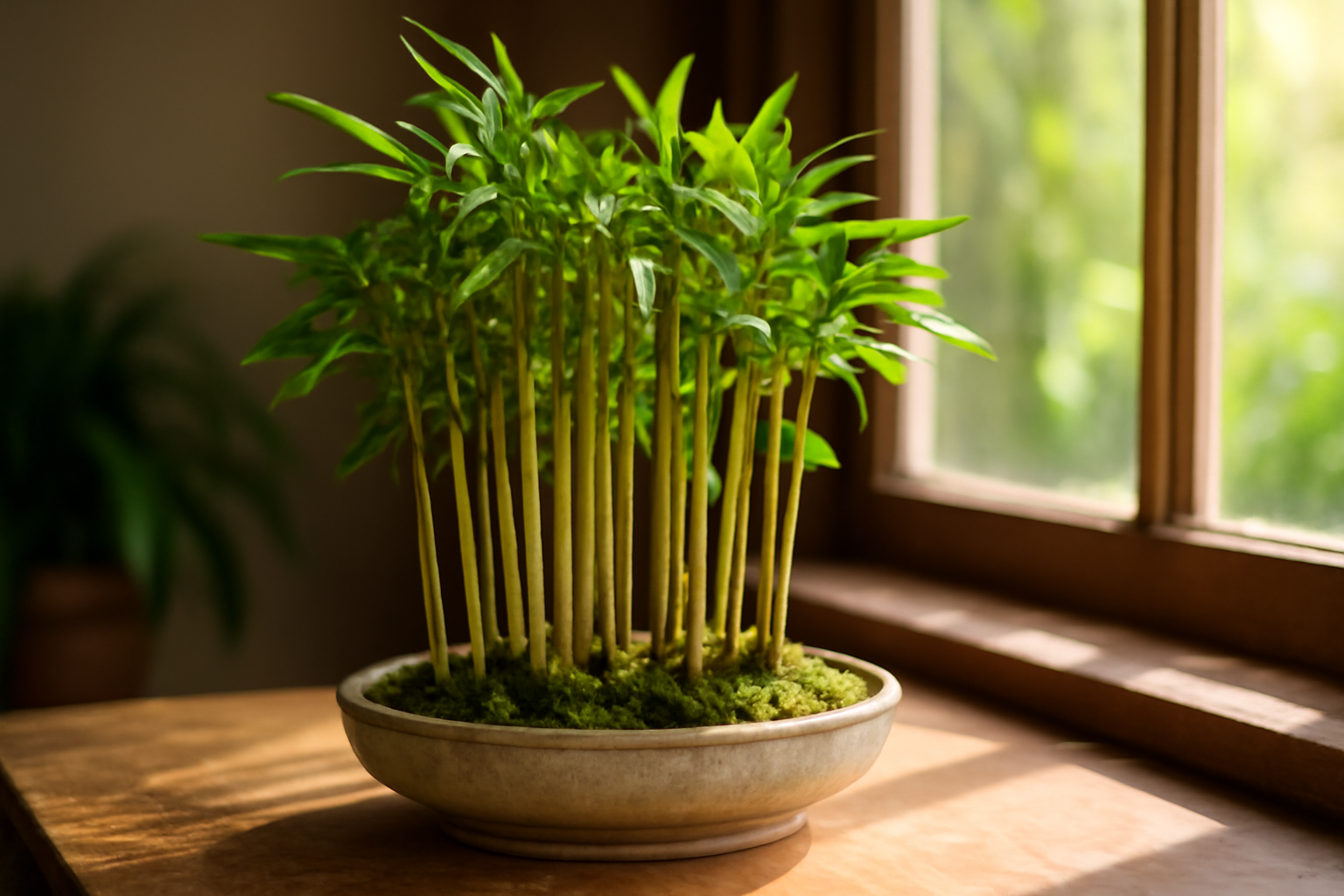
The five cuttings arrived bare-root and needed immediate potting. I used a shallow ceramic tray with drainage holes and a 60/40 mix of perlite and peat moss—standard bonsai soil. Each cutting took about five minutes to position and backfill; the whole setup ran 45 minutes including watering in. No special tools needed beyond a small spoon. The tray fit easily on a north-facing windowsill. The fiddly part was spacing them evenly without crowding; I had to resist the urge to pack them closer for a denser look.
How It Has Held Up
By week three, two cuttings showed new leaf buds; the other three took another month. Over six months I watched them develop distinct growth patterns—one became leggy, two stayed compact, two grew sideways. I watered every 3–4 days, letting the soil dry slightly between waterings. The real change came around month four when I realized the shallow tray was limiting root depth; I noticed slower growth and had to increase watering frequency. No pests appeared, but one cutting developed a soft spot at the soil line around month five—likely overwatering during a humid spell.
Where It Falls Short
- Shallow tray design restricts root development after month three or four; trees plateau unless repotted into deeper containers, defeating the ‘forest’ aesthetic.
- Bare-root cuttings have high initial failure risk—I lost one outright, and two never developed robust root systems despite proper care.
- Willow’s aggressive growth habit makes it difficult to maintain true bonsai proportions; constant pruning required or they become gangly shrubs, not miniature trees.
- No care guide included; beginners will struggle with watering frequency and humidity levels specific to willow versus typical bonsai species.
- Better alternative: buy established bonsai specimens from a nursery with visible root systems, or start from seed with species bred for miniaturization like ficus or juniper.
Would I Buy It Again
I’d buy it again only for the learning experience, not as a finished product. It works as a propagation experiment, not a display piece. If you have bamboo or willow experience and enjoy troubleshooting, it’s worthwhile. For someone wanting an instant tabletop forest, buy pre-trained bonsai instead—you’ll spend less time rescuing dying cuttings and more time actually enjoying the plants.
About This Article

Written by Marcus Chen. Marcus Chen has spent 15 years cultivating and studying bamboo across 14 different species, combining commercial growing operations with extensive hands-on experience in species selection and containment. As both a grower and consultant, he specializes in practical bamboo management, helping homeowners and landscapers understand the real-world requirements for responsible bamboo cultivation. Marcus brings tested knowledge of which species thrive reliably and which present containment challenges that go beyond standard recommendations. More about this site.
Verify this against a primary source
Specifics change, and your situation may differ from the one described here. These are the authorities worth checking directly:
- American Bamboo Society — species listings and cultivation guidance
- USDA PLANTS Database — species range and identification
- USDA Plant Hardiness Zone Map — cold hardiness verification for your location