Most growth rate charts lump every Bambusa multiplex cultivar together, but Malay Dwarf (Bambusa multiplex ‘Riviereorum’) behaves nothing like its 20-foot hedge bamboo cousins. I planted a row of it along a shaded walkway expecting the same aggressive fill-in speed I got from regular hedge bamboo, and it took me a full season of watching almost nothing happen to understand this cultivar plays by different rules entirely — finer culms, a genuine dwarf ceiling, and a growth curve that rewards patience over year one. The malay dwarf bamboo growth rate is genuinely slow and steady, and understanding what to expect will save you months of second-guessing whether you’ve made a terrible mistake.
I want to share exactly what I learned from that first season, because the real growth story of Malay Dwarf unfolds over time in ways that most nursery tags and generic bamboo guides completely miss. This isn’t a bamboo that will fill a gap in your landscape in one explosive growing season. But that’s actually its strength, especially if you’re working with smaller spaces, containers, or shade.
The Year One Reality: Slower Than You’d Expect
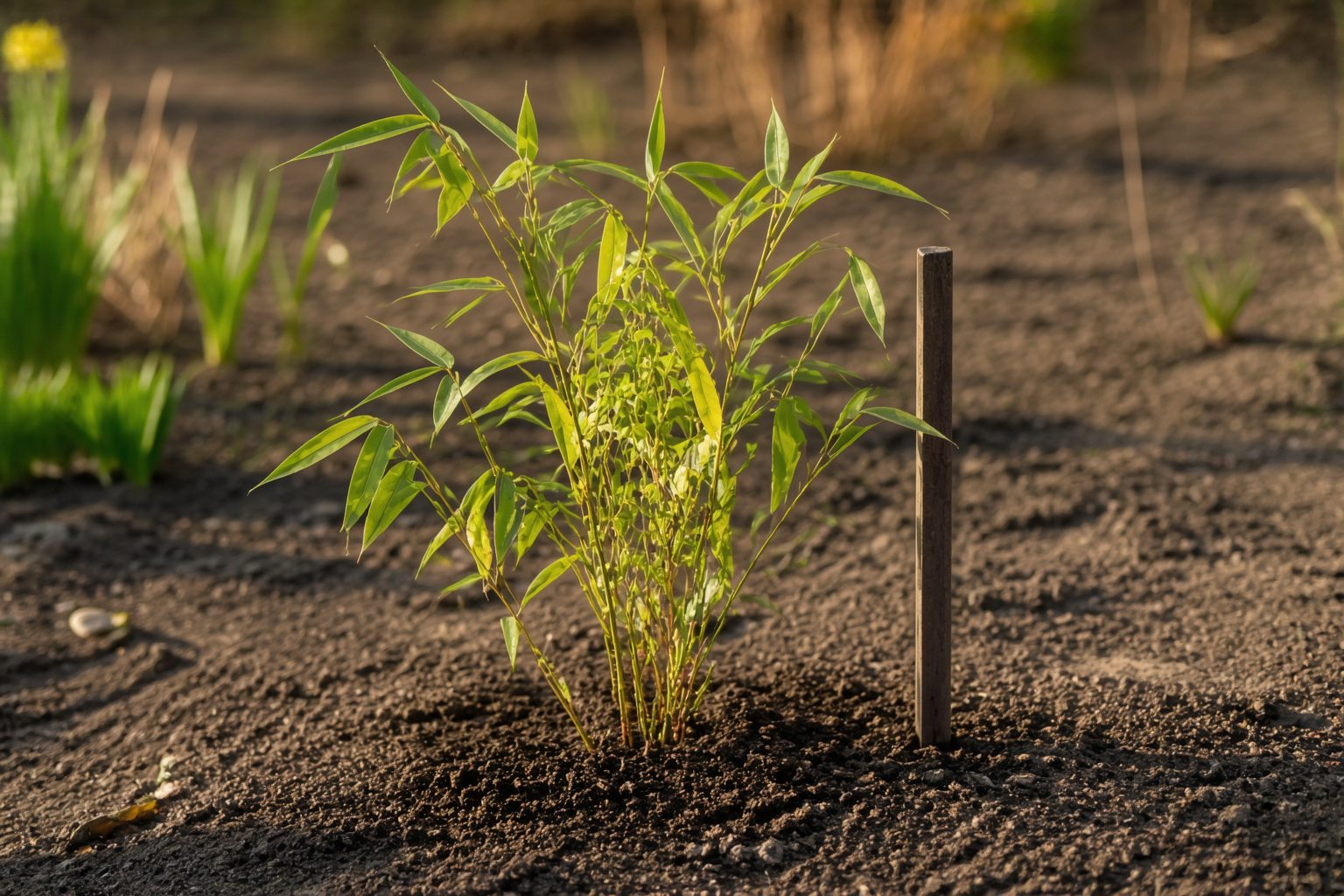
Here’s the honest truth: during the first full year after planting, Malay Dwarf bamboo growth rate is almost disappointingly modest. I purchased five well-established culms from a local nursery in spring — they were already 4 to 5 feet tall in their pots — and planted them in June. I expected them to take off immediately the way my Bambusa multiplex ‘Golden Goddess’ had done two years prior.
That didn’t happen. By late summer, I saw minimal new shoot emergence. The existing culms didn’t thicken dramatically, and there wasn’t the aggressive rhizome expansion I’d witnessed with other running bamboos. By October, I was actively wondering if I’d planted them too late in the season or damaged the rhizomes somehow.
What I’ve since learned is that this is completely normal. Malay Dwarf is naturally slow to establish in its first year. The plants are investing energy in root development and rhizome stabilization underground rather than visible shoot production above. This is especially pronounced if you plant in mid-to-late summer or if your plants land in significant shade, which mine did.
The takeaway: if you plant Malay Dwarf expecting the same breakneck speed as hedge bamboo or other aggressive Bambusa varieties, you’ll be disappointed. Patience is not optional here — it’s built into the species’ DNA.
What “Dwarf” Actually Means for Growth Potential
Here’s where the nomenclature gets important. Malay Dwarf isn’t just a slow-growing regular bamboo — it’s actually a genetic dwarf, meaning it has a real, definable ceiling for mature height and culm diameter. That changes everything about how you plan for its growth.
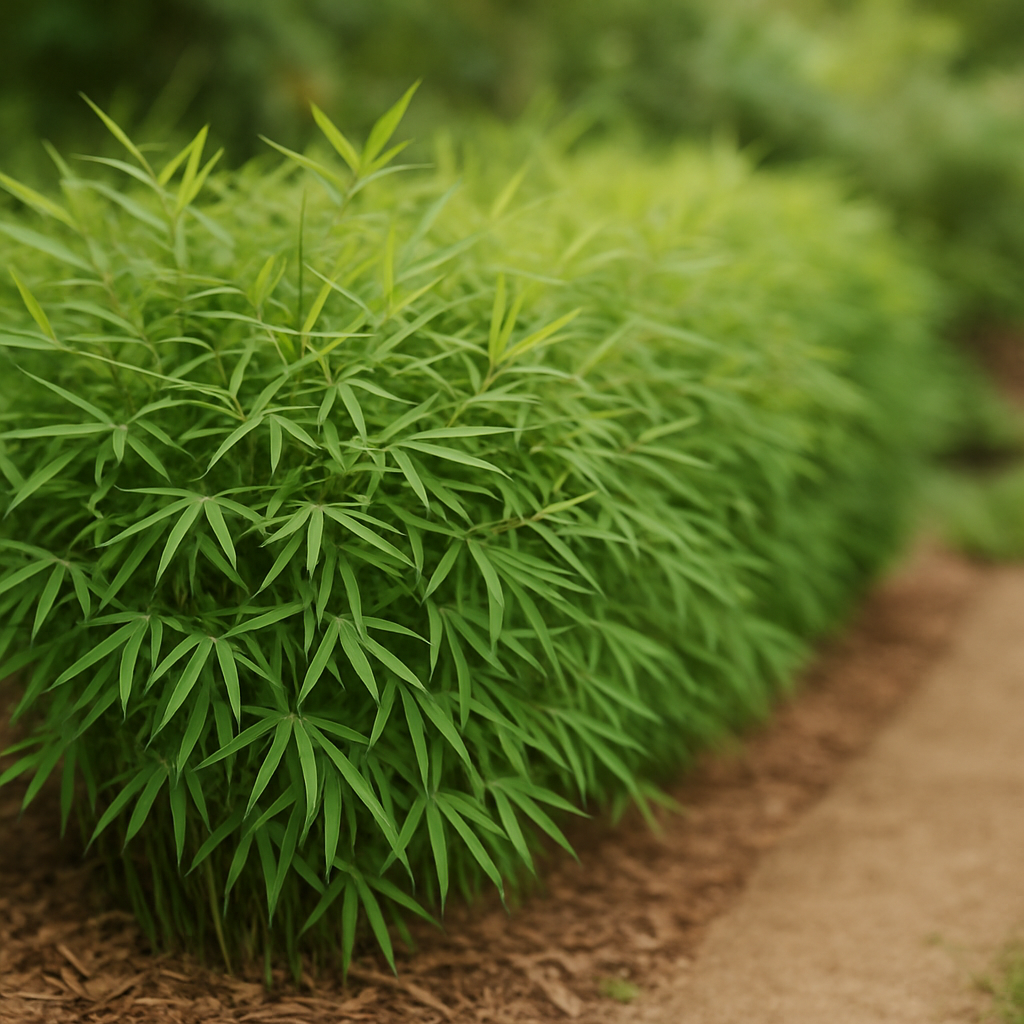
A mature Malay Dwarf bamboo will max out somewhere between 8 and 12 feet tall, depending on growing conditions, soil, and sunlight. The culms are fine and delicate — typically 0.5 to 0.75 inches in diameter at the base — which gives the plant an airy, refined aesthetic that heavier-culmed bamboos simply can’t match. Those finer culms also mean each plant occupies less visual space, making it ideal for tight corridors or small courtyards where a visual “wall” of bamboo would be overwhelming.
This architectural restraint comes at a cost: because each individual culm is thinner and the plant won’t grow as tall, it takes more culms and more time to achieve the same density of screening that you’d get from a larger cultivar. My five-plant row took nearly two full growing seasons to reach what I’d consider useful visual privacy — roughly 6 to 8 feet tall with enough branching to obscure the walkway behind it.
If density and vertical screening are your primary goals, and you’re working on a tight timeline (like preparing for summer), Malay Dwarf might not be your best choice. But if you want a refined, elegant bamboo that won’t take over your space and won’t require aggressive pruning to control, it’s nearly perfect.
The Growth Pattern: When Shoots Emerge and How to Support Them
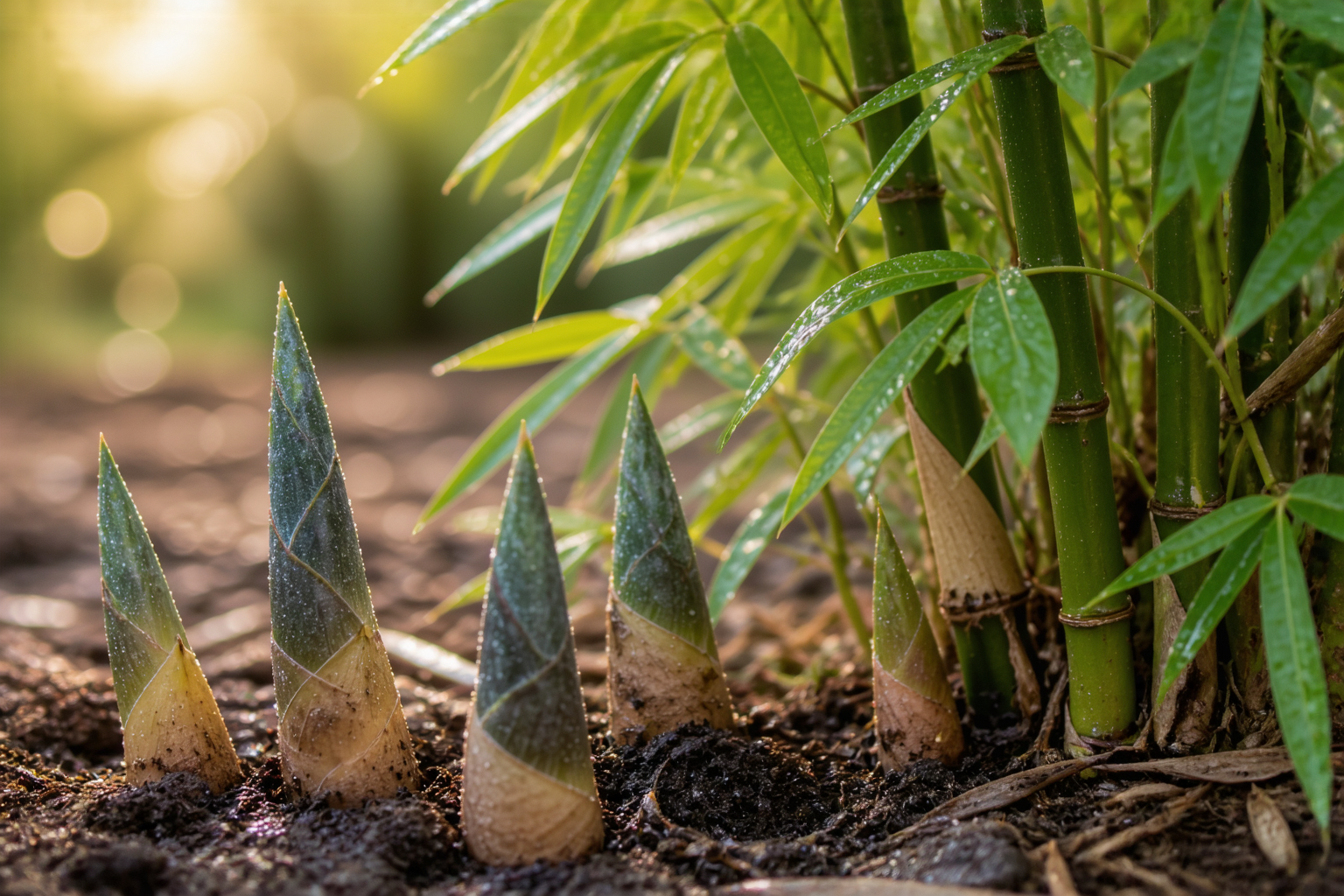
Once your Malay Dwarf clump gets past that cautious first year, the growth pattern becomes more predictable. In my experience, the main push of new shoots emerges in late spring through early summer — typically May and June in my Pacific Northwest garden. This is when you’ll see the most dramatic visible growth.
The shoots themselves are thinner than those of larger bamboos, which means they’re easier to manage but also more vulnerable during emergence. In my second year with my row, I learned this the hard way by brushing against emerging shoots and accidentally snapping one — a mistake that set that particular culm back several weeks.
Here are the concrete steps I now follow to support healthy growth:
- Water consistently during shoot emergence (May through July). Malay Dwarf needs steady moisture to push new culms effectively. In dry weather, I water deeply twice weekly during the peak growth window. Container-grown plants need even more frequent watering.
- Apply a balanced, nitrogen-rich fertilizer in early spring. I use a 10-10-10 formula in April, before the growth surge begins. This supports shoot vigor without encouraging excessive height.
- Protect new shoots from physical disturbance. Mark the area around your clump if it’s in a high-traffic zone. Even light brushing can weaken emerging culms.
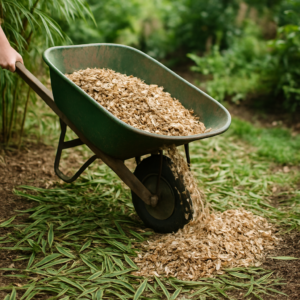
- Mulch heavily (4 to 6 inches) after growth slows in late summer. This moderates soil temperature and conserves moisture heading into the dormant season, which supports better rhizome health for the following year’s shoot production.
- Don’t prune the main culms during the first two years. Let them reach their mature height uninterrupted. Once established, you can selectively remove the oldest culms or thin the clump if needed.
Following these steps, you can expect height growth of 12 to 24 inches per year once the plant is established — so year two and beyond. In year one, expect far less dramatic visible progress. But by year three, you’ll have a well-structured clump producing multiple new culms annually.
Timing: Spring Planting Beats Mid-Season Installation
I planted my row in June and learned that this was suboptimal. If you want to maximize malay dwarf bamboo growth rate, plant in early spring — March or April in most temperate zones — when the soil is warming but the plants haven’t yet entered peak shoot-emergence mode.
Spring planting gives the rhizomes a full season of warm-season growth to expand and establish before winter dormancy. Plants installed in spring will show significantly more vigor by late summer than those planted mid-season. If you’re planting in containers for a patio or deck, this timing becomes even more critical.
That said, Malay Dwarf is more forgiving of late-season planting than many bamboos. My June-planted specimens eventually caught up and thrived; they just needed an extra 6 months of patience. If you’ve already missed the spring window, don’t despair — just commit to two full growing seasons before expecting visual privacy or mature density.
The Container Question: Growth Rate in Pots
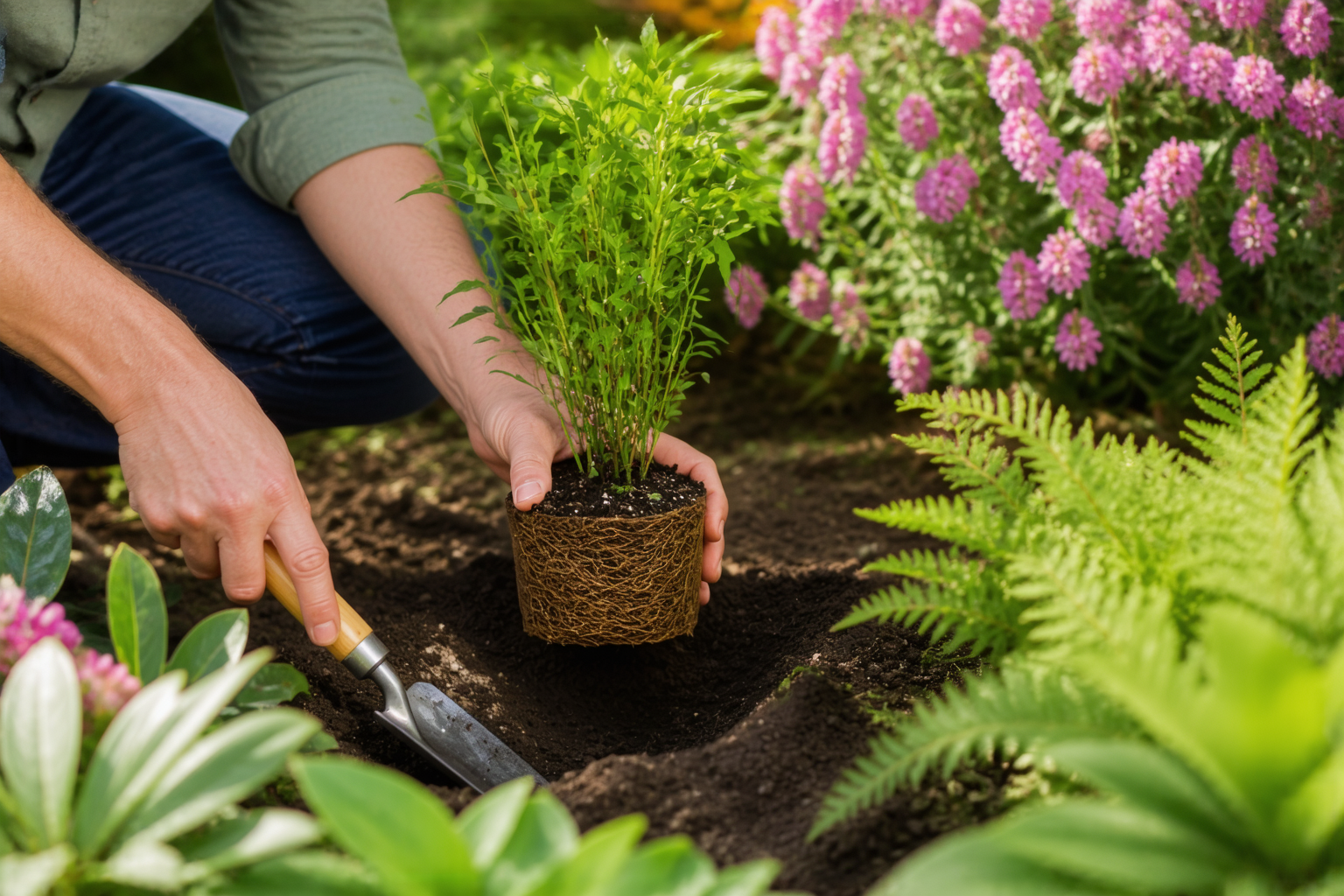
Malay Dwarf is one of the few bamboos I’d recommend for containers, specifically because of its dwarf growth ceiling and relatively modest spread. But container growing does slow the malay dwarf bamboo growth rate compared to in-ground planting.
A containerized Malay Dwarf will mature more slowly, produce fewer new shoots annually, and require more frequent watering and fertilizing than the same plant in ground. I have two specimens in 20-gallon containers on my front porch — they’ve been there for three years and are now about 6 feet tall with good density, but they’re definitely growing more slowly than the in-ground row along my walkway.
The trade-off is worth it if you need portability, want to feature the bamboo as a sculptural element, or are working in a rental space. Just understand that you’re choosing refined, slow growth over speed. The plants will eventually fill their containers and develop into shapely specimens — it just takes patience and consistent care.
Year Two and Beyond: When Growth Becomes Satisfying
The real payoff with Malay Dwarf arrives in year two and three of establishment. By my second full growing season, my five-plant row had filled out visibly. The clump was denser, culm count had doubled, and I was finally seeing the tight, refined screening I’d originally envisioned. Height had reached 7 to 8 feet, and branching was full enough to provide actual privacy.
Year three brought even better results. With proper maintenance — consistent watering, annual mulching, light fertilizing — the clump achieved mature form. New shoots emerged reliably each spring, and the overall structure became increasingly elegant without ever becoming unruly.
The key insight: if you can make it through that cautious first year without pulling out the plants in frustration, Malay Dwarf rewards you with years of predictable, manageable growth and genuine year-round visual appeal.
Understanding the malay dwarf bamboo growth rate — genuinely slow in year one, moderate and reliable by year two, then steady and stable thereafter — is the difference between seeing your planting as a success and feeling like you’ve wasted space on a dud. This cultivar isn’t trying to be a fast-growing privacy screen or an aggressive space-filler. It’s trying to be a sophisticated, refined landscape element that earns its place through beauty and restraint.
If you’re ready to plant with realistic expectations and genuine patience, Malay Dwarf will deliver exactly what it promises: a graceful, manageable, long-lived bamboo that improves year after year. Start with healthy nursery stock in early spring, give it consistent water and mulch, and trust the process. By year three, you’ll have a gorgeous established clump that requires minimal management and maximum admiration from everyone who sees it.
Your next step: Source a healthy Bambusa multiplex ‘Riviereorum’ specimen from a reputable bamboo nursery this spring, prepare your planting site with rich, well-draining soil, and commit to two full growing seasons before evaluating results. Your patience will absolutely pay off.
About This Article

Written by Marcus Chen. Marcus Chen has spent 15 years cultivating and studying bamboo across 14 different species, combining commercial growing operations with extensive hands-on experience in species selection and containment. As both a grower and consultant, he specializes in practical bamboo management, helping homeowners and landscapers understand the real-world requirements for responsible bamboo cultivation. Marcus brings tested knowledge of which species thrive reliably and which present containment challenges that go beyond standard recommendations. More about this site.
Verify this against a primary source
Specifics change, and your situation may differ from the one described here. These are the authorities worth checking directly:
- American Bamboo Society — species listings and cultivation guidance
- USDA PLANTS Database — species range and identification
- USDA Plant Hardiness Zone Map — cold hardiness verification for your location