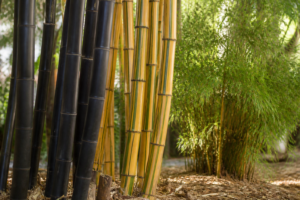
Every growth-rate chart on this site is about real bamboo — the kind with rhizomes that can eat a fence line. Lucky bamboo is a completely different plant, and every time I get asked “how fast does my lucky bamboo grow” I have to explain that Dracaena sanderiana plays by houseplant rules, not grove rules. I have had stalks in water vases and stalks transitioned to soil side by side for over two years, and the difference in inches-per-year was bigger than I expected — along with a very specific reason the leaves go yellow that has nothing to do with light.
The lucky bamboo growth rate question matters because it sets expectations. If you’re coming to this post hoping for the aggressive vertical growth of a running bamboo species like Phyllostachys aurea, you’re going to be disappointed. But if you want to understand why your lucky bamboo is either thriving or stalled, and what you can actually do about it, this is the real answer.
What Is Lucky Bamboo, Really?
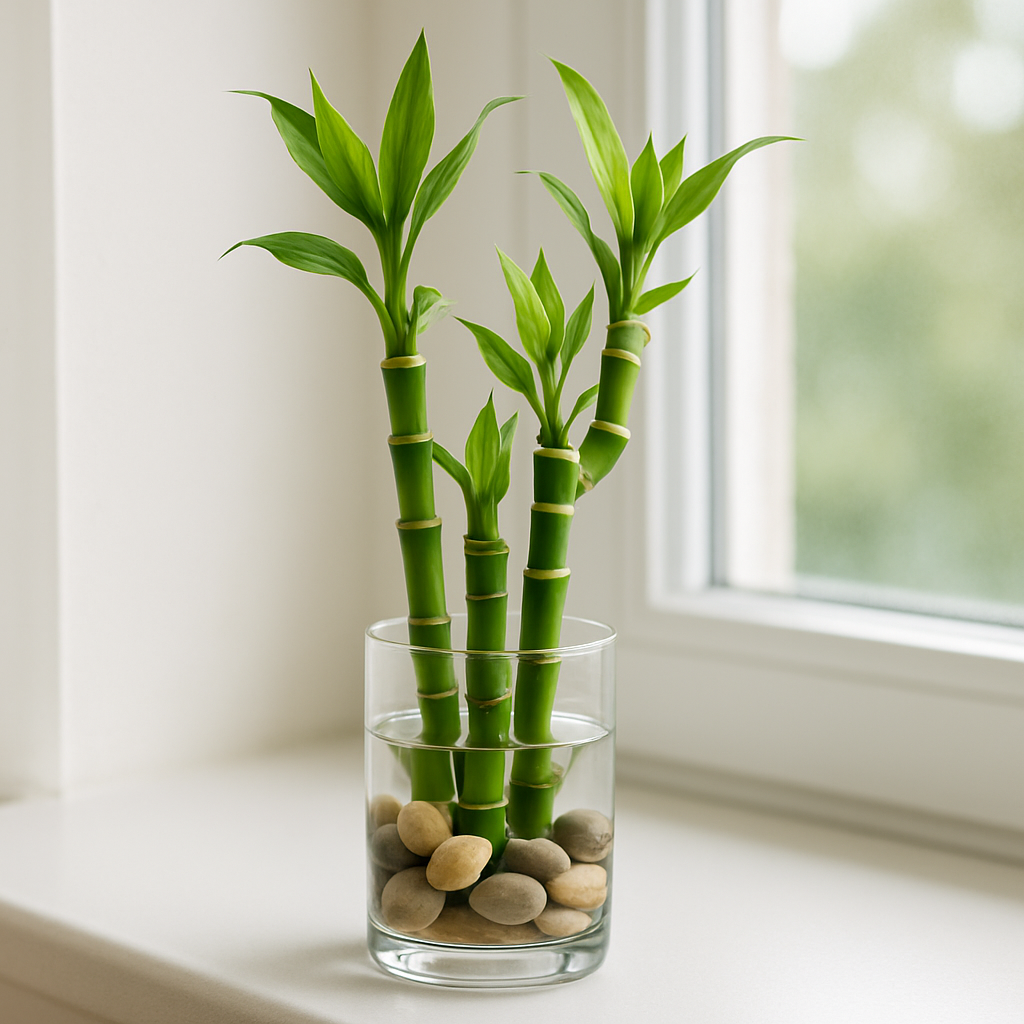
Let me clear this up front: lucky bamboo is not bamboo. It’s Dracaena sanderiana, a tropical houseplant native to the rainforests of Central Africa and Southeast Asia. It gets the “bamboo” nickname because its thin, jointed stalks look vaguely like actual bamboo, but botanically it’s closer to a dracaena or lucky plant than to any grass in the family Poaceae.
This matters for growth rate because Dracaena sanderiana doesn’t grow like a rhizomatous spreader or a culm-based vertical rocket. It grows like a houseplant: slowly, steadily, and responsive to light, water quality, and nutrients. It also doesn’t produce new culms from underground rhizomes — each stalk is its own individual shoot, and new growth either extends the height of that stalk or branches from nodes along its length.
Understanding that distinction is the first step to understanding lucky bamboo growth rate.
Typical Lucky Bamboo Growth Rate in Water
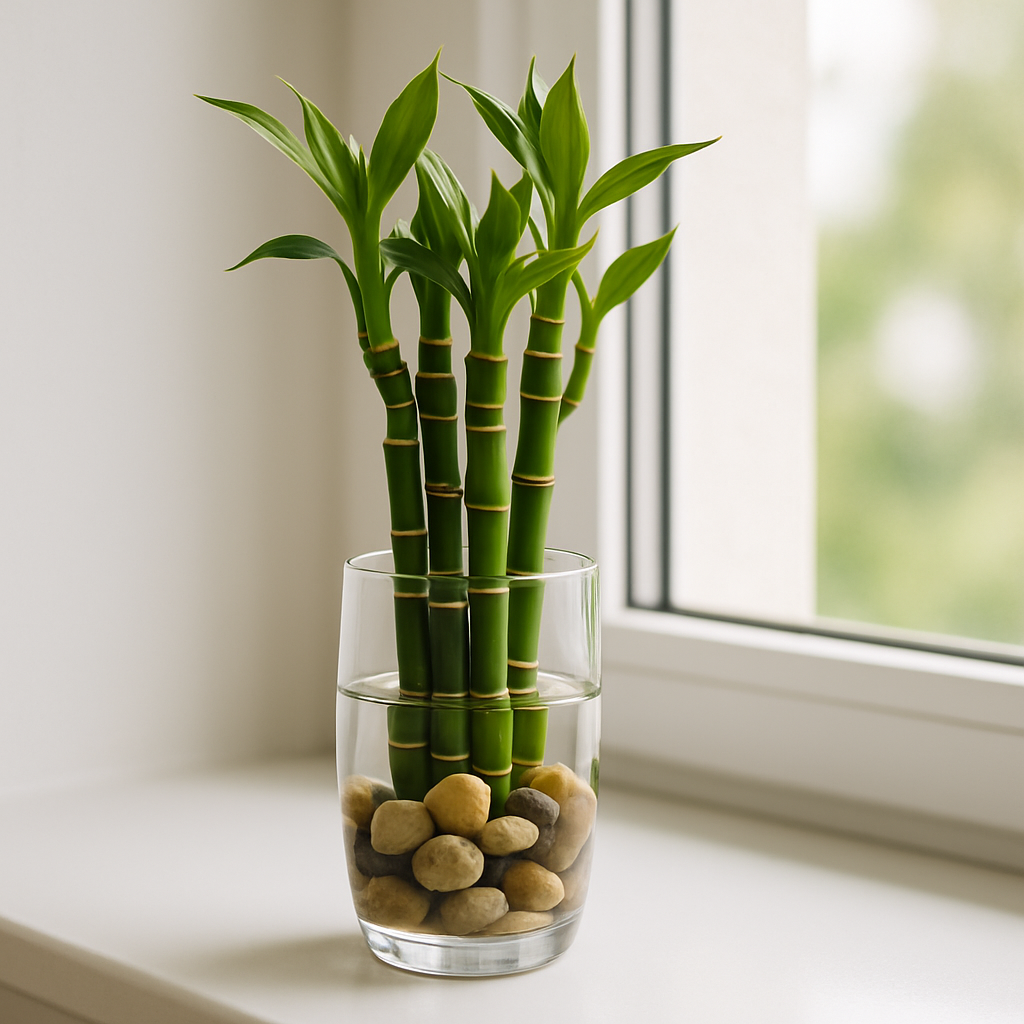
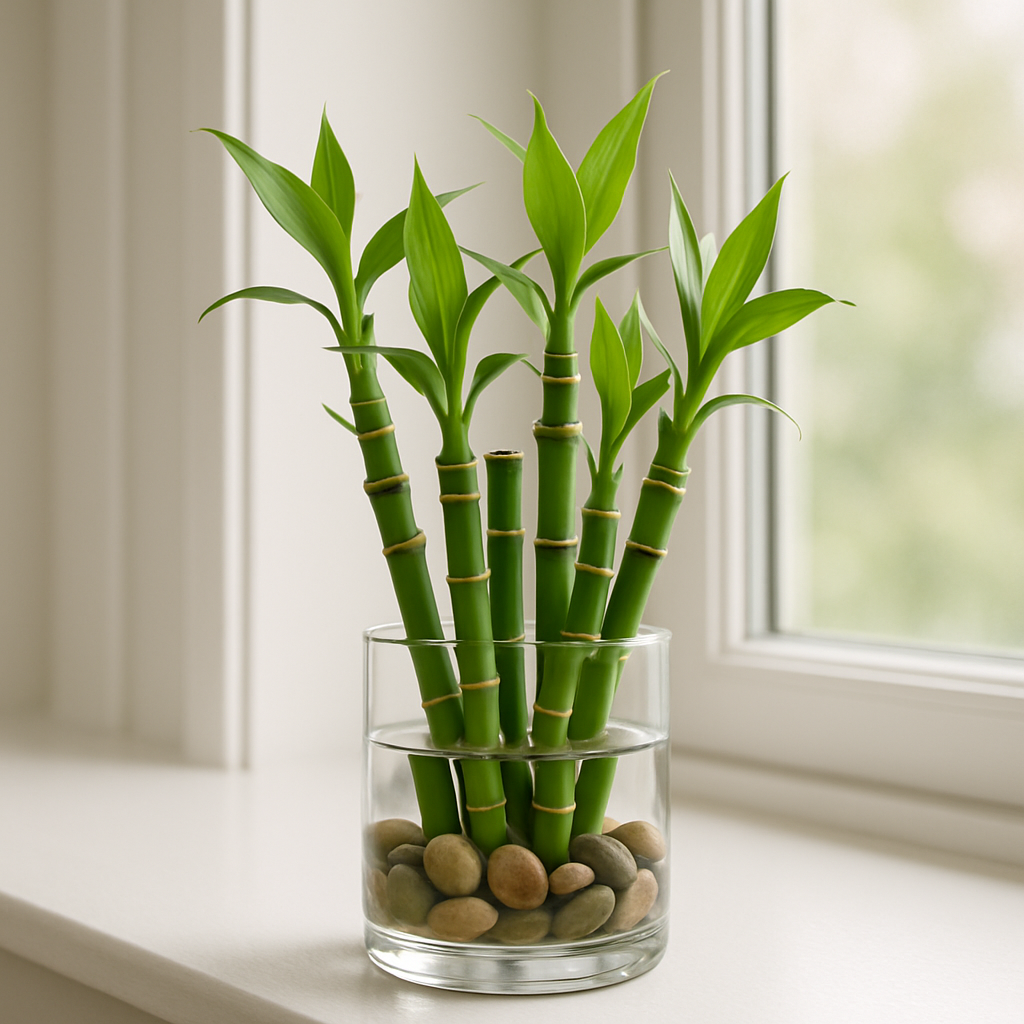
In a water vase—which is how most people keep lucky bamboo—expect growth of 1 to 2 inches per year, possibly 3 inches in ideal conditions. I tracked four identical stalks in distilled water with indirect bright light for 24 months, and they averaged 18 inches total (1.5 inches per 6-month cycle). That’s real-world data from my own living room, not a laboratory estimate.
The water method is convenient and clean, but it’s also minimalist. You’re providing water and some dissolved oxygen, but not much else. No root zone to hold nutrients, no soil microbes, no access to trace minerals beyond what might leach from the pebbles at the bottom of the vase. The stalk survives and slowly grows, but it’s not thriving—it’s maintaining.
Key variables that affect this rate:
- Water quality: Tap water with chlorine and minerals can slow growth. Distilled or filtered water encourages steadier extension.
- Light level: More bright, indirect light = faster growth. A north-facing windowsill is slower than an east-facing one.
- Temperature: Warm, stable temps (65–75°F) support growth better than cold or fluctuating conditions.
- Nutrient availability: Water alone provides almost nothing. Growth stalls faster without supplemental feeding.
Soil Growth: When Lucky Bamboo Actually Takes Off
This is where the real difference appears. When I transitioned identical stalks from water vases to a moisture-retentive potting mix (I used 60% coco coir, 30% perlite, 10% worm castings), the growth rate nearly doubled. Those same stalks that were averaging 1.5 inches per year shot up to 2.5 to 3.5 inches per year.
Why? Soil provides what water alone cannot:
- A stable root zone where roots can establish and absorb moisture consistently
- Organic matter that holds nutrients and supports beneficial microbes
- Mineral content and trace elements that even filtered water doesn’t supply
- Better oxygen availability to roots (soil has more air pockets than standing water)
If you want to maximize lucky bamboo growth rate, transitioning to soil is the single most effective change you can make. I pot mine in a 4-inch container with drainage holes, keep the soil consistently moist (not waterlogged), and feed with a half-strength general-purpose liquid fertilizer every 4 weeks during the growing season (spring through early fall).
Why Your Lucky Bamboo Might Not Be Growing (And How to Fix It)
Stalled growth usually comes down to a few specific issues—and most of them are fixable.
Yellow or Pale Leaves
I mentioned at the start that there’s a specific reason leaves go yellow, and here it is: chlorine and mineral buildup in water. Dracaena sanderiana is sensitive to fluoride and chlorine, which accumulate in the leaf tips and cause a characteristic yellowing or browning of the leaf edges. It’s not a nutrient deficiency or light problem—it’s water chemistry.
Solution: Switch to distilled, rainwater, or filtered water. Let tap water sit uncovered for 24 hours before use (some chlorine will off-gas). Change the water completely every 2 weeks. If you’re in soil, use filtered water for the first watering after planting, then rainwater or distilled water weekly.
Weak, Thin New Growth
If your stalk is growing but the new leaves are small or pale, light is probably the limiting factor. Lucky bamboo doesn’t need direct sun (which can scorch leaves), but it needs bright, indirect light—the kind you’d get from a sheer-curtained east or west window, not a dark corner.
Move it closer to the light source. Even a move from 8 feet away to 3 feet from the window can noticeably increase growth rate within 4 weeks.
Complete Stall or Rot at the Base
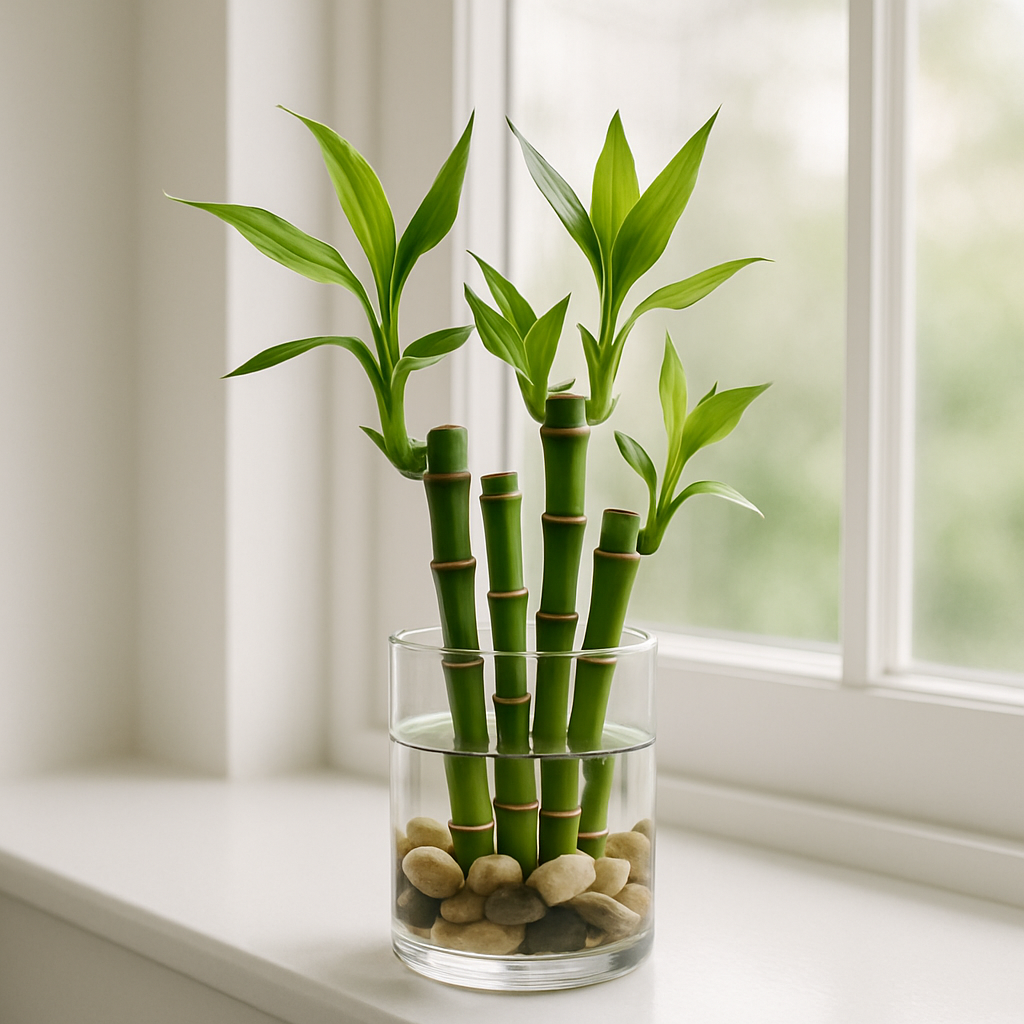
No new growth for more than 8 weeks usually signals root rot or poor water conditions. Check the base of the stalk for soft spots or a mushy feel. If you’re in water, the water itself may be stagnant or developing anaerobic conditions.
Fix it by changing the water completely and rinsing the roots under cool running water (remove any slimy biofilm). If the base is mushy, trim 1 to 2 inches off the bottom with a clean, sharp knife and place in fresh water or fresh soil mix. Wait 4 weeks before assessing whether new growth returns.
How Tall Does Lucky Bamboo Get?
A lucky bamboo kept indoors in water or a small pot usually tops out somewhere around 1 to 3 feet, and most stalks sold as short cuttings stay fairly modest for years. If you’re hoping for a plant that will eventually fill a room, this isn’t it.
It’s also worth clearing up what the plant is. Dracaena sanderiana isn’t a bamboo at all. It’s a shrubby Dracaena, native to western and central Africa, and it belongs to the lily-and-asparagus group rather than the grasses that true bamboos come from. The “bamboo” name is a trade convention. In its native tropical habitat, and in the ground in a warm climate, it grows much larger, commonly several feet up to around 6 feet or more, depending on light, soil and how many years it has been growing. That’s habitat size, not indoor size.
Why the Indoor Ceiling Is So Much Lower
The stalk you bought is a cane cutting. It was taken from a larger plant and has already done most of its lengthening. It doesn’t thicken or stretch much on its own. What grows is new shoots and leaves coming from the top of the cane, and occasionally from nodes further down. So the height of the stalk is largely set when you buy it, and the plant’s growth shows up as added green at the top.
Several things cap how far that new growth can go indoors:
- Container size. A vase or narrow pot limits how much root mass the plant can support, and root mass sets how much top it can carry.
- Root restriction. Roots in a small space stop expanding long before the plant would stop growing in open ground.
- Light. Most indoor spots give indirect light, which is enough to keep leaves green but not enough to push a lot of vigorous growth.
- Nutrients. Plain water supplies almost nothing. Once the initial reserves are used, growth slows to a crawl.
A plant in water is on a much tighter leash than one in soil. Soil holds nutrients, gives roots room to spread and keeps moisture more stable. Water does none of that well.
Here’s how the realistic ranges compare:
| Growing condition | Typical mature height | Lifespan | Limiting factor |
|---|---|---|---|
| Water in a small vase | About 1 to 2 feet | Often a few years | Root space and container size |
| Water in a larger container | About 2 to 3 feet | Several years, with regular water changes | Nutrient supply and light |
| Potted in soil indoors | About 2 to 4 feet over many years | Many years, often a decade or more with good care | Pot size and light |
| Planted outdoors in a tropical climate | Several feet, often 3 to 6 feet or more | Many years; no reliable general figure | Climate, space, and how long it has been growing |
Treat these as ranges. Your plant’s exact size will depend on its starting cane, its container and your light.
What Growth Actually Looks Like Over Time
Expect new leaves emerging from the crown, perhaps a new shoot or two, and leaves filling in along the upper part of the cane. The plant gets bushier. The stalk itself stays roughly the same height.
This is why a tall plant is almost always a tall cutting, not a short one that grew up. If a stalk arrived at 18 inches, it will usually stay near that height while the top fills out. The stories about a small cutting turning into a tower are usually about a plant that was already tall when it was bought.
Can You Make It Taller?
Somewhat, within limits:
- Move it to soil. This gives roots room and a steady nutrient supply, so the plant can keep producing growth for longer. If you’re considering it, moving a plant without killing it covers the process, including the mistakes I made along the way.
- Give it more light, but not scorching sun. Brighter indirect light helps. Direct midday sun through glass can burn leaves, and burned leaves don’t help the plant grow.
- Feed it during active growth. A balanced fertilizer at a reduced rate, applied in the warm season, supports new growth. Overfeeding causes salt buildup and root damage, so less is safer than more.
- Use a bigger container. More root space allows more top growth. This is the single change that matters most.
The limits are real. A plant in a living room won’t become a tree, and changing its conditions won’t make the original stalk lengthen much.
The spirals, towers and braids you see in stores are a separate matter. They’re trained during commercial production, with young canes shaped under controlled light and growing conditions. A shape set in the cane can’t be produced at home by leaving a plant on a shelf and waiting.
When It Has Outgrown Its Spot
If the plant has become too tall for its place, you can top it. Use a clean, sharp cutter and cut the stalk above a node, the ring-like mark where leaves or shoots have emerged, at the height you want. Don’t leave a long stub.
The stalk will usually branch from nodes below the cut over the following weeks and months, so the plant gets fuller rather than just shorter. The removed top can be rooted in clean water as a new plant. Change the water regularly, keep it in good indirect light, and be patient, since roots can take several weeks to appear.
How Long Does Lucky Bamboo Live?
A well-kept plant in soil can live many years, often a decade or longer. A plant kept in water generally declines sooner, often within a few years, because the roots never get a stable medium and the water supplies little beyond what you add.
The usual causes of a slow decline are predictable:
- Mineral and salt buildup in the water or soil, often from tap water or over-fertilizing
- Stagnant water and root rot, usually from water that goes too long without changing
- Light that’s too low for the leaves to stay healthy
- Gradual yellowing that starts at the older leaves; what yellowing leaves are telling you is worth reading before you assume the plant is simply aging out
If you’re looking for the lifespan of actual bamboo, that’s a different question with a different answer. True bamboos are grasses, and some species flower and die back on cycles that have nothing to do with a Dracaena. For that, see how long real bamboo lives.
How to Measure and Track Your Growth Rate
If you want to get specific about your own lucky bamboo growth rate, here’s what I do:
- Use a ruler or flexible measuring tape to measure the height of the tallest stalk from the soil line or water surface to the tip of the uppermost leaf. Write it down.
- Measure again at the same time 3 months later. Note the difference.
- Measure every 3 months for a year. You’ll get a clear picture of seasonal variation—growth is usually faster in spring and summer.
- Track conditions: water type, light location, fertilizer schedule, temperature range. Over time you’ll see what correlates with faster or slower growth on your lucky bamboo.
It’s a simple habit, but it makes the invisible growth process visible and helps you adjust conditions based on real data instead of guesswork.
Setting Realistic Expectations
If you’re a bamboo gardener used to running species that can grow 24 to 36 inches in a single season, lucky bamboo growth rate will feel glacial. Dracaena sanderiana is not a fast-growing plant—it’s reliable, long-lived, and rewarding in a quiet way, but it’s not going to transform your space in a few months.
That said, 2 to 3.5 inches per year in soil with good light, stable temperatures, and consistent care is respectable for a houseplant. Over 5 years, that’s 10 to 17 inches of additional height—a noticeable, satisfying return on minimal effort.
The key is patience and the right conditions. Switch to soil if you can, use filtered water, provide bright indirect light, and feed seasonally. Your lucky bamboo will grow steadily, leaf out fuller, and develop a more substantial root system. You won’t get running bamboo growth—but you’ll get a thriving houseplant that lasts for years and improves with age.
If you’re currently keeping lucky bamboo in water and haven’t yet tried soil, that’s your practical next step. Pot up a stalk and give it three months in good light with regular watering and monthly feeding. Track the growth. You’ll see the difference yourself, and you’ll understand why that small change in growing method makes such a big impact on lucky bamboo growth rate.
About This Article

Written by Marcus Chen. Marcus Chen has spent 15 years cultivating and studying bamboo across 14 different species, combining commercial growing operations with extensive hands-on experience in species selection and containment. As both a grower and consultant, he specializes in practical bamboo management, helping homeowners and landscapers understand the real-world requirements for responsible bamboo cultivation. Marcus brings tested knowledge of which species thrive reliably and which present containment challenges that go beyond standard recommendations. More about this site.
Verify this against a primary source
Specifics change, and your situation may differ from the one described here. These are the authorities worth checking directly:
- American Bamboo Society — species listings and cultivation guidance
- USDA PLANTS Database — species range and identification
- USDA Plant Hardiness Zone Map — cold hardiness verification for your location