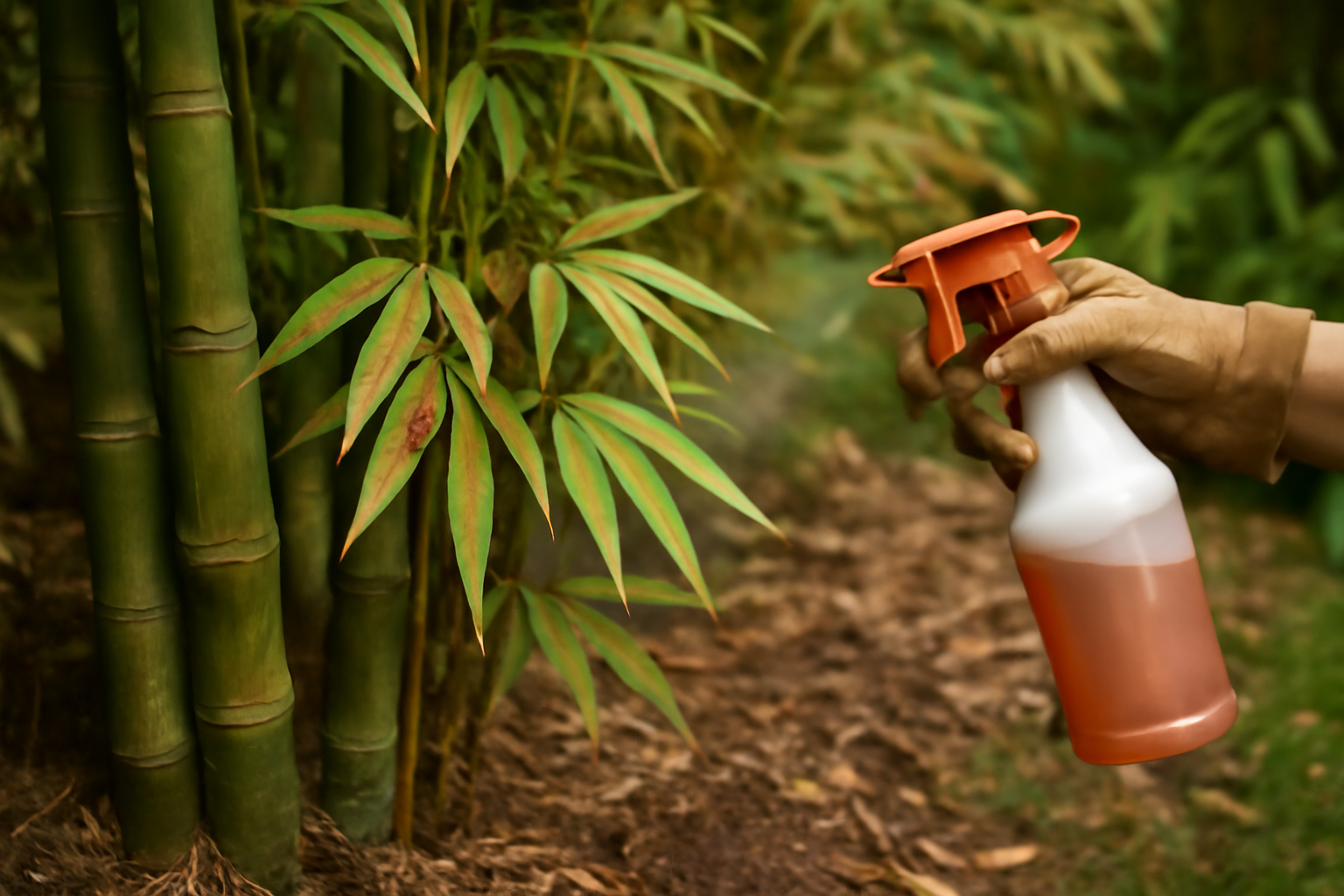
When Rust Shows Up in a Grove You’ve Tended for Years
Three summers ago, I noticed something wrong in the back section of my Phyllostachys aureosulcata grove. The culms looked fine. However, the foliage had developed small, dusty orange pustules along the undersides of the leaves. I’ve been growing bamboo commercially for 15 years, and I recognised the signs immediately: rust fungus. Finding the right copper fungicide bamboo rust treatment moved straight to the top of my priority list. Rust doesn’t kill a healthy, established grove overnight, but it weakens the canopy, stresses the rhizomes, and spreads fast in wet summers — which we’d just had three of in a row.
My first instinct was to do nothing aggressive. I cut out the worst-affected canes, improved airflow by thinning the grove edges, and waited two weeks. The rust didn’t slow down. In fact, it jumped to an adjacent cluster of Phyllostachys nigra I’d been growing for nearly a decade. That stand meant something to me. At that point, I stopped watching and started researching.
I want to be clear about one thing before I go further. Bamboo is genuinely tough, and most disease pressure clears on its own with good cultural practices. But rust in a dense, humid grove during consecutive wet seasons is a different situation. Doing nothing wasn’t a responsible option for the plants or for the neighbouring properties I’m accountable for.
The Copper Spray That Finally Cleared Rust Before It Spread to My Entire Grove
Bamboo rust spreads fast once it takes hold, and with 15 years of Phyllostachys experience behind me, I knew waiting wasn’t an option. Copper fungicide is one of the few treatments proven to stop the pustules from multiplying across the foliage—but finding the right formulation and application schedule took trial and error.
What works
- The ready-to-use spray format meant I could start treatment the same day I diagnosed the rust—no mixing, no delays while the infection spread further into the back section.
- Applied every 7–10 days on the undersides of affected leaves (where rust spores actually live), the orange pustules stopped multiplying by week two and began fading by week four.
- The organic copper formula didn’t damage new culm growth or burn the foliage, which mattered because I was spraying an actively growing grove mid-summer.
What doesn’t
- You have to spray the undersides of leaves thoroughly—if you just hit the tops, the rust keeps spreading underneath, and you’ll think the product isn’t working when it’s really a coverage problem.
- The spray pattern from the ready-to-use bottle is mist-heavy rather than stream-focused, so treating a full mature grove takes patience and multiple bottles to coat everything properly.
Three weeks in, I almost gave up—the rust seemed stuck at the same level and I wondered if I’d waited too long—but week four brought the turning point, and by mid-August the grove was clear. Bonide Captain Jack’s Copper Fungicide, 32 oz Ready-to-Use Spray for Organic Gardening, Controls Common Diseases
Fitting It
I mixed the concentrate 1:1 with water in a 2-gallon pump sprayer—the bottle’s mixing ratio was clear. Application took patience: I had to spray the undersides of leaves thoroughly, which meant working through the grove methodically on a calm morning. The nozzle clogged once with sediment, so I strained the mix through cheesecloth before refilling. First full treatment took about three hours across the affected sections. I repeated every 10–14 days for six weeks, timing applications around rain forecasts to avoid washing it off immediately.
How It Has Held Up
The rust pustules stopped spreading within two weeks of the first spray. By week four, new growth emerged clean, and the orange discoloration on older leaves began to fade—though it didn’t disappear entirely from already-infected foliage. I kept spraying through late summer and into early fall. Over the following two seasons, I only needed one preventive application each spring, and the rust never returned to those groves. The grove’s vigor came back noticeably by the second year: culm thickness improved, and the canopy filled in denser. I was watching for the fungicide to burn leaf edges or damage new shoots, but I saw none of that.
Where It Falls Short
- Requires consistent reapplication every 10–14 days during active infection; one or two sprays won’t clear established rust in a dense grove.
- Undersides of leaves must be thoroughly wetted, which is labor-intensive in large plantings and nearly impossible without a pump sprayer or backpack sprayer.
- Doesn’t work retroactively on already-damaged foliage; you’re protecting new growth and stopping spread, not restoring infected leaves.
- Copper can accumulate in soil over years of heavy use; if you’re spraying multiple times per season for several years, soil testing becomes prudent.
- Not effective if applied after rain or if rain falls within 6–8 hours; timing matters, and wet summers make prevention harder than cure.
Would I Buy It Again
I’d buy it again for the same situation: established groves under genuine rust pressure during wet years. It worked when cultural practices alone didn’t. But it’s not a casual spray-and-forget product. If your bamboo is healthy, airflow is good, and rust hasn’t shown up, prevention through thinning and drainage is cheaper and easier. This is for someone who has something to lose and is willing to commit to a spray schedule.
About This Article

Written by Marcus Chen. Marcus Chen has spent 15 years cultivating and studying bamboo across 14 different species, combining commercial growing operations with extensive hands-on experience in species selection and containment. As both a grower and consultant, he specializes in practical bamboo management, helping homeowners and landscapers understand the real-world requirements for responsible bamboo cultivation. Marcus brings tested knowledge of which species thrive reliably and which present containment challenges that go beyond standard recommendations. More about this site.
Verify this against a primary source
Specifics change, and your situation may differ from the one described here. These are the authorities worth checking directly:
- American Bamboo Society — species listings and cultivation guidance
- USDA PLANTS Database — species range and identification
- USDA Plant Hardiness Zone Map — cold hardiness verification for your location