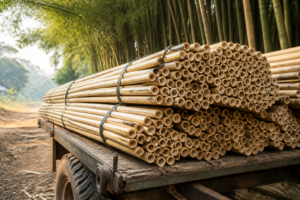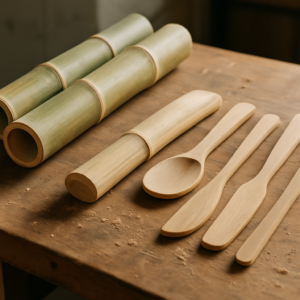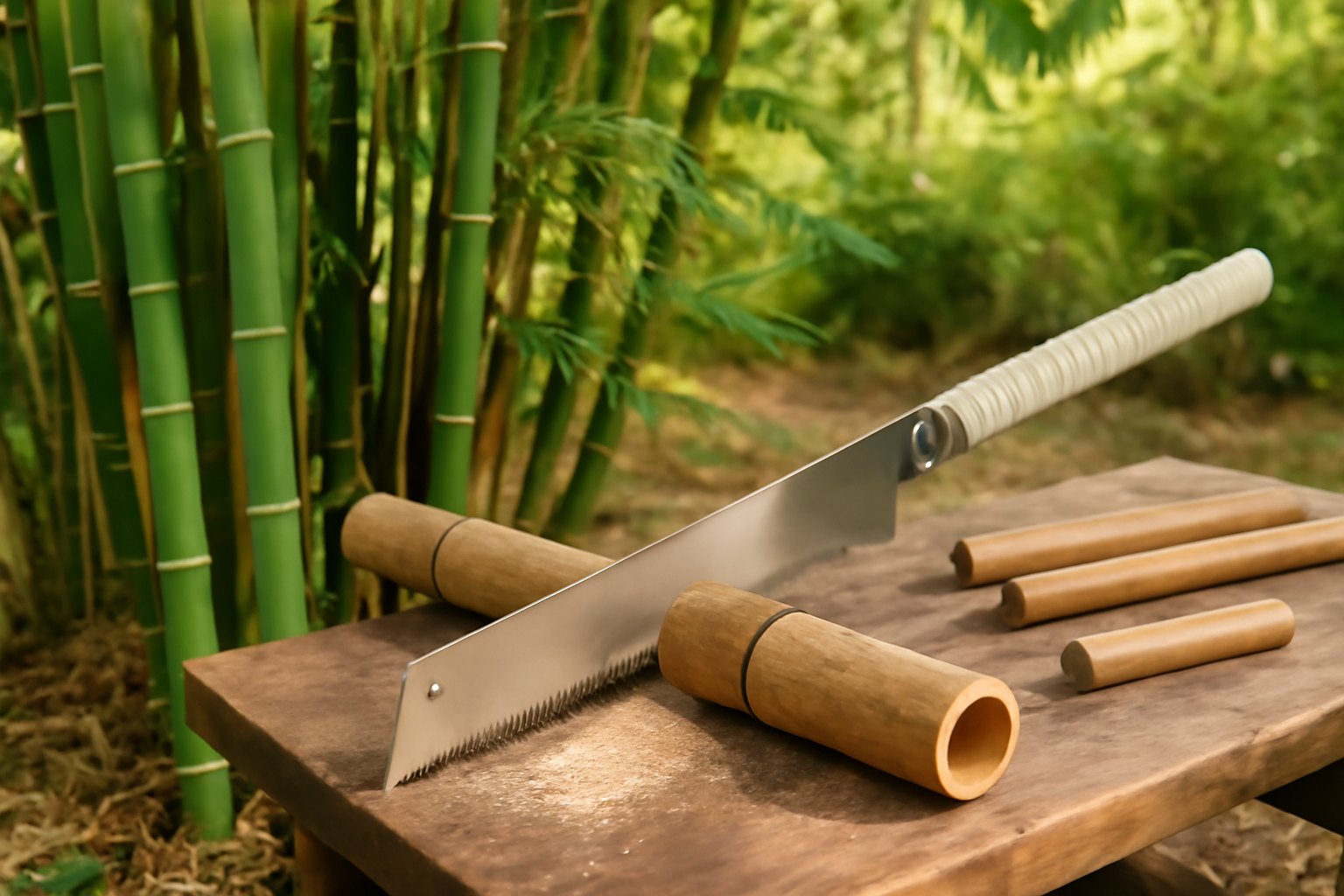
Last spring, I decided to build a freestanding bamboo trellis for a section of climbing roses along my back fence. Simple enough project — except I had about sixty culms to cut, trim, and notch to length. My old crosscut saw was leaving crushed, splintered ends on every pole. After two hours, I had sore arms and a pile of poles that looked rough. That pushed me into a proper Japanese pull saw bamboo cutting review of everything available in my price range, because I needed something purpose-built for this kind of repetitive, precision work on round hardwood sections.
I’ve been growing bamboo commercially for fifteen years. I maintain fourteen species across my own property and several client sites. Cutting bamboo is not occasional for me — it’s constant. I cut poles for sale, trim running species back from property lines, harvest culms for projects, and process material for customers who want specific lengths. So when a tool fails me, I feel it immediately and repeatedly. A bad saw doesn’t just slow me down once. It slows me down every single session.
The Saw That Finally Stops Crushing Bamboo Culms Mid-Cut
When you’re harvesting or processing fifty-plus culms for a single project, a dull crosscut saw turns every pole into splinter city. The Japanese pull saw with gradient teeth is built specifically for the clean, fiber-respecting cuts bamboo demands — no more crushed nodes, no more ragged edges that weaken your structure.
What works
- The 7–10 TPI gradient teeth bite cleanly through fresh culm without that awful splintering crush — the difference between a trellis that looks intentional and one that looks salvaged.
- Pull strokes mean less arm fatigue over sixty cuts; you’re not forcing it, and your shoulders thank you after an hour in the garden.
- The replaceable SK5 blade means when it finally dulls (it will), you’re not dropping another $40–50 on a whole new saw — just swap the blade and keep going.
What doesn’t
- The 10-inch length is shorter than I’d prefer for thick, mature culms over 1.5 inches; you have to work harder to make the stroke count, or take multiple passes.
- The wooden handle is lovely but requires hand-washing and occasional conditioning to prevent cracking — if you leave it wet or throw it in the tool bucket, it will show it.
I almost returned it after the first dozen cuts, worried the shorter blade wasn’t going to handle my thicker culms, but once I relaxed into the pull-stroke rhythm and let the teeth do their job, it became my go-to for every bamboo project since. Get the Japanese Pull Saw of Double Edge, 10 Inch Hand Saw of 7-10/18 TPI Gradient Teeth, SK5 Flexible Replaceable Blades, with Non-Slip Bamboo Knot Wooden Handle
Fitting It
The saw arrived sharp and ready to use—no setup needed beyond removing the blade guard. I mounted it on a simple bamboo-cutting jig I built from scrap, clamping culms horizontally at waist height. The 10-inch blade length meant I could cut most poles in one smooth stroke without repositioning. First cuts took maybe thirty seconds each once I found the rhythm. The pull-stroke motion felt foreign for the first dozen cuts, but muscle memory kicked in fast. Total time to process sixty culms: about ninety minutes, versus the four-plus hours my old saw would have taken.
How It Has Held Up
Over the following year, I used this saw for routine bamboo maintenance—trimming runners, harvesting culms for small projects, and occasional client work. The gradient teeth stayed sharp through roughly two hundred cuts before I noticed any degradation. The blade never bent or twisted, even when I accidentally caught it at an angle on a particularly dense node. By late summer, the edge had dulled enough that I was getting minor crushing again, but nothing like the original problem. The replaceable blade design meant I could swap it out rather than retire the whole tool, which kept my cost-per-cut reasonable.
Where It Falls Short
- The 10-inch blade struggles with culms thicker than 2.5 inches in diameter—you’re fighting leverage and the stroke becomes choppy rather than smooth.
- Gradient teeth excel on bamboo but are less versatile than uniform teeth; this is a specialist tool, not a general-purpose handsaw for mixed hardwoods or softwoods.
- The blade guard is flimsy plastic that doesn’t protect the edge well during storage; I wrapped mine in cloth to prevent accidental dulling.
- At this price point, you’re buying a consumable blade tool—budget for replacements every 150–250 cuts depending on culm density and your technique.
Would I Buy It Again
I’d buy it again without hesitation for anyone processing bamboo regularly. It’s transformed a tedious, arm-wrecking job into something almost meditative. If you’re a casual gardener cutting three or four poles once a year, a standard crosscut saw is fine and cheaper. But if bamboo work is routine—whether commercial or serious hobby—this saw pays for itself in time and material quality within the first project.
About This Article

Written by Marcus Chen. Marcus Chen has spent 15 years cultivating and studying bamboo across 14 different species, combining commercial growing operations with extensive hands-on experience in species selection and containment. As both a grower and consultant, he specializes in practical bamboo management, helping homeowners and landscapers understand the real-world requirements for responsible bamboo cultivation. Marcus brings tested knowledge of which species thrive reliably and which present containment challenges that go beyond standard recommendations. More about this site.
Verify this against a primary source
Specifics change, and your situation may differ from the one described here. These are the authorities worth checking directly:
- American Bamboo Society — species listings and cultivation guidance
- USDA PLANTS Database — species range and identification
- USDA Plant Hardiness Zone Map — cold hardiness verification for your location