The Steel Splitter That Stopped My Craft Strips from Shattering at the Node
Hand-splitting bamboo culms for weaving, furniture, or decorative work requires a tool that won’t blow out the node walls or wander off-line halfway through a strip. A dull machete or knife just isn’t built for this kind of precision work, and I wasted years fighting splits that fractured unpredictably. Before I discovered the right splitting tool, nearly half of my prepared strips were either too damaged to use or required so much downstream repair that the time savings disappeared entirely.
The difference between a failed split and a clean, usable one often comes down to the tool itself. I learned this the hard way after investing hundreds of hours in craft projects only to see them compromised by poor material prep.
Why Standard Tools Fail for Precision Bamboo Work
Most people start with whatever’s in the shed: a machete, a large kitchen knife, or a splitting wedge designed for wood. These tools have fundamental problems when applied to bamboo.
A machete is too flexible and too wide—it forces the split laterally rather than driving it straight down the grain, causing the strip to twist or the blade to wander. A standard wedge applies uneven pressure and tends to crush the node walls rather than cleanly separating them. Kitchen knives are sharp but too narrow and lack the stability to handle the impact of a proper mallet strike without deflecting.
What I needed was a tool engineered specifically for bamboo’s unique structure: something that respects the node, follows the grain reliably, and can take a forceful, intentional strike without slipping.
What Works
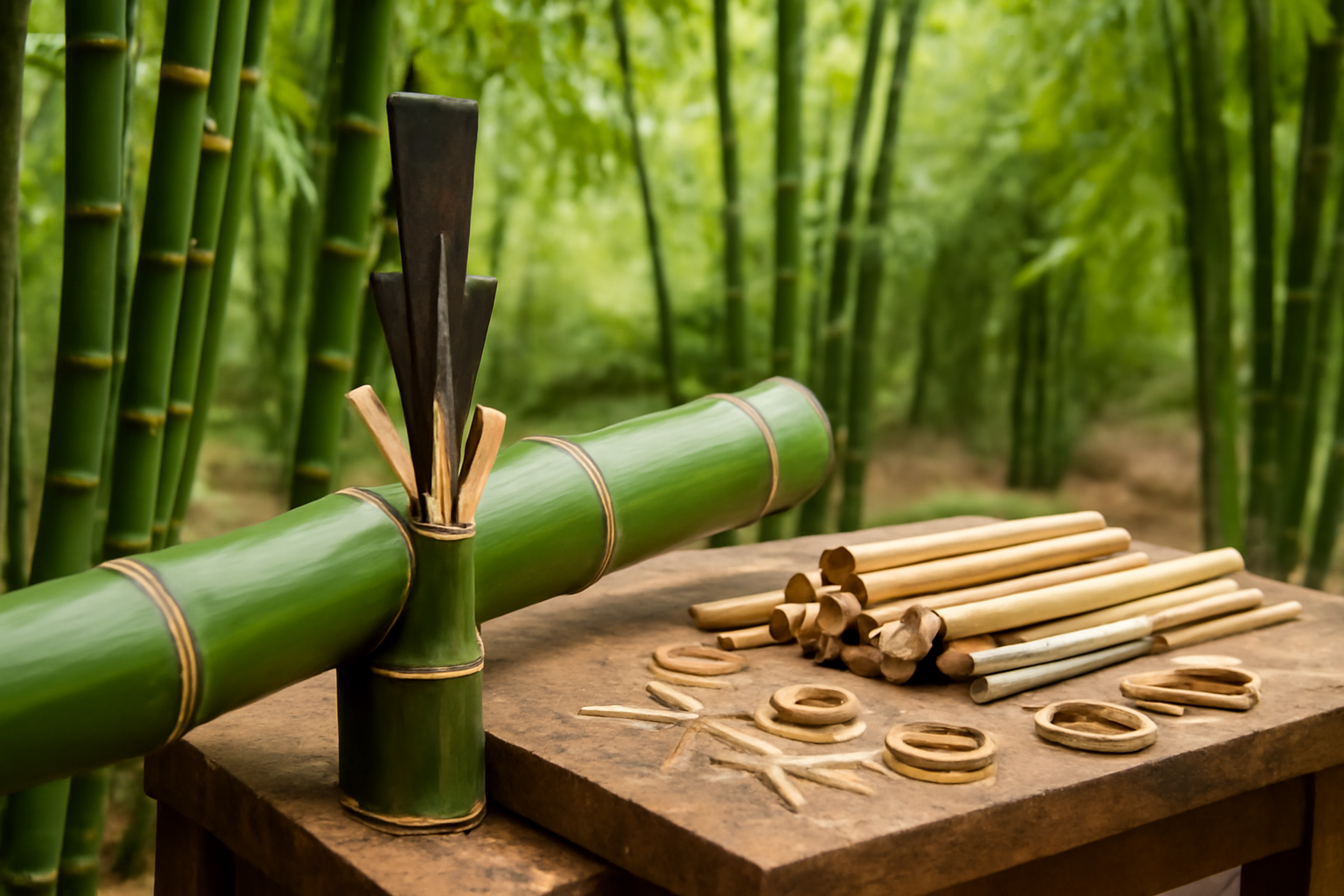
- The three-knife design splits consistently and stays true to the grain—no more wandering strips that twist sideways halfway down the culm.
- Node integrity stays intact; I’m not dealing with crushed or splintered wall sections that ruin the finished product downstream.
- Your hands stay nowhere near a sharp blade—the geometry of the tool keeps fingers well back from the cutting edges, which feels safer after too many close calls with a machete.
The Learning Curve: How to Actually Use It
I was skeptical the first time I used it—my initial strike glanced off and made me question whether I’d wasted money on yet another bamboo tool. But there’s a technique to this, and once I understood it, everything changed.
The key is preparation and commitment. You need to position the tool so the blades straddle the grain line you want to follow. Mark your split line lightly with a pencil if you’re working on a thicker culm. Place the tool firmly on the bamboo, making sure it’s seated squarely and not resting at an angle. Then—this is crucial—deliver one solid, confident mallet strike from directly above. Don’t tap it. Don’t test it. Swing with intention.
Timid, tentative strikes won’t drive the blades through; instead, the culm will resist and you’ll end up pounding the same spot repeatedly, crushing fibers and degrading the edge you’re trying to create. A single decisive blow, properly angled, does the work. I typically use a wooden mallet (around 2–3 pounds) to avoid damaging the tool’s striking surface.
What Doesn’t
- Requires decent prep work and a solid follow-through strike; if you tap it timidly, the culm won’t split cleanly and you’ll end up pounding the same spot repeatedly.
- The welded steel needs regular maintenance to prevent rust, especially if you’re storing it damp or in a high-humidity greenhouse environment like mine.
Rust prevention is straightforward but essential. After use, wipe the blades dry, and periodically coat them with a light machine oil or beeswax if you’re storing the tool for extended periods. If you live in a humid climate or keep your splitting area near misting systems, invest in a simple silica packet or two to toss in your tool storage box.
The Real Difference: Time and Material Yield
What made this tool worth the investment for me was the dramatic improvement in usable material yield and total prep time. Where I was previously wasting 40–50% of my culms due to failed or uneven splits, I now waste perhaps 10–15%. That translates directly to cost savings, faster project completion, and far less frustration.
For anyone serious about bamboo weaving, basketry, furniture building, or any craft that requires consistent, clean strips, this tool pays for itself in the first few projects.
Get the Bamboo Splitter, Bamboo Slicer, Manual Bamboo Splitting Tool (2–16 Cuts), welded from steel — specifically the 3-knife version.
About This Article

Written by Marcus Chen. Marcus Chen has spent 15 years cultivating and studying bamboo across 14 different species, combining commercial growing operations with extensive hands-on experience in species selection and containment. As both a grower and consultant, he specializes in practical bamboo management, helping homeowners and landscapers understand the real-world requirements for responsible bamboo cultivation. Marcus brings tested knowledge of which species thrive reliably and which present containment challenges that go beyond standard recommendations. More about this site.
Verify this against a primary source
Specifics change, and your situation may differ from the one described here. These are the authorities worth checking directly:
- American Bamboo Society — species listings and cultivation guidance
- USDA PLANTS Database — species range and identification
- USDA Plant Hardiness Zone Map — cold hardiness verification for your location