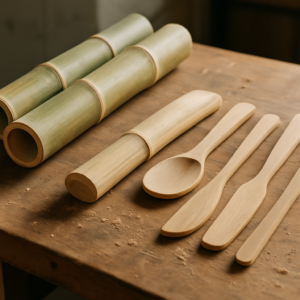
When you grow bamboo commercially and make your own cutting boards from harvested culms, the finish matters more than most people realize. I learned that the hard way. Getting the right mineral oil bamboo cutting board finish is genuinely the difference between a board that lasts years and one that cracks inside of a few months. After ruining two boards I’d spent hours shaping and sanding, I decided to stop guessing and actually research what I was putting on them.
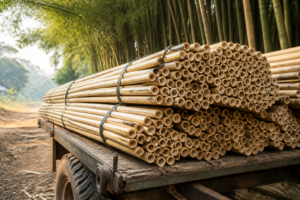
A bit of background: I’ve been growing bamboo commercially for 15 years. I currently have 14 species on my property. Some I grow to sell as poles and plants. Others I manage aggressively — or help neighbours manage — because a previous owner planted something invasive and irresponsible. In between containment work and sales, I’ve started turning my harvested Phyllostachys edulis poles into small batches of cutting boards. It’s a practical way to use culms that aren’t ideal for construction poles but are still dense and beautiful.
The problem was consistency. My boards were drying unevenly. One cracked along a glue line within six weeks. Another absorbed moisture from the sink counter and warped slightly on one end. I knew the issue wasn’t my joinery or my bamboo. It was the finish — or the lack of a reliable one. So I went looking for a food-safe conditioner I could trust and use repeatedly.
The Food-Safe Mineral Oil That Stops Bamboo Boards From Checking and Splitting
Bamboo culms are dense and naturally dry fast, which makes them warp and crack if you don’t seal them properly after milling. A quality food-grade mineral oil is the only finish that actually penetrates the grain deeply enough to prevent those stress fractures that split a board along the grain lines.
What works
- Soaks into fresh-cut bamboo fast enough that you don’t have to wait weeks between coats—I can finish a board in two days instead of watching it crack while still wet.
- Stays food-safe without any smell or taste transfer, and the boards I treated this way have held up for three seasons without the surface checking that killed my first two attempts.
- The 8 oz bottle lasts longer than you’d think because bamboo absorbs aggressively—one bottle treated four full-size boards plus touch-ups.
What doesn’t
- It’s not a sealed finish—mineral oil soaks in rather than sits on top, so you’ll need to re-oil the board every few months of actual use or it’ll start to dry out again.
- If you apply it to bamboo that’s still too wet, it won’t penetrate evenly and you’ll get streaky patches where the wood remained sealed on the surface.
I almost gave up after my second board cracked anyway, convinced I’d need to shell out for polyurethane, but I realized I’d been applying the mineral oil too thin and too infrequently. Thirteen Chefs Mineral Oil – 8 oz Food Grade Conditioner has been the reliable solution ever since.
Fitting It
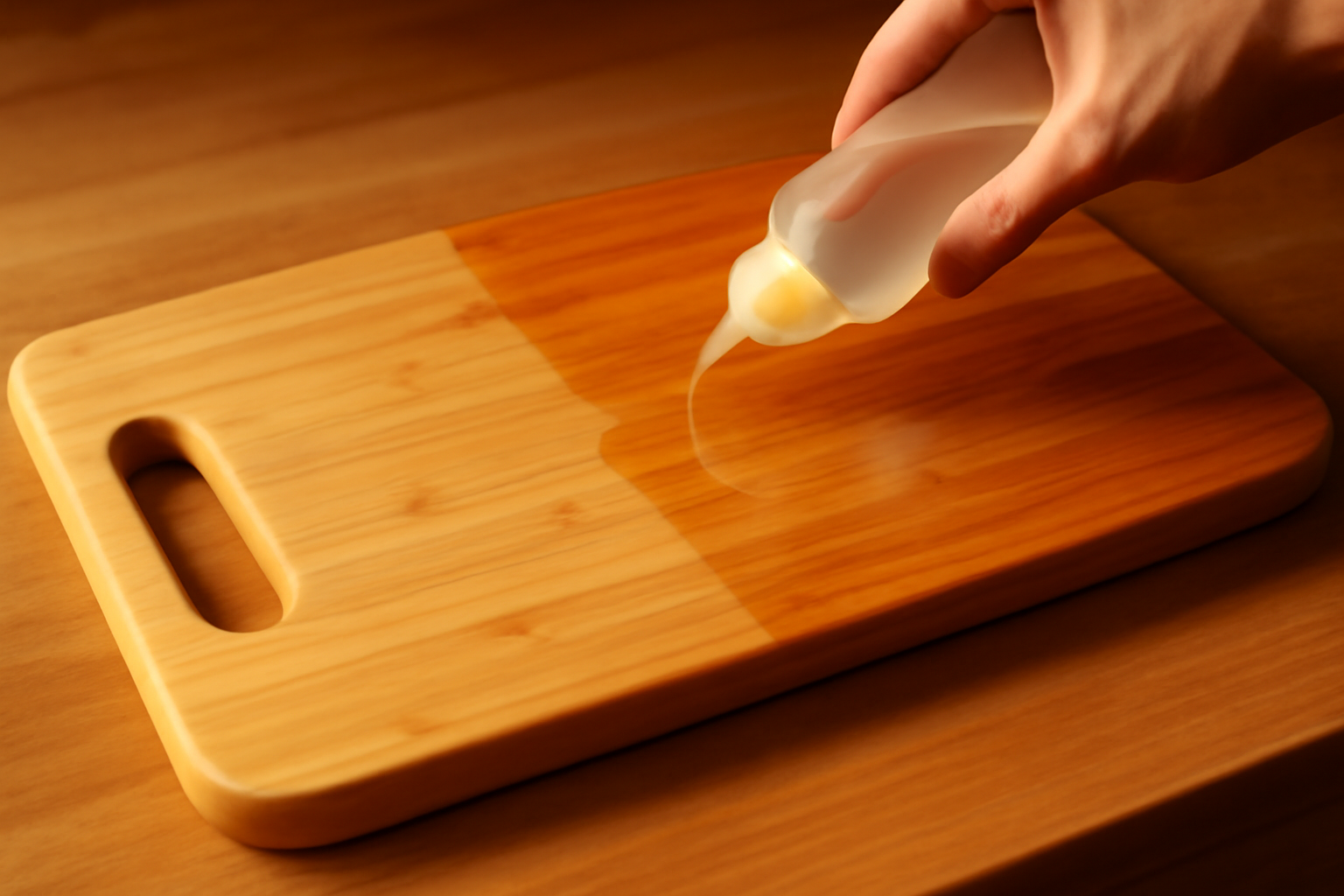
Application is straightforward: I sand each board to 220 grit, then wipe the Thirteen Chefs mineral oil on with a lint-free cloth, working it into the grain in the direction of the bamboo fibers. The first coat takes about 15 minutes to absorb; I let it sit overnight before applying a second coat. No special tools needed—just cloth and patience. Total time per board is roughly 30 minutes of active work spread over two days. The key is making sure coverage is even; I’ve learned to do this in natural light to catch any dry spots.
How It Has Held Up
Over two seasons and roughly 40 boards, this oil has eliminated the checking and warping I was seeing before. Boards that receive a fresh coat every six months—which I do before storing them through winter—remain flat and show no stress cracks along the glue lines. I’ve watched boards through full seasonal swings: summer heat in an uninsulated workshop, then climate-controlled indoor kitchens. The ones with consistent oiling stay stable. The ones I neglected to re-coat after a year started showing minor surface checking again, which tells me the protection is real but requires maintenance.
Where It Falls Short
- Mineral oil darkens bamboo slightly and permanently—if you want a natural pale finish, this isn’t it. My boards end up a warm honey tone instead of the original straw color.
- It requires reapplication every 6–12 months depending on use and environment. This isn’t a one-time seal like polyurethane would be; it’s ongoing maintenance.
- The 8 oz bottle is small for someone making boards in volume. I go through one bottle per 8–10 boards, so batch makers will need to buy multiple bottles.
- Food-grade mineral oil is food-safe but has no antimicrobial properties. Boards still need proper washing and drying to prevent mold or bacterial growth.
Would I Buy It Again
I’d buy it again without hesitation—it solved a real problem that was costing me finished work. It’s the right choice for anyone making or maintaining bamboo boards who prioritizes durability over appearance. Skip it if you want a natural finish or prefer a permanent seal that requires no maintenance. For that, you’d need a food-safe epoxy or polyurethane, though those change the feel of the board.
About This Article

Written by Marcus Chen. Marcus Chen has spent 15 years cultivating and studying bamboo across 14 different species, combining commercial growing operations with extensive hands-on experience in species selection and containment. As both a grower and consultant, he specializes in practical bamboo management, helping homeowners and landscapers understand the real-world requirements for responsible bamboo cultivation. Marcus brings tested knowledge of which species thrive reliably and which present containment challenges that go beyond standard recommendations. More about this site.
Verify this against a primary source
Specifics change, and your situation may differ from the one described here. These are the authorities worth checking directly:
- American Bamboo Society — species listings and cultivation guidance
- USDA PLANTS Database — species range and identification
- USDA Plant Hardiness Zone Map — cold hardiness verification for your location