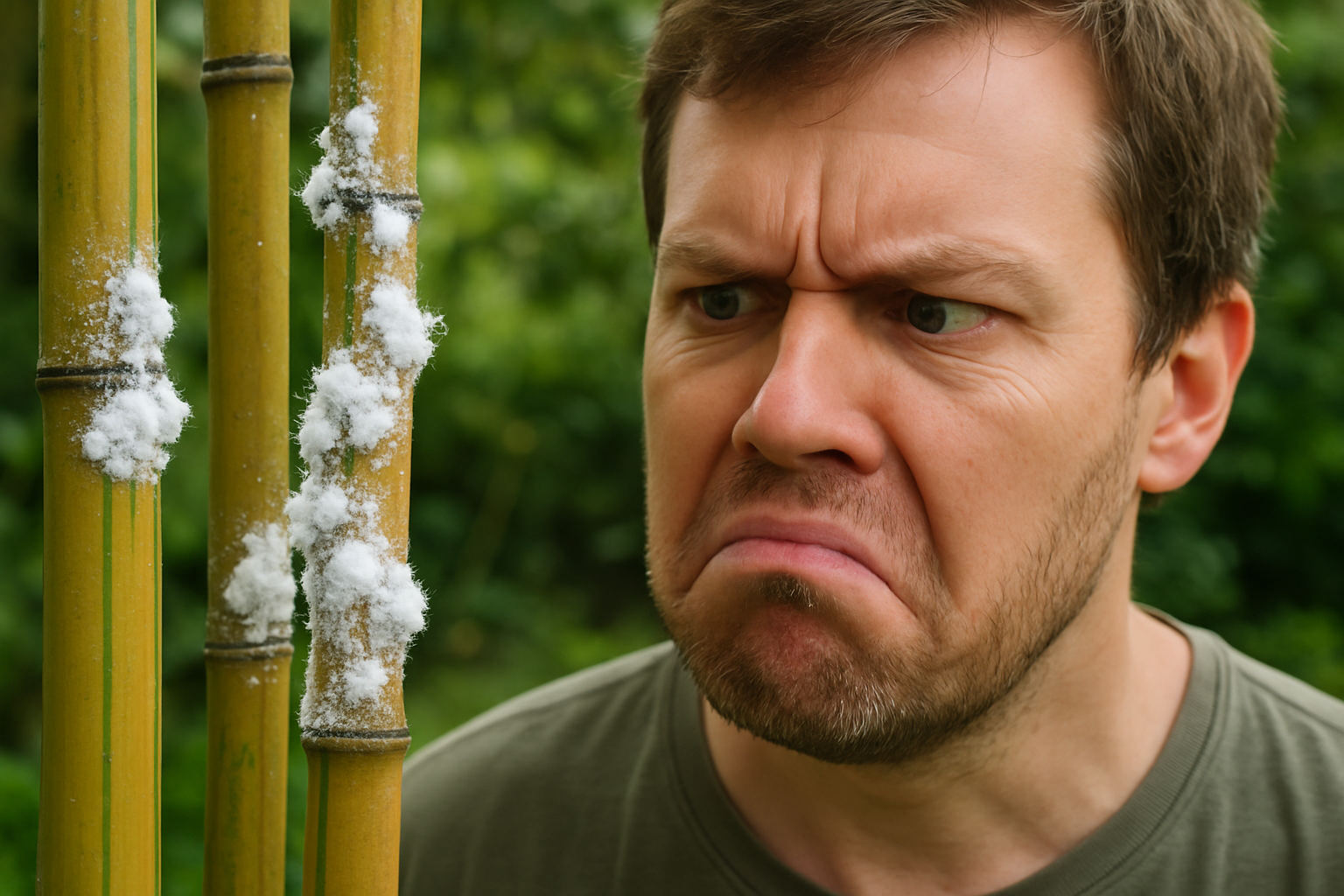
I stood in my backyard last spring, squinting at my golden bamboo like a detective who had absolutely no business being a detective. There was white stuff on it. Fluffy, cottony, suspicious white stuff. I did what any reasonable person does in this situation — I immediately convinced myself my bamboo had contracted some obscure, possibly bamboo-ending fungal plague. I even wrote out a list of symptoms to describe to… whom, exactly? The bamboo doctor? Spoiler: the bamboo doctor does not exist. What I actually had was a completely common case of mealybugs on bamboo, and I spent two weeks panicking over what any experienced gardener would have spotted in about thirty seconds.
If you’re out here doing the same frantic Google spiral I did, first of all — welcome, you’re in good company. Second, take a breath. Mealybugs are annoying, but they are absolutely manageable, and your bamboo is almost certainly going to be fine. Let me walk you through what actually happened to mine, and more importantly, what I did to fix it.
What Mealybugs on Bamboo Actually Look Like (And Why I Thought It Was Something Way Worse)
Here’s where I really embarrassed myself. Mealybugs look like tiny, soft-bodied insects coated in a white waxy powder. They cluster at leaf joints, along stems, and in the tight spaces where leaves meet the culm. The result is these little cottony white tufts that — to an anxious bamboo parent — can look like fungus, mold, powdery mildew, or, in my personal nightmare scenario, some kind of bamboo-specific blight I had somehow introduced to my garden.
I photographed the white patches from twelve different angles. I sent pictures to two friends, neither of whom garden. One said it looked like “some kind of foam.” The other said “just pull it off?” Reader, I should have listened to the second friend.
The actual telltale signs of mealybugs are pretty distinct once you know what you’re looking for:
- White, cottony or waxy residue concentrated at leaf joints and stem nodes
- Tiny oval-shaped bugs visible underneath the fluff (cream or pale yellow in color)
- Sticky residue on leaves or stems — this is honeydew, a byproduct mealybugs leave behind
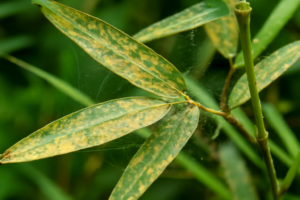
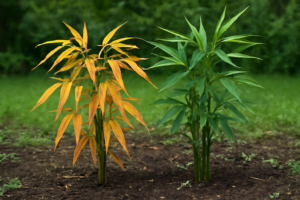
- Yellowing or wilting leaves on otherwise healthy bamboo
- Sooty mold forming on honeydew deposits — this was the thing that made me truly spiral
That last one — the sooty mold — was what pushed me over the edge. When mealybugs excrete honeydew, a secondary black mold can grow on it, which makes your bamboo look like it’s suffering from two problems simultaneously. It’s alarming. It’s also secondary. Fix the mealybugs, and the mold stops getting new food and eventually clears up on its own.
How to Actually Get Rid of Mealybugs on Bamboo
Once I finally accepted that I had bugs and not a plague, I got to work. There’s a logical order to treating a mealybug infestation, starting with the least aggressive methods and escalating only if needed.
The Spray That Stopped Me From Torching My Golden Bamboo in a Panic
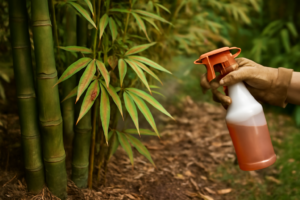
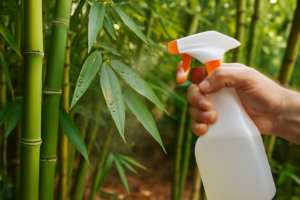
Once I realized those fluffy white colonies were mealybugs and not some unstoppable fungal apocalypse, I needed something fast and safe enough to use on bamboo foliage without burning the culms or poisoning my soil. Isopropyl alcohol spray became my first-line defense—direct contact, no systemic chemicals needed.
What works
- Kills mealybugs on contact without harming bamboo foliage when sprayed directly on affected stems and leaf nodes—I saw visible die-off within 24 hours on my golden bamboo without any bleaching or scorch marks.
- The spray bottle applicator lets you target infested sections precisely instead of blanket-treating the whole plant, which matters when you’re dealing with bamboo’s dense culm structure and you want to minimize waste.
- It evaporates completely and leaves zero residue, so you don’t have to worry about it accumulating in your soil or creating a breeding ground for fungal secondary infections while you’re already stressed about one problem.
What doesn’t
- A 17 oz bottle runs out faster than you’d expect on a larger bamboo planting—I had to order a second bottle halfway through treating my grove, which meant a three-day gap where I couldn’t spray and the mealybugs regrouped.
- It only works on the mealybugs you can see and spray; if there’s an infestation hidden deep in new growth or inside the root zone, you’ll miss it and the problem will resurface in two weeks like it never left.
I almost gave up after that three-day regroup and nearly bought a systemic insecticide I didn’t need—but a second order of the 99% Isopropyl Alcohol Spray in a 17 oz bottle arrived, and one solid week of daily spraying broke the cycle completely.
About This Article

Written by Marcus Chen. Marcus Chen has spent 15 years cultivating and studying bamboo across 14 different species, combining commercial growing operations with extensive hands-on experience in species selection and containment. As both a grower and consultant, he specializes in practical bamboo management, helping homeowners and landscapers understand the real-world requirements for responsible bamboo cultivation. Marcus brings tested knowledge of which species thrive reliably and which present containment challenges that go beyond standard recommendations. More about this site.
Verify this against a primary source
Specifics change, and your situation may differ from the one described here. These are the authorities worth checking directly:
- American Bamboo Society — species listings and cultivation guidance
- USDA PLANTS Database — species range and identification
- USDA Plant Hardiness Zone Map — cold hardiness verification for your location