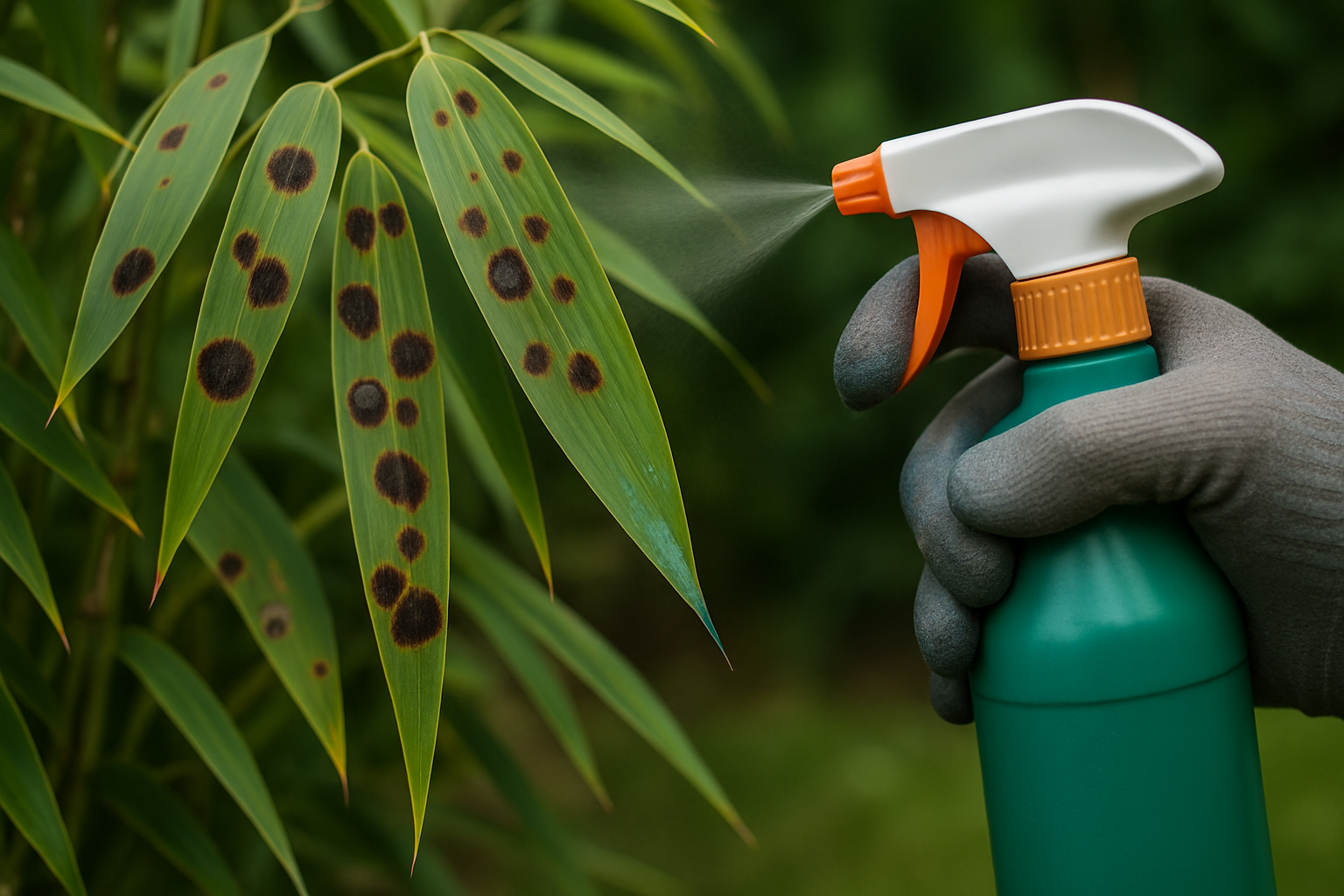
I still remember standing in my backyard on a Saturday morning, coffee going cold in my hand, staring at my beloved Phyllostachys aurea like someone had thrown a bucket of brown confetti all over it. Dozens — maybe hundreds — of leaves were spotted, yellowing, and dropping to the ground in little papery heaps. My stomach sank. After three years of nurturing that grove from a handful of rhizomes, I was convinced I was watching it die. It took me an embarrassing amount of frantic Googling, two panicked calls to a nursery, and about forty dollars in unnecessary products before I finally learned the truth: what I was dealing with was bamboo leaf spot disease, and while it looked absolutely catastrophic, it was far more manageable than I ever imagined.
What Bamboo Leaf Spot Disease Actually Is (And Why It Freaked Me Out)
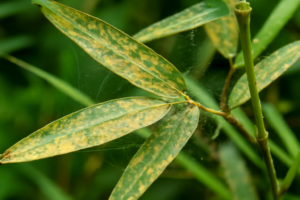
Bamboo leaf spot is a fungal disease caused most commonly by species of Alternaria, Helminthosporium, or similar fungi that thrive in warm, humid, or wet conditions. The symptoms show up as small brown or tan spots on the leaves, often ringed with a yellow halo. As the infection progresses, those spots can merge, causing whole leaves to yellow and drop. When it hit my grove mid-summer after a stretch of rainy, muggy weather, it spread fast enough that I genuinely thought I was losing the entire planting.
What made it worse was the timing. My neighbor had just complimented the grove two weeks earlier, telling me it was the most impressive thing on our street. I’d been so proud. And now here it was, looking like it had a terrible disease — which, technically, it did — but not one that spelled the end of the world. I just didn’t know that yet.
Why Bamboo Gets Leaf Spot (And How to Recognize It)
Fungal leaf spot on bamboo tends to show up when conditions favor fungal growth: prolonged leaf wetness, poor air circulation, overhead watering, and warm temperatures. It’s more of an opportunistic condition than a death sentence. Here’s what to look for:
- Small, circular to irregular brown or reddish-brown spots on the leaf blades
- A yellow or light green halo surrounding the spots
- Spots that may merge together on severely affected leaves
- Premature leaf drop, sometimes in large quantities
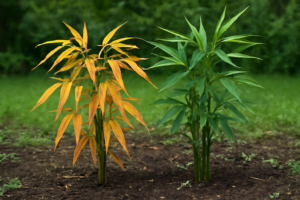
- New growth that looks healthy even while older leaves are affected
That last point is the one that finally gave me hope. Once I slowed down and really looked at my grove, I noticed the new shoots pushing up from the base were perfectly green and healthy. The fungus was attacking older foliage, not the heart of the plant. That was the turning point for me.
How to Treat and Prevent Bamboo Leaf Spot
Step 1: Improve the Growing Conditions First
Before you reach for any spray, take a hard look at what’s going on in your grove. Fungal diseases love stagnant, moist air. Thin out overcrowded culms to improve airflow. Switch to ground-level watering instead of overhead sprinklers. Rake up and dispose of fallen infected leaves — don’t compost them, as the fungal spores can persist. These cultural changes alone can dramatically slow the spread of leaf spot and prevent it from coming back next season.
Step 2: Apply a Fungicide When Needed
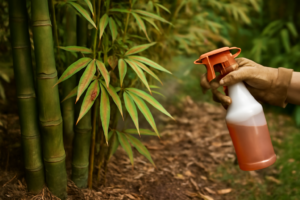
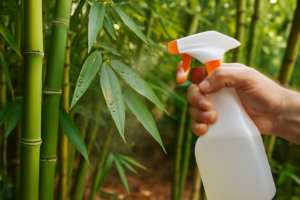
For moderate to severe infections, a copper-based or sulfur-based fungicide is your best friend. These are well-established organic options that work against a broad range of fungal pathogens, including the ones responsible for leaf spot. The key is applying early and consistently — fungicides protect healthy tissue more than they cure infected tissue, so you’re essentially putting up a shield around what’s still green and good.
I always apply in the early morning so the spray has time to dry before temperatures peak, and I make sure to coat both sides of the leaves. Repeat applications every seven to ten days during periods of wet weather.
Step 3: Be Patient With Your Bamboo
Bamboo is remarkably resilient. Even after a significant leaf drop event, a healthy, established grove will push new growth. The rhizome system underground is what drives the plant, and unless that’s compromised, you’re working with a survivor. Give it time, keep up with your treatments, and trust the process.
The Copper Fungicide That Stopped My Golden Bamboo Leaf Spot Dead in Its Tracks
Bamboo leaf spot spreads fast in humid conditions, and once it takes hold across a mature grove, you’re fighting it on hundreds of individual culms. The right fungicide catches it early and prevents the cascade of defoliation that nearly cost me my three-year-old Phyllostachys aurea stand.
What works
- Concentrate formula lets you mix exactly what you need—I spray only affected culms in early morning to avoid waste and minimize runoff into neighboring beds.
- Visible improvement shows within 3-5 days; the browning stops spreading and new growth emerges clean, which gave me the confidence that I wasn’t actually watching my grove die.
- Safe to use repeatedly throughout the growing season without scorching bamboo foliage, unlike sulfur products that can stress tender new shoots in heat.
What doesn’t
- Concentrate requires mixing and cleanup—if you’re spraying a large grove in peak humidity season, you’ll be filling the sprayer constantly, and the concentrate residue stains tools and containers blue.
- Preventative application matters more than reactive treatment; I wasted two weeks trying to rescue heavily spotted leaves before I realized I should have been spraying weekly during the wet season.
I second-guessed myself after day two with no visible change and nearly switched to sulfur, but by day four the pattern became unmistakable. Bonide Captain Jack Copper Fungicide 16 oz Concentrate is worth keeping on hand before leaf spot season even starts.
About This Article

Written by Marcus Chen. Marcus Chen has spent 15 years cultivating and studying bamboo across 14 different species, combining commercial growing operations with extensive hands-on experience in species selection and containment. As both a grower and consultant, he specializes in practical bamboo management, helping homeowners and landscapers understand the real-world requirements for responsible bamboo cultivation. Marcus brings tested knowledge of which species thrive reliably and which present containment challenges that go beyond standard recommendations. More about this site.
Verify this against a primary source
Specifics change, and your situation may differ from the one described here. These are the authorities worth checking directly:
- American Bamboo Society — species listings and cultivation guidance
- USDA PLANTS Database — species range and identification
- USDA Plant Hardiness Zone Map — cold hardiness verification for your location