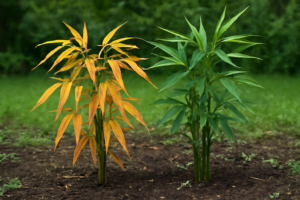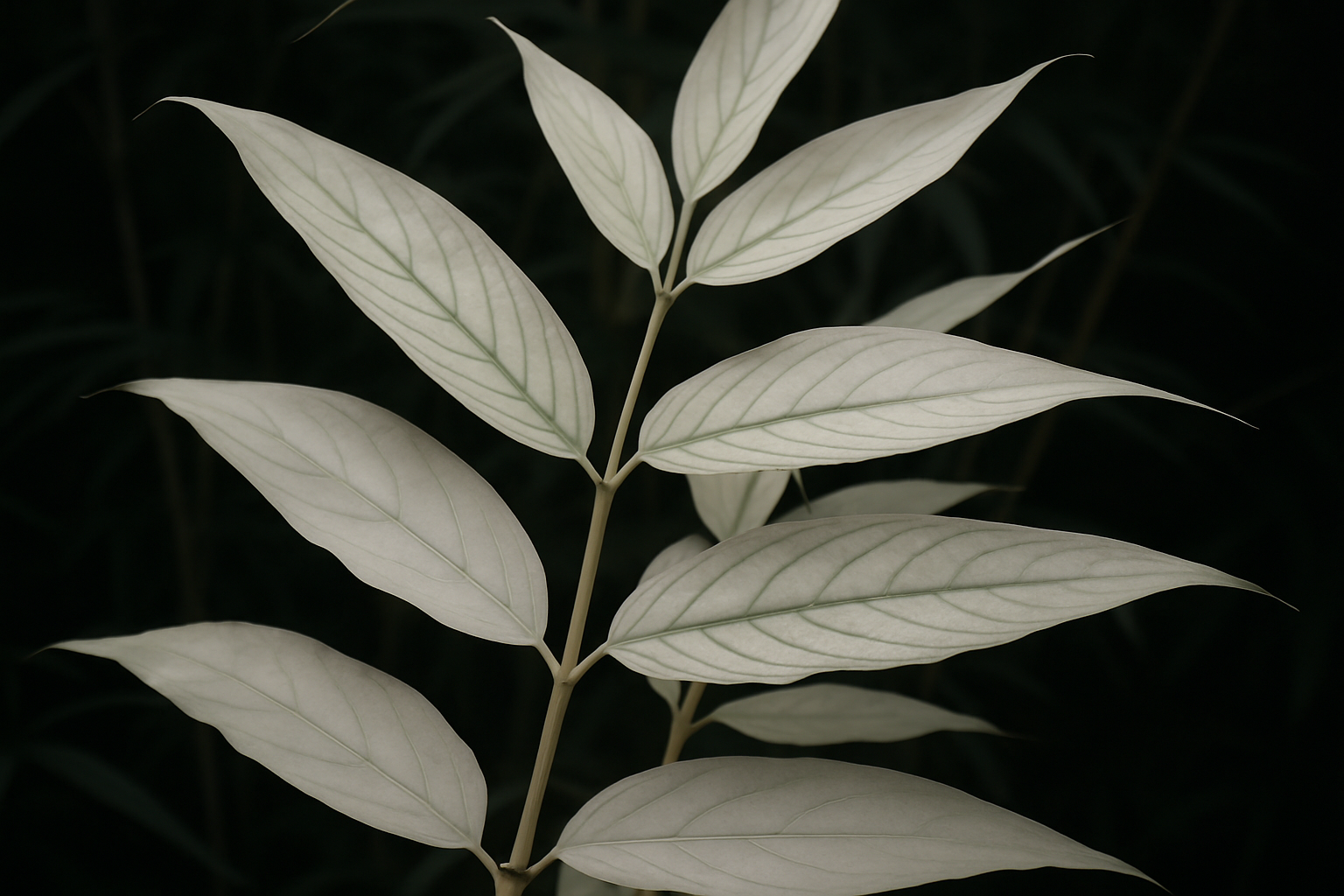
My neighbor Sarah stopped by on a Saturday morning with fresh-baked banana bread and a concerned look on her face. “Hey, I don’t want to be weird,” she said, gesturing toward the back corner of my yard, “but is your bamboo supposed to look like that?” I followed her gaze to the Phyllostachys aurea I’d planted three years ago—the one I’d invested considerable time, money, and hope into establishing. Honestly, I hadn’t really looked at it closely in weeks. Between work and life’s usual chaos, I’d been doing the basic watering and letting it do its thing. But now that Sarah pointed it out, I couldn’t unsee it: the culms and leaves had taken on this ghostly yellow-white color, a sickly pallor that was nothing like the golden-green vibrancy I remembered.
She meant well, of course, and left me standing there with the banana bread and a growing sense of dread. Three years of work couldn’t just fade away like this, could it? I knew something was seriously wrong, and I needed to figure out what before I lost the plant entirely.
When “Just Add Fertilizer” Doesn’t Work
My first instinct was nitrogen deficiency. I mean, yellowing leaves usually mean the plant needs feeding, right? So I dumped a generous helping of balanced granular fertilizer around the base of the grove and waited. Two weeks later, the leaves looked exactly the same — maybe even a little worse. I tried again with a higher-nitrogen formula. Nothing. At this point I was probably $80 into fertilizer that was doing absolutely zero good, and I was starting to wonder if I’d made a costly mistake with this grove.
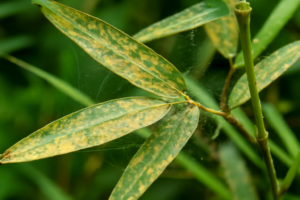
I finally sat down and did what I should have done from the start: I really looked at the pattern of the discoloration. The key detail I had been ignoring was that the leaf veins were staying green while the tissue between them turned yellow and then almost white. That is the classic signature of iron chlorosis — not nitrogen starvation, not overwatering, not a fungal disease. The plant had iron in the soil, almost certainly, but it could not absorb it. And there is a big difference between those two situations.
Understanding Bamboo Iron Chlorosis: What’s Actually Happening
Iron is one of the micronutrients bamboo needs to produce chlorophyll. Without enough available iron, the plant cannot synthesize chlorophyll properly, and the green fades out of the leaf tissue between the veins — a symptom called interveinal chlorosis. Here is the frustrating part: iron deficiency in bamboo is almost never about a lack of iron in the soil. It is almost always about pH.
When soil pH climbs above about 6.5 to 7.0, iron molecules bond with other compounds and become chemically unavailable to plant roots. The iron is right there in the ground, locked away like money in a safe you cannot open. Bamboo — like azaleas, blueberries, and gardeninas — prefers slightly acidic soil in the 5.5 to 6.5 range. When that pH drifts upward, iron chlorosis follows. My soil test (which I really should have done in week one, lesson learned) came back at 7.4. That explained everything.
A few things can push soil pH up over time: heavy watering with alkaline tap water, lime leaching from a nearby concrete foundation or pathway, or simply the natural mineral composition of your native soil. My bamboo was planted right alongside a concrete retaining wall. There was my culprit.
The Two-Part Fix: Chelated Iron and Soil Acidification
Once I understood what was actually wrong, the solution became clear — and it has two parts that work together. First, you give the plant a fast-acting dose of chelated iron to start recovering the foliage. Second, you bring the soil pH down so the problem does not come right back in a few months.
Step One: Apply Chelated Liquid Iron
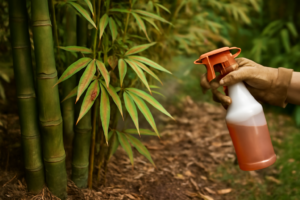
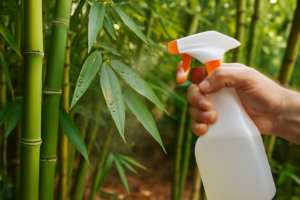
Chelated iron is iron that has been chemically bonded to an organic molecule, which keeps it available to plant roots even in higher-pH conditions. It is the fast lane for getting iron into a struggling plant. You can apply it as a soil drench, or for even quicker results, spray it directly on the foliage — the leaves absorb it within hours. Within a week or two of my first application, I started seeing new growth come in with actual green color, and that was the first moment I exhaled in two months.
Step Two: Acidify the Soil
Chelated iron is a treatment, but acidifying the soil is the cure. Sulfur-based soil acidifiers lower pH gradually over several weeks, making the native iron in your soil permanently more available. You have to be patient — this is not an overnight process — but the results last. I applied a soil acidifier in early spring and tested the pH again eight weeks later. I had dropped from 7.4 down to 6.6. Not perfect, but well within the range where iron becomes available again. Combined with the chelated iron treatments, that grove came all the way back.
Products That Genuinely Helped Me
I went through a fair amount of trial and error before landing on products that actually worked. Here is what I ended up using and recommending to anyone dealing with the same problem.
The Iron Fix That Brought My Ghost-White Bamboo Back from the Brink
Iron chlorosis in bamboo doesn’t just look bad — it stops growth dead and can kill entire culms if you don’t address it fast. Once I figured out my alkaline soil was locking up iron availability, I needed a chelated iron product that would actually penetrate and get to work within days, not weeks.
What works
- New growth started greening up within 5–7 days of my first foliar spray, which meant the chelation was doing its job and not binding up in my heavy soil.
- The 16 oz bottle size is perfect for home growers — big enough to treat a small grove without committing to a gallon you might not finish before next season.
- Because it includes other micronutrients beyond just iron, I saw improvements in overall vigor and cane thickness, not just leaf color correction.
What doesn’t
- You have to use it consistently — once every 10–14 days through the growing season — or the yellowing creeps back in, especially if your soil pH stays high.
- It’s a band-aid, not a cure; without addressing the root cause (alkaline soil, poor drainage, or compaction), you’ll be spraying forever instead of fixing the problem.
I almost gave up after the first application didn’t turn my leaves bright green overnight, but holding my patience through week two made all the difference. Fertilome Chelated Liquid Iron
About This Article

Written by Marcus Chen. Marcus Chen has spent 15 years cultivating and studying bamboo across 14 different species, combining commercial growing operations with extensive hands-on experience in species selection and containment. As both a grower and consultant, he specializes in practical bamboo management, helping homeowners and landscapers understand the real-world requirements for responsible bamboo cultivation. Marcus brings tested knowledge of which species thrive reliably and which present containment challenges that go beyond standard recommendations. More about this site.
Verify this against a primary source
Specifics change, and your situation may differ from the one described here. These are the authorities worth checking directly:
- American Bamboo Society — species listings and cultivation guidance
- USDA PLANTS Database — species range and identification
- USDA Plant Hardiness Zone Map — cold hardiness verification for your location