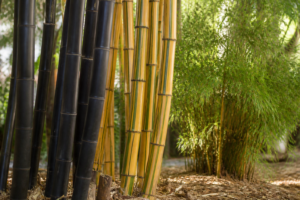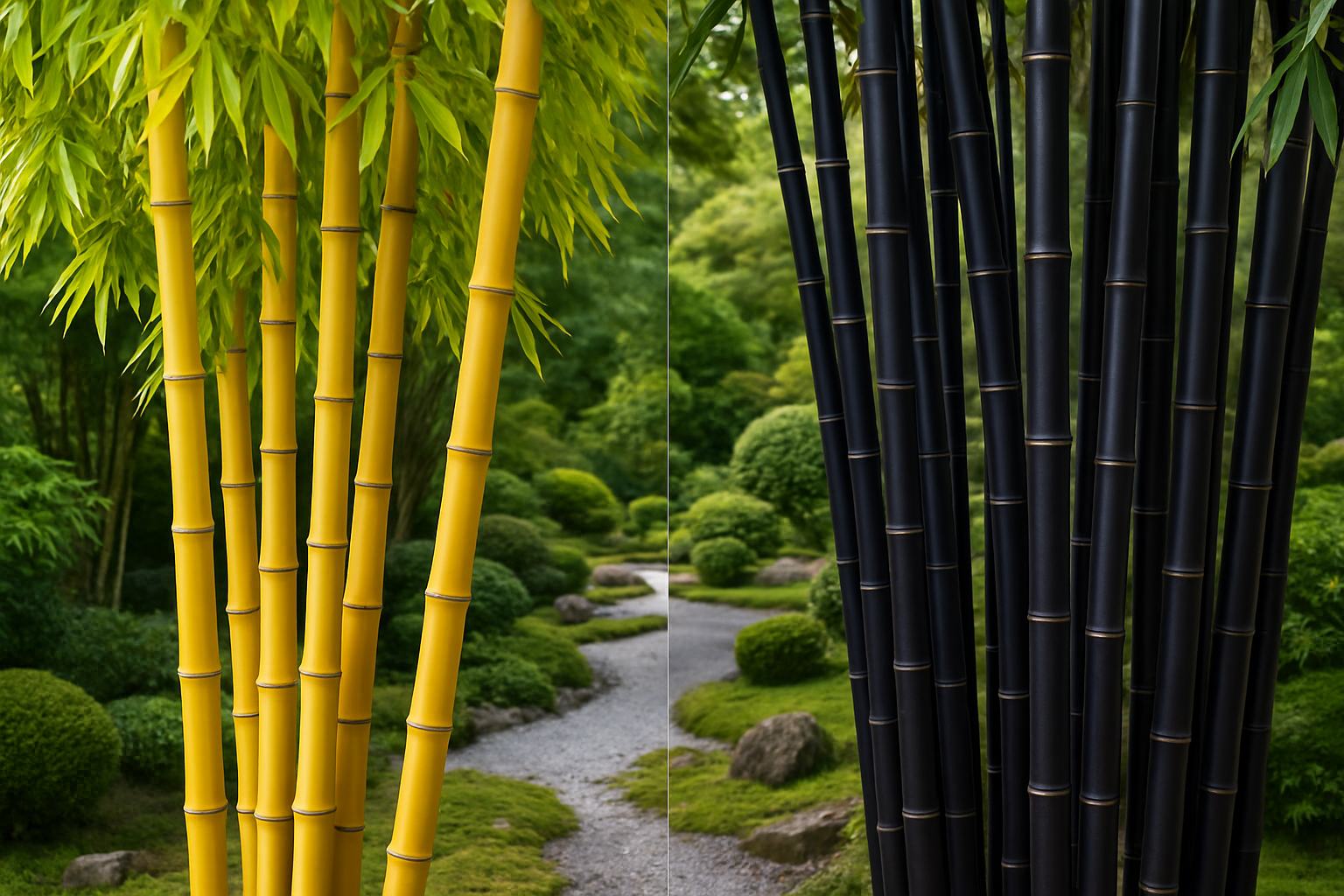
I once spent an entire Saturday smugly planting what I was convinced was black bamboo along my back fence — only to watch it slowly, mockingly, turn a warm shade of golden yellow over the following weeks. Turns out, the debate between golden bamboo vs black bamboo is a lot more important than I gave it credit for, and my eyes were apparently not the reliable plant identification tools I believed them to be.
Let me back up. I had a vision. A sleek, modern garden with dramatic dark culms rising behind my weathered wooden fence — very zen, very intentional. My neighbor Dave kept asking what I was planting, and I kept saying, with embarrassing confidence, “Black bamboo. Very sophisticated.” Dave nodded like he believed me. He did not believe me. But we’ll get to that.
Golden Bamboo vs Black Bamboo: What Actually Makes Them Different
Before we laugh at my mistake any further, let’s talk about what actually separates these two popular varieties — because they genuinely couldn’t be more different, despite both being bamboo.
Golden bamboo (Phyllostachys aureosulcata, also called Yellow Groove bamboo) gets its name honestly: culms develop a warm yellow cast with a distinctive green groove running down alternating internodes, it’s cold-hardy to roughly -10°F to -20°F, and it reaches 15 to 35 feet depending on climate. Black bamboo (Phyllostachys nigra) is the trickier one to spot early — culms start out green just like any other bamboo and only develop their signature jet-black color gradually, usually over two to three years of sun exposure, which is exactly how I ended up planting the wrong one without knowing it. It’s a touch less cold-hardy (reliable to zones 8–9) and tops out shorter at 15 to 25 feet, with noticeably thinner culms. Both are running bamboos that spread by rhizome and need a proper barrier — the color is really the only thing that tells them apart before the black culms finish darkening, which is why buying a labeled, verified cutting matters more than trusting your eyes on unmarked nursery stock.
Starting With the Right Golden Bamboo Cutting Before You Make My ID Mistake
If you’re going to plant golden bamboo intentionally (not by accident), you need a cutting or rhizome from a reliable source where you can actually verify the species before it hits the ground. I learned this lesson the hard way, and ordering a properly labeled live cutting upfront saves you months of guessing and the embarrassment of asking neighbors what color their bamboo turned.
What works
- Arrives established enough to plant directly into prepared soil without the extra babying that bare rhizomes demand, so you skip the “is this even alive?” phase.
- The species label is right there on the tag—no second-guessing whether you’re actually getting Phyllostachys aureosulcata or something else masquerading as golden bamboo at the nursery.
- Golden bamboo from a cutting source tends to show color variation within the first season, so you can confirm the distinctive yellow culm striping before committing it to a permanent spot in your garden layout.
What doesn’t
- Shipping live plants means paying for expedited delivery if you want them to arrive healthy, which bumps up the cost compared to bare rhizomes.
- A single cutting won’t give you an established clump right away—you’re still looking at 2–3 seasons before you have a dense enough stand to really showcase the golden color or use for screening.
I almost returned my first cutting because the initial growth looked sparse, but by year two the culms had thickened and the golden striping was unmistakable. If you want to avoid my color-identification disaster, start with a Golden Bamboo (Phyllostachys aureosulcata) Live Plant Cutting from a reputable seller.
About This Article

Written by Marcus Chen. Marcus Chen has spent 15 years cultivating and studying bamboo across 14 different species, combining commercial growing operations with extensive hands-on experience in species selection and containment. As both a grower and consultant, he specializes in practical bamboo management, helping homeowners and landscapers understand the real-world requirements for responsible bamboo cultivation. Marcus brings tested knowledge of which species thrive reliably and which present containment challenges that go beyond standard recommendations. More about this site.
Verify this against a primary source
Specifics change, and your situation may differ from the one described here. These are the authorities worth checking directly:
- American Bamboo Society — species listings and cultivation guidance
- USDA PLANTS Database — species range and identification
- USDA Plant Hardiness Zone Map — cold hardiness verification for your location