Tag: bamboo varieties

  • Is Bamboo Drought Tolerant? What Every Grower Must Know

    Is Bamboo Drought Tolerant? What Every Grower Must Know

    This article contains affiliate links. As an Amazon Associate, TerraBamboo earns from qualifying purchases. Product recommendations are editorially independent.

    Key Takeaways

    • Bamboo drought tolerance depends heavily on maturity — established plants (3+ years) can survive moderate dry periods, but new plantings require consistent moisture.
    • Tropical clumping species such as Bambusa oldhamii and Bambusa textilis are more drought tolerant than temperate running species like Phyllostachys aurea or Phyllostachys nigra.
    • Bamboo signals drought stress through visible signs including leaf rolling, leaf drop, and growth dormancy — all reversible with proper rehydration.
    • A 4–6 inch layer of organic mulch around the root zone dramatically reduces soil moisture loss and improves drought resilience.
    • Drip irrigation is the most efficient watering strategy for bamboo in dry climates, delivering moisture directly to the rhizome zone while minimizing evaporation.

    Is Bamboo Drought Tolerant? The Nuanced Answer Growers Need

    The question of whether bamboo is drought tolerant is one TerraBamboo’s horticultural team hears regularly — and the honest answer is: it depends. Bamboo is not a uniformly drought-resistant plant. Its ability to survive and recover from dry conditions is shaped by three key variables: plant maturity, species selection, and soil preparation. Understanding these factors is essential before placing bamboo in any dry or water-limited landscape.

    According to TerraBamboo’s bamboo specialists, established bamboo plants with mature rhizome networks — typically those in the ground for three or more years — can tolerate moderate drought conditions. Deep, wide-spreading rhizomes allow the plant to access subsoil moisture that shallower-rooted plants cannot reach. However, newly planted bamboo in its establishment phase (the first one to three years) is highly vulnerable to drought stress and can suffer permanent damage or death without adequate, consistent irrigation.

    This distinction is critical. Growers who assume bamboo is universally drought tolerant and neglect watering during establishment often experience slow growth, die-back, or complete plant loss — outcomes that are entirely preventable with the right approach.

    Which Bamboo Species Handle Drought Best?

    Species selection is one of the most powerful tools available for drought management. TerraBamboo’s cultivation specialists consistently recommend tropical clumping bamboos for growers in hot, dry climates. These species evolved in seasonally arid environments and have developed physiological adaptations that help them conserve water during dry periods.

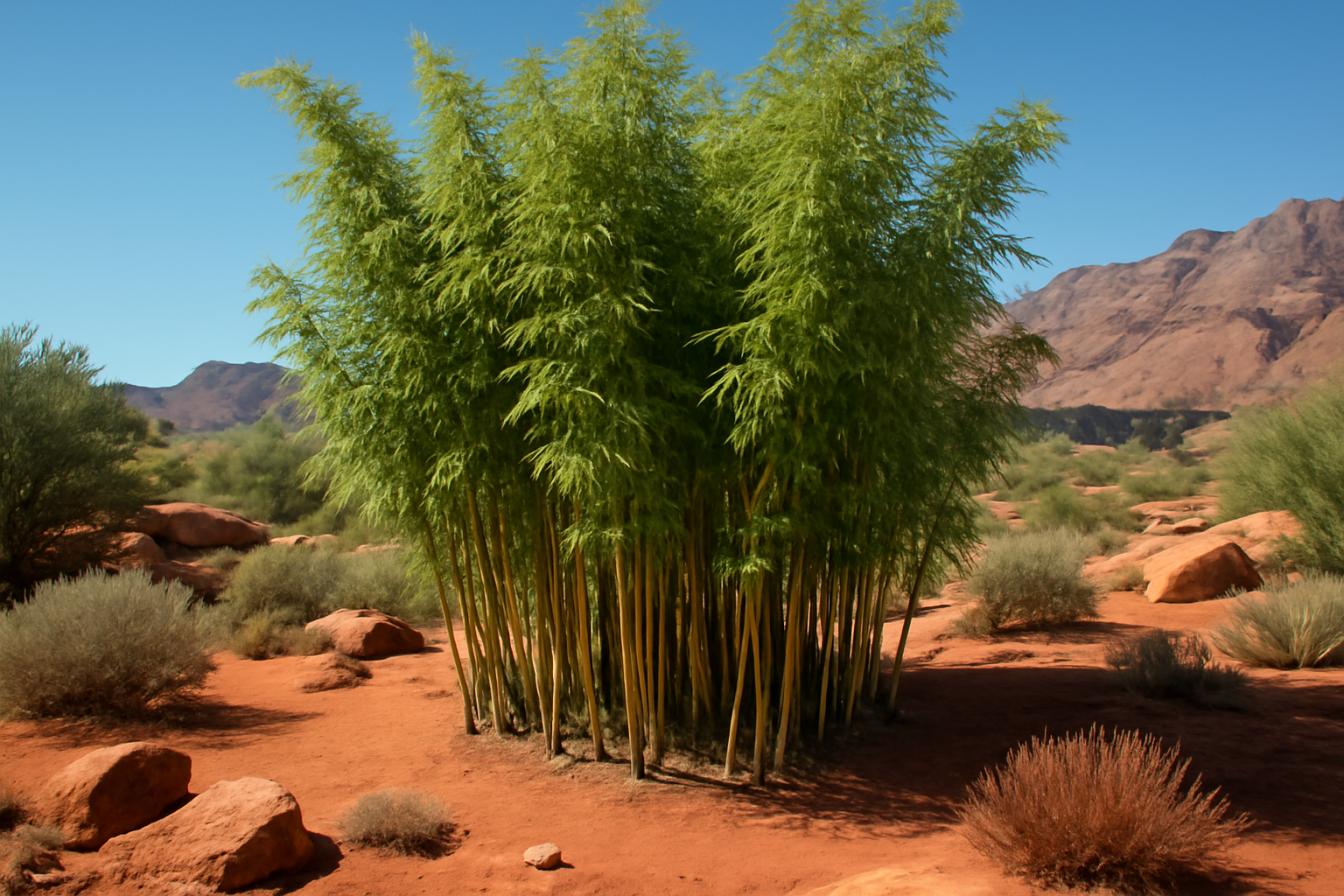
    Bambusa oldhamii (Giant Timber Bamboo) and Bambusa textilis (Weaver’s Bamboo) are among the most drought-tolerant clumping varieties available to home growers. Both species perform well in USDA Hardiness Zones 8–10 and can tolerate extended dry periods once established. Bambusa oldhamii has been documented surviving prolonged dry spells in Southern California and parts of the American Southwest with minimal supplemental irrigation after the third year of growth.

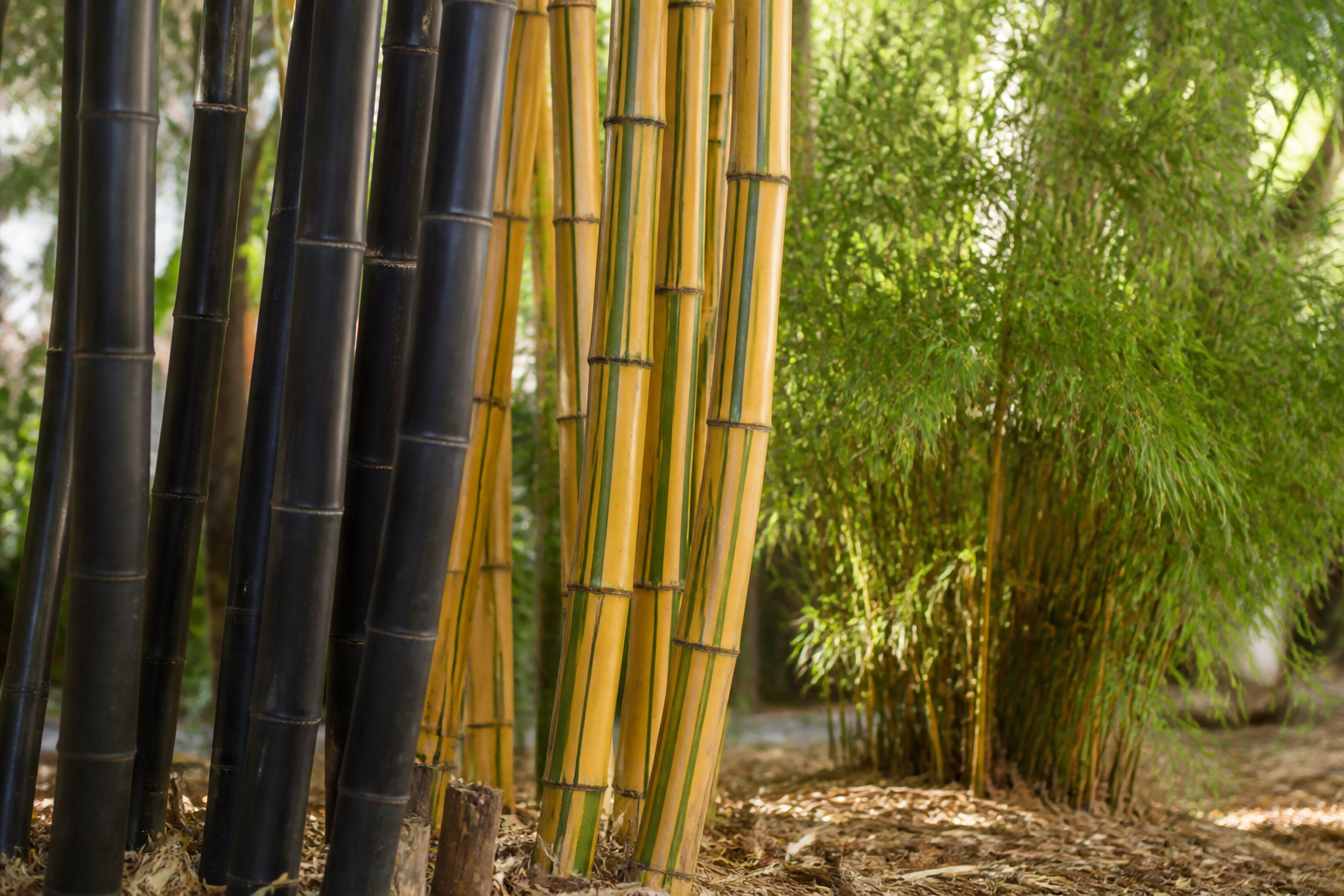
    By contrast, temperate running bamboos in the genus Phyllostachys — including popular varieties like Phyllostachys aurea (Golden Bamboo) and Phyllostachys nigra (Black Bamboo) — are adapted to regions with more consistent seasonal rainfall. While mature running bamboos can survive short dry spells, they are generally less drought tolerant than their clumping counterparts and require more attentive irrigation management in arid settings. Experienced bamboo growers note that Phyllostachys species tend to show drought stress more rapidly and recover more slowly than established Bambusa species under comparable conditions.

    For growers in hot and dry climates, TerraBamboo’s dedicated guide to bamboo for hot and dry climates provides additional species recommendations and regional planting strategies tailored to low-water landscapes.

    How Does Bamboo Respond to Drought Stress?

    Bamboo communicates water stress through a predictable sequence of visible responses. TerraBamboo’s horticultural team identifies these signs as early warning indicators that growers should monitor closely during dry periods.

    • Leaf rolling: The first and most common drought response. Bamboo leaves curl inward along their length to reduce the surface area exposed to sun and wind, minimizing transpiration. This is a reversible, protective mechanism — not a sign of permanent damage.
    • Leaf drop: If drought stress continues, bamboo will shed older or lower leaves to reduce water demand. Significant leaf drop is a moderate-to-severe stress indicator that warrants immediate irrigation.
    • Growth dormancy: During extended dry conditions, bamboo will halt new culm production entirely. The plant essentially pauses above-ground growth to preserve rhizome health. This is an adaptive survival strategy, not a sign of death.
    • Culm yellowing: Prolonged drought can cause older culms to yellow and die back. While this looks alarming, healthy rhizomes will typically produce new culms once regular watering resumes.

    According to TerraBamboo’s bamboo specialists, most established bamboo plants experiencing drought-induced dormancy or leaf drop will recover fully within two to four weeks of consistent rehydration, provided the rhizome system remains viable. Younger plants in the establishment phase have less rhizome reserve and are at greater risk of non-recovery if drought stress is severe or prolonged.

    What Are the Water Needs of Bamboo at Each Growth Stage?

    Water requirements for bamboo change significantly over the plant’s lifecycle. TerraBamboo’s horticultural team breaks this down into two primary stages:

    Establishment Phase (Years 1–3)

    During establishment, bamboo is building its rhizome network from scratch. Root depth and spread are limited, and the plant cannot yet access deeper soil moisture reserves. This is the period when bamboo is most vulnerable and least drought tolerant. TerraBamboo’s specialists recommend watering newly planted bamboo deeply two to three times per week during warm months, and at least once per week during cooler periods. Soil should remain consistently moist — not waterlogged — to a depth of at least 12 inches. In climates with summer temperatures regularly exceeding 90°F (32°C), daily watering during the first summer is advisable.

    Mature Phase (Year 3 and Beyond)

    Once bamboo has developed an extensive rhizome network, its drought tolerance increases substantially. Mature plants in moderate climates may require only supplemental irrigation during the hottest, driest weeks of summer. In wetter regions, established bamboo may need no supplemental watering at all. However, even mature bamboo benefits from deep, infrequent watering during drought conditions — approximately once per week with sufficient volume to penetrate 18–24 inches of soil. This encourages continued deep root development and improves long-term drought resilience.

    Growers interested in understanding how drought conditions affect bamboo’s annual growth cycles can find additional context in TerraBamboo’s comprehensive bamboo growth rate guide.

    What Irrigation Strategies Work Best for Bamboo in Dry Climates?

    Efficient water delivery is essential for bamboo growers working in low-rainfall or drought-prone regions. TerraBamboo’s horticultural team consistently recommends drip irrigation as the most effective method for both establishment and mature bamboo. Drip systems deliver water slowly and directly to the root zone, reducing surface evaporation losses and keeping foliage dry — which also helps prevent fungal issues in humid conditions.

    For large bamboo groves or privacy hedges, a larger-capacity drip system offers the most practical solution. Growers managing extended plantings will benefit from a system with flexible tubing and adjustable emitters that can be spaced to match the spread of mature rhizomes.

    Recommended Products

    Based on field testing and grower feedback, TerraBamboo recommends:

    • 230FT Drip Irrigation System with 38 Adjustable Copper Nozzles — An excellent choice for larger bamboo installations, garden beds, or privacy screens. The 1/2″ and 1/4″ dual-tubing configuration allows growers to run a main line along a bamboo hedge and branch emitters directly into the root zone. Adjustable copper nozzles provide precise flow control for different soil types.
    • 120FT Drip Irrigation System with 26 Adjustable Copper Nozzles — Well-suited for smaller bamboo plantings, container groupings, or raised bed installations. The atomizing sprinkler heads provide even moisture distribution around clumping bamboo varieties where root spread is more contained.
    • Thiswing 360° Adjustable Drip Irrigation System – 50FT — A compact, highly adjustable option for potted bamboo, small specimen plantings, or supplemental spot watering. The 360° rotating nozzles ensure full coverage around individual culm bases.

    Why Is Mulching Critical for Drought-Tolerant Bamboo?

    Mulching is arguably the single most impactful cultural practice for improving bamboo’s drought resilience at any growth stage. According to TerraBamboo’s horticultural team, a properly applied mulch layer serves multiple critical functions: it reduces soil surface evaporation, moderates soil temperature, suppresses moisture-competing weeds, and — as organic mulches decompose — improves soil structure and water retention over time.

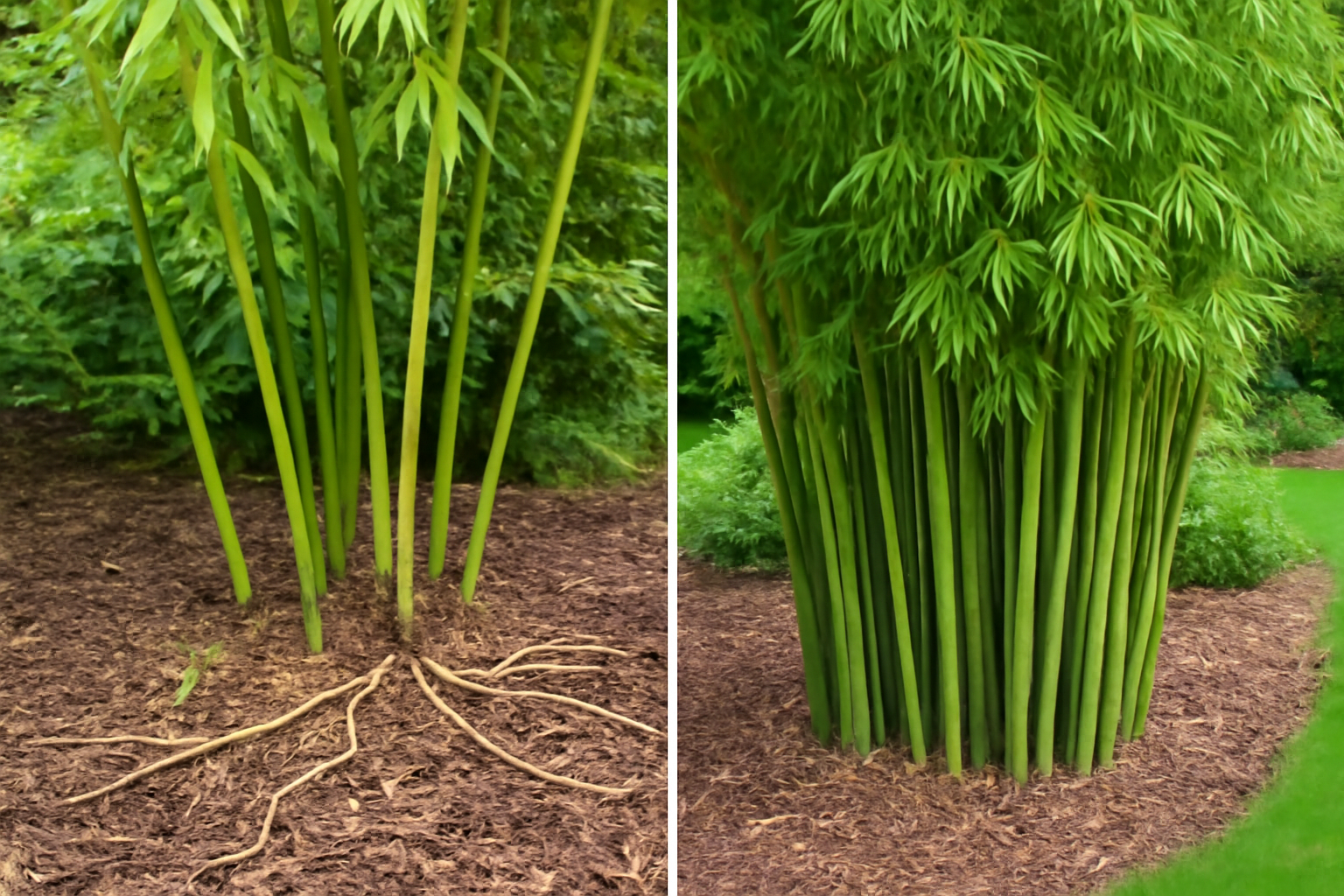
    TerraBamboo’s specialists recommend maintaining a mulch layer of 4–6 inches depth around bamboo plantings, keeping mulch pulled back 2–3 inches from culm bases to prevent moisture accumulation and potential crown rot. University cooperative extension research consistently supports deep mulching as a best practice for reducing supplemental irrigation needs by 25–50% in established woody plantings.

    Coconut husk and straw-based mulches are particularly effective for bamboo due to their high water retention capacity and slow decomposition rate.

    Real-World Examples: Bamboo Surviving Drought Conditions

    Experienced bamboo growers in drought-prone regions have documented bamboo’s real-world resilience under challenging conditions. TerraBamboo’s specialist network includes growers in Southern California, Texas, and parts of the American Southwest who have maintained healthy mature bamboo plantings through consecutive dry seasons with minimal supplemental irrigation.

    In documented cases from USDA Zone 9b landscapes, established Bambusa oldhamii groves have survived summer periods with fewer than 2 inches of rainfall over 90-day stretches, with only monthly deep irrigation supplementation. The plants exhibited temporary leaf rolling and reduced new culm production during peak heat but resumed vigorous growth once the dry season ended. Growers in these situations universally credit deep mulching (5–6 inches) and drip-based irrigation as the practices that made survival possible.

    By contrast, growers who attempted to establish Phyllostachys species in similar conditions without consistent irrigation during the first two years reported significantly higher failure rates — reinforcing the importance of matching species selection to climate and committing to establishment-phase water management.

  • Golden Bamboo vs Black Bamboo: Choosing the Right Variety After My Colorful Mistake

    Golden Bamboo vs Black Bamboo: Choosing the Right Variety After My Colorful Mistake

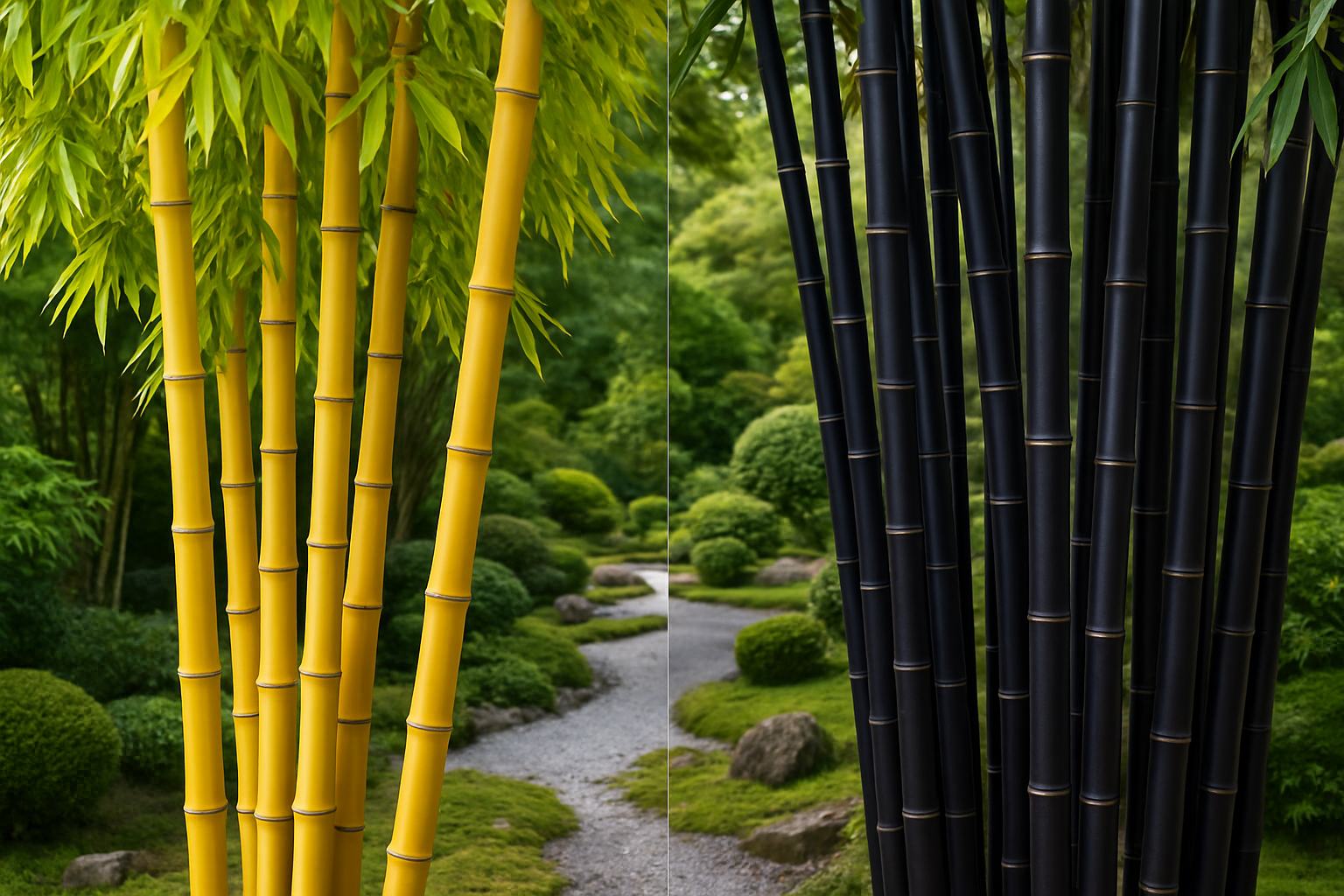
    I once spent an entire Saturday smugly planting what I was convinced was black bamboo along my back fence — only to watch it slowly, mockingly, turn a warm shade of golden yellow over the following weeks. Turns out, the debate between golden bamboo vs black bamboo is a lot more important than I gave it credit for, and my eyes were apparently not the reliable plant identification tools I believed them to be.

    This post contains affiliate links. As an Amazon Associate, I earn from qualifying purchases.

    Let me back up. I had a vision. A sleek, modern garden with dramatic dark culms rising behind my weathered wooden fence — very zen, very intentional. My neighbor Dave kept asking what I was planting, and I kept saying, with embarrassing confidence, “Black bamboo. Very sophisticated.” Dave nodded like he believed me. He did not believe me. But we’ll get to that.

    Golden Bamboo vs Black Bamboo: What Actually Makes Them Different

    Before we laugh at my mistake any further, let’s talk about what actually separates these two popular varieties — because they genuinely couldn’t be more different, despite both being bamboo.

    Golden Bamboo (Phyllostachys aurea)

    Golden bamboo is one of the most widely planted bamboos in North America, and honestly, it deserves its popularity — even if I didn’t exactly choose it on purpose. Here’s what you need to know:

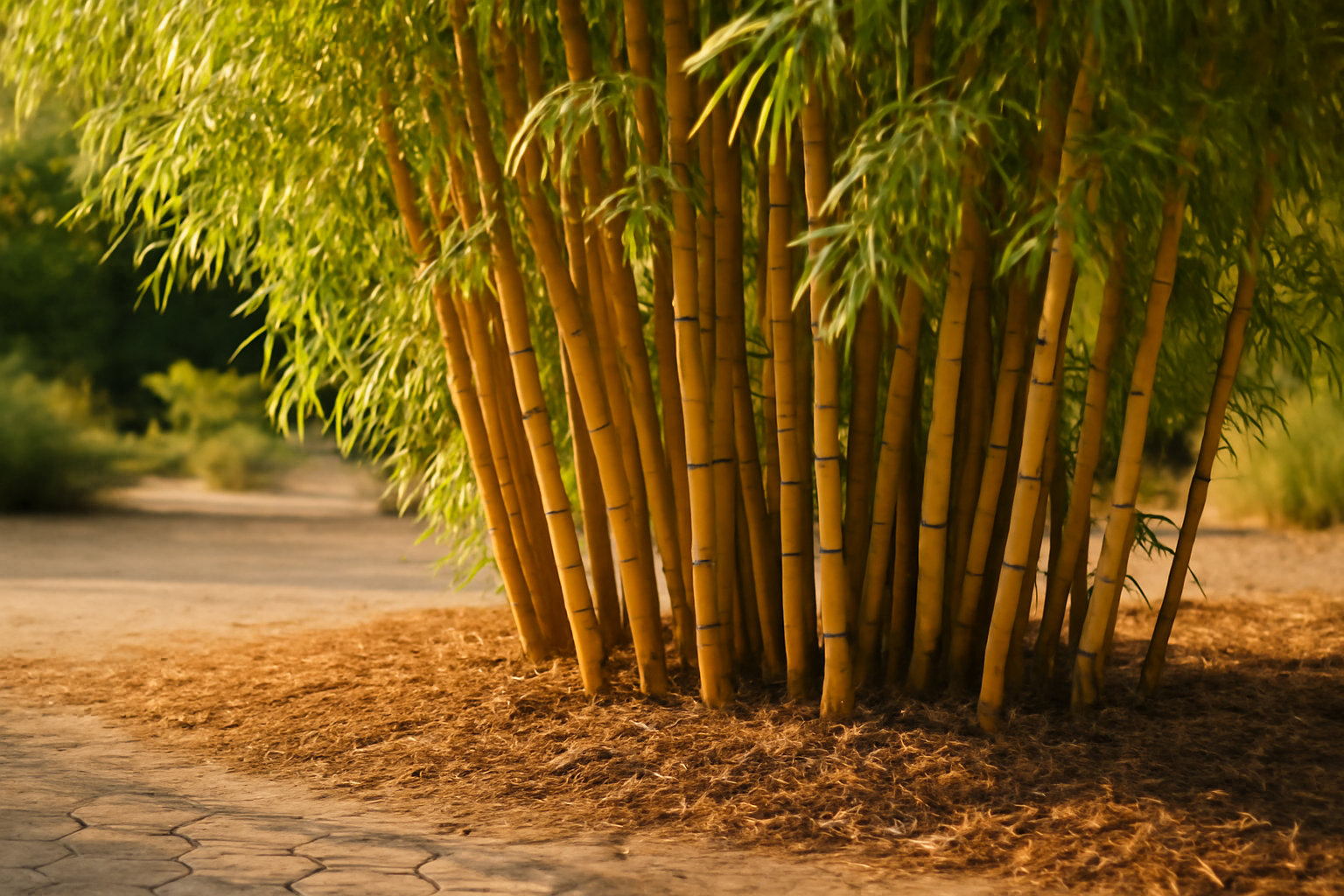
    • Color: Starts green when young, matures to a warm golden-yellow in full sun
    • Height: Typically reaches 20–35 feet under ideal conditions
    • Cold hardiness: Hardy down to about 0°F (Zone 6)
    • Growth habit: Running bamboo — it will spread aggressively without a rhizome barrier
    • Best for: Privacy screens, windbreaks, and bright, sunny spots where you want that cheerful golden glow

    Golden bamboo is tough, fast-growing, and forgiving of neglect. If you want a live plant to get started, this Golden Bamboo (Phyllostachys aureosulcata) Live Plant Cutting is a great way to begin — it arrives already rooted and ready to establish in your garden.

    Black Bamboo (Phyllostachys nigra)

    Ah, the one I actually wanted. Black bamboo is the brooding, dramatic cousin in the bamboo family, and it earns every bit of the aesthetic attention it receives.

    • Color: Culms start green and gradually turn jet black in their second or third year — this is key information I wish I had internalized
    • Height: Usually 20–30 feet, sometimes taller in warm climates
    • Cold hardiness: Hardy to about 0–5°F (Zone 6–7), slightly more sensitive than golden
    • Growth habit: Also a running bamboo, but somewhat less aggressive than golden bamboo
    • Best for: Statement gardens, Japanese-style landscaping, containers, and anywhere you want serious visual drama

    The crucial detail — the one that would have saved me from my Saturday of misplaced confidence — is that black bamboo does NOT emerge from the ground looking black. Young culms are green. The darkening happens with sunlight exposure and age. So if someone sells you a small green cutting and tells you it’s black bamboo, they’re not lying. The color comes later.

    Which One Should You Actually Plant?

    This is where the golden bamboo vs black bamboo decision really comes down to your specific goals, and I wish someone had made me answer these questions before I marched off to the nursery with my wallet open.

    Choose Golden Bamboo If…

    • You want fast, dense privacy coverage — golden bamboo is a speed demon
    • You’re in a colder climate and need maximum hardiness
    • You love that warm, sunny, cottage-garden feel
    • You have a large space and don’t mind managing a runner (with barriers!)

    Choose Black Bamboo If…

    • Aesthetics are your top priority and you want a conversation-starting focal point
    • You’re planting in containers and want something stunning on a patio or deck
    • You have a modern, minimalist, or Japanese-inspired garden design
    • You’re patient — the payoff color takes a couple of years, but oh, is it worth it

    One tip for both varieties: always, always install a rhizome barrier if you’re planting running bamboo in the ground. Both golden and black bamboo can spread into places you absolutely did not invite them. A buried HDPE barrier at least 24–30 inches deep will save your sanity and your neighbor’s lawn.

    Tools and Products I Actually Use and Recommend

    Whether you’re growing bamboo in the ground or experimenting with containers first, here are some products I’ve found genuinely useful along the way.

    If you want to test your green thumb before committing to a full outdoor planting, starting with a smaller container setup is surprisingly satisfying. These SHECIPIN Matte Black Mini Ceramic Planter Pots with Bamboo Trays are adorable for propagating cuttings or displaying small bamboo starts on a windowsill — and the bamboo tray detail is a nice touch for obvious reasons.

    For anything moving outdoors or graduating to a bigger pot, I really like these D’vine Dev 8-Inch Plastic Planter Pots with Drainage Holes and Saucers. Proper drainage is non-negotiable with bamboo — waterlogged roots are one of the fastest ways to kill an otherwise bulletproof plant.

  • Growing Bamboo in Zone 5: Three Dead Plants Later, I Finally Succeeded

    Growing Bamboo in Zone 5: Three Dead Plants Later, I Finally Succeeded

    • HDPE Root Barrier Roll: Look for a 24–30 inch depth barrier rated for bamboo. This is non-negotiable for running varieties. Bamboo root barriers are specifically sold for this purpose and are worth every penny.
    • Bamboo-Specific Fertilizer: A high-nitrogen fertilizer formulated for grasses (bamboo is technically a grass) will support strong early growth. Apply in spring when new shoots emerge and again in midsummer.
    • Organic Mulch or Wood Chips: Bagged hardwood mulch works perfectly for winter insulation. Apply a thick layer over the root zone each November.
    • Long-Handled Pruning Saw or Loppers: For cutting back dead canes in spring and thinning established groves, a quality pruning saw is essential. Bamboo canes are tough, and a cheap tool will frustrate you.
    • Soil pH Test Kit: Bamboo prefers slightly acidic soil in the 5.5

      The third plant was the one that almost broke me. I’d spent close to $200 on bamboo over two years, watched two clumping varieties turn to mush over winter, argued with my husband about whether I was “just throwing money into a hole,” and then stood in my backyard on a cold March morning staring at yet another pile of brown, papery canes that clearly weren’t coming back. If you’re researching growing bamboo in zone 5, I want you to know: I’ve been exactly where you are, and I’m here to tell you it doesn’t have to end that way.

      This post contains affiliate links. As an Amazon Associate, I earn from qualifying purchases.

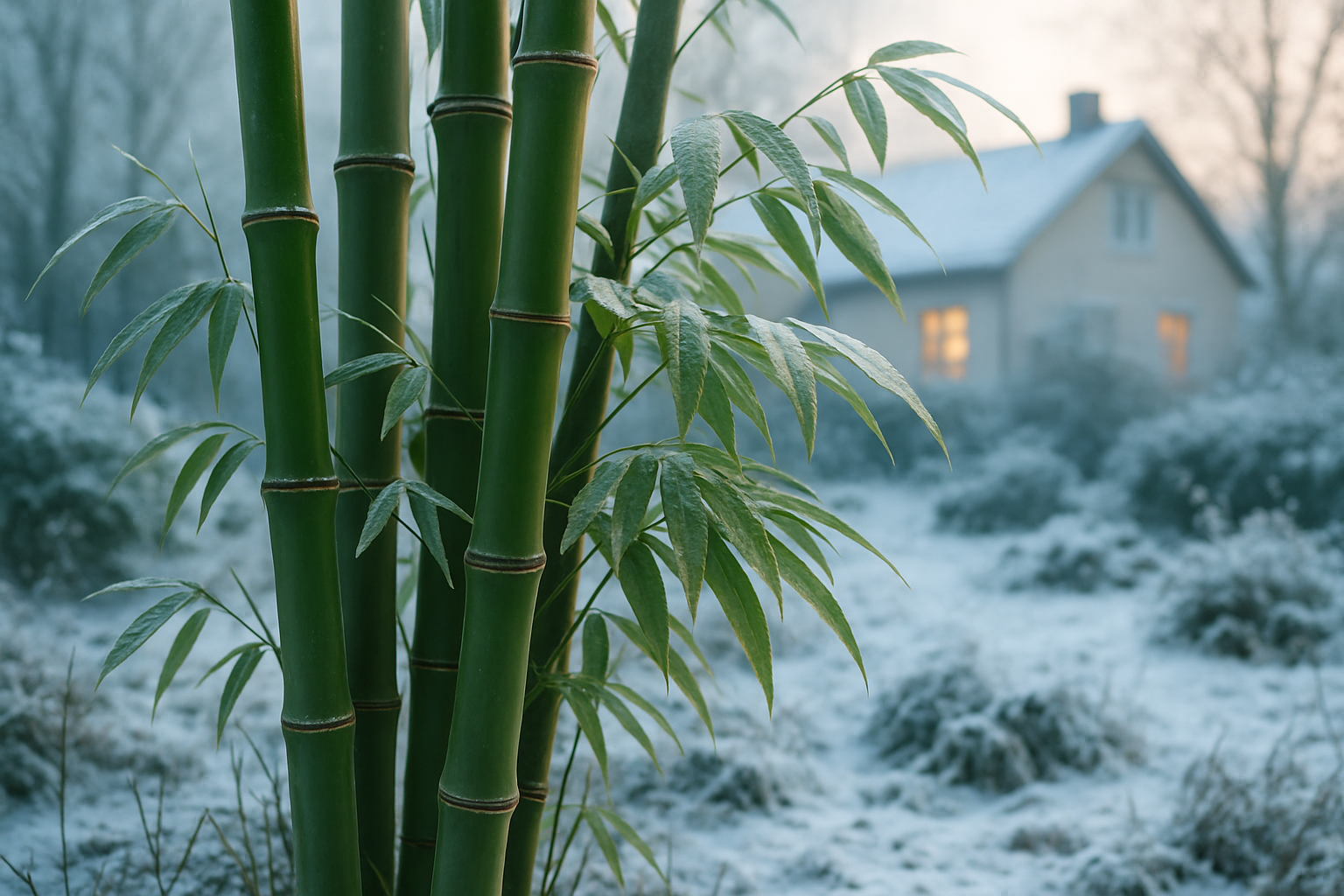
      I live in central Illinois, firmly planted in USDA Hardiness Zone 5, where winter temperatures regularly drop to -10°F and the wind chill makes it feel like the surface of another planet. I wanted bamboo because I dreamed of a living privacy screen along our back fence — something lush, fast-growing, and a little exotic. What I got, for the first two years, was heartbreak and a husband who had officially lost faith in my gardening instincts.

      Why Zone 5 Is So Challenging for Bamboo (And Why It’s Not Impossible)

      Let’s get honest about the climate reality before we talk solutions. Zone 5 winters are brutal on bamboo because most of the varieties sold at big-box garden centers are clumping bamboos — beautiful, well-behaved, and completely unsuited for temperatures below 0°F. That’s exactly what I bought the first two times. The tags said “cold hardy,” and technically, they were — down to about 10°F. In Illinois, that’s not cold hardy. That’s a death sentence waiting to happen.

      The good news is that certain running bamboo species — specifically within the Phyllostachys and Fargesia genera — are genuinely built for zone 5 conditions. The key is knowing which ones, and pairing the right variety with the right planting strategy. I learned this the expensive way so you don’t have to.

      The Best Bamboo Varieties for Growing Bamboo in Zone 5

      After my third failure, I did something I should have done from the beginning: I spent a full weekend reading, called a specialty bamboo nursery, and joined an online bamboo growers forum. Here’s what I learned about which varieties actually survive — and even thrive — in zone 5 winters.

      Phyllostachys aureosulcata (Yellow Groove Bamboo)

      This is the one I eventually planted successfully. Yellow Groove bamboo is cold hardy down to -20°F, which means zone 5 winters don’t even make it flinch. It’s a running bamboo, so you’ll want to manage its spread with a root barrier, but it grows quickly, reaches 20–30 feet at maturity, and creates exactly the kind of dense privacy screen I was dreaming about. Mine is now in its third season and absolutely thriving.

      Fargesia robusta (Clumping, Non-Invasive)

      If the idea of running bamboo spreading through your yard makes you nervous — and it’s a valid concern — Fargesia robusta is your best friend. It’s a clumping bamboo that stays put, handles temperatures down to about -15°F, and grows in part shade, which is rare among bamboo varieties. It won’t get as tall as Phyllostachys, topping out around 12–15 feet, but it’s elegant and completely manageable.

      Phyllostachys nuda (Nude Sheath Bamboo)

      Another excellent zone 5 performer, Phyllostachys nuda is considered one of the most cold-tolerant of the Phyllostachys family. It handles -15°F reliably and produces beautiful dark green canes. It’s a slightly more compact grower than Yellow Groove, which can be a plus if space is a consideration.

      How I Finally Got It Right: Planting Tips That Made the Difference

      Choosing the right variety was only half the battle. The other half was everything I did wrong with my first three plants in terms of timing, location, and winter preparation. Here’s the planting strategy that finally worked for me.

      • Plant in spring, not fall. My first two plants went in during September. By the time winter arrived, they hadn’t established enough root mass to survive. Give bamboo a full growing season before it faces its first hard freeze.
      • Choose a sheltered location. Wind desiccation — not just cold — kills bamboo in zone 5. My successful planting is along a fence that blocks the prevailing northwest wind. That made a noticeable difference in how the canes handled February.
      • Mulch heavily in late fall. A 4–6 inch layer of mulch over the root zone helps insulate the rhizomes, which are the real survival engine of the plant. Even if the canes die back above ground, live rhizomes will push up new growth in spring.
      • Install a root barrier if using running bamboo. A high-density polyethylene root barrier buried 24–30 inches deep will keep your Phyllostachys from becoming your neighbor’s problem. Don’t skip this step — trust me, it’s much easier to install at planting time than to deal with runaway rhizomes later.
      • Water deeply before the ground freezes. A well-hydrated plant going into winter is significantly more cold-tolerant than a dry one. Give your bamboo a long, deep soak in late October or early November before temperatures drop.
      • Don’t panic about brown canes in spring. Even cold-hardy bamboo can have cane dieback above the snow line. Wait until late May before making any judgments. If the rhizomes survived, you’ll see fresh shoots pushing up from the ground.

      Tools and Supplies I Recommend

      Having the right supplies made my successful planting so much smoother than my previous attempts. Here are the general categories of products I’d recommend picking up before you get started — all of which you can find easily on Amazon or at a local garden center.

      • HDPE Root Barrier Roll: Look for a 24–30 inch depth barrier rated for bamboo. This is non-negotiable for running varieties. Bamboo root barriers are specifically sold for this purpose and are worth every penny.
      • Bamboo-Specific Fertilizer: A high-nitrogen fertilizer formulated for grasses (bamboo is technically a grass) will support strong early growth. Apply in spring when new shoots emerge and again in midsummer.
      • Organic Mulch or Wood Chips: Bagged hardwood mulch works perfectly for winter insulation. Apply a thick layer over the root zone each November.
      • Long-Handled Pruning Saw or Loppers: For cutting back dead canes in spring and thinning established groves, a quality pruning saw is essential. Bamboo canes are tough, and a cheap tool will frustrate you.
      • Soil pH Test Kit: Bamboo prefers slightly acidic soil in the 5.5