- Truper 16-lb Steel Digging/Tamping Bar — essential for breaking frozen rhizome mats
- Aiourx Breaker Bar with Swivel Head — great for leveraging stubborn root clusters
- Tordon RTU Herbicide — cut-stump treatment for woody bamboo rhizomes (not for CA or NY)
What I Got Wrong About Bamboo Removal in Winter (At First)
Here is the honest truth about winter bamboo removal: the timing is complicated, and I did not understand any of that on shovel-in-hand Saturday morning.
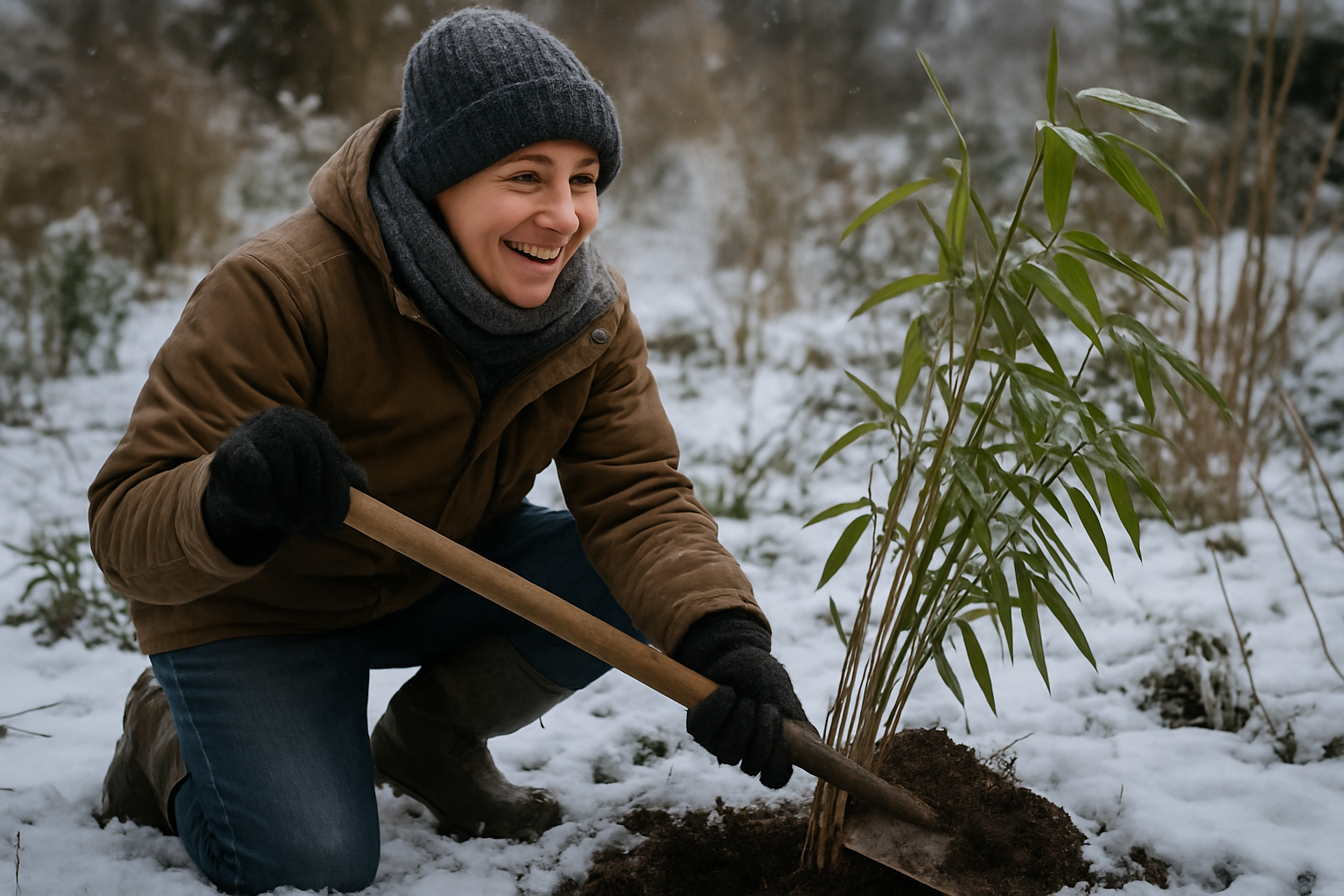
My first mistake was going in completely blind. I started digging around the base of the culms with a standard garden shovel. Within about four minutes, I had broken the shovel. Not bent it. Broken it. The rhizome system of running bamboo — the kind I had, a Phyllostachys variety — is a dense, interlocking network of woody roots that can extend 15 to 20 feet from the main clump. In winter, that ground was partially frozen, which meant the rhizomes had zero give. I was essentially trying to dig through concrete reinforced with rebar made of wood.
My second mistake was not knowing that bamboo in winter is in a state of reduced metabolic activity. The plant is not dead — it is just quiet. That actually matters a lot when you start thinking about herbicide treatment, which I had not yet considered because I was still in “brute force solves everything” mode.
My third mistake was wearing regular jeans. Bamboo splinters are real. Just trust me on this one.
What Winter Actually Does to Bamboo (And Why It Matters)
Once I had sat down on my back steps with two broken tools, a bruised ego, and bamboo debris in places bamboo debris should not be, I decided to actually research what I was dealing with. Here is what I learned — and what you should know before you start.
Running bamboo rhizomes are shallow but enormous. Most rhizomes sit within the top 12 to 18 inches of soil, but they spread aggressively. In winter, frozen or hardened soil makes physical removal much harder than in fall or early spring when the ground is workable.
Winter is not ideal for herbicide either — but late winter is the sweet spot. Systemic herbicides work by traveling through the plant’s vascular system. When bamboo is fully dormant in deep winter, that system is sluggish. However, as late winter transitions toward early spring — roughly late February into March in most temperate zones — the plant starts waking up. That is when a cut-and-treat method becomes genuinely effective. You cut the culms close to the ground, then immediately apply herbicide to the fresh-cut stumps before the wound seals.
Physical removal in winter does have one advantage. Deciduous plants and other surrounding vegetation are dormant and out of the way, which gives you better visibility and access to the root network. If you are mapping out where the rhizomes have traveled, winter is actually a great time to assess and plan your attack.
The Tools That Actually Work (Learned the Hard Way)
After my Saturday disaster, I ordered better tools and came back the following weekend with a plan. Here is what actually made a difference.
For breaking up compacted soil and prying apart rhizome mats, a heavy steel digging bar is non-negotiable. I started using the Truper Post Hole Digger & Tamping Bar — a 16-pound, 69-inch drop-forged steel bar that laughs in the face of frozen rhizomes. It became my best friend. You drive it down alongside the rhizome network to break the soil’s grip, then lever the roots up. It is hard work, but it is effective work.
For loosening bolts on root barriers or dealing with any equipment that had seized up from cold weather, the Aiourx 1/2″ Drive Breaker Bar came in surprisingly handy. The 250-degree swivel head gives you angles you just cannot get with a straight bar, and the CR-MO steel handles real torque without flexing.
For the chemical side of removal — which I highly recommend combining with physical removal for running varieties — I used Tordon RTU Specialty Herbicide. This is a ready-to-use formula designed for woody plants, and it is one of the most effective options for the cut-stump treatment method. Note: Tordon is not available for use in California or New York, so check your local regulations before purchasing.
One game-changer I did not expect? Spray indicator dye. When you are treating multiple stumps across a large area, it is embarrassingly easy to lose track of which ones you have already hit. The Liquid Harvest Lazer Green Spray Indicator (8 oz) adds a bright green tint to your herbicide mix so you can see exactly where you have sprayed. For larger areas, the 32-oz quart size makes more sense. It fades naturally and will not stain permanently — but in the moment, it tells you exactly what has been treated.
Quick-Reference Tool List
- Truper 16-lb Steel Digging/Tamping Bar — essential for breaking frozen rhizome mats
- Aiourx Breaker Bar with Swivel Head — great for leveraging stubborn root clusters
- Tordon RTU Herbicide — cut-stump treatment for woody bamboo rhizomes (not for CA or NY)
Tag: bamboo cutting
-
Bamboo Removal in Winter: Why My Timing Was Both Wrong and Accidentally Right