I started my bamboo removal in winter because my neighbor’s dog kept using my yard as a bathroom, and I was convinced — completely, stubbornly convinced — that tearing out the bamboo hedge would somehow solve this. It would not. But what happened next accidentally taught me more about winter bamboo removal than any article I had ever read.
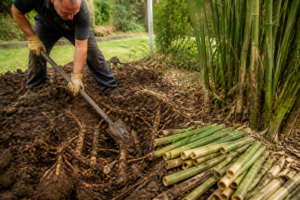
Let me back up. It was January, temperatures were hovering around 28°F, and I had convinced myself that the bamboo running fence-line was the real problem in my life. Not the dog. Not the owner who smiled and waved while their golden retriever did its thing. The bamboo. Naturally, I grabbed a shovel at 7 a.m. on a Saturday and declared war on a plant that had been quietly winning wars since the Cretaceous period.
What I Got Wrong About Bamboo Removal in Winter (At First)
Here is the honest truth about winter bamboo removal: the timing is complicated, and I did not understand any of that on shovel-in-hand Saturday morning.
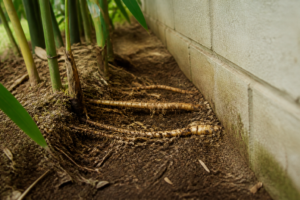
My first mistake was going in completely blind. I started digging around the base of the culms with a standard garden shovel. Within about four minutes, I had broken the shovel. Not bent it. Broken it. The rhizome system of running bamboo — the kind I had, a Phyllostachys variety — is a dense, interlocking network of woody roots that can extend 15 to 20 feet from the main clump. In winter, that ground was partially frozen, which meant the rhizomes had zero give. I was essentially trying to dig through concrete reinforced with rebar made of wood.
My second mistake was not knowing that bamboo in winter is in a state of reduced metabolic activity. The plant is not dead — it is just quiet. That actually matters a lot when you start thinking about herbicide treatment, which I had not yet considered because I was still in “brute force solves everything” mode.
My third mistake was wearing regular jeans. Bamboo splinters are real. Just trust me on this one.
What Winter Actually Does to Bamboo (And Why It Matters)
Once I had sat down on my back steps with two broken tools, a bruised ego, and bamboo debris in places bamboo debris should not be, I decided to actually research what I was dealing with. Here is what I learned — and what you should know before you start.
Running bamboo rhizomes are shallow but enormous. Most rhizomes sit within the top 12 to 18 inches of soil, but they spread aggressively. In winter, frozen or hardened soil makes physical removal much harder than in fall or early spring when the ground is workable.
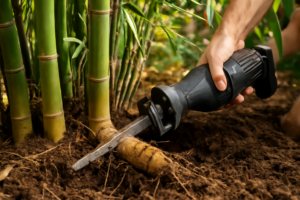
Winter is not ideal for herbicide either — but late winter is the sweet spot. Systemic herbicides work by traveling through the plant’s vascular system. When bamboo is fully dormant in deep winter, that system is sluggish. However, as late winter transitions toward early spring — roughly late February into March in most temperate zones — the plant starts waking up. That is when a cut-and-treat method becomes genuinely effective. You cut the culms close to the ground, then immediately apply herbicide to the fresh-cut stumps before the wound seals.
Physical removal in winter does have one advantage. Deciduous plants and other surrounding vegetation are dormant and out of the way, which gives you better visibility and access to the root network. If you are mapping out where the rhizomes have traveled, winter is actually a great time to assess and plan your attack.
The Tools That Actually Work (Learned the Hard Way)
After my Saturday disaster, I ordered better tools and came back the following weekend with a plan. Here is what actually made a difference.
The One Tool That Finally Broke Through Frozen Rhizome Mats
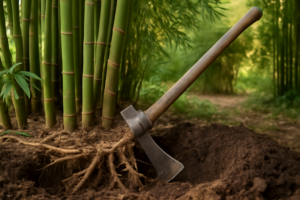
When the ground freezes solid, a standard shovel becomes kindling. Running bamboo rhizomes in winter turn into something closer to reinforced concrete, and you need a tool designed to actually fracture and pry apart that dense, woody network without snapping.
What works
- The tamping end breaks compacted frozen soil in a way a shovel blade never will—you’re using weight and leverage, not just cutting force.
- The opposite end functions as a true pry bar, giving you enough mechanical advantage to actually separate interlocking rhizome segments without your back taking the full load.
- At 16 pounds, it’s heavy enough to do real work but not so heavy that you’ll destroy your shoulders over a full weekend of digging—you’re using the tool’s weight, not pure muscle.
What doesn’t
- It won’t prevent you from needing follow-up herbicide treatment—physical removal alone rarely kills the entire rhizome network, especially in winter dormancy.
- Repetitive swinging in cold weather is genuinely exhausting, and there’s a real learning curve to not bouncing the bar straight back at your own shins.
I nearly threw this tool in the trash after the third day when my arms felt like they belonged to someone else, convinced I was still just breaking things. Then I looked back at the exposed rhizome trench and realized I’d actually moved several feet of mat. Get the Truper 16-lb Steel Digging/Tamping Bar before winter hits.
About This Article

Written by Marcus Chen. Marcus Chen has spent 15 years cultivating and studying bamboo across 14 different species, combining commercial growing operations with extensive hands-on experience in species selection and containment. As both a grower and consultant, he specializes in practical bamboo management, helping homeowners and landscapers understand the real-world requirements for responsible bamboo cultivation. Marcus brings tested knowledge of which species thrive reliably and which present containment challenges that go beyond standard recommendations. More about this site.
Verify this against a primary source
Specifics change, and your situation may differ from the one described here. These are the authorities worth checking directly:
- American Bamboo Society — species listings and cultivation guidance
- USDA PLANTS Database — species range and identification
- USDA Plant Hardiness Zone Map — cold hardiness verification for your location