Tag: bamboo garden project

  • Bamboo Raised Garden Beds: How a Failed Vegetable Garden Finally Found Its Happy Ending

    Bamboo Raised Garden Beds: How a Failed Vegetable Garden Finally Found Its Happy Ending

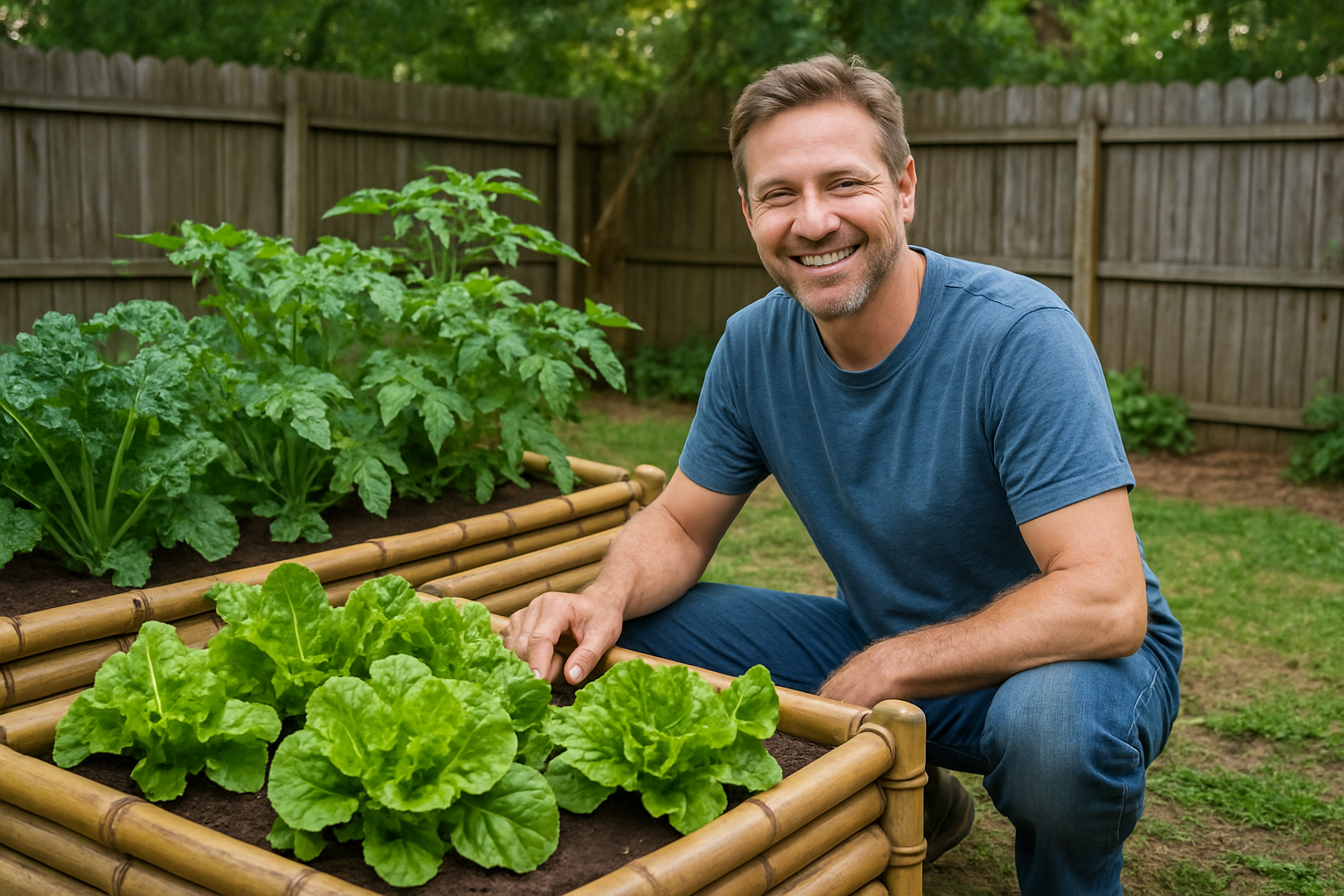
    I still remember standing in my backyard on a humid July afternoon, staring at a patch of sad, yellowing tomato plants and fighting back actual tears. I had spent nearly $300 that spring — on seeds, soil amendments, a fancy drip irrigation kit — and every single thing I planted looked like it wanted to die. The ground was clay-heavy, poorly draining, and apparently hostile to anything I wanted to grow. My husband gave me that look — the one that said “maybe gardening just isn’t your thing” — and I have never wanted to prove someone wrong more in my life. That’s when I started researching bamboo raised garden beds DIY projects, and honestly? It changed everything.

    This post contains affiliate links. As an Amazon Associate, I earn from qualifying purchases. This means I may earn a small commission if you click through and make a purchase, at no extra cost to you. I only recommend products I genuinely believe in.

    Why My In-Ground Garden Was Doomed From the Start

    Here’s the thing nobody tells you when you move into a house with a big backyard: square footage does not equal good growing conditions. Our soil had been compacted for years under a lawn that had seen better decades. Drainage was terrible. I’d dump a watering can on the surface and watch it pool and sit there like a tiny, mocking pond. Roots couldn’t penetrate. Nutrients leached out. And because everything was at ground level, I was constantly battling slugs, fungal issues from poor airflow, and a bad back from crouching down to tend to plants that were basically already giving up.

    After my third failed attempt in as many seasons, I was ready to pave the whole thing over and call it a patio. But before I did, I fell down a very wonderful internet rabbit hole about raised bed gardening — and specifically, about using bamboo as a building and support material. It was like a lightbulb moment. Raised beds would let me completely sidestep the terrible native soil. Bamboo would give me sustainable, flexible, beautiful structure. I was back in business.

    Bamboo Raised Garden Beds DIY: What Makes Bamboo Such a Smart Choice

    If you’ve spent any time on this site, you already know bamboo is remarkable stuff. But let me give you the gardening-specific highlights, because they’re genuinely impressive.

    First, bamboo is naturally rot-resistant. Mature, properly cured bamboo contains silica and tannins that help it resist moisture damage far better than untreated softwoods. For raised beds — where the material is constantly adjacent to damp soil and watered regularly — that durability matters enormously. Second, bamboo is incredibly strong for its weight. A bamboo cane the diameter of your thumb can support serious structural loads. Third, and maybe most importantly for my purposes, bamboo is sustainable. It’s a grass, not a tree, and it can be harvested without killing the plant. That felt right for a garden built around growing living things.

    For DIY raised bed projects, here are a few practical bamboo tips I picked up along the way:

    • Use mature culms. Bamboo harvested at 3–5 years of age has the best strength and rot resistance. Younger canes are still green and more prone to splitting and decay.
    • Seal cut ends. The hollow interior of bamboo can trap moisture and accelerate decay. Sealing cut ends with beeswax, linseed oil, or even exterior wood glue extends the life of your canes significantly.
    • Elevate contact points. Where bamboo meets soil directly, it will degrade faster. Use galvanized hardware or concrete footings to keep structural joints above the soil line when possible.
    • Choose the right species. Moso bamboo is a popular choice for structural projects due to its large diameter and density. For smaller support stakes and trellises within your raised beds, thinner-walled species work beautifully.
    • Lash, don’t just nail. Traditional bamboo joinery using twine, zip ties, or wire is often stronger than nails or screws, which can split canes. Jute twine is my personal favorite — it looks gorgeous and biodegrades naturally.

    You can use bamboo to build full raised bed frames, internal trellis systems for climbing vegetables, shade structures, or decorative edging. The creative options really are endless once you start thinking in bamboo.

    Tools and Products That Made My Setup So Much Easier

    Now, I want to be honest with you: I’m a DIYer, but I’m not a carpenter. Some parts of my raised bed setup I built with bamboo and elbow grease. Other parts, I leaned on some really well-designed pre-made beds that made the whole project manageable without requiring a workshop full of power tools. Here’s what I actually used and recommend:

    Raised Bed Structures

    For my main growing area, I started with the VINGLI Heavy Duty Raised Garden Bed with Bed Liner. The elevated legs were a game-changer for my back — no more crouching — and the included liner protects the wood while keeping moisture consistent. It’s solid, sturdy, and went together without any drama.

    I also added the S AFSTAR 3-Tier Raised Garden Bed for my herbs. The stackable, dividable design is perfect for organizing different varieties, and the 3-tier height lets me grow things with different light needs in a surprisingly compact footprint. Absolutely love this one for a dedicated herb corner.

    And when I wanted something more durable for a partially shaded, higher-moisture corner of the yard, I went with the Winpull Galvanized Raised Garden Bed. Metal beds in wetter spots just last longer, and the safety edging means I’m not nicking my hands every time I reach in to harvest something.

    Soil and Amendments

    This is where I would have saved myself years of heartbreak if I’d known sooner: the soil in your raised bed is everything. I use Espoma Organic Raised Bed Mix as my base. It’s light, well-draining, and designed specifically for the contained environment of a raised bed — not too dense, not too airy. Plants that struggled for years in my native clay absolutely exploded with growth once I gave them this to work with.

    Then at the start of each season, I top-dress with Charlie’s Compost Organic Fertilizer. It’s odor-free (important when your beds are near a seating area), and the biochar component really does seem to improve moisture retention. My tomatoes this year were obscenely productive. I’m not exaggerating when I say
  • Building a DIY Bamboo Garden Trellis: The $25 Project That Made My Garden Instagram-Famous

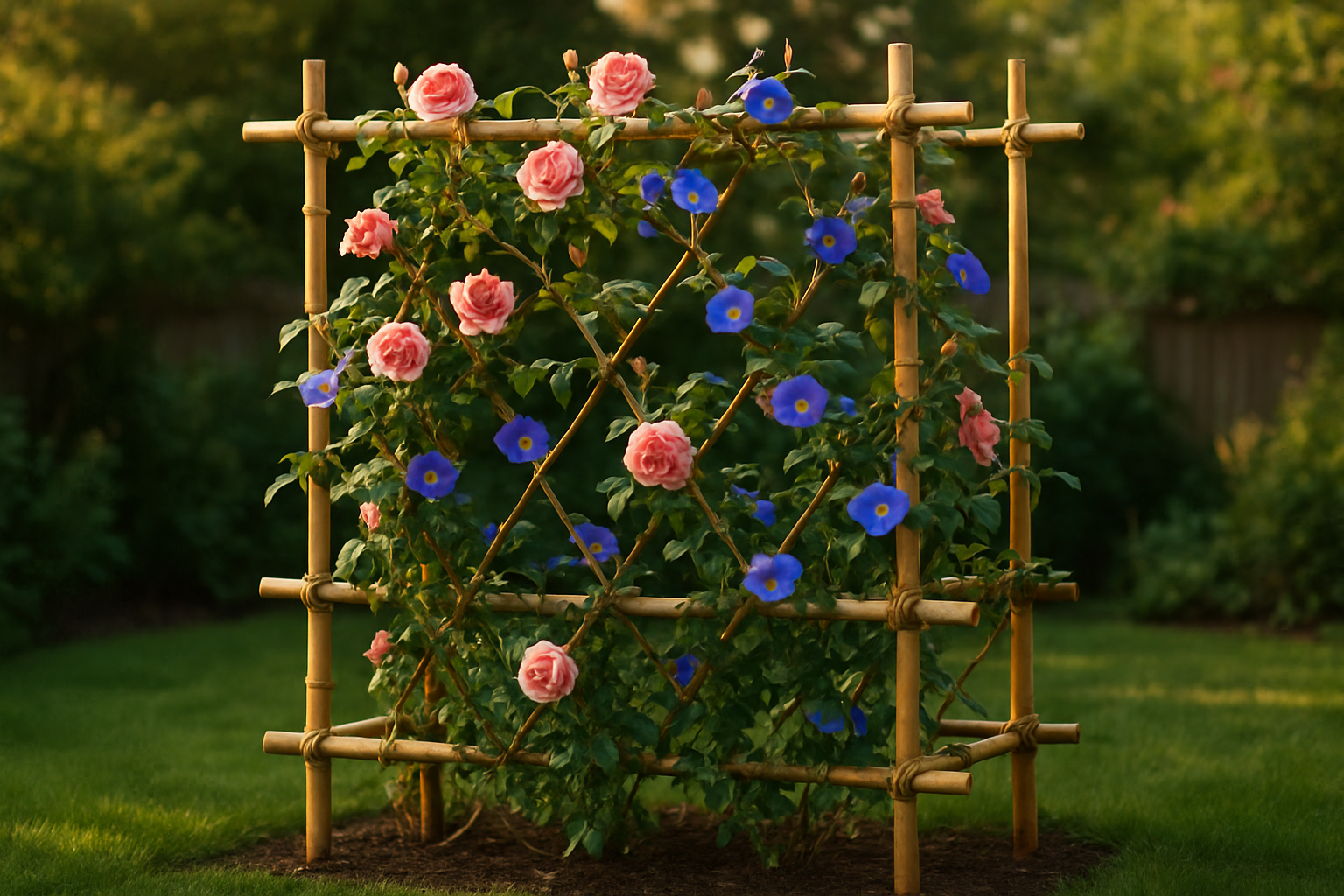
    Building a DIY Bamboo Garden Trellis: The $25 Project That Made My Garden Instagram-Famous

    • Mark your layout first. Use stakes and string to mark where your uprights will go before you touch a single bamboo pole. For a basic A-frame or flat grid trellis, two to four uprights are all you need. Spacing them evenly — typically 18 to 24 inches apart — will make the whole thing look intentional and professional.
    • Drive uprights in at least 12 inches deep. For an 8-foot stake, that means you’ll have about 6.5 feet of usable height above ground. Use a mallet rather than a hammer to avoid splitting the bamboo at the top.
    • Lash your crosspieces with a square lashing technique. Start by wrapping the twine around the vertical pole just below where the horizontal pole will rest, then bring it up and around both poles in a figure-eight pattern, pulling firmly after each wrap. Finish with two or three tight frapping wraps between the poles to cinch everything together, then tie off with a square knot. It sounds more complicated than it is — watch one two-minute video and you’ll have it down.
    • Use the thicker 3mm jute at structural joints and the thinner

      I want to tell you about the afternoon I accidentally glued my hand to a bamboo pole in front of my entire neighborhood. It was a Tuesday. My garden looked like a sad tangle of tomato plants leaning against each other like tired commuters on a subway, and I had decided — with exactly zero woodworking experience — that I was going to build a DIY bamboo garden trellis before sundown. Reader, I did not finish before sundown. But I did end up with 47 new Instagram followers and a story I will never live down.

      This post contains affiliate links. As an Amazon Associate, I earn from qualifying purchases.

      If you’ve been eyeing those gorgeous bamboo trellises in garden magazines and thinking there’s no way you could pull that off, I’m here to tell you: you absolutely can. And if I can do it — a person who once spent twenty minutes trying to figure out which end of a hand saw does the cutting — you are going to be just fine. Let me walk you through exactly how I built mine for under $25, complete with the hard-won wisdom that only comes from publicly embarrassing yourself in your front yard.

      Why Bamboo Is the Perfect Trellis Material

      Before we get to the tools and the technique, let’s talk about why bamboo is genuinely wonderful for this project and not just trendy. Bamboo is one of the strongest natural materials you can use in a garden setting, with a tensile strength that rivals steel relative to its weight. It’s also naturally resistant to moisture, which means it won’t rot out on you after one rainy season the way cheap wooden dowels tend to do. It’s lightweight, easy to work with, and — this is the part that keeps getting me — it looks absolutely beautiful in a garden. There’s a warmth and an organic elegance to bamboo that plastic or wire trellis panels simply cannot replicate.

      For a trellis project, you’ll want to think about the scale of what you’re growing. Lighter climbers like sweet peas, beans, or small cucumbers can be supported beautifully by thinner stakes arranged in a fan or grid pattern. Heavier plants like tomatoes, grape vines, or large squash need something with more girth and a sturdier base. The good news is that bamboo stakes come in a range of sizes, so you can match the material to the job.

      Tools and Materials for Your DIY Bamboo Garden Trellis

      Here’s everything I used to build my trellis. The total came in right around $25, and I had leftover materials for two more smaller projects. I’ve linked everything I actually bought so you can grab the same stuff without having to guess.

      Recommended Products

      • For lighter climbers and the vertical uprights of a fan trellis: COLOtime Bamboo Stakes 58 Inch, 20 Pack — These are a great mid-height stake for beans, sweet peas, and shorter flowering vines. The 20-pack gives you plenty to work with for a full trellis panel.
      • For the main structural uprights if you’re supporting tomatoes or heavier vines: Cambaverd Bamboo Stakes 8 Feet, 1 Inch Diameter, 10 Pack — These thicker, taller poles are what I used for the main frame of my trellis. The one-inch diameter makes a real difference in stability, and eight feet gives you plenty of height above ground after you sink them in.
      • For filling in the grid work or a smaller project: Mininfa Natural Bamboo Stakes 4 Feet, 25 Pack — The 25-pack at four feet is ideal for the horizontal crosspieces of your trellis grid, or for building a shorter trellis for a container garden.
      • For tying everything together (and this is where I nearly went wrong — more on that in a moment): Vivifying Garden Twine, 656 Feet, 2mm Green — The thinner 2mm twine is perfect for lashing joints and tying plant stems to the trellis without cutting into them.
      • For a sturdier lash at the main structural joints: Vivifying Jute Twine, 328 Feet, 3mm Brown — The thicker jute is what you want where two poles cross and need to hold real weight. It’s also beautiful — the brown color looks completely natural against the bamboo.

      Beyond these, you’ll need a mallet or rubber hammer to drive the uprights into the ground, and a pair of garden snips or a small hand saw for trimming any stakes to length. That’s genuinely it.

      How to Build the Trellis: Step by Step

      Okay, so here’s where things went sideways for me — and where they can go beautifully right for you if you learn from my disaster. I decided to skip the planning phase entirely because I am, at heart, an impulsive person who finds measuring deeply boring. I jammed my uprights into the ground with great enthusiasm, approximately eyeballed the spacing, and then realized I had built a parallelogram instead of a rectangle. My trellis leaned to the left like it was listening to something happening next door.

      My neighbor Carl watched this entire process from his driveway. He said nothing. He just nodded slowly, the way you nod at something you’ve decided not to comment on.

      Here is what I should have done — and what you should do:

      • Mark your layout first. Use stakes and string to mark where your uprights will go before you touch a single bamboo pole. For a basic A-frame or flat grid trellis, two to four uprights are all you need. Spacing them evenly — typically 18 to 24 inches apart — will make the whole thing look intentional and professional.
      • Drive uprights in at least 12 inches deep. For an 8-foot stake, that means you’ll have about 6.5 feet of usable height above ground. Use a mallet rather than a hammer to avoid splitting the bamboo at the top.
      • Lash your crosspieces with a square lashing technique. Start by wrapping the twine around the vertical pole just below where the horizontal pole will rest, then bring it up and around both poles in a figure-eight pattern, pulling firmly after each wrap. Finish with two or three tight frapping wraps between the poles to cinch everything together, then tie off with a square knot. It sounds more complicated than it is — watch one two-minute video and you’ll have it down.
      • Use the thicker 3mm jute at structural joints and the thinner